
The Modern Day Vegetarian
My story and enlightenment from being a carnivore, to becoming a pescatarian, to the now..


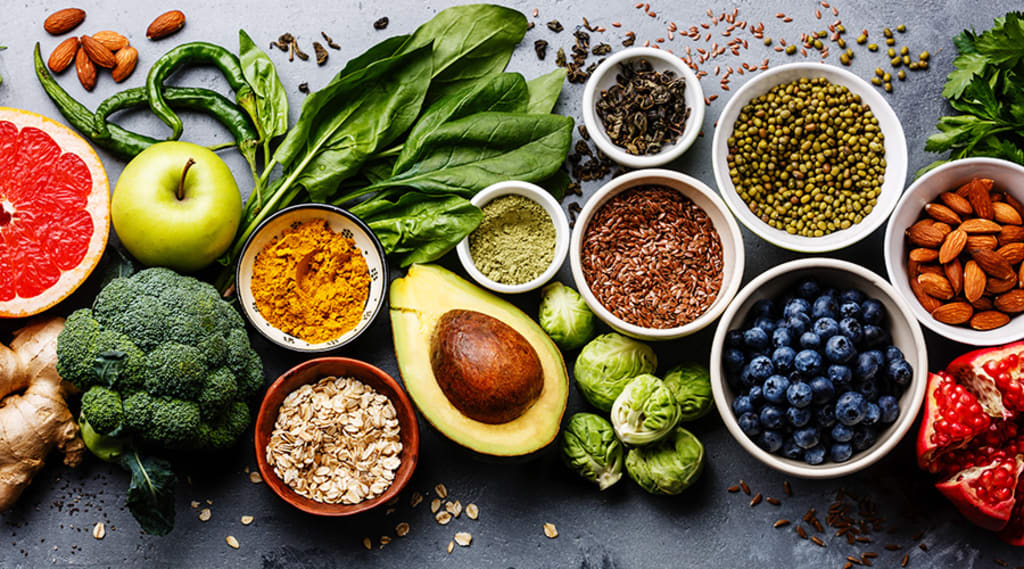
My Story
Since early 2019 pre covid I have been on a journey of varying diets. Finding out what does and doesn't work for me, and I am going to share with you my story. Everyone's reason for cutting out meat and dairy or putting meat and dairy back in their diets are different. Personally I have more than a single reason, and I don't think I could ever go back! In fact I would personally recommend vegetarianism and veganism to anyone, but of course people love their dairy and meat, and I don't blame them.
Veganism and Vegetarianism is becoming more and more popular, and I get it. Because I am right there with it, and once upon a time I told myself, "No, that will never be me." and "How could someone not eat meat? It is sooo good!" I could not wrap my mind around taking favorites out from my diet, and substituting them with something else. Some of my favorite dishes used to be meat based, but I don't miss them. Although I am still stuck on eggs and minimal dairy intake solely for their nutritional value, and well they taste good!
I grew up eating meat, and of course I loved it. So much so that when my mother introduced me to veggies burgers and veggie bacon I thought "ew," and now I am the exact opposite. Let me be completely honest; I thought the veggie burgers were atrocious, and the veggie bacon? Yuck! Why would I want to eat something that imitated flavors that I loved? Simply stated I was not a fan, and I would not enjoy them. "Please, just give me the fresh beef roast with veggies mom!"
Growing up I also regularly had issues with my stomach, and I could not ever quite figure out what it was. I never had any allergies, and I loved all kinds of food. It was an ongoing issue that eventually went away, but than out of the blue when I got older it got really bad. When it started I was putting too much physical strain on my body, and that didn't help either. Eventually I stopped doing that to that extent, but a couple years later it got even worse.
Some days my heart hurt badly, and others I couldn't keep a meal or even water down, and I could never figure out why. I eventually decided I was going to tweak my diet, and over time it began improving. Something inside me believed that it would help and I was right but I was not inspired to change my diet because I was periodically getting sick. In fact I didn't believe that it had anything to do with it, and I assumed it was solely my body and from smoking cigarettes. When really my diet had something to do with it.
I habitually drank whole milk my whole life, ate a lot of cheese, cooked with a lot of real butter, indulged in steak, chicken, beef, and turkey. When I would eat it I wouldn't ALWAYS experience an issue at the moment I ate them and it took me a while to connect the dots. It could have been anything, but when I eliminated those things from my diet something miraculous happened. Although very sensitive I rarely ever have serious triggers with my stomach anymore unless I am really stressed, or not being careful enough with my diet.
So one day I quit eating fish, steak, chicken, beef, ham, pork and turkey cold turkey! Slowly I began reducing my milk and butter intake, and eventually how much cheese I ate. I can still appreciate a good dish made with these ingredients, but I myself do not cook with any of them. There was a time when I drank so much milk I could not ever imagine not drinking it, but now I am perfectly content with my almond milk, and don't think I could go back.
An example of how much eliminating meat, and most dairy from my diet has helped my healing process- I have only gotten sick a little over a dozen times in the past year and a half compared to a few times a month! Of course like anyone with any sort of sensitives it is hard to keep a handle on it all of the time. Still what a difference that change, along with quitting smoking cigarettes, and reducing the amount of processed foods (breads, pastas, cereals, etc.) made.
At first glance I went vegetarian, but within a couple of weeks I had still kept fish in my diet. For over 2.5 years I was a pescatarian and would eat specific nutrient dense seafood items periodically in my diet. Although within the last year after a handful of bad experiences that changed and I have eliminated seafood completely from my diet. I slowly reverted back to the vegetarianism that I started off with, and personally am still trying to find a perfect balance.
What got me is that some seafood contains high levels of toxicity, and that they die some salmon pink! “Really?” Some of you might ask. Yes! Unfortunately these things added up turned me off to it as it is substantially one of most nutrient dense foods on the planet. Not saying that there wouldn't be a time and place that I wouldn't try something of good quality somewhere, but I don't plan on it. Even a healthy vegetarian or vegan might eat a slab of salmon or a plate of classy caviar with crab legs sometime!
The sayings "You are what you eat," "Healthy as a horse," and "Let thy medicine be thy food and thy food be thy medicine." Really mean a lot to me, and here is why. You truly are what you put into your body, and why put anything into your body that it is rejecting? Horses are herbivores, and they are strong creatures and perfectly healthy without meat and dairy to sustain their diet. Although they don't live as long as the longest living land animals, also majority herbivores, they do live a while. Lastly since ancient times herbs, specific diets etc. have been labeled "natures pharmacy', and it is true.
So with all that said, at the age of 26 I am now strictly vegetarian and when I pass cows or animals that people eat I am not so indifferent. I try to eat vegan the majority but still keep eggs, cheese, and sometimes dairy yogurt in my diet. As they contain heme iron which you can't find anywhere in anything else except for meat products. Heme iron is an essential nutrient for the human diet, and plays a key role in metabolism, digestion, and absorption. Non heme-iron is found in healthy foods like leafy greens, nuts, legumes, and grains it is not readily absorbable as heme iron.
The Facts
Meat is such a regular part of most people diets, but their body doesn't break it down and digest it the same. According to some studying I did years ago it stated quite specifically that it can exhaust the muscles. Ever see those people who sit and chew their steak for a very long time? Are you one of those meat eaters? Than you know what I am talking about. The more meat that a person eats the more potential is has to overwork the body causing the potential of aging faster, and can decrease life span by seven years if not more or less.
As tasty and nutritious healthy meat can be, if you were thinking about going vegetarian or vegan, want to decrease your dairy/meat intake this is your sign! Or if you needed some inspiration to stay that way here it is. As I have talked with several people who have stated that they were for several years, but then converted back. Especially when sometimes it is hard for body builders, etc. to substitute their meat replacements even though there is all sorts of good stuff out there!
Although meat does contain essential amino acids, high amounts of protein, vitamins and minerals (i.e. vitamin Bs', heme iron, zinc, selenium, iodine, and niacin) having a diet that consists of eating meat regularly, especially processed meats, can increase the chances of having certain health ailments. Research shows some of these conditions include heart disease, pneumonia, cancer, diabetes and other severe illnesses.
One of the reasons being that the use of sodium nitrate still used in some processed or known as cured meats today is a carcinogen. It is a preservative most commonly found in turkey, ham, hot dogs, beef jerky, smoked fish, lunch meat, and bacon. Not only does it preserve the food, give it a savory salty flavor but it helps meat flesh have that pink hue that without would decrease sales. According to an extensive study it has harmful effects on the body, but logically some people have wanted this information swept under the rug in years past.
"The Meat Lobby, How the Industry Hides the Truth"
If you click here you can learn all about it on YouTube, or watch the provided link above!
Going vegetarian also reduces your carbon footprint in the world, and is better for the environment. There is a lot of pollution associated with the growth, production, and distribution of meat and meat products. The more people that go vegetarian the less of these instances occur and eating green is well as you already know, greener for the environment! I eat green in confidence knowing that even though as just a single individual I am producing less trash, waste, etc. into the world than I would be if I still ate meat and that feels good too.
As statistics show according to evidence gathered from science, data, and common sense vegetarianism is also better for the environment for many reasons. When I say many I don't mean just one or two, but over half a dozen to name a few. According to the article www.downtoearth.org/go-veggie/environment/top-10-reasons these are some of there reasons that vegetarianism is better for the environment.
Groundwater contamination reduction being a big one. If less animals were raised solely for the purpose of eating them, than less run off water would be subject to viruses, and diseases from pollutants in animal waste and erosion. This spreads into local streams, rivers, and well groundwater! Especially if the people who are managing it are doing so at a low standard and taking less necessary precautions, whether intentional or unintentional, to prevent such circumstances.
Decreased meat production and distribution reduces global warming, and here is why. Beef alone, statistically speaking, makes up for the highest amount of greenhouse gas emissions. Lamb coming in second with half as much as beef, at 25kg per 3.5 oz. That is 50kg or 110lbs. per 3.5 oz. of beef of greenhouse gases released into the atmosphere! On a yearly average America alone eats 55 lbs. of beef per person. The math states that would be approximately 251 lbs. of gas emissions, and that is only one statistic for one meat product for one person for one country.
That is why eating vegetarian can minimalizes excessive co2 pollution as reports have stated that "The livestock sector accounts for 9% of co2 derived from human related activities." It would also reduce the amount of nitrus oxide, and methane that is released into the environment through man made pollution. I.e. "Cows and sheep are responsible for 37% of the total methane, which is 23 times more warming as co2, generated by human activity." (Top Ten Reasons Why It's Green To Go Veggie, https://www.downtoearth.org/go-veggie/environment/top-10-reasons.)
"Beef is Bad for the Climate, but How Bad?"
Above is an informational video about the how mass cow production for the purpose of eating meat is harmful for the environment.
Now back to the water issue, but not how it affects the water. Rather how much water that meat production uses. Evidence states that it takes up to 1,847 gallons of water to manufacture 1 lb. of beef! Rewinding back at what the math stated previously that calculates to 101,585 gallons of water on a yearly average for someone who eats meat regularly. Imagine these statistics are 100% accurate and what it means for the environment, water scarcity, and population if people produced less meat products and relied on either hunting alone, or going vegetarian/vegan.
It would also decrease the pollution that is generated trough animal waste, such as antibiotics and hormones that they are fed, chemicals, fertilizers, and the feed crop pesticides. Which if you think about it are some of the things that some people are ingesting when they eat these meat products. Not to say there isn't any of these despicable things in the fruits and vegetables that we eat, because unfortunately there is, but ew! Not to mention the millions of dollars that is spent yearly trying to maintain the amount of waste that is produced through meat production.
There is also the matter of deforestation, and destruction of topsoil, and tropical rainforests. Beef, in the greatest of numbers, contributes to 6.7 million acres of bulldozed tropical rainforests for the sake of the production of cattle. On the other hand the production of vegan meat would decrease the deforestation rate by 94%. Those are some pretty big numbers contributing to the amount of harm that meat production is causing the environment alone, let alone ways that it can prove harmful to the body itself.
Vegetarian/Vegan Recipes
Below I am adding some fairly basic quick, easy, healthy recipe's I made if you'd like to try them out!

Mushroom Veggie and Dill Omlette
Ingredients: (servings 1-2)
- Fresh baby spinach (per desired amount)
- 1/4-1/2 finally diced white onion
- 2-4 freshly minced garlic cloves
- 4-8 thinly sliced baby bella or white mushrooms
- 1/4-1/2 yellow/red/or green bell pepper finely chopped
- 2-4 cage free eggs or JUSTEGG liquid egg replacement
- 1-2 tbsp. unsweetened silk almond milk (Preferably in plastic jug without thickening agents)
- extra virgin organic olive oil (Bragg 100% imported from Greece)
- 1 tsp. turmeric
- 2 tsp. organic dead sea salt
- 2 tsp. dried dill weed
- 1-2 tsp black pepper
- 1 pinch basil
- 1 tsp chia seads (optional)
- 1-2 chopped jalapenos (optional)
- 1/4-1/2 cup shredded cheese (vegan or dairy)
Directions:
- Drizzle olive oil in small frying pan and heat mixing in and stirring chopped onion, garlic, and mushrooms until golden brown. Add finely chopped bell pepper mid process
- Add 1 tsp. salt, pepper, turmeric, chia seeds, and any other spices to your liking
- While veggies are lightly sautéing beat eggs and almond milk, dill weed, dried basil and half of your cheese of choice
- Set aside veggies and wipe pan, or use new pan and oil after heating on medium heat
- Cook omlette until almost finished and add partial veggies with raw spinach ( or sautéed ) and fold over :) ( of course you know how to make an omlette )
- Add the rest cheese on top after serving, and remaining veggies if desired or,
- Enjoy veggies with recipe #2 for added flavor! *

Simple and Easy Mini Beyond Sausage Potato Patties
Ingredients:
- 1-2 Purple potatoes slice in circles (10-20 pieces)
- 1-2 Beyond Meat spicy Italian spicy sausages sliced into circles ( 10-20) pieces
- 1 tsp. salt
- 24 herbs and spices (Bragg)
- 1/4 cups shredded cheese
- Extra virgin olive oil, avocado oil, or unrefined coconut oil for added flavor
- Optional: garnish of choice, i.e. favorite sauce, or parsley/cilantro etc.
- Optional* Remaining vegetables from recipe #1
Directions:
- In a large pan fry potatoes on 1 side of the pan in olive oil until crispy. Add 24 herbs and spices on both sides
- While potatoes are cooking add sausage circles on other half of pan, or in separate pan( if you make in the same pan at the same time for efficiency purposes only oil half the pan )
- Add sausage on the other half of the pan until desired amount of browning/crispiness has occurred. ( careful not to over cook because it'll make it dry)
- Put sausage slices on potato slices and sprinkle with cheese while still hot. Add remaining veggies if desired, and garnish/sauce of choice here if any.
- Enjoy ! :)
Add some sliced up strawberries and kiwis for a full balanced breakfast/lunch.
I like keeping it simple and sweet (sometimes) with 4 strawberries and 1 kiwi(skin on for extra nutrients and fiber) chopped into small pieces mixed together with some shelled hemp seeds!
Or more extra nutrients including protein add with one cup of dairy or non dairy yogurt, diced apple, and sliced grapes. Yummy! :-)
About the Creator
Reader insights
Nice work
Very well written. Keep up the good work!
Top insights
On-point and relevant
Writing reflected the title & theme
Expert insights and opinions
Arguments were carefully researched and presented
Eye opening
Niche topic & fresh perspectives
Easy to read and follow
Well-structured & engaging content
Heartfelt and relatable
The story invoked strong personal emotions
Excellent storytelling
Original narrative & well developed characters
Masterful proofreading
Zero grammar & spelling mistakes
Compelling and original writing
Creative use of language & vocab
Keep reading
More stories from Ruby Estelle and writers in Feast and other communities.
Lentil Rotini Vegetable Soup
Cooking healthy, cheap, and vegan can be quick and easy! Here is a kosher recipe I have put together for the modern vegan. Something that is savory to the taste buds, and protein dense for the body. Whether you're rushing and need to make something quick, looking for something to add to a dish you already have, or want to try something new. Which ever it might be this is a delicious and nutrient packed soup for you to try.
By Ruby Estelle 4 years ago in Feast


Comments
There are no comments for this story
Be the first to respond and start the conversation.