
The Future of Food Delivery - What Restaurants Need to Know
What Modern Restaurants Must Prepare for Today and Tomorrow

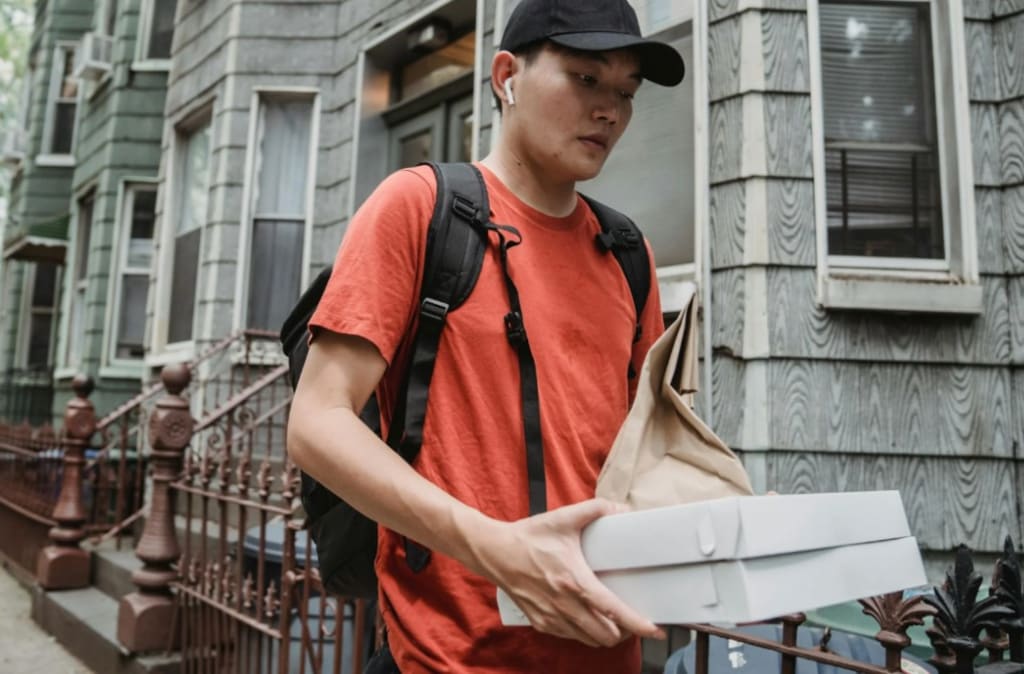
Remember when getting food delivered meant calling the local chippy and hoping they didn’t lose your address? That era is ancient history. We’ve moved from the humble paper menu stuffed through the letterbox to an age where sushi can literally fly through the sky. In the heart of Greenwich, the team at Tokyo Nights is already seeing this shift firsthand. They’ve noted that, "The two cities - Tokyo and London - have long respected and inspired each other, and presenting an authentic experience in London continues that dialogue, whether that’s through the spectacle of sumo or the precision of our Japanese bites." This precision isn't just for the plate; it's the new benchmark for the entire delivery ecosystem.
The delivery landscape in 2026 isn't just a side hustle for restaurants. It’s the main stage. If you aren't thinking about your digital storefront with the same intensity as your interior design, you’re essentially leaving the door locked. The "Future of Food" isn't just about what we eat, but the invisible, high-tech dance that brings it to our sofas.
The Rise of the Algorithmic Kitchen
We’ve officially entered the era of the AI-powered kitchen. No, a robot isn't necessarily tossing your pizza dough (yet), but AI is definitely deciding how many pizzas you should prep for Tuesday night. Predictive analytics have become the secret sauce for successful kitchens.
These systems look at everything: weather patterns, local football scores, and even historical traffic data to tell you exactly when the rush will hit.
This tech helps solve the industry’s oldest headache: waste. By knowing that a rainy Tuesday in February usually results in a 20% spike in ramen orders, restaurants can stock accurately. It’s no longer about "gut feeling." It’s about data-driven decisions that protect those famously thin margins.
Moreover, the "ghost kitchen" has evolved. We used to think of them as windowless shipping containers in industrial estates. Now, they’re sophisticated, multi-brand hubs. A single kitchen might produce high-end burgers, vegan tacos, and artisanal pasta all at once. This flexibility allows restaurateurs to experiment without the soul-crushing overhead of a new lease.
The Logistics Revolution: Drones and Droids
Traffic is the enemy of a good meal. Nobody wants lukewarm fries because a delivery rider got stuck at a roundabout in Elephant and Castle. This is why the sky is the next frontier. Drone delivery is no longer a "Jetsons" fantasy. In 2026, we’re seeing a massive scale-up in aerial logistics. Companies are navigating the regulatory hurdles to allow lightweight drones to bypass the gridlock entirely.
On the ground, autonomous delivery droids - those cute, six-wheeled coolers - are becoming a common sight on London’s pavements. They are perfect for "last-mile" delivery in pedestrianized zones.
They don't take breaks, they don't get lost, and they certainly don't eat your chips on the way. For restaurants, this means more reliable "promise times." If the app says 18 minutes, it actually means 18 minutes.
The Profit Margin Tightrope
Let’s talk about the elephant in the room: the third-party apps. While Deliveroo, Uber Eats, and Just Eat provide the audience, their commission fees can be brutal.This has led to a "Direct-to-Consumer" revolution. Savvy restaurants are building their own apps and loyalty programs to reclaim their customer relationships.
Interestingly, some of the most successful venues aren't just selling a meal; they're selling a brand. Take the approach of Clay's Kitchen in Reading. They realized early on that a local footprint wasn't enough. They stated, "We also want to secure the future of our 'Clay’s At Home' delivery service.
We started doing this to survive the pandemic, but after making so many new friends and customers across the country this way, we don’t want to abandon them now." By pivoting to nationwide delivery, they turned a local restaurant into a national powerhouse. They proved that if your food is good enough, people will wait for it to travel across three counties.
This "at-home" experience is a massive trend. We’re seeing "finish-at-home" kits that offer a middle ground between a takeaway and a home-cooked meal. It gives the customer the theatre of cooking without the stress of sourcing niche ingredients.
Sustainability: The Plastic-Free Mandate
If your delivery arrives in a mountain of non-recyclable plastic in 2026, you’re going to hear about it on social media. "Packaging shame" is a real thing. Customers now expect their containers to be as thoughtfully sourced as the ingredients inside them.
We’ve moved past the soggy cardboard era. New materials like mushroom-based packaging and seaweed-coated wraps are keeping food crispy while remaining 100% compostable. Some forward-thinking boroughs are even trialling "circular" delivery systems. You get your curry in a high-quality glass or metal tiffin, and the rider picks up the empty ones from your previous order. It’s a return to the old-school milkman model, but for Tikka Masala.
Personalization and the "Digital Regular"
In the old days, a "regular" was someone the bartender knew by name. Today, a regular is a data profile. AI-driven personalization means that when a customer opens an app, the menu they see is unique to them. If they’re gluten-free and usually order on Sundays at 7 PM, the app should highlight the Sunday roast options that won’t make them ill.
This level of service creates a "digital warmth" that was previously missing from delivery. Restaurants are using QR codes on their packaging to link to curated Spotify playlists or "behind-the-scenes" videos of the chef. It’s an attempt to bridge the gap between the dining room and the living room.
Hyper-Localism and the Return of the Neighborhood Hub
Despite all the tech, people still crave community. This is where the "Hybrid Model" shines. The most resilient restaurants are those that serve as a vibrant local hangout by day and a high-efficiency delivery hub by night. They aren't choosing between "in-person" and "online" - they're doing both, but with distinct strategies for each.
The neighborhood brasserie isn't dead; it’s just getting smarter. In Tufnell Park, Haylaz Brasserie has become a staple of the local scene by focusing on that exact blend of atmosphere and accessibility. As they put it, "Haylaz Brasserie is a Mediterranean restaurant... offering a bold and flavourful take on small plates and brasserie-style dining... creating a space that’s as welcoming as it is expressive." That expressiveness needs to translate through the app screen just as clearly as it does through the restaurant's front window.
Key Takeaways for Restaurant Owners:
- Own Your Data: Don't just rely on third-party apps. Build your own mailing list or app to keep those margins healthy.
- Invest in "Delivery-First" Packaging: Your food is judged by how it looks after a 15-minute bike ride, not how it looks under the kitchen lights.
- Think Nationally: Could your signature dish be a "finish-at-home" kit for someone 100 miles away?
- Embrace the Droid: Prepare your logistics for a world where drones and robots are doing the heavy lifting.
The future of food delivery isn't just about speed; it's about staying human in a digital world. The technology should be invisible, leaving the customer with nothing but the aroma of a perfectly cooked meal and the feeling that they’ve been looked after, even from a distance.
About the Creator
Shabbir Ahmad
Shabbir Ahmed is a professional blogger, writer, SEO expert & founder of Dive in SEO & CEO of Shifted Magazine.
Keep reading
More stories from Shabbir Ahmad and writers in Feast and other communities.
Starting Fresh: The Idea Behind My Cherry Blog
Every new project begins with an idea, and My Cherry Blog is no different. It was created to be a space where food and lifestyle meet in a simple and approachable way. Many people search online for recipes or lifestyle tips, but often the information they find is either too complicated or not practical for everyday use. The goal of My Cherry Blog is to change that by providing easy recipes, healthy eating tips, and simple lifestyle inspiration in one place.
By Shabbir Ahmad4 months ago in Feast
My Tous les Jours Trip
As someone who lives in a rural area, I don't get the chance to visit fancy restaurants or bakeries that often. So, when a friend told me about a French-Asian bakery that's less than an hour away, I knew I had to check it out and grab some pictures for social media. Tous les Jours ended up providing an immersive experience that went above and beyond my expectations--although I did leave with a few reservations.
By Kaitlin Shanks23 days ago in Feast
No-Recipe-Needed Dessert Tutorials
1. Basque Burnt Cheesecake Cream cheese, a few high-quality farm-fresh eggs, heavy cream, and sugar—just mix them together. Sift the mixture into a mold to remove air bubbles. Bake at 180°C (356°F), both top and bottom heat, for 40-50 minutes. Done! It must be completely chilled before slicing. One bite, and you'll be floating on cloud nine... This is so good! It has an incredibly rich, cheesy aroma and melts instantly in your mouth. The key is that this method is just too simple and unbeatable.
By yue . shui2 days ago in Feast



Comments
There are no comments for this story
Be the first to respond and start the conversation.