
The Chinese Island Where Dreams of Real Estate Glory Never Die
How Ambition, Investment, and Urban Dreams Keep a Chinese Island’s Real Estate Market Alive Against All Odds”

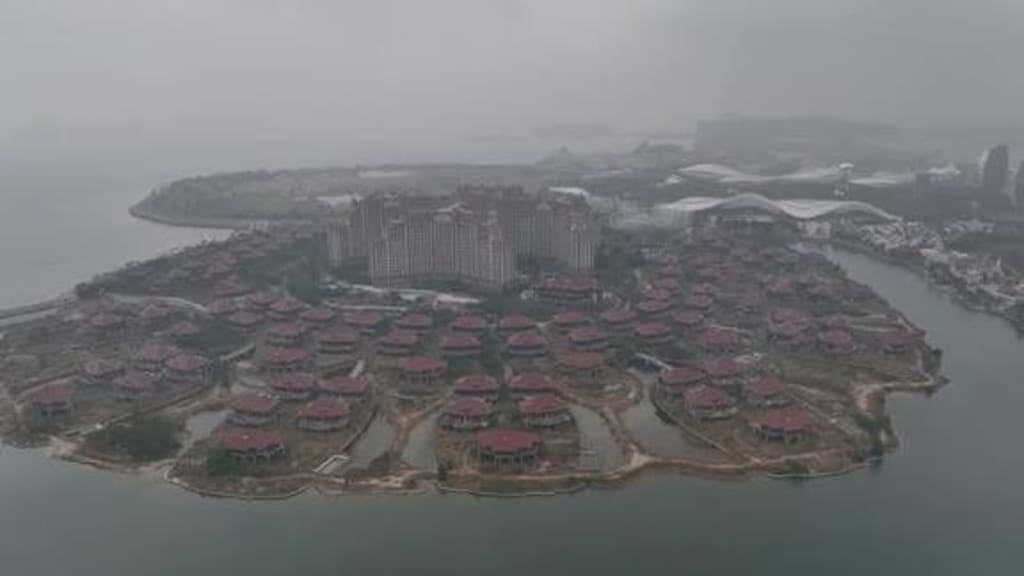
Off the southern coast of China lies an island that has long captured the imagination of investors, developers, and dreamers alike. Hainan, often called “China’s Hawaii,” is a place where blue seas meet ambitious blueprints, and where the promise of real estate glory has repeatedly risen, fallen, and risen again. Despite market downturns, policy crackdowns, and shifting economic winds, the dream of turning Hainan into a global property hotspot simply refuses to die.
Hainan’s real estate story is inseparable from its strategic importance. Designated a special economic zone in 1988, the island was meant to become a laboratory for reform and openness. Early on, real estate became the fastest way to turn policy optimism into profits. Developers rushed in, prices soared, and glossy brochures promised beachfront living, international lifestyles, and endless returns. For a time, Hainan symbolized the future of China’s coastal development.
That first boom ended abruptly in the 1990s when speculation ran far ahead of real demand. Half-built towers and empty resorts dotted the landscape, becoming cautionary symbols of excess. Yet unlike many failed developments elsewhere, Hainan never faded from the national imagination. Its climate, geography, and political backing kept it alive as a “what if” story—what if the island finally fulfilled its potential?
The answer seemed closer in the 2010s. As China’s middle class expanded, domestic tourism surged, and demand for second homes in warm climates grew rapidly. Hainan re-emerged as a magnet for mainland buyers seeking holiday properties, retirement havens, and investment opportunities. Cities like Sanya and Haikou saw prices climb sharply, sometimes outpacing incomes by dramatic margins. Once again, the island was buzzing with talk of easy wealth.
But history repeated itself. In 2018, Beijing stepped in with some of the country’s toughest property controls, explicitly targeting Hainan. Restrictions on home purchases, sales, and financing were introduced to cool speculation. The message was clear: Hainan was not meant to be another runaway housing bubble. Predictably, transaction volumes fell, and many developers struggled.
Yet this time, the story did not end in despair. Instead, Hainan’s real estate dream evolved. Rather than abandoning the island, policymakers reframed its future. In 2020, China announced plans to turn Hainan into a high-level free trade port by 2025, with ambitions extending to 2035. The vision was no longer just about apartments and villas, but about services, trade, technology, healthcare, and tourism.
This shift has kept real estate hopes alive, albeit in a more complex form. While pure speculation is discouraged, long-term development tied to genuine economic activity is encouraged. High-end tourism resorts, international medical centers, research hubs, and duty-free shopping complexes are now central to the island’s growth narrative. Property linked to these sectors—hotels, serviced apartments, commercial spaces—continues to attract interest.
Another factor sustaining Hainan’s allure is demographics. China’s aging population has created strong demand for health-focused living environments. Hainan’s clean air, warm weather, and government-backed medical tourism initiatives make it an appealing destination for retirees and long-stay visitors. Real estate designed for wellness, rather than flipping, fits neatly into official priorities while keeping the dream of property value appreciation alive.
Foreign interest, though limited by China’s regulations, also plays a psychological role. Hainan is often marketed domestically as a future international hub, comparable to Dubai or Singapore in spirit, if not yet in reality. The presence of international brands, global events, and free trade rhetoric reinforces the idea that owning property on the island is a long-term bet on China’s opening rather than a short-term gamble.
Still, risks remain significant. Oversupply in certain areas, high prices relative to local incomes, and uncertainty over how far liberalization will truly go continue to haunt the market. For many investors, Hainan has become a lesson in patience rather than quick profit. The era of overnight riches appears over, replaced by a slower, more regulated path.
What makes Hainan unique is not that its real estate market is always booming, but that belief in its future never fully collapses. Each downturn is followed by a reinvention of the dream—first reform zone, then tourism paradise, now free trade port. The narrative adapts to the times, keeping hope alive even when numbers disappoint.
In the end, the Chinese island where dreams of real estate glory never die is less about concrete and steel, and more about faith in policy, geography, and long-term national ambition. Hainan stands as a reminder that in China, real estate is not just an asset class—it is a story people continue to believe in, even when reality demands patience.
About the Creator
Fiaz Ahmed Brohi
I am a passionate writer with a love for exploring and creating content on trending topics. Always curious, always sharing stories that engage and inspire.
Keep reading
More stories from Fiaz Ahmed Brohi and writers in Feast and other communities.
Dharmendra’s 90th Birthday: Celebrating the Legend Who Defined Indian Cinema
Few stars in Indian cinema have enjoyed the kind of love, respect, and longevity that Dharmendra has earned over more than six decades. As he celebrates his 90th birthday, fans across generations are taking a moment to honor not just an actor, but an emotion—someone whose charm, humility, and warmth built a legacy that remains unmatched in Bollywood.
By Fiaz Ahmed Brohi2 months ago in Feast
My Tous les Jours Trip
As someone who lives in a rural area, I don't get the chance to visit fancy restaurants or bakeries that often. So, when a friend told me about a French-Asian bakery that's less than an hour away, I knew I had to check it out and grab some pictures for social media. Tous les Jours ended up providing an immersive experience that went above and beyond my expectations--although I did leave with a few reservations.
By Kaitlin Shanks25 days ago in Feast




Comments
There are no comments for this story
Be the first to respond and start the conversation.