
Shivaratri: A Night of Devotion to Lord Shiva.
The Spiritual Essence of Shivaratri.


Shivaratri: A Night of Devotion to Lord Shiva
Across the vibrant tapestry of India, where traditions weave seamlessly into everyday life, the festival of Shivaratri stands out as a profound celebration of spirituality and devotion. Dedicated to Lord Shiva, one of the principal deities in Hinduism, Shivaratri—often referred to as Maha Shivaratri when it falls in late winter or early spring—draws millions of devotees into a night of fasting, prayer, and reverence. Observed with fervor in temples, homes, and sacred sites, this festival encapsulates the essence of Shiva’s divine presence as the destroyer of evil, the meditative yogi, and the cosmic force of transformation.
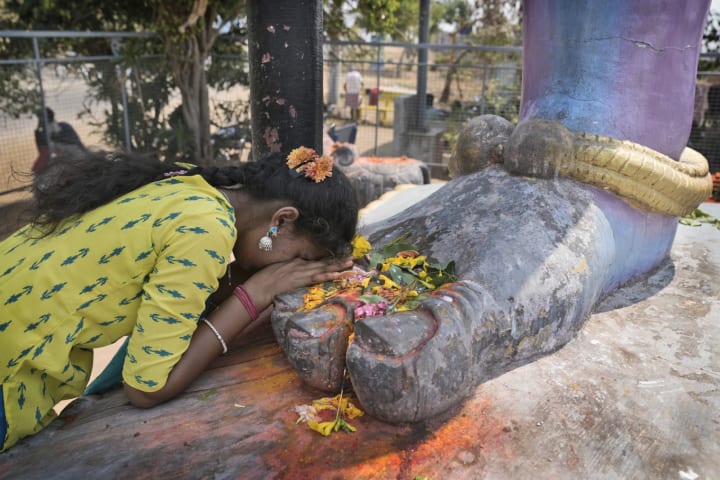
The Significance of Shivaratri
Shivaratri translates to "the great night of Shiva," and its origins are steeped in mythology and spiritual symbolism. According to Hindu lore, this is the night when Shiva performed the Tandava, the cosmic dance of creation, preservation, and destruction. Another popular legend ties the festival to the divine union of Shiva and Parvati, symbolizing the harmony of masculine and feminine energies. For many, it’s also believed to be the night when Shiva consumed the poison that emerged from the churning of the ocean (Samudra Manthan), saving the world and earning the title Neelkanth, or "the blue-throated one."
Beyond mythology, Shivaratri holds deep philosophical meaning. It’s a time for devotees to transcend worldly desires, reflect on life’s impermanence, and seek spiritual awakening—qualities embodied by Shiva, the ascetic who meditates atop Mount Kailash. The festival typically falls on the 13th or 14th day of the waning moon in the Hindu month of Phalguna (February or March), with the exact date shifting annually based on the lunar calendar. In 2025, it aligns with late February, a time when devotees across India prepare for a night of vigil and worship.
A Night of Rituals and Observance
The celebration of Shivaratri is marked by simplicity and discipline, reflecting Shiva’s own austere nature. Devotees begin the day with a ritual bath, symbolizing purification, and often fast from sunrise to the following morning. The fast varies—some abstain from all food and water, while others consume fruits, milk, or light meals. Temples dedicated to Shiva, such as the Kashi Vishwanath in Varanasi or the Somnath Temple in Gujarat, buzz with activity as throngs of worshippers arrive to offer prayers.
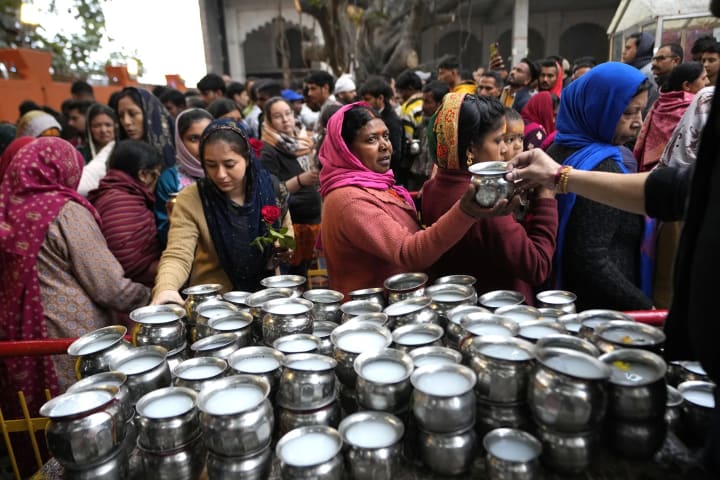
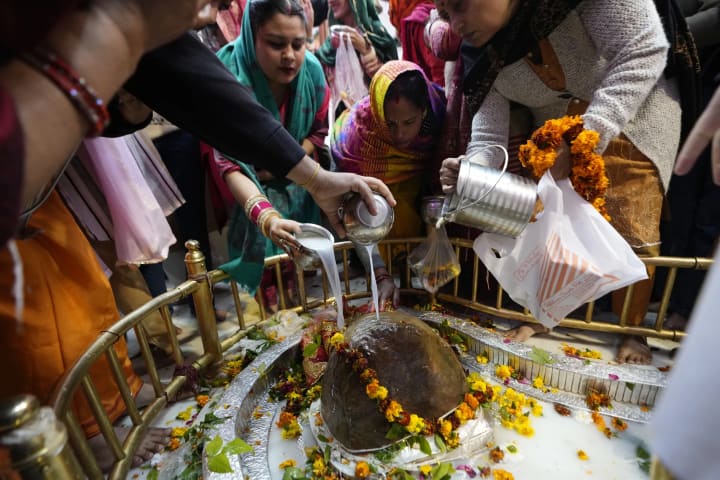
At the heart of the rituals is the worship of the Shiva Lingam, a symbolic representation of the deity’s infinite nature. Devotees pour milk, water, honey, and curd over the Lingam, chanting mantras like "Om Namah Shivaya," which reverberates through the air. Bilva (bael) leaves, considered sacred to Shiva, are offered in abundance, their trifoliate shape symbolizing the three aspects of existence—creation, preservation, and destruction. In many households, a small Lingam or idol is set up, adorned with flowers and sandalwood paste, as families gather for prayers.
The night is spent in jagran, or staying awake, often accompanied by singing devotional songs, reciting the Shiva Purana, or meditating. For many, this sleepless vigil is a way to honor Shiva’s eternal watchfulness and to seek his blessings for strength and liberation. As dawn breaks, the fast is broken, often with simple meals shared among family and friends.
Regional Flavors of Shivaratri
While the core essence of Shivaratri remains consistent, its celebration takes on unique hues across India’s diverse regions. In North India, particularly in Uttar Pradesh and Uttarakhand, pilgrims flock to sacred sites like Haridwar and Rishikesh, bathing in the Ganges before offering prayers at nearby Shiva temples. Processions, devotional music, and dramatic enactments of Shiva’s tales add a festive touch.
In South India, Tamil Nadu’s Annamalaiyar Temple in Tiruvannamalai hosts a grand celebration. Devotees circumambulate the Arunachala Hill, believed to be a manifestation of Shiva himself, under the glow of a massive fire lit atop the hill—a sight that draws spiritual seekers from far and wide. In Karnataka and Andhra Pradesh, temple bells ring incessantly as intricate rituals unfold, often accompanied by classical music and dance performances dedicated to the deity.
Western India, especially Maharashtra and Gujarat, sees a blend of solemnity and celebration. In cities like Pune and Ahmedabad, temples are decorated with lights and flowers, and community feasts follow the night of worship. Meanwhile, in the eastern state of Odisha, the Lingaraj Temple in Bhubaneswar becomes a focal point, with thousands participating in elaborate ceremonies that blend local traditions with Vedic practices.
Shiva’s Universal Appeal
What makes Shivaratri so compelling is its ability to unite people across social and economic divides. Shiva, often depicted with ash-smeared skin and a tiger hide, transcends the opulence of other deities. He is the god of the common folk as much as the elite, revered by ascetics in the Himalayas and householders in bustling cities. This universality is reflected in the festival’s inclusivity—whether in a grand temple or a humble village shrine, every devotee finds a personal connection to the divine.
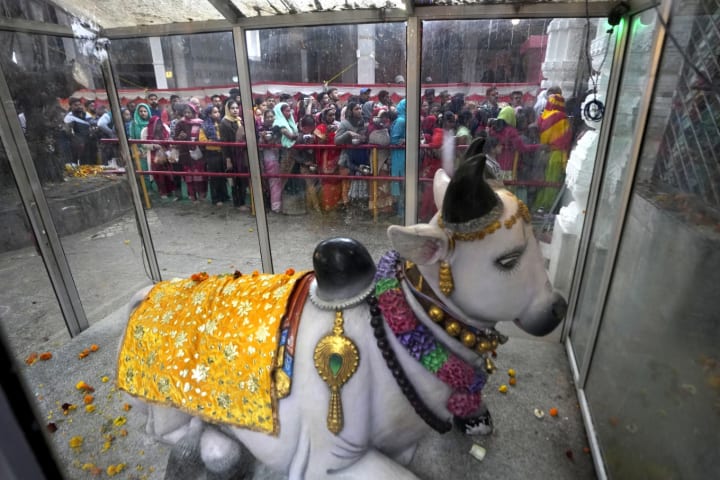
For some, Shivaratri is a time to seek forgiveness and renewal. The act of fasting and staying awake is seen as penance, a way to shed negativity and align with higher consciousness. For others, it’s a celebration of Shiva’s enigmatic persona—both the fierce destroyer and the compassionate protector. This duality resonates deeply in a country where life itself is a blend of contrasts.
Beyond Religion: A Cultural Legacy
Shivaratri’s influence extends beyond the spiritual realm into India’s cultural fabric. Classical dance forms like Bharatanatyam and Odissi often feature performances inspired by Shiva’s Tandava, while poets and musicians have long drawn inspiration from his mystique. Festivals like these also boost local economies, with vendors selling flowers, bilva leaves, and prasad (offered food) outside temples. In rural areas, it’s a time for community bonding, as villagers gather to share stories and celebrate their shared heritage.
In recent years, Shivaratri has gained global attention, with yoga practitioners and spiritual enthusiasts worldwide joining in meditation and chanting sessions. The festival’s emphasis on inner peace and detachment aligns with universal themes, making it a bridge between ancient traditions and modern aspirations.
A Night to Remember
As the moon wanes and the night deepens on Shivaratri, India transforms into a land of devotion and introspection. From the snow-capped peaks of Kashmir to the coastal shores of Tamil Nadu, the air hums with the energy of millions honoring Lord Shiva. It’s a night that reminds us of the eternal cycle of life—birth, death, and rebirth—and the possibility of rising above it all, much like Shiva himself.
For devotees, Shivaratri is more than a festival; it’s a journey inward, a chance to connect with the divine spark within. As the chants of "Har Har Mahadev" echo through the night, they carry a timeless message: in the stillness of devotion, one finds the strength to face the chaos of the world. And so, year after year, this sacred night continues to illuminate hearts across India and beyond.
About the Creator
Ramesh Mahato
Experienced content writer, blog writer, and translator passionate about crafting engaging, SEO-optimized content. I specialize in writing informative articles, blog posts, and accurate translations that captivate readers and drive results
Keep reading
More stories from Ramesh Mahato and writers in Feast and other communities.
The Magic of Milk: A Healthy Drinks for Everyone.
The Magic of Milk: A Healthy Drink for Everyone 🥛🌟 Milk has been a part of our lives for as long as we can remember. From childhood to adulthood, it’s one of the few drinks that remains a constant in our diet. But have you ever stopped to think about why milk is so important? 🤔 Let’s explore the wonders of milk, its health benefits, and why it deserves a special place in your daily routine. 🌈
By Ramesh Mahato about a year ago in Feast
The food business is undergoing a transformation thanks to gene-edited fungus, which is being considered as a beef substitute.
Compared to the strain now in use, a gene-edited fungus has created meat-like protein that grows more quickly and uses a lot less sugar. These improvements bring one of the earliest meat alternatives in the world closer to competing with animals in terms of scale and efficiency.
By Francis Dami4 days ago in Feast
The Politics of Playing Dress-Up
Well, to start off I'd like to say a happy world book day to all who celebrate. I know I haven't really posted anything on my socials about it but I'm not a jubilant kind of person. I lay low most of the time. Let's start off with a popular anecdote from the vaults...
By Annie Kapur7 days ago in Geeks


Comments
There are no comments for this story
Be the first to respond and start the conversation.