
Paper Packaging Market Trends & Summary
How Sustainability, E-Commerce, and Innovation Are Reshaping the Future of Global Packaging


Introduction: Paper Packaging Enters a New Era of Global Demand
The global paper packaging market is undergoing an extraordinary transformation driven by rising sustainability consciousness, technological advancements, and the unstoppable expansion of e-commerce. According to Renub Research, the market is projected to be worth USD 383.95 billion in 2024, expanding at a CAGR of 4.42% between 2025 and 2033, ultimately reaching USD 566.67 billion by 2033. As businesses and consumers continue to shift toward biodegradable, recyclable, and renewable packaging materials, paper-based solutions are becoming the cornerstone of modern packaging strategies.
From corrugated boxes fueling the logistics boom to aesthetically refined folding cartons dominating retail shelves, paper packaging is evolving far beyond its traditional role. Its relevance is expanding across sectors—including food and beverage, e-commerce, home care, personal care, pharmaceuticals, and industrial applications—making it one of the most dynamic and future-ready segments of the global packaging industry.
Paper Packaging Market Outlook
Paper packaging encompasses a diverse range of products made from kraft paper, cardboard, paperboard, and corrugated sheets. Known for their durability, versatility, and recyclability, these materials offer an eco-friendly alternative to plastic packaging, supporting global sustainability goals.
Its appeal lies in its biodegradable nature, capacity for branding and customization, and ability to maintain product safety and integrity. In industries like food and beverage, paper packaging ensures freshness and safe handling, while in e-commerce, it offers strong, lightweight protection suitable for high-frequency shipments. Personal care and cosmetic brands increasingly prefer paper packaging for its premium appearance and lower environmental impact.
As concerns around plastic waste intensify, paper packaging stands out as one of the most scalable, economically viable, and consumer-preferred solutions for a greener future.
Key Paper Packaging Statistics: A Global Snapshot
Recent industry data and major corporate developments illustrate the strong momentum across the packaging value chain:
US production leadership: The U.S. Census Bureau estimates that in 2024, pulp mills produced $6.11 billion, paperboard mills $34.02 billion, and paper mills $39.55 billion, reflecting robust domestic manufacturing.
E-commerce boom: U.S. retail e-commerce sales reached USD 291.6 billion in Q2 2024, directly contributing to soaring demand for corrugated boxes and shipping materials.
Healthcare packaging demand: Canada spent CAD 41.1 billion (USD 30.27 billion) on prescription drugs in 2023—an industry heavily reliant on safe, regulatory-compliant packaging.
Major acquisitions and investments:
ProAmpac acquired UP Paper in March 2024 to expand sustainable kraft paper production.
Suzano purchased U.S. industrial assets worth USD 110 million to strengthen its North American footprint.
Mondi Group entered the Canadian market by acquiring the Hinton Pulp Mill, investing USD 432 million.
Graphic Packaging divested its Augusta plant to Clearwater Paper in a USD 700 million strategic move.
Sustainability milestones:
SIG launched its first aseptic carton packs in Ahmedabad.
Stora Enso and Tetra Pak opened a €29 million recycling line in Poland to triple carton recycling capacity.
European growth: Germany's paper packaging market generated €14.4 billion (USD 15.70 billion) in 2023.
Industry consolidation: Smurfit Kappa and WestRock merged to create Smurfit WestRock, a global packaging powerhouse with over 500 sites.
India’s rising demand: The Indian Paper Manufacturers Association reported 8.2% growth in paper packaging in 2023–24, reflecting a booming domestic market.
These statistics collectively underscore how sustainability pressures, e-commerce expansion, and strategic investments are accelerating the global shift toward paper-based solutions.
Market Growth Drivers
1. Surge in Demand for Sustainable Packaging
The global shift toward eco-conscious living is the single biggest driver of the paper packaging industry. As governments impose bans on single-use plastics, companies are rapidly transitioning to recyclable, biodegradable paper alternatives.
Recent examples reinforce this trend:
Marigold Health Foods (Sept 2024) partnered with Sonoco to introduce fully recyclable packaging for plant-based food items.
Premium brands, like Louis Vuitton, even explored paper-based luxury packaging, demonstrating rising acceptance across all consumer segments.
Sustainability is no longer optional—it’s a competitive advantage.
2. Explosive Growth of the E-Commerce Industry
E-commerce continues to be a major catalyst for the paper packaging market. With billions of parcels shipped each year, corrugated boxes, folding cartons, and protective mailers have become essential.
A notable development:
Mondi (Sept 2024) launched its recyclable paper-based Protective Mailers with Amazon, eliminating the need for plastic bubble wrap.
This shift reflects digital commerce’s strong influence on environmentally responsible shipping solutions.
3. Technological Innovations in Paper Packaging
Modern paper packaging is no longer limited to simple cardboard constructs. Today’s innovations include:
Moisture-resistant coatings
Advanced printing techniques
Food-safe and pharmaceutical-grade materials
Origami-like structural designs, such as the one developed by VTT and Aalto University (Dec 2024)
Such advancements improve durability, enhance aesthetics, and open doors to new applications across high-value sectors.
Market Challenges
1. High Production and Raw Material Costs
Wood pulp price volatility, high energy usage, and water-intensive production processes continue to challenge manufacturers. Additionally, investments in modern machinery and sustainability-driven innovations increase operational expenses, posing difficulties for small and medium enterprises.
2. Competition from Emerging Alternative Materials
Paper packaging faces competition from:
Biodegradable plastics
Metal packaging
Glass
Reusable containers
While paper is eco-friendly, some alternatives offer superior barrier properties or durability, limiting paper’s adoption in certain heavy-duty industries.
Segment Analysis
Corrugated Boxes
A cornerstone of the global shipping and logistics industry, corrugated boxes remain the most dominant segment. Their recyclability, lightweight structure, and strength make them indispensable for e-commerce and retail.
Technological improvements—such as water-resistant surfaces and advanced customization—are pushing them deeper into food, beverage, and apparel industries.
Folding Boxes and Cases
Popular in cosmetics, pharmaceuticals, and retail, folding cartons offer unmatched branding opportunities. High-quality printing, structural flexibility, and sustainability make them ideal for premium product packaging.
Demand is rising rapidly due to:
Growth of direct-to-consumer brands
Increased use of moisture-resistant coatings
Expanding food and beverage applications
Food & Beverage Paper Packaging
Eco-conscious consumers are driving massive adoption of paper cups, wraps, trays, and cartons. The surge in ready-to-eat foods, café culture, and takeaway services further accelerates demand.
Innovations include:
Grease-resistant paper
Compostable food containers
Multi-layer barrier paper solutions
Home Care Paper Packaging
Home care brands are embracing paper packaging for detergents, cleaners, and personal products. Advances in print quality and moisture-resistant papers are making this niche one of the fastest-growing markets.
Country-Level Outlook
United States
The U.S. is one of the world’s most mature paper packaging markets, driven by:
Expanding e-commerce
High consumption of packaged foods
Sustainability-driven corporate initiatives
American Packaging Corporation (Dec 2024) expanded its recycle-ready offerings, reflecting industry-wide efforts to reduce plastic dependency.
Germany
A European leader in sustainability, Germany’s strict environmental standards and robust recycling infrastructure make it an ideal market for paper packaging.
A notable milestone:
Germany's first 100% paper-packaged chocolate bar launched in July 2024, signaling a new direction for food brands.
India
India is one of the fastest-growing paper packaging markets globally. Key drivers include:
E-commerce boom
Plastic bans
Rising disposable income
Expanding food, pharma, and retail sectors
India’s paper consumption is projected to reach 30 million tons by FY 2026–27, accelerated by organized retail and literacy growth.
UAE
The UAE’s rapid market growth is anchored in:
Strong sustainability commitments
Expansion of e-commerce logistics hubs
Regulatory support for plastic reduction
Demand for corrugated boxes, paper bags, and eco-friendly cartons is rising sharply across consumer and commercial sectors.
Market Segmentation Overview
By Product Type
Corrugated Boxes
Folding Boxes and Cases
Liquid Paperboard Cartons
Paper Bags and Sacks
Others
By End Use
Food & Beverage
E-Commerce
Electrical & Electronic
Home Care
Personal Care & Cosmetic
Automotive & Industrial
Healthcare
Others
By Country
Coverage across 25 major markets, including the U.S., Canada, Germany, France, China, India, Japan, Australia, Brazil, UAE, Saudi Arabia, South Africa, and others.
Key Companies Covered
Amcor
DS Smith PLC
Pactiv Evergreen Inc.
WestRock Company
Mondi Group Plc
Smurfit Kappa
Mayr-Melnhof Karton AG
Billerud
Stora Enso Oyj
Rengo Co. Ltd.
These companies are actively innovating through acquisition strategies, product launches, material advancements, and sustainability initiatives.
Final Thoughts
The global paper packaging market is entering a high-growth, innovation-led, and sustainability-driven era. With increasing global pressure to reduce plastic waste, governments tightening environmental regulations, and consumers demanding greener alternatives, paper packaging is set to dominate future packaging landscapes.
Renub Research’s projection of a rise from USD 383.95 billion in 2024 to USD 566.67 billion by 2033 highlights a sector on the verge of unprecedented expansion. Emerging technologies, large-scale investments, and surging e-commerce will only accelerate this momentum.
About the Creator
Marthan Sir
Educator with 30+ years of teaching experience | Passionate about sharing knowledge, life lessons & insights | Writing to inspire, inform, and empower readers.
Keep reading
More stories from Marthan Sir and writers in Feast and other communities.
Tuna Fish Market Trends & Summary: Rising Global Demand, Sustainability Battles, and the Future of Protein Consumption
The global tuna fish market continues to attract widespread attention as consumer diets shift toward protein-rich foods and seafood consumption rises. According to Renub Research, the tuna fish market—valued at US$ 42.18 billion in 2024—is projected to reach US$ 55.47 billion by 2033, growing at a CAGR of 3.09% from 2025 to 2033. This strong yet steady expansion reflects a blend of changing consumer preferences, innovation in food processing, sustainability efforts, and expansions in global supply chains.
By Marthan Sirabout a month ago in Feast
My Tous les Jours Trip
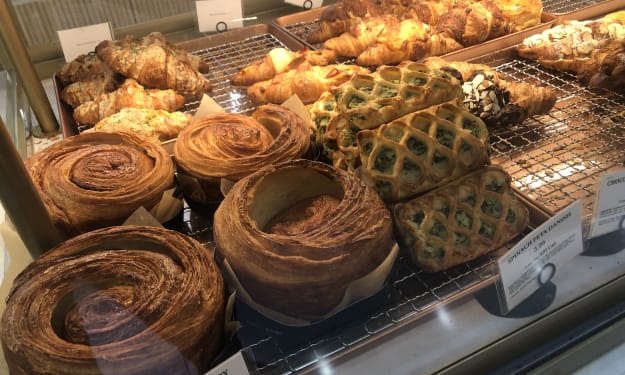
As someone who lives in a rural area, I don't get the chance to visit fancy restaurants or bakeries that often. So, when a friend told me about a French-Asian bakery that's less than an hour away, I knew I had to check it out and grab some pictures for social media. Tous les Jours ended up providing an immersive experience that went above and beyond my expectations--although I did leave with a few reservations.
By Kaitlin Shanks17 days ago in Feast
Organic Baby Food Market Companies Analysis (2025–2033)
Introduction: A New Standard for Infant Nutrition The global Organic Baby Food Market is undergoing a transformative shift as modern parents increasingly demand clean, transparent, and sustainable nutrition for their children. Organic baby food—made without synthetic fertilizers, artificial preservatives, genetically modified organisms (GMOs), or chemical pesticides—has moved from a niche category to a mainstream necessity. Rising awareness of food safety, health outcomes, and environmental sustainability is reshaping consumer behavior worldwide.
By Aaina Oberoiabout 22 hours ago in Feast



Comments
There are no comments for this story
Be the first to respond and start the conversation.