
Food and Beverage Shortage Because of Coronavirus
Here are just some of the foods and beverages that are missing from grocery shelves.

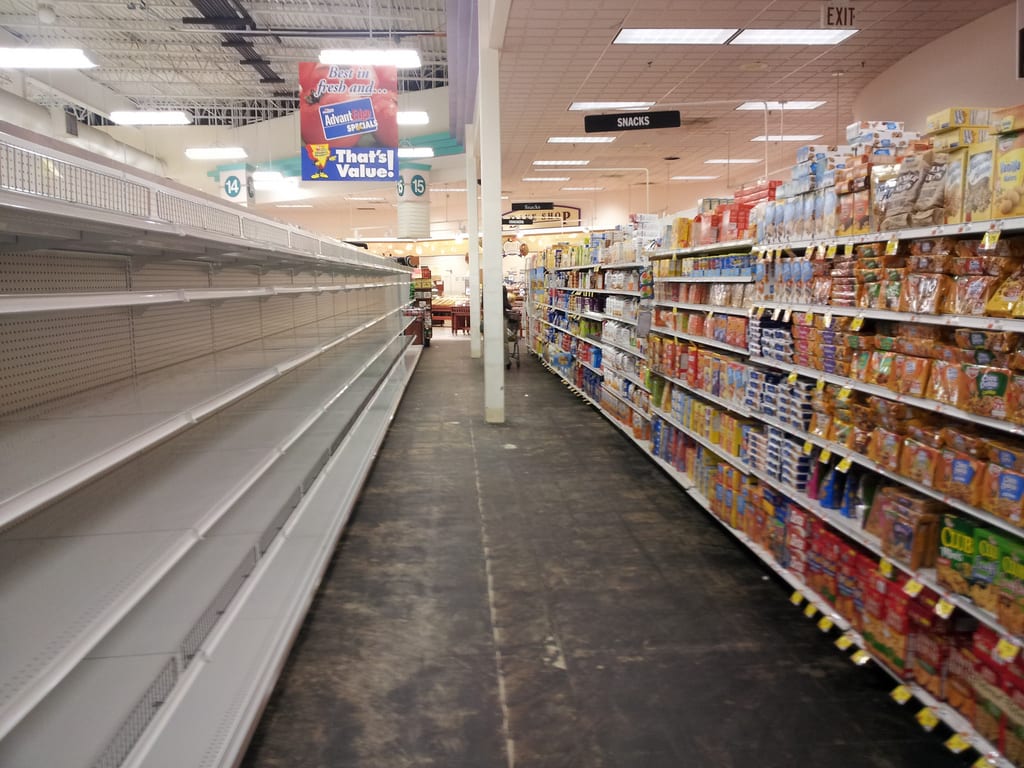
Everybody might remember how certain items were disappearing from store shelves when the coronavirus pandemic first started throughout the world in 2020. Consumers stocked up on toilet paper, paper towels, disinfectant wipes, household bleach, hand sanitizer, and face masks. Those products were completely missing from store shelves during that time. There were also times when certain meats and other products were limited to customers. They could buy only one or two of the same item. The coronavirus pandemic is still going on, but many of those items are plentiful now. However, other products are in high demand and are beginning to be hard to find.
Food shortages are not always because the grocery store is not getting enough to stock shelves. It is because consumers are now buying extra and stockpiling them.
Look through the list below and see the items that are beginning to be in short supply.
Grape-Nuts Cereal
It is hard to believe that a certain brand of cereal is leaving store shelves empty. Consumers are discovering that Grape-Nuts cereal is hard to find and people are wondering why especially when other cereals are still plentiful.
In late January, Kristin DeRock, Grape-Nuts brand manager at Post Consumer Brands, told USA Today that it has become very difficult for the wheat-and-barley breakfast staple to produce as fast as consumers want to purchase it. At that time, she said it would be a long time before the cereal would be plentiful again. DeRock announced some good news to Grape-Nuts fans on February 11, 2021. She said the cereal will be shipped in full capacity by mid-March and will be back on grocery store shelves in the spring.
Beef and Poultry
Some of the largest meat processing plants have suffered a great deal during the pandemic. They have been forced to either close temporarily or scale back production significantly. Some plants have reopened, but they are still being forced to limit their production. A much smaller number of employees can work at a time. Even then, they have to practice social distancing, and their workspace has been redesigned with glass dividers. With those changes, facilities haven't been able to process meat as quickly as they have been accustomed to doing in the past.
Spam

Spam was available when the pandemic first started. Then more people cooking at home. According to Bloomberg, sales of Spam increased more than 70 percent, and the canned meat is now flying off the shelves.
Top officials at Hormel, manufacturer of Spam, said the company has been forced to reduce the number of employees working at one time. That reason alone reduces the amount of Spam that can be made. As long as COVID-19 is still a factor, production will continue to be limited. It is good to pick up a can of Spam whenever you see it on the shelf in the grocery store.
Snack Foods
Whether your snack choices are cookies or chips, certain varieties of favorite brands won't be on the shelves in 2021. Snack companies are focusing only on their best-selling products. For instance, Mondelez International, maker of Oreos, announced it would be producing more original Oreos cookies instead of some of its unique flavors. Pepperidge Farm did the same thing and limited the production of its Geneva cookies.
Those who favor salty snacks should know that many potato chip flavors have either been put on hold or have been discontinued. Therefore, you won't be able to find Lay's Lightly Salted Potato Chips, Tostitos Baked Scoops, Lay's Classic Multi-Pack, Tostitos Black Bean & Garlic, and Fritos Scoops Spicy Jalapeno.
Yeast
You can't bake bread and some other pastry without yeast. For that reason, there has been a 258.5 percent sales increase on the product. Yeast is taking longer to be plentiful because the ingredient is a living product that needs time for its cells to continue to double.
Flour
Like yeast, flour has been short on supply during the pandemic. People are using flour more than ever because they are baking more at home. Regular flour is easier to find than specialty flours like whole wheat, organic, and gluten-free.
Canned Soup and Canned Corn
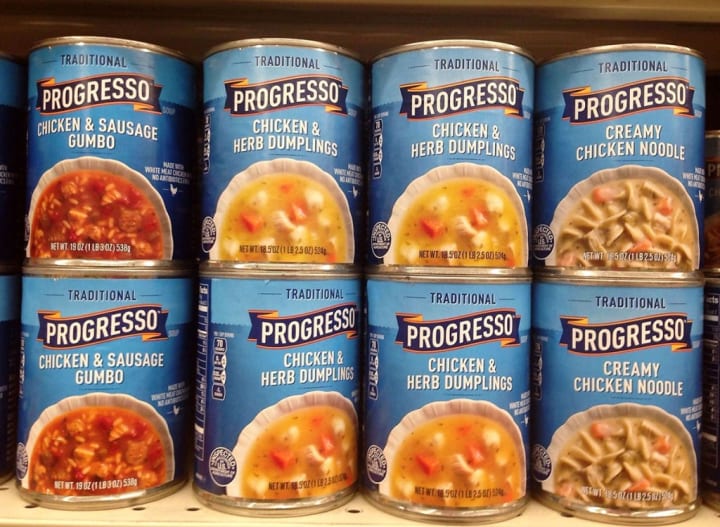
Canned soup was a popular item since the beginning of the pandemic. Soup producers are still trying to catch up. Major soup companies are working hard to keep up with the demand. You might find some canned soups in the grocery store, but they might not be your favorites.
Canned corn was hit harder than other canned vegetables. That's because sweet corn is harvested only once a year. At the beginning of the pandemic, canned corn sales went up 47.6 percent.
Farmers had already harvested their corn when the pandemic started. They could not go back and grow more to meet the demand. Even if they could, they would still have had a problem getting it to the stores because there were fewer trucks transporting food.
If the pandemic doesn't end soon and consumers continue to stockpile nonperishable food, canned corn may be one of the most difficult vegetables to find on grocery shelves.
Cans of Beer and Cans of Soft Drinks
There will be no shortage of beer because breweries are in good shape. There will be no shortage of soft drinks. So, why will there be a shortage of these beverages in the stores? Actually, the shortage is not on the beverages. The shortage is on the aluminum cans that contain the beverages.
Bars and restaurants have been closed for a large portion of the year. The beer that would have been delivered in kegs has been put in cans and sold that way. That has created a demand for aluminum cans. Consumers can still purchase beer and sodas in bottles, but either those beverages will be hard to find in cans or the price will be higher.
Another reason cans of soda will be in short supply is because there is a shortage of carbon dioxide. Carbon dioxide is what gives can soda that bubbly, fizzy characteristic. Carbon dioxide comes from ethanol that makes engine fuel. Ethanol producers aren't selling carbon dioxide like they used to because people across the country aren't driving as much. Ethanol plants cut production because of the decreased need for fuel. What a sciencelesson!
Final Words
This is not a complete list of foods and beverages that are in short supply. The list changes day by day. Therefore, these are just some of the items that will continue to be missing or show signs of being missing from grocery shelves in the future. If you are discovering that some of your favorites foods and beverages are hard to find, know that it is because many consumers are cooking and eating more at home. Also, manufacturers have limited what they once produced.
Now is a good time to experiment with new foods and become creative to cook and eat differently than you have done in the past.
About the Creator
Margaret Minnicks
Margaret Minnicks has a bachelor's degree in English. She is an ordained minister with two master's degrees in theology and Christian education. She has been an online writer for over 15 years. Thanks for reading and sending TIPS her way.
Keep reading
More stories from Margaret Minnicks and writers in Feast and other communities.
Do You Know You Can Season Foods With Liquid Smoke?
You do not have to wait until summer to eat food flavored with smoke. You can enjoy the taste all year long. You can purchase liquid smoke in a bottle. The good news is that is so inexpensive that you can get it in all of the different flavors: hickory, mesquite, chipotle flavor and jalapeño flavor as shown above. There are also applewood and pecan varieties.
By Margaret Minnicks5 years ago in Feast
Hundreds of Thousands of NHS Staff in England Attacked and Harassed, Survey Shows
A major workforce survey has revealed that hundreds of thousands of employees working in England’s National Health Service have faced violence, harassment and abuse while carrying out their duties. The findings have sparked renewed concern among health leaders and unions, who warn that hostility toward healthcare workers is reaching unacceptable levels. The data comes from the latest NHS Staff Survey, one of the largest workplace surveys in the United Kingdom. More than 760,000 NHS employees took part, providing a detailed picture of working conditions across hospitals, clinics and ambulance services. The results highlight a troubling pattern of aggression directed at staff from patients, visitors and, in some cases, colleagues. According to the survey, around one in seven NHS employees reported experiencing physical violence from patients or members of the public during the previous year. This represents roughly 14 percent of staff—equivalent to more than 200,000 workers across the healthcare system. Even more widespread was verbal harassment and bullying. Over a quarter of respondents said they had experienced harassment, abuse or bullying in the workplace within the last 12 months. Experts say this includes a range of incidents, from aggressive threats and verbal insults to racist abuse and intimidation. Healthcare unions have described the situation as deeply worrying, arguing that violence against medical staff is becoming increasingly normalized in some settings. Nurses, ambulance crews and emergency department staff are often the most exposed because they deal directly with patients during stressful situations such as medical emergencies or long waiting times. In particular, ambulance workers reported some of the highest levels of violence in the survey. In certain services, nearly a third of staff said they had faced at least one incident of aggression from patients or the public. Experts note that frontline responders frequently encounter unpredictable situations involving intoxication, mental health crises or highly distressed individuals. Healthcare leaders say the consequences of this violence go far beyond physical injury. Many staff report psychological stress, anxiety and burnout after repeated exposure to abuse. Some workers take sick leave following violent incidents, while others consider leaving the profession entirely. In response to the survey findings, NHS leaders stressed that abuse toward healthcare workers is unacceptable. Officials emphasized that staff should be able to perform their duties without fear of violence or harassment. “NHS staff work tirelessly to care for patients and deserve to feel safe and respected at work,” said one senior health official responding to the survey results. Healthcare organizations have increasingly called for stronger protections, including better security in hospitals and clearer reporting systems for incidents of abuse. The issue of violence against healthcare workers has grown more visible in recent years. Data from hospitals and trusts across England shows that incidents of aggression have risen since the COVID-19 pandemic, partly driven by strained healthcare services, staff shortages and long patient waiting times. At the same time, experts say many incidents likely go unreported. Some staff fear that reporting abuse will not lead to meaningful action, while others believe such behavior has become an unfortunate but expected part of the job. Unions and professional groups are now urging the government to take stronger action. They have called for tougher penalties for individuals who assault healthcare workers, as well as increased funding for workplace safety measures. Campaigners also emphasize the need for cultural change. Many healthcare leaders argue that public awareness is crucial, reminding patients and visitors that doctors, nurses and paramedics are there to help. Despite the troubling statistics, NHS officials say steps are being taken to improve staff safety. Initiatives include violence-prevention standards, staff training on managing aggressive situations and improved cooperation with police in serious cases. However, unions warn that unless the root causes—such as staff shortages and overloaded emergency departments—are addressed, the pressure on frontline workers will continue. For the hundreds of thousands of NHS employees who dedicate their careers to saving lives, the message from health leaders is clear: caring for patients should never come with the risk of being attacked or abused on the job.
By Fiaz Ahmed 2 days ago in Feast
Foods Seniors
As we age, maintaining a balanced diet becomes increasingly important for overall health and vitality. Alkaline foods help regulate the body's pH levels, reduce inflammation, and support bone health—all crucial concerns for older adults. These ten recipes transform simple, nutrient-dense ingredients into delicious meals that are gentle on digestion and big on flavor. Best of all, they're incredibly easy to prepare.
By yue . shui2 days ago in Feast




Comments
There are no comments for this story
Be the first to respond and start the conversation.