
Eid-ul-Azha in Bangladesh: The Spirit of Sacrifice and Togetherness
Uniting Hearts Through Devotion, Sharing, and Festive Traditions

Introduction
Eid-ul-Azha, or the Festival of Sacrifice, is one of the two major Islamic festivals observed by Muslims across the globe. It gains an added cultural as well as religious importance in Bangladesh, uniting people from all walks of life in one single act of piety, devotion, and charity. The festival falls on the 10th of the Islamic calendar’s month of Zilhajj. It’s not just the festival of Prophet Ibrahim’s (A.S) willingness to sacrifice his son at Allah’s command, but also a grand reminder of such virtues as submission, humility, and mercy.
Eid-ul-Azha in Bangladesh is not only a religious obligation but also an emotionally and socially heightened event that reunites people socially, purifies them spiritually, and provides charity. Religious importance, cultural practices, preparation, and altered patterns of Eid-ul-Azha in Bangladeshi society will be discoursed in this article.
Religious Significance and Historic Origins
Eid-ul-Azha has its origin in the Islamic history of Prophet Ibrahim (A.S), who was commanded through a vision by God that he sacrifice his most beloved son Ismail (A.S). Ibrahim (A.S) in an example of unshakable faith and compliance went ahead with the will of God. Meanwhile, God replaced Ismail (A.S) with a ram and let the child live, which was an example of the acceptance of Ibrahim's unflinching faith. Thus, Muslims of the whole world celebrate the act of such strong belief by giving qurbani, or sacrifice, of an animal such as a cow, goat, or sheep.
For Bangladeshi Muslims, however, such a story is not metaphorical but very inspirational. Self-sacrifice, belief in Allah, and service for society by sharing the meat with family, relatives, and poor people are symbolized by the ritual of qurbani.
Spiritual and Social Significance of Qurbani
"Qurbani" comes from the Arabic word for "Qurban," which is a sacrifice made in order to get closer to Allah. While the action involved in this instance is sacrificing an animal, its spiritual depth lies much deeper. It becomes a lesson for Muslims for giving up attachment and ego and setting religion and the sense of duty towards others first. Qurbani in Bangladesh becomes a time when families gather together to perform the sacrifice and distribute the meat among relatives, friends, and the poor.
What makes Bangladeshi qurbani unique is the communal way in which it happens. Communities arrange group offerings, and richer members of society sponsor those families that are not in a position to buy an animal on their own. It serves as a social leveler—crossing economic gaps, enhancing community relationships, and upholding the Islamic concept of fraternity.
Preparations: The Time of Zeal and Anticipation
Eid-ul-Azha preparations begin weeks ahead. Perhaps the most conspicuous part of the celebrations in Bangladesh are the temporary "haats," or markets, that erupt in towns and cities across the country. The markets are filled with a colorful, and occasionally raucous, assortment of livestock—cows, buffaloes, goats, and camels—driven into the cities by farmers and traders.
Families exercise a great deal of care while selecting the sacrifice animal. It is something that makes one proud on grounds of religion and social prestige. Children also accompany their parents, excitedly pointing out animals and participating in spirited debates over size, beauty, and strength. Bargaining is an art at these haats, and the buying of the sacrifice animal is a cherished family custom.
In addition to buying the animal, families will also make preparations by cleaning their homes, buying new attire, and buying spices and ingredients for the celebratory dinner that will be served after the sacrifice.Tailors have a last-minute rush of work, and shopping malls and bazaars are crowded late into the night before the Eid.
The Morning of Eid: Celebrating the Spirit of Faith
Early on the morning of Eid-ul-Azha, Muslims everywhere wake up early, bathe (ghusl), dress up in their finest—an ensemble of traditional panjabi and pajama for men, and salwar kameez for women—and go towards the local Eidgah or mosque for the congregational prayer. Thousands attend the congregations, which are held in open grounds or big prayer halls and followed by a brief khutbah (sermon) that speaks of sacrifice, sympathy, and solidarity.
The families return home after prayer in order to perform the qurbani. The ritual is performed with utmost respect and care, with the animal treated with dignity and Islamic teachings followed carefully. The sacrifice traditionally performed by the head of the family has others, such as children, watching over them, and they themselves remind themselves of the religious significance.
Distribution of Meat: Charitable Deed
Perhaps the most vital thing about Eid-ul-Azha, however, isn't the worship, but sharing. The qurbani meat is divided into three equal portions: one-third for members of the family, one-third for friends and relatives, and one-third for the poor. Not only does doing so make the festival within everyone's reach, regardless of their economic conditions, but also instills in them a spirit of sharing and social-mindedness.
People go out of their way in rural and urban Bangladesh to contact poor families. It is distributed through local civil society groups, madrassas, and mosques, so that no one remains uncovered. Many families have begun using online platforms for donating meat to charity groups that carry out mass distribution drives in slums, orphanages, and affected areas over the past few years.
Festive food and food traditions
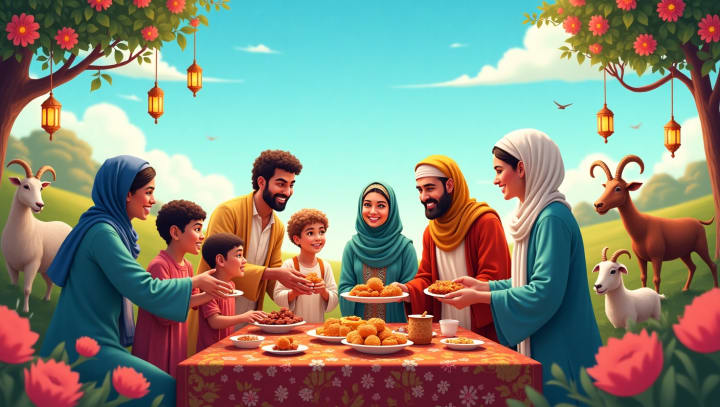
Eid-ul-Azha is a culinary festival like no other. Freshly cooked beef and mutton preparations fill the atmosphere on the streets of each locality, creating a festive and celebratory environment. Chefs cook beef tehari, rezala, korma, shami kebab, and mutton curry on a grand scale. All households possess secret family recipes that have been passed down through generations.
Guests are welcomed with sweet dishes like semai (vermicelli), payesh (rice pudding), and firni, followed by lavish meals of a multitude of meat dishes. Receiving and making visits of relatives and friends is a significant part of the festive event, and no guest is permitted to leave without being entertained with a lavish meal.
Challenge and Innovation
While the festival of Eid-ul-Azha holds great importance, there are certain disadvantages as well, particularly in city corporations. Animal carcasses and their disposal during qurbani have become a major source of environmental and public health hazard for cities like Dhaka and Chattogram. While city corporations do their part in cleaning the cities, public ignorance and improper waste disposal choke the drains and provide unhygienic conditions for the neighborhoods.
In reaction, city authorities have launched campaigns requesting that people perform their qurbani on designated sites and dispose of rubbish in biodegradable bags. There have also become popular online qurbani sites where one could book animals and get them delivered on their doorstep or straight into the hands of the poor and reduce traffic and keep the city clean.
Rural festivals and cultural features
Rural Bangladesh celebrations of Eid-ul-Azha have no match anywhere else in their communal intensity. The religiosity and celebratory atmosphere pervade villages. Shared meals after sacrifice in public places where families get together with food and have a meal are such celebratory gatherings. There are also traditional singing, narration of stories, and country games like kabaddi and danguli that impart a unique character to the day.
Rural simplicity and hospitality ofeid celebrations frequently stand out by comparison with more formal and structured celebrations in cities, but they radiate the same underlying spirit of joy and closeness.
Eid in Diaspora and the Digital Age For Bangladeshi transnational migrants, Eid-ul-Azha becomes a symbol of bonding with their homeland. Despite their physical distance from relatives and familiar environments, they continue with the ritual of qurbani and celebrate with host country Muslim communities. Most of them also send remittances so that their family members participate in sharing the ritual and celebrations with them. And today, with this modern age of technology, the influence of technology on the celebrations of Eid is stronger than ever before. From ordering animals online to posting eid wishes on social media, technology has pervaded each and every aspect of the celebration. Despite these technological advancements, the essence of Eid—sacrifice, solidarity, and devotion—remains unchanged. Conclusion Eid-ul-Azha is not merely a festival but a very spiritual as well as socially meaningful function that symbolizes the core values of Islam. The festival in Bangladesh is marked by spiritual piety, charitable sharing, and communal spirit. All the proceedings of Eid-ul-Azha, from morning prayers until the last repast with the neighbours, are full of meaning and joy. With the country modernizing, so does the way that its people approach and celebrate the holy day. Yet the ageless lessons of sacrifice, generosity, and humility remain. Eid-ul-Azha in Bangladesh is a testament to the strength of religion to unite people, build community, and encourage deeds with lasting results that go beyond the holiday season.
About the Creator
Keep reading
More stories from writers in Feast and other communities.
My Tous les Jours Trip
As someone who lives in a rural area, I don't get the chance to visit fancy restaurants or bakeries that often. So, when a friend told me about a French-Asian bakery that's less than an hour away, I knew I had to check it out and grab some pictures for social media. Tous les Jours ended up providing an immersive experience that went above and beyond my expectations--although I did leave with a few reservations.
By Kaitlin Shanks24 days ago in Feast
No-Recipe-Needed Dessert Tutorials
1. Basque Burnt Cheesecake Cream cheese, a few high-quality farm-fresh eggs, heavy cream, and sugar—just mix them together. Sift the mixture into a mold to remove air bubbles. Bake at 180°C (356°F), both top and bottom heat, for 40-50 minutes. Done! It must be completely chilled before slicing. One bite, and you'll be floating on cloud nine... This is so good! It has an incredibly rich, cheesy aroma and melts instantly in your mouth. The key is that this method is just too simple and unbeatable.
By yue . shui4 days ago in Feast
Rachel Reviews: The Spiral Archive by Pieter Hendrik
It's difficult for me to know where to start with a review of this book as it was, for me, an entirely unique experience and one that I'll probably never have again. I don't want that to be interpreted as unenjoyable but it has left me scratching my head a little and ruminating on its content, its themes and its characters.
By Rachel Deeming2 days ago in BookClub




Comments
There are no comments for this story
Be the first to respond and start the conversation.