
Casting Spells
The Magic of Judaism and its Food


Cooking is a kind of slow moving, deep seated magic. I have always thought of it this way...it is passed down through generations, taught with kind eyes over a bubbling stew pot and whispered in secret, absolute trust over the sizzling of onions and garlic in olive oil. Whenever I think of home, it is the food that comes to mind first. The food and the people that make it, the kitchen and all it stands for. I think that is what so many have tried to convey through food writing…that specific kind of kitchen magic that can seep into your bones and cast a hazy spell, making everything else seem distant, and secondary.
Every Friday night of my childhood, my family and I would pile into the car and drive to my mother’s parents house for shabbat dinner. Two tables filled with family and food and always at least five conversations going on at any given time. Before we ate, my Bubie and Zadie would call everyone to the table; my brothers, sister, cousins and I would run up from our basement fortress of toys and video games (my Bubie and Zadie’s Super Nintendo hooked up to their old wooden tv and crackling out the visuals of Donkey Kong as we tried to turn the silver dials to get the picture just right will always be part of my heart) and slide into our places at the table just in time for the blessings, our palms tingling after whooshing across the tablecloth. The blessings are a regular part of shabbat dinner — we do them every Friday night and I have known them for as long as I can remember — but despite the normalcy of them, the repetition, they just enhanced the magic of it all. Those words and that house are part of my soul as much as the way that I laugh or how easily I cry.
The first blessing is the lighting of the candles. Before any food is served, before we drink from our glasses or nibble on the challah that lies under its cover on the table, my Bubie would light the shabbat candles, wave her hands over the flames, cover her eyes, and recite the blessing. We would all watch as she struck the match and then join her in covering our eyes and saying the prayer, and it mystified me. I would peek out from between my fingers, looking around at everyone’s faces before my eyes fell on my Bubie, watching as her lips moved and the candle flames steadied.
We then raise our glasses (wine for the adults, apple juice or water for the kids, Manischewitz for pre-teens) and say the kiddush, clinking glasses together and taking a sip before we put our glasses down and all eyes fall on my Zadie to uncover the challah, recite the last blessing, and break the bread in half, passing it around for us to tear apart.
Coveting the challah is a big part of my shabbat memories — some liked the glazed crust best, sesame seeds falling all over the tablecloth, and some would scoop out only the soft, pillowy insides, until the bread had all but disappeared. After the ritual massacre of the braided challah, it was time to properly eat, and my Bubie would ladle out her matzo ball soup like liquid gold, which was followed with salads, brisket, noodle kugel, knishes, and more food than anyone could ever hope to eat. My Zadie would often make his famous chocolate cake for dessert, accompanied of course by babka, mandelbrot (basically a Jewish biscotto), fruit, and the smell of freshly brewed coffee and the sound of a tea kettle whistling. With sticky chocolate fingers we would jump back downstairs, to the familiar giant pillow on the floor where we would vie for positions and the Player 1 controller until we heard our names called from above.
When I was little, I would often fall asleep in the car on the drive back home, my hair covering my face because it smelled like Bubie’s soup and I could never get enough of that kind of comfort. As I got older, I wouldn’t fall asleep as much, and sometimes I would be the one driving, but when I got home after dinner, with an armful of aluminium-foil wrapped leftovers, I would always give my hair a small sniff, and without fail, it always smells the same.
That smell, those memories of glimpses between fingers, the feel of the fold-up chairs at the kids table, my first sips of wine, tearing into a warm challah, talking to my mom and aunt and Bubie in the kitchen as my Bubie ladles soup into bowls that we run back out to the table…it’s all part of the magic, the power of food to bring people together and keep them together. Cooking means magic as much as it means family, and in Judaism, it takes on whole other meanings and there are so many added layers to its importance. It means survival, connection, and most importantly, that we are able to gather, be together, and eat.
Handwritten recipes are often folded up and passed down like notes during class, and more than once I have been overwhelmed with emotion when following a recipe written out by my mother, or her mother, or her mother’s mother. In a simple sense, cooking is sustenance, but in a much more real sense, it is life, at your fingertips.
About the Creator
Hannah Warry-Smith
Jewish writer, interdisciplinary artist and researcher currently based out of Toronto, Canada.
Keep reading
More stories from writers in Feast and other communities.
My Tous les Jours Trip
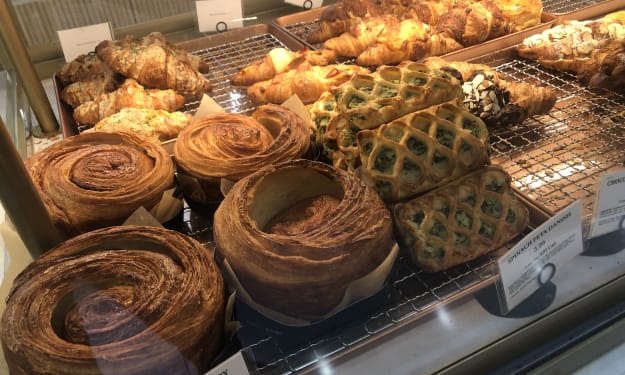
As someone who lives in a rural area, I don't get the chance to visit fancy restaurants or bakeries that often. So, when a friend told me about a French-Asian bakery that's less than an hour away, I knew I had to check it out and grab some pictures for social media. Tous les Jours ended up providing an immersive experience that went above and beyond my expectations--although I did leave with a few reservations.
By Kaitlin Shanks21 days ago in Feast
Organic Baby Food Market Companies Analysis (2025–2033)
Introduction: A New Standard for Infant Nutrition The global Organic Baby Food Market is undergoing a transformative shift as modern parents increasingly demand clean, transparent, and sustainable nutrition for their children. Organic baby food—made without synthetic fertilizers, artificial preservatives, genetically modified organisms (GMOs), or chemical pesticides—has moved from a niche category to a mainstream necessity. Rising awareness of food safety, health outcomes, and environmental sustainability is reshaping consumer behavior worldwide.
By Aaina Oberoi4 days ago in Feast


Comments
There are no comments for this story
Be the first to respond and start the conversation.