

Candy, also called sweets (British English) or lollies (Australian English, New Zealand English), is a confection that features sugar as a principal ingredient. The category, called sugar confectionery, encompasses any sweet confection, including chocolate, chewing gum, and sugar candy. Vegetables, fruit, or nuts which have been glazed and coated with sugar are said to be candied.
Physically, candy is characterized by the use of a significant amount of sugar or sugar substitutes. Unlike a cake or loaf of bread that would be shared among many people, candies are usually made in smaller pieces. However, the definition of candy also depends upon how people treat the food. Unlike sweet pastries served for a dessert course at the end of a meal, candies are normally eaten casually, often with the fingers, as a snack between meals. Each culture has its own ideas of what constitutes candy rather than dessert. The same food may be a candy in one culture and a dessert in another.
History
The word candy entered the English language from the Old French çucre candi ("sugar candy"). The French term probably has earlier roots in the Arabic qandi, Persian qand and Sanskrit khanda, all words for sugar.Sugarcane is indigenous to tropical South and Southeast Asia. Pieces of sugar were produced by boiling sugarcane juice in ancient India and consumed as khanda. Between the 6th and 4th centuries BCE, the Persians, followed by the Greeks, discovered the people in India and their "reeds that produce honey without bees". They adopted and then spread sugar and sugarcane agriculture.Before sugar was readily available, candy was based on honey. Honey was used in Ancient China, the Middle East, Egypt, Greece and the Roman Empire to coat fruits and flowers to preserve them or to create forms of candy. Candy is still served in this form today, though now it is more typically seen as a type of garnish.
Association to Halloween
To this day, the process of going door to door to receive free candy during Halloween-time has become a major draw for children all across America. It is the one day of the year that ringing a neighbor's doorbell is socially acceptable. Children across the country will continually dress up in costume and go door to door. In turn, the residents of each house graciously buy candy for children and hand it out in small increments. Just as it had been in the mid-1970s, the main form of candy that is passed out is pre-packaged sweets. Parents feel much more easy minded allowing their children to eat pre-packaged candies because of the quality control that comes with each product. As a result, name brand candies have become a staple for Halloween and trick-or-treating up to the present. Some candies continue to be popular with trick-or-treaters, such as Reese's Cups, Kit Kat, and Snickers, which were the top three halloween candies of 2022.The tradition of handing out treats on Halloween originated from the holiday of All Hallows Day, or All Saints Day, which derives from Christian tradition. On this day, children would travel across town, saying prayers along the way. These children prayed mainly for all people who had passed away. In between their prayers, these children would also arrive at the doorsteps of people within their town. As a reward for their actions, they were given homemade cakes referred to as soul cakes, made by the homeowners. These soul cakes resembled a form of biscuit and were usually filled with raisins or cinnamon among other ingredients. Many cakes were also given to the poor during this time. The soul cakes gave these children the incentive to pray intensely in exchange for sweets.The idea of providing trick-or-treaters with candy was not fully conceptualized until the 1950s. Up until that point many households continued to provide children with soul cakes among other homemade goods. However, it was discovered by numerous candy producers that the holiday of Halloween could be marketed to sell their products. As a result, many households began to buy candy products. The main draw to these candy products were that they were inexpensive, took no time to prepare, and came in bulk. Nevertheless, candy would not completely take over until the 1970s. Up until that point, givers would continue to make treats or package small toys and coins specifically for Halloween.The main cause for the shift from homemade treats to pre-packaged candies was the result of speculation concerning tampered food. Many parents during this time were concerned that their children were being exposed to needles or toxic chemicals within their halloween goods. The lack of packaging made it much easier for a person to put dangerous substances into the food they were planning to give out. These worries were heightened because of a large number of false reports concerning medical attention relating to dangerous halloween treats. As a result, parents became much more likely to allow their children to participate in Halloween festivities when packed candy was introduced. They noticed that it would be much harder for a person to tamper with factory packaged sweets because the seal would be torn. It would be too noticeable if someone tried to affect the product.Judging from recent statistics, it is evident that Halloween candy is still at high demand. In 2021 alone, profits from halloween candy were up to at least "$324 million". From the same report, the demand for halloween candy was "up 59.8% from 2019". From these numbers it can be presumed that Halloween is still a big deal for Americans. An even bigger deal for the American public is the act of receiving candy from trick-or-treating. Candy continues to be a staple for the Halloween season and remains the biggest draw for participation.
About the Creator
Keep reading
More stories from writers in Feast and other communities.
Widow invests $800,000 to start hawker culture experience centre in honour of late husband
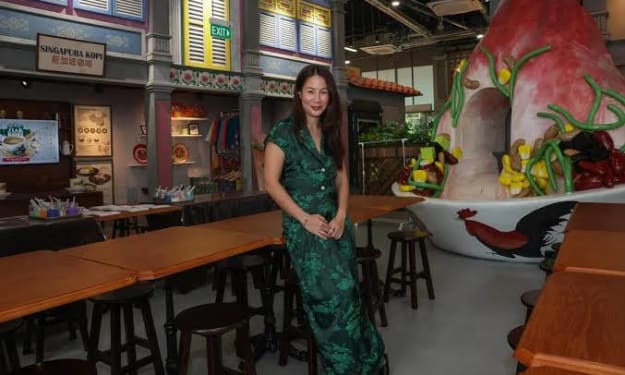
In a touching tribute to love, memory, and cultural heritage, a Singaporean widow has invested nearly $800,000 to establish a hawker culture experience centre dedicated to preserving and celebrating the vibrant food traditions that her late husband cherished throughout his life. The centre, which opened recently in Singapore, aims to provide visitors with an immersive journey into the country’s beloved hawker culture while honouring the legacy of a man who spent decades supporting local food vendors. The project was initiated by Lim Mei Hua, whose husband, Tan Wei Chong, passed away three years ago after a long illness. Tan was widely known among friends and family as a passionate supporter of traditional hawker stalls and frequently spent his weekends exploring different food centres across Singapore. According to Lim, the idea of creating a space dedicated to hawker heritage had long been one of her husband’s dreams. “He always believed that hawker culture was the heart of Singapore,” Lim said during the centre’s opening ceremony. “After he passed away, I wanted to do something meaningful that would keep his passion alive and allow future generations to understand why these traditions matter.” Singapore’s hawker culture is a cornerstone of the nation’s identity. The bustling open-air food centres, filled with vendors serving affordable and diverse dishes, reflect the multicultural roots of the country. In recognition of its cultural importance, UNESCO added Singapore’s hawker culture to its Representative List of the Intangible Cultural Heritage of Humanity in 2020. Lim’s experience centre is designed to showcase this heritage through interactive exhibits, live cooking demonstrations, and storytelling sessions led by veteran hawkers. Visitors can learn about the origins of iconic dishes such as Hainanese chicken rice, Laksa, and Char kway teow, while also exploring the personal journeys of the hawkers who prepare them. The centre includes a small exhibition gallery featuring photographs, kitchen tools, and handwritten recipes collected from hawker families across the city. Many of these items date back decades, offering a glimpse into how culinary traditions have been passed down through generations. One section of the centre recreates a traditional hawker stall environment, allowing visitors to experience what it feels like to work behind the counter during a busy lunch rush. Young participants can try their hand at simple cooking techniques while learning about the discipline and dedication required to master hawker cuisine. Local hawkers have warmly welcomed the initiative. Many worry that younger generations may be less interested in taking over family stalls, which often involve long hours and physically demanding work. By highlighting the cultural significance of these businesses, Lim hopes the centre will inspire renewed appreciation among the public. “Hawker food is not just about eating,” said veteran vendor Ong Kee, who participated in one of the centre’s demonstration sessions. “It’s about history, family, and community. Places like this help remind people why our traditions should continue.” Beyond cultural preservation, the experience centre also aims to support hawkers economically. A portion of ticket sales will be directed toward training programs for aspiring food vendors, helping them learn both traditional recipes and modern business skills. Lim believes this approach can help sustain the industry while adapting to changing times. Tourism officials in Singapore have also expressed optimism about the centre’s potential to attract international visitors interested in culinary experiences. Food tourism has become an increasingly important part of the country’s travel industry, with visitors eager to explore authentic local cuisine. For Lim, however, the centre’s true purpose goes far beyond tourism or business success. Every corner of the space reflects memories of her husband—his favorite dishes, the stalls he frequently visited, and the stories he loved to share. “Whenever I see people enjoying the exhibits or learning about hawker culture, I feel like his spirit is still here,” she said quietly. “This place is not just about the past. It’s about keeping something precious alive.” Through her remarkable gesture, Lim has transformed personal grief into a lasting tribute that celebrates love, heritage, and the enduring power of food to bring communities together. Her $800,000 investment ensures that the spirit of Singapore’s hawker culture—and the memory of the man who cherished it—will continue inspiring generations to come.
By Fiaz Ahmed 7 days ago in Feast
Chipotle Tattoo BOGO: The Story Behind the Burrito Deal
Sometimes a free burrito is more than just a meal. Sometimes it becomes a small cultural moment that people remember for years. The phrase chipotle tattoo bogo began as a strange mix of food, loyalty, humor, and internet culture. At first glance it sounds like a joke. Why would anyone get a tattoo for a burrito? But thousands of people actually did.
By Muqadas khanabout 21 hours ago in Feast


Comments
There are no comments for this story
Be the first to respond and start the conversation.