
Australia Confectionery Market: Consumer Preferences, Product Innovation & Retail Dynamics
How changing tastes, premiumization and health-aware choices are shaping Australia’s confectionery industry

Australia Confectionery Market Overview
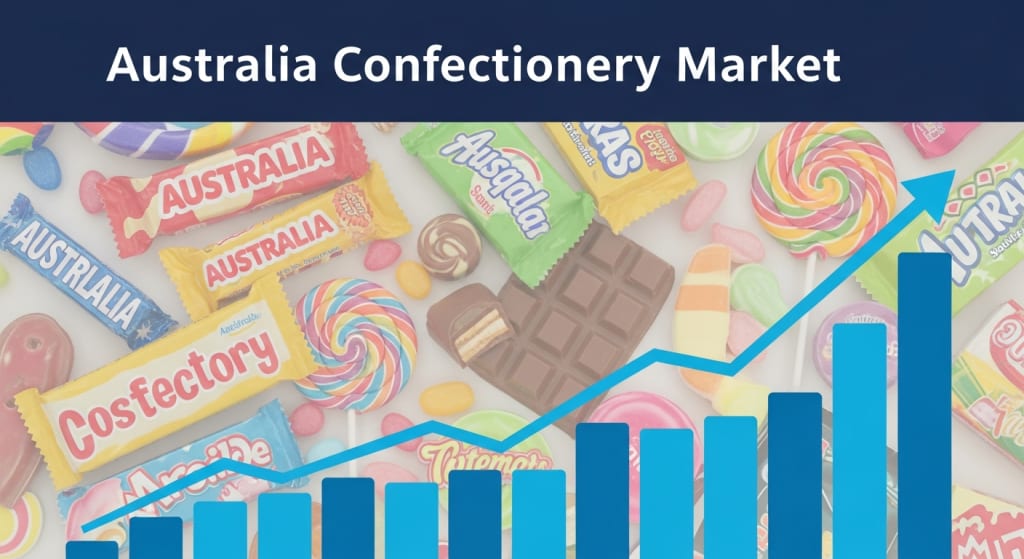
The Australia confectionery market continues to evolve as consumer preferences shift, product innovation expands and retail formats adapt to changing buying behavior. The Australia confectionery market size reached USD 4.0 Billion in 2024. Looking forward, IMARC Group expects the market to reach USD 5.2 Billion by 2033, exhibiting a growth rate (CAGR) of 3% during 2025-2033. This steady expansion reflects a balance between indulgence-driven consumption and increasing health awareness among consumers.
Confectionery in Australia includes a wide range of products such as chocolate, sugar confectionery, gums and functional sweets. These products are consumed across age groups and occasions—from everyday snacking to gifting and seasonal celebrations. While traditional consumption remains stable, the market is being reshaped by evolving attitudes toward sugar intake, ingredient transparency and premium food experiences.
Driving Growth in the Australia Confectionery Market
One of the main drivers of growth is changing consumer preferences. Australian consumers increasingly seek variety in flavors, textures and formats. Novel combinations, limited-edition offerings and regionally inspired flavors help maintain interest and encourage trial purchases. This dynamic keeps the market active even as overall consumption patterns mature.
Premiumization is another important factor. Consumers are increasingly willing to pay more for products perceived as higher quality, ethically sourced or crafted with distinctive ingredients. Premium chocolates, artisanal sweets and specialty confectionery products benefit from this trend, particularly within urban markets and specialty retail channels.
Retail expansion and diversification also support growth. Supermarkets remain the primary distribution channel, but convenience stores, specialty food retailers and online platforms are gaining importance. E-commerce, in particular, enables access to niche brands and customized gifting options, supporting incremental demand.
Seasonal demand continues to play a significant role. Holidays, cultural celebrations and gifting occasions drive sales spikes throughout the year. Manufacturers and retailers rely on seasonal product launches and promotional activity to capture these demand cycles.
Influence from media personalities and public figures contributes to product visibility. While consumption decisions remain personal, celebrity associations and social media exposure help introduce new brands and formats to broader audiences, reinforcing brand recognition.
What the Opportunities Are
The Australia confectionery market offers multiple opportunities related to product development, positioning and distribution.
1. Reduced-Sugar and Alternative Sweeteners
As health awareness grows, demand for lower-sugar options continues to rise. Products using alternative sweeteners or reduced-sugar formulations can appeal to health-conscious consumers while maintaining indulgence appeal.
2. Ethical and Sustainable Sourcing
Consumers increasingly consider ethical sourcing and sustainability in purchasing decisions. Confectionery products emphasizing responsible cocoa sourcing, recyclable packaging and transparent supply chains can align with these expectations.
3. Premium and Artisanal Segments
Smaller-batch, artisanal and locally produced confectionery offers differentiation in a competitive market. These products often appeal to gifting and specialty consumption occasions.
4. Functional and Hybrid Products
There is growing interest in confectionery that incorporates functional elements, such as added vitamins, botanicals or energy-boosting ingredients. While still niche, this segment reflects broader wellness trends.
5. Digital and Direct-to-Consumer Sales
Online platforms allow brands to reach consumers directly, offer customization and build brand communities. Subscription models and limited online releases support customer engagement.
Operational Considerations
Despite positive growth trends, the confectionery market faces several operational challenges. Input cost volatility, particularly for cocoa, sugar and dairy ingredients, affects pricing strategies and margins. Manufacturers must balance cost management with quality consistency.
Regulatory scrutiny around sugar content, labeling and advertising influences product formulation and marketing approaches. Compliance with evolving food standards requires ongoing investment in research and testing.
Consumer expectations regarding transparency and ingredient quality are rising. Clear labeling, allergen information and nutritional disclosures are increasingly important to maintain trust.
Competition is intense, with both global brands and local producers competing for shelf space and consumer attention. Differentiation through innovation and branding remains essential.
Recent News & Developments in the Australia Confectionery Market
• Feb 2025: Major retailers expanded shelf space for reduced-sugar and plant-based confectionery products, reflecting shifting consumer demand.
• Jun 2025: Several Australian confectionery manufacturers introduced limited-edition premium chocolate ranges focused on ethical sourcing and artisanal production.
• Oct 2025: Industry data showed a 13% year-on-year increase in online confectionery sales, driven by gifting demand and direct-to-consumer platforms.
Why Should You Know About Australia Confectionery Market?
Understanding the Australia confectionery market provides insight into how indulgence-based consumption adapts to changing lifestyles, health awareness and ethical considerations. The market reflects a blend of tradition and innovation, where consumer enjoyment coexists with evolving expectations around nutrition and sustainability.
For businesses, the sector highlights the importance of product differentiation, supply chain resilience and responsible sourcing. For investors, it illustrates steady demand supported by premiumization and retail diversification. From a broader perspective, the confectionery market shows how consumer preferences shape food industry evolution within a mature economy.
Australia’s confectionery market is therefore defined not by rapid transformation, but by continuous adaptation—balancing enjoyment, quality and responsibility in response to changing consumer values.
About the Creator
Amyra Singh
Market research analyst who loves spotting patterns, digging into data, and turning insights into strategies that help brands grow and stay ahead of the curve.
Keep reading
More stories from Amyra Singh and writers in Feast and other communities.
Australia Tomato Ketchup Market: Flavor Trends, Consumption Patterns & Growth Ahead
Australia Tomato Ketchup Market The Australia tomato ketchup market is spicing up as evolving consumer preferences, retail channel expansion and lifestyle shifts drive consistent demand. The Australia tomato ketchup market size reached USD 403.60 Million in 2024. Looking forward, IMARC Group expects the market to reach USD 522.02 Million by 2033, exhibiting a growth rate (CAGR) of 2.90% during 2025-2033.
By Amyra Singhabout a month ago in Feast
My Tous les Jours Trip
As someone who lives in a rural area, I don't get the chance to visit fancy restaurants or bakeries that often. So, when a friend told me about a French-Asian bakery that's less than an hour away, I knew I had to check it out and grab some pictures for social media. Tous les Jours ended up providing an immersive experience that went above and beyond my expectations--although I did leave with a few reservations.
By Kaitlin Shanks29 days ago in Feast
Artificial Sweetener Market Size and Forecast 2025–2033: Health Awareness, Sugar Reduction, and the Global Shift Toward Low-Calorie Living
Introduction: Sweetness Without Sugar Is No Longer Optional The global food and beverage industry is undergoing a major transformation as consumers increasingly question their sugar intake. Once viewed as a simple indulgence, sugar is now widely linked to obesity, diabetes, cardiovascular diseases, and metabolic disorders. This shift in perception has created a powerful opportunity for sugar alternatives, especially artificial sweeteners, which offer sweetness without the calorie burden.
By Sushant. Renub Research4 days ago in Feast



Comments
There are no comments for this story
Be the first to respond and start the conversation.