
Why Recording Your Child’s Snoring Might Save Their Life
A grandmother’s sleepless night reveals the hidden danger doctors often miss.

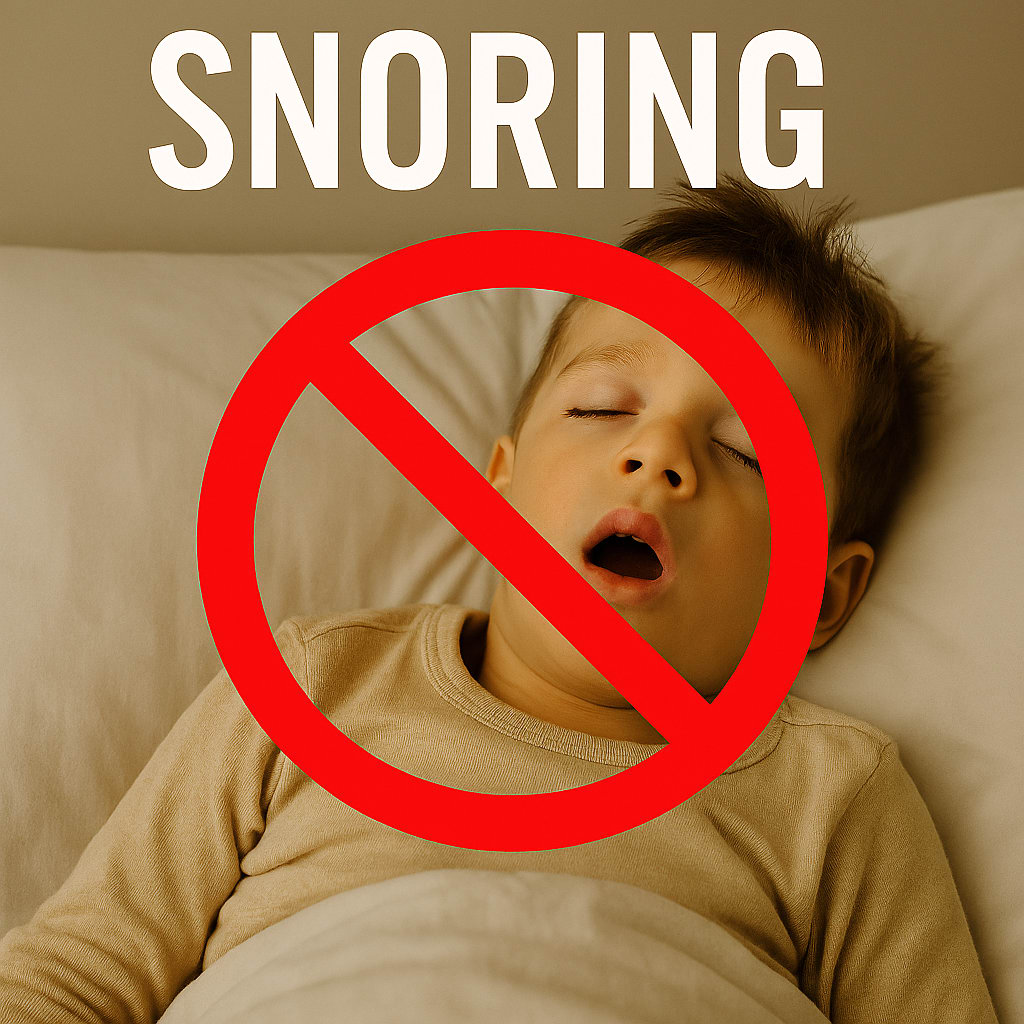
When Snoring Isn’t “Just Snoring”: A Grandmother’s Wake‑Up Call About Children’s Sleep and Breathing
Most people think of snoring as an adult problem—something that happens to tired parents or aging friends who refuse to wear their CPAP machines. But I learned the hard way that snoring in children can be a warning sign we cannot afford to ignore.
This is the story of how a simple sleepover with my grandson turned into a moment of clarity, urgency, and fierce love. It’s also a call to every parent and grandparent: listen to your children at night. Their breathing tells a story.
A Night That Changed Everything
My five‑year‑old grandson stayed the night with me recently—our first real sleepover. I expected giggles, bedtime stories, and a warm little body curled up next to mine. What I didn’t expect was to lie awake between 3 a.m. and 6 a.m., listening to something that made my heart pound with fear.
His snoring wasn’t soft or rhythmic. It was loud, uneven, and broken by long stretches of silence—too long—followed by a gasp or a sudden shift. I’ve heard this pattern before. My sixty‑five‑year‑old friend has diagnosed sleep apnea, and when he doesn’t wear his CPAP machine, his breathing sounds exactly like that.
Except my friend is sixty‑five.
My grandson is five.
That contrast alone was enough to keep me wide awake.
A Pattern That Runs in the Family
What makes this even more urgent is that my grandson’s story echoes my daughter’s in a way that’s impossible to ignore.
My daughter had two seizures—one at age two and one at age three.
Both happened while she was sleeping.
Not long after, she began snoring.
My grandson had two seizures—one at age two and one at age three.
Both happened while he was sleeping.
And now, he snores too.
I’m not claiming these things are medically linked. But when the same sequence repeats across two generations, any loving caregiver would pay attention. Any grandmother would start connecting dots.
And that’s exactly what I did.
The Science Behind What I Heard
Snoring in children is often dismissed as “cute” or “normal,” but research shows that habitual, loud snoring—especially when paired with breathing pauses—can be a sign of pediatric obstructive sleep apnea, a condition where the airway becomes partially or completely blocked during sleep.
This can lead to:
• Drops in oxygen levels
• Fragmented sleep that disrupts brain development
• Behavioral changes that mimic ADHD
• Morning headaches or difficulty waking
• Mouth breathing and restless tossing
• Learning or growth challenges over time
Children rarely show daytime sleepiness the way adults do. Their brains fight to stay alert, so the signs show up in behavior, not yawns.
That’s why nighttime listening matters so much.
Why I Recorded His Breathing
Doctors are skilled, but they don’t sleep next to our children. They don’t hear the gasps at 3 a.m. or the sudden silence that makes your heart stop. They see snapshots; caregivers see the whole movie.
So I recorded my grandson’s breathing—not to diagnose anything, but to give his doctors the information they need to evaluate him properly. A recording captures what words can’t.
And honestly, it frustrates me that sometimes doctors don’t connect the dots unless we bring them the pieces ourselves. I’m grateful for every tool that helped me understand what I’m seeing and hearing—including AI—but the urgency came from love. The science gave me language. The combination gave me courage.
How to Advocate When Something Feels Wrong
If you’re a parent or grandparent who notices something off in a child’s sleep, here’s what I’ve learned:
1. Trust your instincts. You’re not overreacting—you’re observing.
2. Record what you hear. Snoring, gasping, pauses—capture it.
3. Write down patterns. Time of night, frequency, restlessness.
4. Bring everything to the doctor. Notes and recordings matter.
5. Push for answers. Especially if you’ve seen it before.
Advocacy isn’t confrontation.
Advocacy is love in action.
A Final Word From One Grandmother to Another
If you hear something in your child’s or grandchild’s sleep that makes your heart tighten—listen to that feeling. Love sharpens our senses. It makes us notice things others miss. It makes us brave enough to ask questions, even when we’re tired, even when we’re scared, even when we’ve been dismissed before.
I’m not a doctor.
I’m a grandmother who’s lived through this twice.
Two children in my family had nighttime seizures at the same ages.
Two children began snoring afterward.
Two children showed me that nighttime breathing is not something to ignore.
Record the snoring.
Write down what you see.
Bring it to the doctor.
Push for answers.
Push again if you need to.
Because the children we love are worth every ounce of vigilance we have.
And sometimes, the difference between “he’ll grow out of it” and “we caught it early” is simply a grandmother who refused to sleep through the warning signs.
Sources
Mayo Clinic – Pediatric Obstructive Sleep Apnea
Cleveland Clinic – Childhood Sleep Apnea
SIU Medicine – Pediatric Sleep Apnea and Snoring
Verywell Health – Sleep Apnea in Children
AAP Journal – Epilepsy and Sleep Apnea Risk
SpringerLink – Pediatric Sleep‑Related Seizure with Obstructive Apnea
About the Creator
Alexandria Hypatia
A philosopher and Libra to the fullest. I have always enjoyed writing as well as reading. My hope is that someday, at least one of my written thoughts will resonate and spark discussions of acceptance and forgiveness for humanity.
Keep reading
More stories from Alexandria Hypatia and writers in Families and other communities.
Love Promised in a Little Black Notebook
My mother told me a story once. I thought it was just a story anyways…. Once upon a time, there was a young woman that went by the name Patricia. Born in a poor little Irish family, Patricia longed for the beautiful things in life.
By Alexandria Hypatia5 years ago in Families
He Was a Teenager With a Bright Future
CHECK OUT MY EBOOKS COLLECTION By Soul on Fire LEAVIE SCOTT ST. LOUIS — In the sharp light of a July evening, a 52‑year‑old man stepped out of the Mel Carnahan Courthouse, paused, and placed a hand to his chest. He scanned a city that had grown up without him—glassier buildings, faster phones, different slang, a world that felt like a foreign country. His name was Christopher Dunn, and on July 30, 2024, after more than three decades behind bars for the 1990 killing of 15‑year‑old Ricco (Recco/Ricco) Rogers, a judge’s ruling and a prosecutor’s decision finally opened the door to his freedom.
By Organic Products 6 days ago in Families
The Call That Came at 2:17 AM
At exactly 2:17 AM, my phone rang. No one calls at 2:17 AM with good news. Half-asleep, I reached for my phone. The number was unknown. My heart started pounding. For a second, I thought of ignoring it… but something inside me whispered, Answer it.
By Imran Ali Shah2 days ago in Families




Comments
There are no comments for this story
Be the first to respond and start the conversation.