
He Was a Teenager With a Bright Future
He Spent 34 Years in Prison for a Crime He Didn’t Commit

By Soul on Fire LEAVIE SCOTT
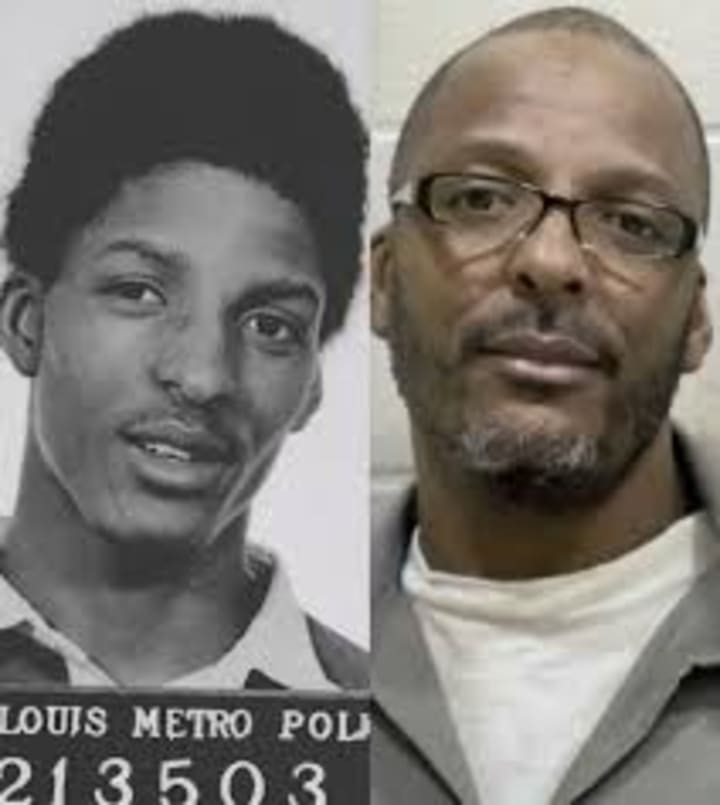
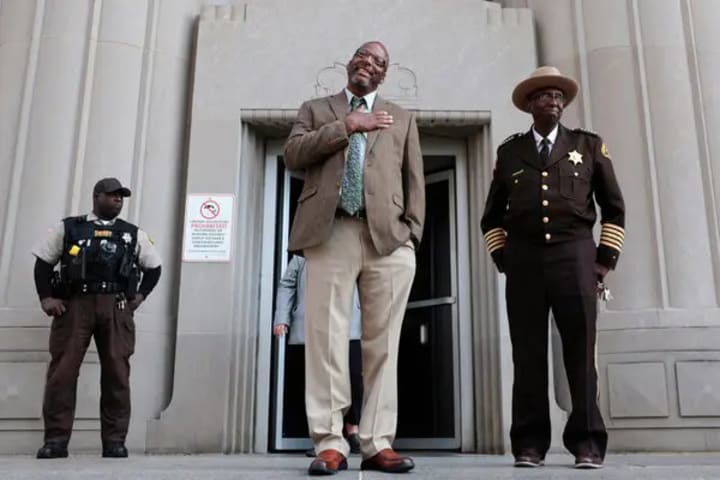
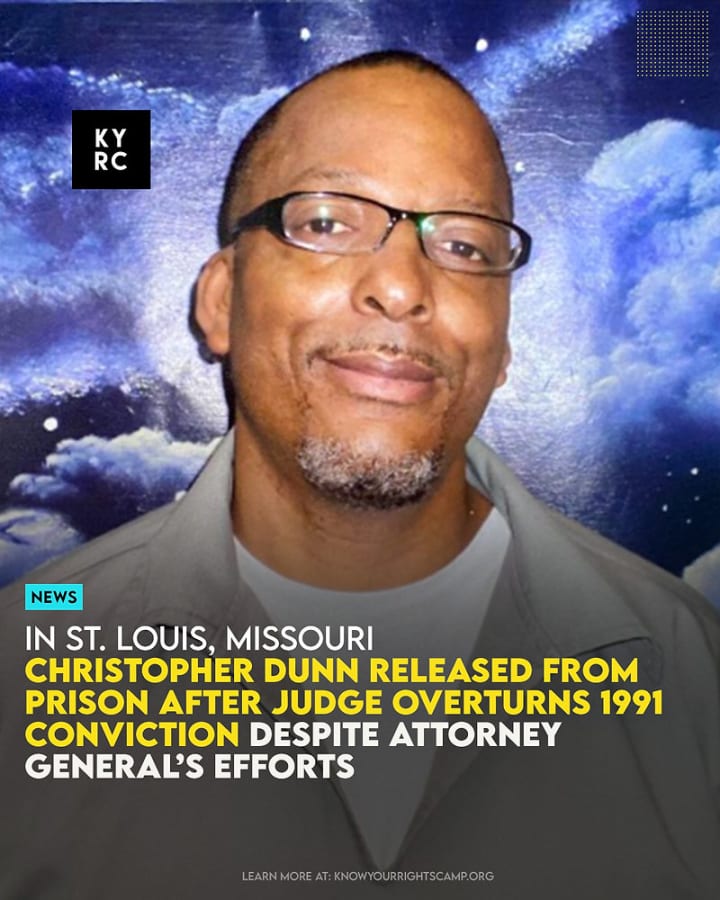
ST. LOUIS — In the sharp light of a July evening, a 52‑year‑old man stepped out of the Mel Carnahan Courthouse, paused, and placed a hand to his chest. He scanned a city that had grown up without him—glassier buildings, faster phones, different slang, a world that felt like a foreign country. His name was Christopher Dunn, and on July 30, 2024, after more than three decades behind bars for the 1990 killing of 15‑year‑old Ricco (Recco/Ricco) Rogers, a judge’s ruling and a prosecutor’s decision finally opened the door to his freedom.
The legal orders were only the last pages of a much longer story—one that began on a spring night in St. Louis and that would test the limits of Missouri law, the reliability of childhood testimony, and the endurance of a family’s hope.
A Night, a Shot, and a Swift Verdict
It was May 18, 1990, when shots rang out in the Wells‑Goodfellow neighborhood of St. Louis. Ricco Rogers, just 15, was killed. The investigation moved quickly, but not on the strength of fingerprints, ballistics, or DNA. There was no physical evidence; no gun was recovered; no forensic link tied any shooter to the scene. The case would rest on the words of two boys—aged 12 and 14—who told police and later a jury that Chris Dunn was the shooter.
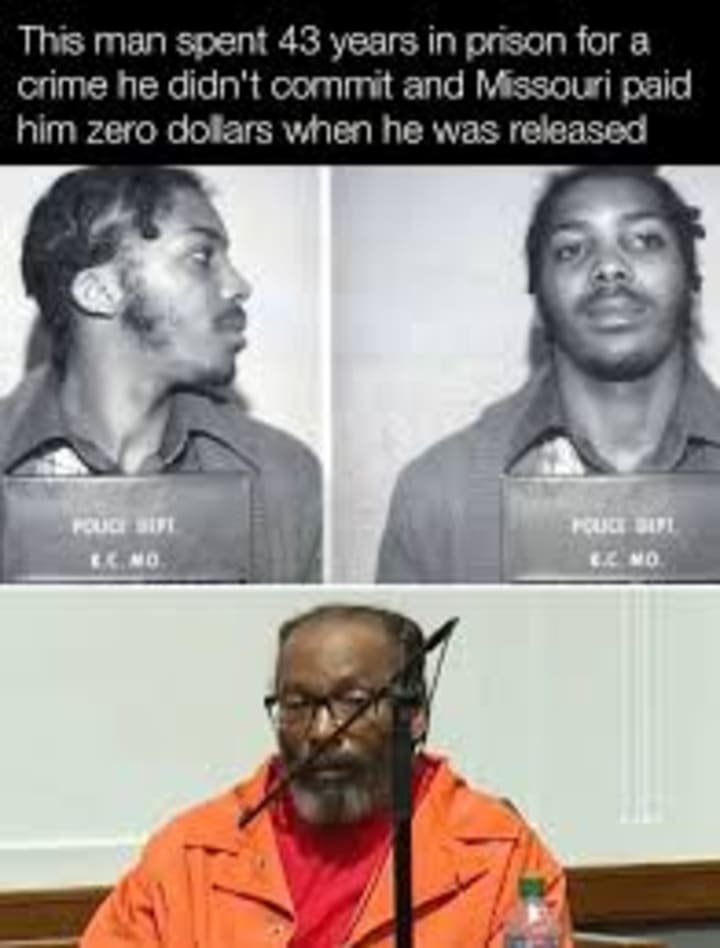
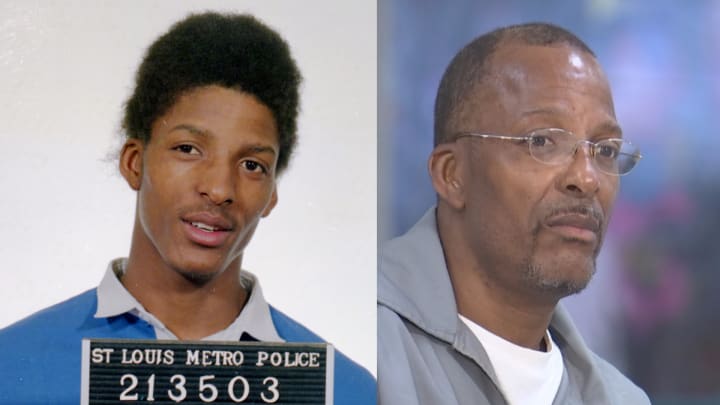
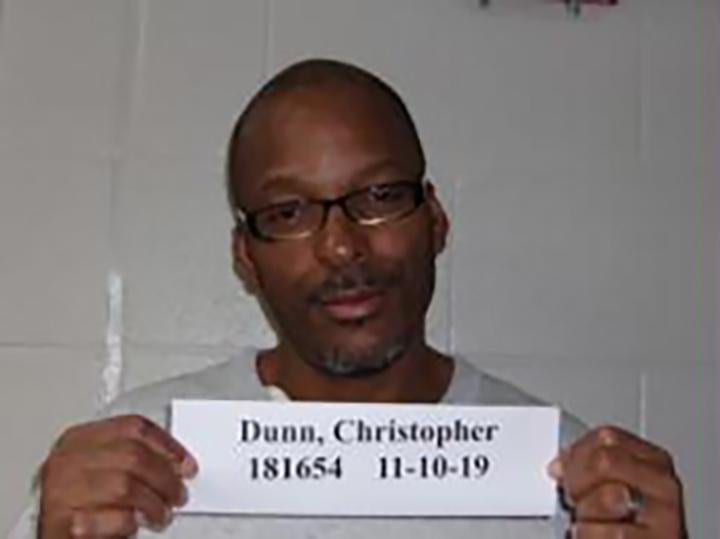
In 1991, a jury convicted Dunn of first‑degree murder, alongside assault and armed criminal action counts. The sentence was crushing: life without parole, plus decades more, to run consecutively. He was 18 when accused and 19 when the gavel fell—a teenager turned lifer in a matter of months
Doubt Emerges, But the Law Is Cold
As years became decades, the witnesses grew up—and then spoke up. Both recanted the childhood testimony that had sent Dunn away, describing pressure and fear that, they said, led them to point a finger at the wrong man. Still, Missouri kept him locked up.
In 2020, an important judicial note appeared in the margins of the case. Sitting in a habeas proceeding, a Missouri judge—William Hickle—reviewed fresh evidence and concluded that no reasonable jury would convict Dunn today. Yet he refused to release him, not because of doubt, but because of law: At the time, Missouri allowed “actual innocence” relief only for people on death row, not for those serving life without parole. It was a legal technicality with a human cost; Dunn would remain in prison.
The gap between truth and freedom narrowed in 2021, when Missouri enacted a statute empowering local prosecutors to seek to vacate wrongful convictions if there was clear and convincing evidence of actual innocence or constitutional error undermining confidence in the judgment. That law, Section 547.031, would later become the vehicle to revisit Dunn’s case.
The 2024 Turn: A Prosecutor Uses the New Law
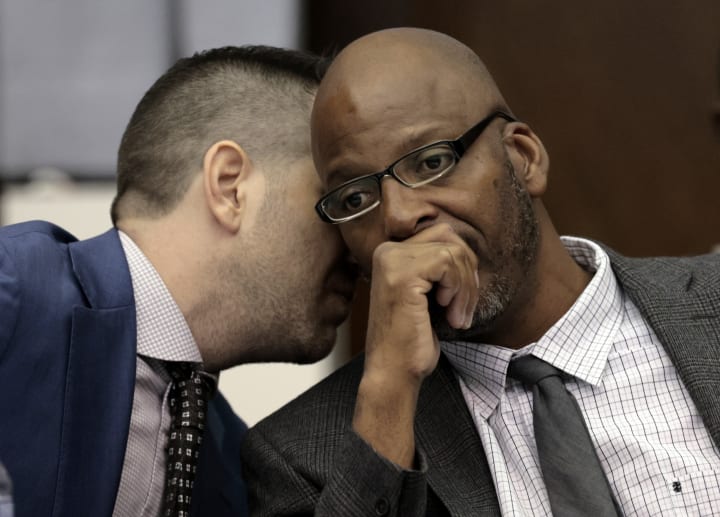
In February 2024, St. Louis Circuit Attorney Gabe Gore filed a motion under the 2021 statute, asking a judge to vacate Dunn’s conviction. In May, Judge Jason Sengheiser convened an evidentiary hearing, weighing the original record against new testimony and years of recantation history.
By July 22, 2024, Judge Sengheiser issued the decision Dunn had waited most of his life to hear: vacated—with a finding that the Circuit Attorney had made a “clear and convincing” showing of actual innocence, and that no reasonable juror would convict Dunn if the case were tried on the current evidence. Critically, the judge observed that one childhood witness “should not be trusted for anything regarding this case,” and the other had been consistent in recantations as an adult, undercutting the entire foundation of the 1991 verdict.
What happened next spotlighted a tug‑of‑war at the highest levels of Missouri’s justice system. The Attorney General’s Office opposed Dunn’s release, questioning the reliability of recantations and moving to appeal. The judge initially ordered Dunn’s immediate release, but the Missouri Supreme Court stepped in with an emergency stay, ruling that while the conviction could be vacated, a circuit judge lacked the authority to unconditionally release Dunn unless the state indicated it would not retry him. The high court’s logic: once a conviction is vacated, the charges revert to pre‑trial status unless prosecutors dismiss.
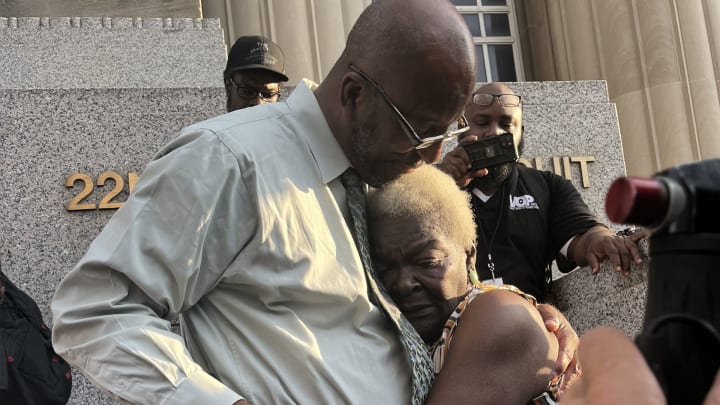
That final step came quickly. Gore dismissed the charges—a procedural move called a nolle prosequi—and Dunn walked free on July 30, 2024, greeted by his mother, his wife Kira, and supporters who had believed in his innocence all along. On the courthouse steps, he said the day was “surreal,” and thanked a city that, in his words, had “takenhim away” 34 years earlier.
Freedom, and a New Fight Over Finality
If the story ended there, it would still be a saga of stubborn facts and stubborn love. But Missouri’s courts were not done with his name.
In April 2025, the Missouri Supreme Court weighed a separate question: could the Attorney General appeal a vacatur under the innocence statute? In a 4–3 decision, the court said yes—the state is an “aggrieved party” with a statutory right to appeal civil judgments, and a Section 547.031 vacatur is a civil collateral proceeding. The case was shipped back to the Court of Appeals to hear the state’s challenge on the merits. Dunn remained free, but once again, his fate returned to briefing schedules and oral arguments.
Through 2026, that appellate fight sharpened. The Attorney General’s team urged caution, arguing that recantations—especially years later—are inherently unreliable; Dunn’s lawyers and the Circuit Attorney pointed to the trial court’s detailed credibility findings and the simple reality that no physical evidence had ever tied Dunn to the crime. At a February 26, 2026 hearing, a panel of the Missouri Court of Appeals heard both sides, a proceeding that would determine whether the 2024 ruling stands—or whether the state could attempt to rebuild the long‑doubted case.
For Dunn and his family, the legalese translates into something painfully simple: the possibility that after learning to walk free, the state could try to lock him up again. “It feels like you can’t really start to live until everything’s resolved,” Kira Dunn told reporters, describing the limbo that lingers even in freedom.
What the Case Reveals About the System
Christopher Dunn’s story is about more than one man. It shines a light on fault lines that run through the American criminal courts.
1) Childhood Testimony and Coercion Risks.
The **entire case rested on two children who were 12 and 14 when they said Dunn was the shooter. As adults, both recanted and described pressure from police and prosecutors. Child witnesses are impressionable. Memories can be molded—especially amid fear, authority figures, and grief. Missouri courts taking the recantations seriously—along with the absence of physical evidence—was not just a legal pivot; it was an acknowledgement of the limits of kids’ testimony in high‑stakes cases.
2) The “Actual Innocence” Catch.
For years, Missouri law effectively said that a person **on death row could bring a freestanding innocence claim, but someone serving life without parole—a sentence that can be a living death—could not. It took a 2021 statute to change that for people like Dunn and to give prosecutors a formal lane to correct errors. It shouldn’t require a change in legislation to correct what judges already believe the evidence cannot support, but in Dunn’s case, it did.
3) Finality vs. Truth.
The Attorney General’s Office framed its appeals as defending finality and the integrity of convictions. Dunn’s defenders argue that confidence in the system grows when courts fix mistakes—not when they entrench them. The Missouri Supreme Court ultimately said the state can appeal in these innocence proceedings; now, the Court of Appeals must decide whether the trial court’s finding of actual innocence will stand. The outcome will ripple beyond Dunn to other innocence claims across the state.
The People Left Out of the Headline
Ricco Rogers should be more than a case name. A teenager’s life was taken in 1990; his family has carried that wound for decades. The tragedy of a wrongful conviction is doubled: **the state punishes the wrong person, and the real perpetrator remains unaccountable. In Dunn’s case, no new suspect has been charged; the killing that devastated Rogers’s loved ones still lacks courtroom closure.
Martha Dunn, Christopher’s mother, aged alongside her son’s prison years. She listened to hearings, clutched hope, and, finally, hugged her child in the open air outside a courthouse instead of a visiting room. Kira, his wife, married life to faith and waiting—and now to the work of helping a man adjust to a world that runs on passwords, swipes, and algorithms. Their love story is not soft; it is made of commissary lists, collect calls, and steel doors. On the day of release, Kira described how close they had come to freedom days earlier, only to have it snatched back by a legal stay while Chris was “literally a few steps away from freedom.” That whiplash is something she won’t forget.
Advocates with the Midwest Innocence Project and pro bono lawyers pushed for years, compiling a record that finally convinced a court to act. After the July 30 ruling cleared the way, the organization called it a victory “tempered by the additional days and moments stolen” in the final legal scramble, reminding the public how fragile and exhausting the path to exoneration can be.

A First Day of the Rest
When Dunn spoke on those courthouse steps, he used the word “surreal.” He also used the word “fight.” “It’s easy to give up in prison when you lose hope… But when the system throws you away, you have to ask yourself if you’re going to settle or fight,” he said. In the days that followed, he experienced a litany of firsts first flight, first look at the ocean—the rites of passage of a free adult postponed by three decades.
But the promise of a new life sits beside the appeal pending in Missouri’s courts. In February 2026, appellate judges heard argument on whether the 2024 innocence ruling will stand. The legal question is technical; the stakes are not. Does the evidence, viewed through the lens of today’s law and the court’s credibility findings, support innocence? Or will the state convince an appellate panel that recantations—even when buttressed by other gaps—are too thin a reed to uphold a vacatur? As of this writing, the decision is pending. Dunn remains free, but his family describes a life still lived “in limbo,” awaiting a final word that will let them exhale.
What Justice Looks Like, After the Fact
There is no script for starting over at 52. No handbook for how to reclaim time. Dunn will need the ordinary things—work, healthcare, counseling, community—and the extraordinary grace of a society willing to welcome him as more than a headline. Missouri, which has struggled in recent years with a spate of high‑profile wrongful convictions, is still learning how to own its mistakes. Correcting them does not weaken the system; it proves that the system can correct course.
Christopher Dunn’s name is a cautionary tale and a call to action. It is a reminder to scrutinize cases built only on the words of children, to check the incentives that can bend testimony, and to preserve legal avenues that elevate truth over finality. It is also a portrait of a mother’s endurance, a wife’s resolve, and a man’s refusal to let prison swallow his will.
He was 18 when they took him. He was grandfather‑aged when they let him go. He walked out with gray hair, a survivor not only of a broken case but of three heart attacks endured while behind bars. And he walked into a future that belongs to him again—even as the courts decide how to write the last paragraph of this case.
Christopher Dunn. 1991–2024. And now: 2026 and beyond.

About the Creator
Organic Products
I was born and raised in Chicago but lived all over the Midwest. I am health, safety, and Environmental personnel at the shipyard. PLEASE SUBSCRIBE to my vocal and check out my store
Keep reading
More stories from Organic Products and writers in Families and other communities.
The Story of a Veteran Fighting for His Freedom
For more than 50 years, the United States was the only home Godfrey Wade ever truly knew. He arrived in America as a young teenager from Jamaica in 1975, full of hope, promise, and the belief that this country offered opportunity for anyone willing to work for it.
By Organic Products 22 days ago in Families
Professor Carlton Jama Adams on Intentional Parenting in the Digital Age
Parenting in the digital age requires awareness that extends far beyond household routines. Children today are influenced by social media trends, instant communication, academic competition, and constant online exposure. In this evolving landscape, thoughtful guidance becomes essential. Professor Carlton Jama Adams offers a steady and practical perspective on how parents can remain grounded while raising emotionally secure, confident, and resilient children.
By Carlton Adams2 days ago in Families
Why Kids’ Clubs at Hotels Are Ideal for Families on Holiday
As the hospitality and travel industry is always competitive, providing attractive kids’ clubs and play areas for children has evolved into being not just an additional feature for accommodation providers but something of a strategic investment. These facilities offer great benefits for kids as well as parents, enhancing the overall travel experience. Some of the reasons why such clubs for children are advantageous and useful are described below.
By John Ashley2 days ago in Families




Comments (1)
Sad. 🚀💙❤🌹 Thank you 🌹💛💗🚀 🚀