
Why everyone hates this concrete building
concrete building is Ugly
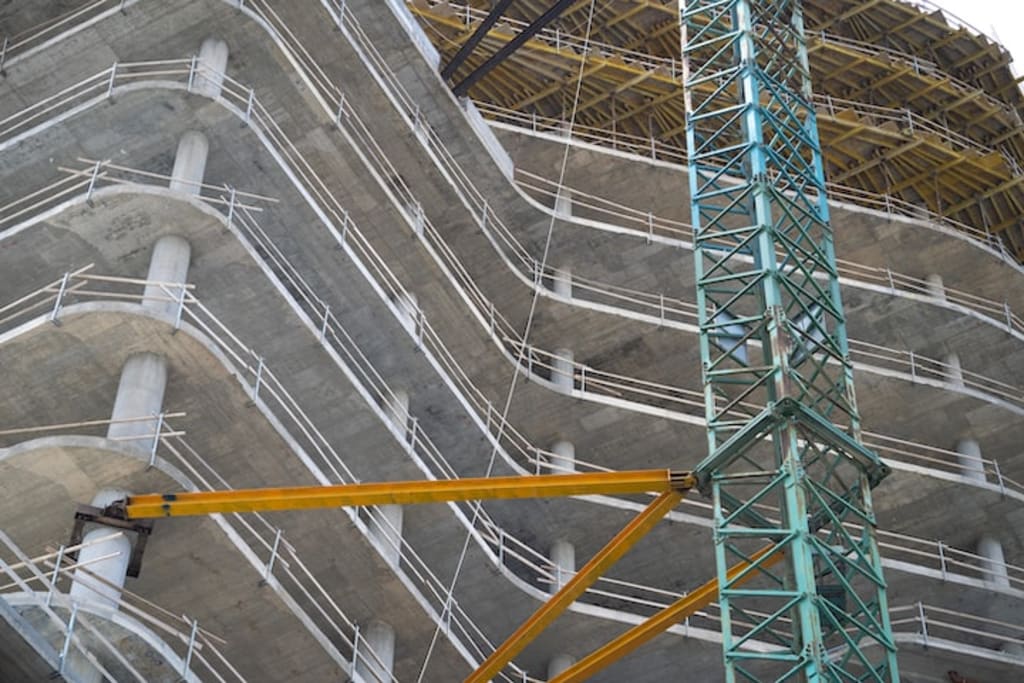
Okay.
Just to start with, the name Brutalism
doesn't actually have anything to do with
the brutality of the architecture per se.
Although some may argue that
it’s quite harsh in appearance.
It's actually derived from a French phrase.
Béton brut.
The raw concrete in French.
This is Timothy Rohan.
He's a professor of architectural history at UMass Amherst.
A campus known for its stunning, brutalist architecture.
It's also the home of UMass Brut...
a campus organization that raises awareness
of the school's collection of buildings.
Some architects...
in conversations about Brutalism and its origins come up a lot.
One of them is the Swiss-born French architect Le Corbusier.
He built an enormous building in Marseilles, an apartment building.
The Unité d’Habitation.
This really became a model for the use of concrete...
and a model for what became brutalism.
Concrete was widely used
but sometimes before this, you would maybe
sand the surface, paint the surface...
clean it up in a groundbreaking fashion.
He left the concrete surface raw.
Le Corbusier continued to build on the motifs
he used in Unité d’Habitation in his later work.
Other architects of the day
played in the Brutalist sandbox as well...
such as Marcel Breuer, Paul Rudolph...
Högna Sigurdardóttir and Louis Kahn.
Brutalism became not just a style of architecture...`
but an entire esthetic ethos.
In what became a manifesto of sorts for the movement...
architecture, writer, and critic Reyner Banham
decreed that new brutalist structures
should have the following qualities:
One: Memorability as an image.
Two: Clear exhibition of structure.
And three: Valuation of materials “as found.”
Modernist architecture up to this point
was dominated by people like Ludwig Mies van der Rohe...
who built sleek glass corporate skyscrapers...
which featured what are called curtain walls:
Non load-bearing veneers
that were meant to hide the construction.
Some architects say if you have a whole city like this
it's going to become banal, monotonous.
Modernist architects called these buildings fish bowls.
And they were lampooned for their resemblance to graph paper.
In contrast, brutalist buildings strove for
honesty in their materials and structure.
They showed you how they were constructed.
At the end of World War II...
College attendance shot up.
There was the veterans returning from the war
who were eligible for government benefits
that allowed them to go to college and pay for it.
This necessitated that universities build new facilities to handle
ballooning admissions.
And with so many new buildings being needed...
what did architects of the day turn to?
Brutalism.
Sorry.
Schools like Yale had entire campuses of brutalist architecture spring up
Which received glowing marquee reviews in the New York Times.
Campuses across the country
erected some pretty spectacular buildings...
that typified the challenging and idealistic, brutalist esthetic.
Schools like Harvard, UMass Dartmouth, UC San Diego...
the University of Chicago, and of course, Berkeley.
Some of the colleges like Yale University
they wanted to part from the old models
of the Gothic and the Georgian.
A campus that was like Oxford or Cambridge for elite gentlemen.
Now they want to show that they are becoming
a world class research university.
A university like mine, University of Massachusetts...
expanded at this time from an agricultural college...
and it becomes a research university.
A flagship campus of Massachusetts.
And so they start to become the hosts for modern architecture...
to show their progress.
During the 1970s, the US economy took a downturn.
New construction on campuses ground to a virtual halt...
and maintenance of existing facilities was neglected...
leaving many buildings brutalist and otherwise...
dingy and in need of renovation.
And there's real cutbacks in maintenance during the 70s.
It's noticeable.
And there's even a policy
that many campuses had called deferred maintenance.
We're not going to do repairs.
We're not going to unstop the gutter.
We're not going to put in air conditioning that was never installed.
It's deferred for a future date.
When will this day come?
I think it's maybe today.
The 1980s swept in a new era of construction
that was a definite change of pace.
Architects like Robert Venturi designed
university buildings that featured brighter colors...
asymmetrical shapes and playful design elements.
Instead of attempts to preserve or renovate
brutalist buildings in need of repair
numerous campuses across the country
opted to tear them down and build something shiny and new.
And that is what it seems like
will be the fate for poor Evans Hall here in Berkeley.
Although a campus spokesperson told me that there is, quote,
“No project in the works, or approved to demolish Evans Hall...”
They went on to say that
they're in the process of relocating all classrooms and offices
out of the building.
And will then construct new buildings to house them, at which point
they will propose a project to demolish Evans.
Which sounds to me like they're going to tear it down.
The reason for all of this is a study that showed
that its seismic rating against earthquakes is poor.
So why is there no talk about tearing down this building?
Or this one?
Or this one?
These buildings and over 22 others on campus...
share the same seismic rating as Evans.
So why set your sights on just Evans?
It's often about a number of other considerations, like real estate.
The fact that these sites are valuable space
on college campuses is at a premium.
The real reason may be buried further in the report
which says that, quote, “Due to its massing height...
scale and materiality, Evans Hall
which obstructs views to San Francisco and beyond...
is considered incongruous
with the Beaux Arts Buildings in the Classical Core.”
And that, quote, “the ad-hoc placement”
of the new buildings “lacked sensitivity.”
My council is, be patient.
Just because you find something unfashionable at the moment...
doesn't mean you should eradicate it.
But while Brutalism hasn't been seen
in a positive light for a few generations...
all hope is not necessarily lost.
There does seem to be a bit of a renaissance happening.
Dr. Rohan hopes to spread the gospel of Brutalism
to a new generation
by doing tours of the brutalist buildings
on the campus of his university.
And Zillow has even named Brutalism
as one of the top trends to watch in 2024.
When you look around, Brutalism influence
has actually made its way into many corners of our culture.
There are $1,000 concrete West Elm coffee tables...
and Jay-Z and Beyoncé paid $200 million
for a brutalist inspired house on the ocean.
I think it has seeped into popular culture...
through Instagram, through Pinterest.
All these things.
It is a very expressive architecture.
It photographs really well; it's like cats on the Internet.
It just spreads.
About the Creator
precious godwin
Giving advice is my specialty
Keep reading
More stories from writers in Families and other communities.
Assisted Living vs. Memory Care: Comparing Levels of Care Side by Side
Picking the right spot for a loved one who's getting older can be a real headache. Assisted living and memory care both help out with everyday stuff, but they're not the same—especially when you look at the levels of care in assisted living compared to memory care's special setup. If it's for your mom or dad facing age-related changes or something like dementia, getting the differences straight makes everything less stressful. Let's lay it out side by side: what they offer day-to-day, safety measures, fun activities, and the price tag.
By Patrica Overton4 days ago in Families
The Cracks in Our Walls: Why Our Homes Have Lost Their Peace
By Hazrat Umer The Secret to a Happy Family: Why Justice and Character Matter More Than Money Today, if you look at almost any house, you will see a sad reality. On the outside, the house looks beautiful. But on the inside, there is no peace. In almost every home, people are fighting. Parents are arguing with children, brothers are fighting with sisters, and married couples are struggling to stay together.
By Hazrat Umer3 days ago in Families
Blessed 33
So I woke up on the morning of February 5, 2026 and guess what and you know what I realized? It’s my 33rd birthday. Do you know what that means? Yes, technically I’m getting old, but what I couldn’t have guessed was this would be one of the best days of my life.
By Joe Patterson7 days ago in Confessions



Comments
There are no comments for this story
Be the first to respond and start the conversation.