
Which is Right for Your Loved One: Assisted Living or a Nursing Home?
Making the Right Choice for Senior Care: Comparing Assisted Living and Nursing Home Options


Choosing the right care option for an aging loved one is a crucial decision that requires careful consideration. Families often weigh the benefits of assisted living vs nursing home care, ensuring that their loved one receives the appropriate level of support. While both options provide essential services, they differ significantly in their approach, level of medical care, and overall environment.
Understanding Assisted Living
What Is Assisted Living?
Assisted living is a residential option for seniors who need help with daily activities but do not require round-the-clock medical care. These communities offer a supportive and social environment where residents can maintain their independence while receiving assistance with tasks such as:
- Bathing and dressing
- Medication management
- Meal preparation
- Housekeeping and laundry services
- Mobility assistance
- Transportation to medical appointments and social outings
- Emergency response systems for immediate assistance
Who Benefits from Assisted Living?
Seniors who struggle with everyday activities but do not have severe medical conditions are ideal candidates for assisted living. It is a great choice for individuals who:
- Can walk or use mobility aids with minimal support
- Have mild to moderate cognitive impairment
- Enjoy socializing and engaging in recreational activities
- Need help with medication but do not require intensive medical supervision
- Requires occasional assistance but still maintains a level of independence
- Would benefit from a structured daily routine with access to engaging activities
Services and Amenities in Assisted Living
Most assisted living facilities offer a wide range of services, including:
- Private or semi-private apartments
- Nutritious meals and dining options
- Social activities and entertainment
- Wellness programs and exercise classes
- Transportation services for appointments and shopping
- 24-hour staff availability for assistance
- Beauty and barber services
- Housekeeping and laundry services
- Access to community gardens, libraries, and game rooms
Understanding Nursing Homes
What Is a Nursing Home?
A nursing home, also known as a skilled nursing facility, provides medical and personal care for individuals who require continuous health monitoring. These facilities cater to seniors with chronic illnesses, disabilities, or post-hospitalization recovery needs. Nursing homes are staffed with licensed nurses and healthcare professionals who offer medical treatment, rehabilitation services, and assistance with daily activities.
Who Needs a Nursing Home?
A nursing home is the best option for seniors who:
- Have complex medical conditions requiring ongoing treatment
- Need assistance with mobility, including transferring from bed to chair
- Requires 24/7 supervision due to severe cognitive decline
- Are recovering from surgery, stroke, or serious illness
- Require long-term medical care for chronic diseases such as Parkinson’s or advanced Alzheimer’s
- Need specialized medical equipment such as ventilators or feeding tubes
Services and Medical Care in Nursing Homes
Nursing homes provide a high level of medical care, including:
- Skilled nursing care available 24/7
- Medication administration and monitoring
- Physical, occupational, and speech therapy
- Wound care and post-surgical recovery support
- Hospice and palliative care for end-of-life needs
- Assistance with all daily activities, including eating and toileting
- Specialized memory care units for dementia patients
- Psychological and emotional support for residents and families
- Dietary management and nutrition plans supervised by dietitians
Key Differences: Assisted Living vs Nursing Home
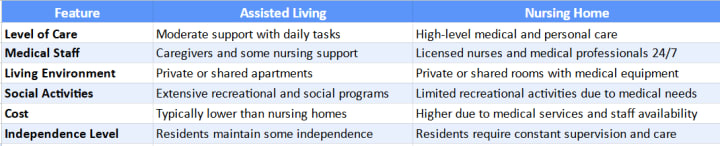
How to Choose the Right Option
Assess Your Loved One’s Needs
To determine whether assisted living or a nursing home is the best choice, consider factors such as:
- Health condition: Does your loved one require specialized medical care?
- Daily living assistance: Can they manage personal hygiene and mobility independently?
- Social preferences: Do they enjoy social engagement or require a quiet, structured environment?
- Budget: What financial resources are available for long-term care?
- Future needs: Will their condition require advanced care in the near future?
Visit and Evaluate Facilities
Before making a decision, it is essential to:
- Tour multiple facilities and assess cleanliness and staff interactions
- Speak with residents and family members for insights
- Review services, amenities, and care plans
- Understand pricing structures and financial assistance options
- Evaluate staff-to-resident ratios for quality care indicators
- Observe how staff interact with current residents
Consider Future Needs
If your loved one has a progressive condition such as Alzheimer’s or Parkinson’s disease, choosing a facility that offers memory care or transitioning to a nursing home may be necessary in the future. It’s important to ask whether the facility can accommodate changing medical needs without requiring a stressful move.
Understanding the Costs of Senior Care
One of the biggest concerns when choosing between assisted living vs nursing home care is affordability. Here’s a breakdown of cost factors to consider:
- Assisted Living Costs: Typically range from $4,000 to $6,000 per month, depending on location, amenities, and level of care required.
- Nursing Home Costs: Average between $7,000 and $10,000 per month due to the increased level of medical care and specialized staffing.
- Insurance and Financial Aid: Long-term care insurance, Medicaid, and veterans' benefits may help cover some costs.
- Additional Fees: Some facilities charge extra for specialized medical services, transportation, or private accommodations.
Final Thoughts
Deciding between assisted living vs nursing home care is a significant step in ensuring your loved one receives the best possible support. While assisted living promotes independence with minimal assistance, nursing homes provide round-the-clock medical care for those with complex health needs. Evaluating your loved one’s requirements and touring different facilities will help you make an informed decision.
About the Creator
Jane Rockwell
Jane Rockwell is a seasoned professional in senior living care with over a decade of experience. She specializes in assisted living and memory care, dedicated to enhancing the quality of life for seniors.
Keep reading
More stories from Jane Rockwell and writers in Families and other communities.
How to Access Long-Term Care Support for Seniors in California
California offers a broad range of long-term care support services designed to help seniors maintain their independence while ensuring they receive the care they require. From in-home supportive services to assisted living and skilled nursing facilities, understanding the available options and eligibility requirements is crucial for families navigating the senior care system. Below, we outline the most effective ways to access long-term care support for seniors in California, with a particular focus on the Assisted Living Waiver Program California, a vital initiative that helps eligible seniors afford assisted living services.
By Jane Rockwell11 months ago in Families
Wise~Guys
— Look Behind what's in Front of You ~ Make Good Choices — Hey, So how you Doin'..! Made~Men — Mobster Movies romanticise a distinctive, elegant appearance, impeccable attire style, along with the 'Families' expressive lingo. Making their 'Bones' gave them Panache — with vintage fedoras, tailored pin-striped suits, mirror-polished wing-tip shoes adorned with tassels; with their 'Gun Moll' gorgeous dates on their arms.
By Jay Kantor18 days ago in Families
Forever Mommy
You are placing bricks, one on top of the other, oblivious to the couples pressing their noses to the glass that separates them from you. The room on this side of the glass has many more like you, in all shapes, sizes, colours, and ethnicity scattered on tables, chairs and mats, playing and laughing unaware of the fate that awaits you on the other side of the glass. The couples on the other side are seated in a waiting room awaiting their turn to view from the glass and choose their prospective offspring. It’s a thrift store of the unwanted and used.
By Poonam Desai3 days ago in Families




Comments
There are no comments for this story
Be the first to respond and start the conversation.