
When Blood Isn’t Enough
On Love, Chosen Families, and the Bonds That Outlast Lineage

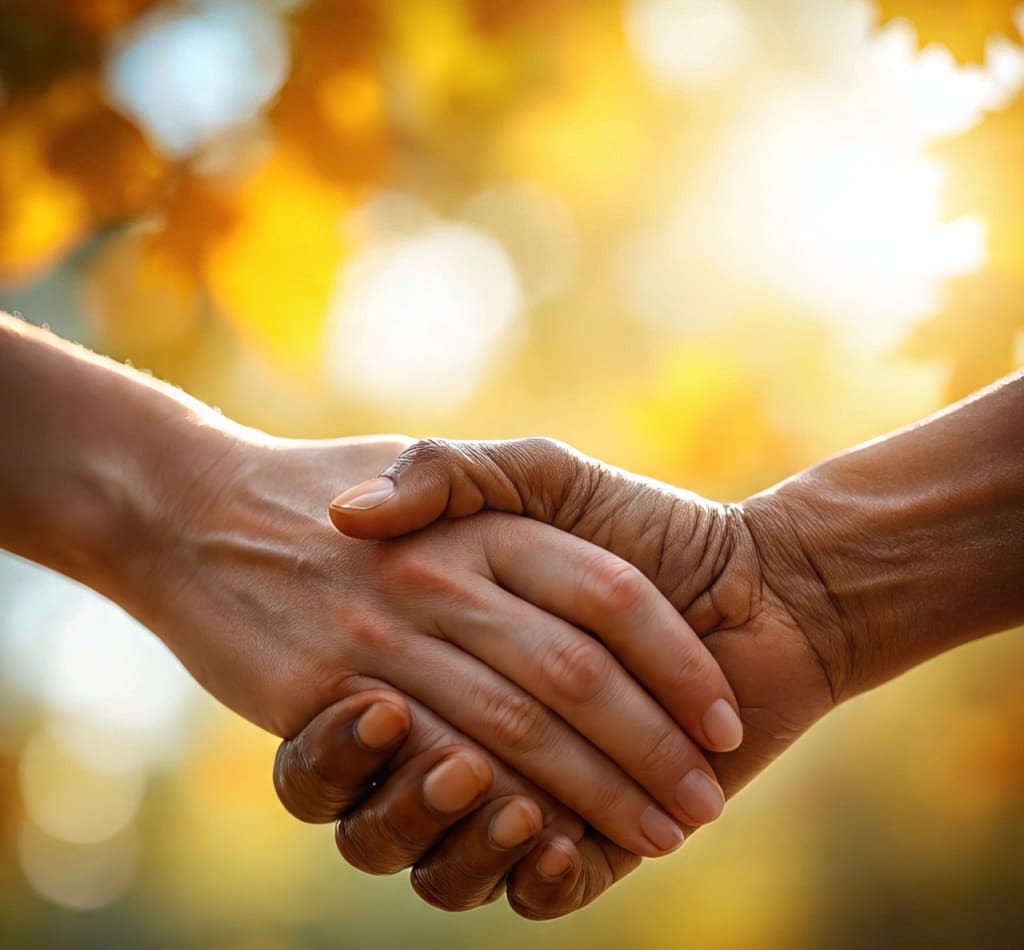
Family is the first myth we are told. Before we learn of gods or heroes, before we even know our own names, we are given a story of belonging: these are your people, this is your blood. We are taught that blood binds tighter than anything else—that love is inherited, that loyalty runs through our veins. But as we grow, life whispers its quiet rebellion: sometimes, blood is not enough.
Because kinship, at its heart, is not a matter of biology but of becoming.
There are families born of choice—woven not by birth but by the shared rhythm of care. A friend who shows up in the storm. A teacher who listens when the world does not. A stranger who offers kindness with no promise of return. These are the invisible threads that hold humanity together. They are not written in our DNA, yet they sustain us more faithfully than some ancestral ties ever could.
Across history, humanity has always remade the idea of family. Monks in monasteries called each other brother. Soldiers bound by battle called each other kin. Artists and dreamers formed small constellations of belonging, lighting each other’s darkness with companionship. Enslaved people, torn from their lineages, created new families of survival and song. Queer communities built chosen families when society denied their existence. Again and again, love expanded to fill the spaces where blood had failed.
Because love, unlike lineage, is an act of will.
Blood gives us origin; love gives us meaning. Blood says you are mine. Love says I see you. One is an accident of birth. The other, a choice renewed daily. And sometimes, the choice matters more.
The poets of old understood this long before science could name it. In myth and scripture, loyalty and betrayal were never guaranteed by kinship. Cain and Abel were brothers by blood but divided by jealousy. In The Mahabharata, cousins drew swords against each other, proving that morality could not be measured by lineage. Even in The Odyssey, family meant more than blood—it was loyalty, friendship, and the courage to return to those who waited. Across civilizations, the same truth persisted: the truest bonds are chosen, not inherited.
Even nature whispers this lesson. Wolves adopt orphaned pups into their packs. Elephants mourn for lost companions. Ravens remember faces, keeping lifelong allegiances. The instinct to care, to protect, to belong—it stretches beyond bloodlines, written into the very fabric of life.
And still, in our modern world, we struggle with the myth of blood. We inherit surnames, traditions, and expectations, believing they define us. But sometimes, family wounds more deeply than any stranger. There are households where silence screams, where love is conditional, where lineage becomes a cage. For many, survival begins when they realize they can choose another kind of family—a family of the heart.
You can find them anywhere.
The nurse who stays past her shift to comfort a patient with no visitors.
The neighbor who feeds the child next door.
The friend who answers a midnight call without hesitation.
These are the quiet architects of belonging. Their love is not born from obligation, but from empathy. They build homes without walls, offering safety not through inheritance but through intention. In a world of fractured roots and scattered generations, they remind us that connection can still be created—patiently, tenderly, one act of kindness at a time.
When blood is not enough, love steps in.
When love is not enough, compassion deepens it.
And when compassion is shared, even the loneliest heart finds a home.
Perhaps that is what humanity has always been reaching for—not a perfect lineage, but a circle of care that outlasts it. The bonds of chosen family prove that we can rewrite our stories. They teach us that belonging is not something we are given; it is something we build, together.
A chosen family is a small revolution. It defies biology and tradition to say: you are loved because you are, not because you belong by name or by blood. It reclaims love as a verb, not a duty.
In the end, family may not be who shares our history, but who shares our humanity. The people who stand beside us, not because they must, but because they choose to. They are the ones who hold our stories when we falter, who remind us who we are when memory fails, who stay when the world grows unkind.
And that choice—repeated, remembered, and freely given—
is the truest kind of kinship there is.
About the Creator
LUNA EDITH
Writer, storyteller, and lifelong learner. I share thoughts on life, creativity, and everything in between. Here to connect, inspire, and grow — one story at a time.
Keep reading
More stories from LUNA EDITH and writers in Families and other communities.
Wise~Guys
— Look Behind what's in Front of You ~ Make Good Choices — Hey, So how you Doin'..! Made~Men — Mobster Movies romanticise a distinctive, elegant appearance, impeccable attire style, along with the 'Families' expressive lingo. Making their 'Bones' gave them Panache — with vintage fedoras, tailored pin-striped suits, mirror-polished wing-tip shoes adorned with tassels; with their 'Gun Moll' gorgeous dates on their arms.
By Jay Kantor16 days ago in Families




Comments
There are no comments for this story
Be the first to respond and start the conversation.