
“What It Means to Be a Woman in a World That Doesn’t Listen”
Speaking Up in a World That Tries to Quiet Us
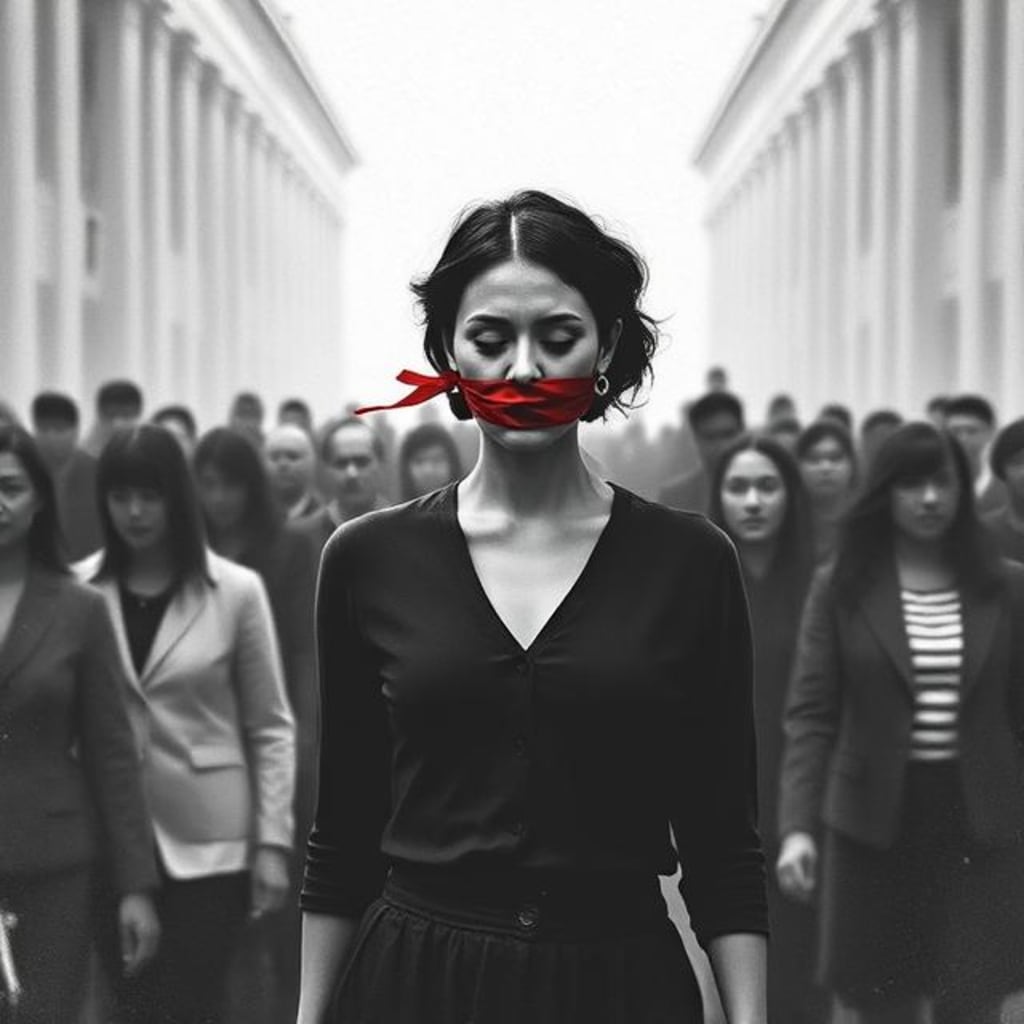
I’ve been interrupted mid-sentence more times than I can count.
In meetings, in classrooms, at dinner tables, and even during moments where my voice should’ve been the only one that mattered. And each time, a little piece of me was tucked away—filed under “Maybe I’m wrong” or “This isn’t the right time.”
You learn early on, as a girl, that the world doesn’t exactly roll out a red carpet for your voice. You’re taught to be polite, not assertive. To smile, not speak too loudly. To avoid “making a scene,” even if the scene is where your truth lives.
I didn’t realize how deep that conditioning ran until adulthood.
Growing up in a family of loud, opinionated men and soft-spoken women, I learned the unspoken rules fast. At dinner, the men spoke politics, business, the “real stuff.” The women passed plates and exchanged side conversations about recipes and birthdays. I had thoughts—strong ones—but I waited for someone to invite them out. They never did. So, I learned to tuck them away behind quiet nods and reserved smiles.
In school, it was the same. If I raised my hand too much, I was “bossy.” If I didn’t, I was “shy.” If I spoke confidently, I was “trying too hard.” If I hesitated, I wasn’t leadership material. It was a lose-lose equation. No matter what I did, someone always had a critique—and it was usually about my tone.
I remember the first time I spoke up about something that mattered.
I was in my early twenties, working my first real job as a junior associate at a fast-paced creative agency. One of the senior managers made a comment during a meeting—something subtly sexist but cloaked in humor. Everyone laughed. Except me.
I spoke up. Politely. Calmly. I said, “I don’t think that’s appropriate.”
The room fell into that strange, uneasy silence that women know too well—the kind that doesn’t protect you, just isolates you. After the meeting, I was told I had “misread the tone,” that I was being “too sensitive,” and should “focus on being a team player.”
That night, I cried in the office bathroom—not just because of what was said, but because of the echo it left. A deep, resounding silence that followed me from room to room. That’s the silence women are forced into when the world refuses to hear them.
But here’s the thing about silence—it builds pressure.
And eventually, it demands release.
In the years that followed, I began to notice how widespread the problem was. Not just in the office or in my family, but everywhere.
Friends who had been harassed on the street but didn’t tell anyone because “nothing would change.”
Mothers who bore the emotional weight of entire households but were dismissed as “overreacting.”
Women in healthcare settings whose symptoms were overlooked or misdiagnosed because they were labeled “anxious” or “hormonal.”
Survivors who came forward and were met not with compassion but with interrogation: What were you wearing? Why didn’t you speak up sooner?
Every story different. Every story the same.
The world has a way of gaslighting women into silence. And it does it so skillfully—so subtly—that for a long time, we don’t even realize we’ve been muted.
But we feel it.
We feel it in our throats, aching to say what we mean without shrinking it down.
We feel it in our backs, tired of carrying generations of suppressed voices.
We feel it in our hearts, which beat loudly for justice, fairness, equality—and ache when those things are treated like luxuries instead of rights.
I decided I couldn't live like that anymore.
I didn’t have a grand awakening. No viral moment. Just small rebellions that slowly stitched my voice back together.
It started with saying no when I meant it.
Then saying yes to things I used to doubt I deserved.
Saying “Excuse me, I wasn’t finished” in meetings.
Saying “That hurt” instead of brushing it off.
Saying “I need help” instead of pretending to be invincible.
And most importantly, saying “I believe you” to other women when the world refused to.
Reclaiming my voice was a quiet revolution—but it was mine.
And as I began to use it again, something incredible happened: I started hearing the voices of others more clearly. Not the loudest ones in the room—but the most honest, the most raw, the most necessary. The ones we’re usually taught to talk over or ignore.
I began mentoring younger women, encouraging them to take up space. I started writing—really writing—about my experiences, and for the first time, I didn’t worry about sounding “too angry” or “too emotional.” I let my words bleed truth. And women began reaching out, sharing their own stories, their own moments of being silenced.
One woman told me she had stopped speaking up in meetings because every time she did, her male colleague would repeat her idea louder and take the credit.
Another told me she had stayed in a relationship far too long because every time she expressed discomfort, she was told she was “overthinking it.”
Another admitted she had never once felt heard in her entire marriage—not truly.
And yet… we kept speaking. Quietly, bravely, persistently.
Because here’s the truth: The world may not always listen. But we do.
We hear each other in the small nods across crowded rooms. In the whispered “me too”s. In the rage-fueled essays, the protest chants, the shared glances of solidarity. We are listening, even when the world tries to drown us out.
And one day, they’ll have no choice but to hear us.
What does it mean to be a woman in a world that doesn’t listen?
It means being strong in the face of indifference.
It means choosing to speak anyway.
It means building a chorus from our silences.
It means lifting other women up so none of us are ever alone in the echo.
And most of all—it means knowing that our worth isn’t determined by the volume of our voice, but by the truth it carries.
So if you feel unheard, unvalued, or invisible, know this:
You are not imagining it.
You are not alone.
And your voice, even if it trembles, still matters.
We are listening.
We always have been.
About the Creator
Keep reading
More stories from Hamza Habib and writers in Families and other communities.
Wise~Guys
— Look Behind what's in Front of You ~ Make Good Choices — Hey, So how you Doin'..! Made~Men — Mobster Movies romanticise a distinctive, elegant appearance, impeccable attire style, along with the 'Families' expressive lingo. Making their 'Bones' gave them Panache — with vintage fedoras, tailored pin-striped suits, mirror-polished wing-tip shoes adorned with tassels; with their 'Gun Moll' gorgeous dates on their arms.
By Jay Kantor18 days ago in Families


Comments
There are no comments for this story
Be the first to respond and start the conversation.