
“I Tried Being the ‘Perfect’ Partner—And It Destroyed Me”
When Love Becomes a Performance, You Lose Yourself
It started with the best of intentions.
I loved him—simple as that. Or at least, I thought I did. What I didn’t understand at the time was that love, real love, should never ask you to disappear.
When I met Liam, he was magnetic. Confident, charming, thoughtful in a way that made every other man I’d dated seem careless in comparison. He noticed things—small things, like how I stirred my coffee counter-clockwise or always read the last page of a book before the first. He paid attention. And to someone like me, who had spent too many years feeling invisible, that attention was intoxicating.
So when we started dating, I wanted to be everything he could possibly want.
I learned what he liked—his favorite meals, the exact brand of shampoo he used, the way he liked his socks folded. I adjusted my habits to fit his. If he liked quiet mornings, I stopped playing music during breakfast. If he preferred nights out with his friends, I tagged along even when I was exhausted. I adapted, reshaped, and silenced parts of myself to mold into the image of the ideal girlfriend. The “cool” one. The chill one. The understanding one.
He never asked me to do these things. That’s what made it harder to explain later. The truth is, he didn’t need to ask. I was already trained—by society, by movies, by my own insecurities—to believe that the best way to keep love was to earn it. And earning love, in my mind, meant perfection.
It didn’t happen all at once. No dramatic breakdown. No yelling or slamming doors. Just a slow, subtle erosion. Like water dripping on stone.
The first sign should have been how tired I always felt. Not physically, but emotionally. Like I was performing in a play that never ended. Smiling when I wanted to cry. Laughing at jokes that didn’t land. Swallowing my opinions, my frustrations, my needs—because the “perfect” partner doesn’t complain.
He’d say, “You’re amazing, you’re not like other girls.” And I’d glow, even as something inside me shriveled. I didn’t want to be “not like other girls.” I wanted to be me. But I’d already forgotten who that was.
I gave up writing—something that once felt like my oxygen—because it took time away from us. I stopped seeing certain friends because he didn’t really get along with them. I wore clothes he liked, dyed my hair darker because he once said he preferred brunettes. None of it seemed like a big deal in the moment. But added together, they built a version of me that wasn’t real.
I thought if I was perfect enough, it would keep us safe. Keep him from ever leaving. But perfection is a mask, and masks are suffocating.
The breaking point came one evening over something as small as a dinner reservation.
I had spent the entire day planning a surprise anniversary dinner—reservations, candles, even a printed photo album of our first year together. I was proud. Excited. He came home late, distracted, and barely looked at it.
“I told you I wasn’t sure if I’d be hungry tonight,” he said flatly, collapsing onto the couch.
Something inside me cracked. Not loudly. Just enough to let the truth seep through.
All I said was, “I wish you’d just appreciated it.”
He looked up. “Are you seriously getting upset over this?”
And for once, I didn’t apologize. I didn’t backpedal or soften my tone. I said: “Yes. Because I put a lot of effort into making you feel loved, and I don’t feel like that’s being returned.”
Silence.
It wasn’t a fight. It wasn’t a breakthrough either. Just an awkward, heavy silence that lingered for the rest of the night. And in that silence, I saw the full picture for the first time.
This wasn’t love. At least not the kind I wanted. It was a performance. A transaction. A tightrope walk where I was the only one afraid of falling.
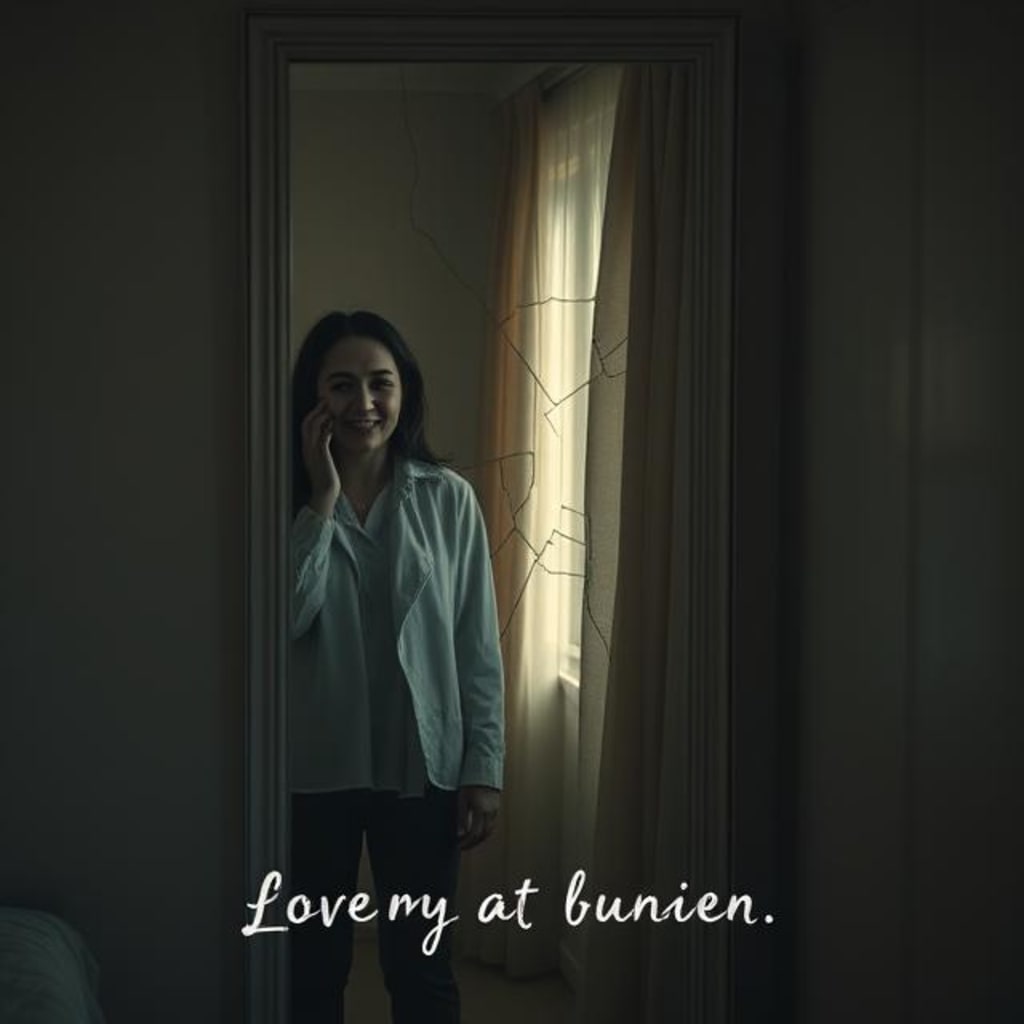
The next morning, I looked at myself in the mirror and barely recognized the woman staring back. She looked tired. Not from one bad night, but from years of trying to hold together a version of love that was built on self-erasure.
I started therapy a few weeks later.
It wasn’t easy. Unlearning perfectionism never is. I had to face the hard truth that I wasn’t just a victim of the relationship—I had been an active participant in my own disappearance. I had convinced myself that shrinking made me lovable. That silence was strength. That sacrifice was the only language of love.
The hardest part was mourning the version of myself I had lost. The girl who used to dance barefoot in the kitchen. Who journaled late into the night. Who spoke too much and laughed too loudly and loved being that way. I missed her. I still do.
Leaving Liam wasn’t a grand moment of empowerment. It was quiet. Painful. Necessary. He didn’t beg me to stay. He didn’t even ask why. And honestly, I think he preferred the version of me who bent instead of broke.
But I’m not bending anymore.
I’m rebuilding. Slowly. I’ve started writing again—not for an audience, not for praise, but just to remember what it feels like to hear my own voice. I’ve reconnected with friends I ghosted out of guilt and shame. I go to bookstores alone. I eat whatever I feel like. I speak up, even when my voice shakes.
I’m not perfect. Thank God.
Because real love—whether from a partner, a friend, or yourself—doesn’t require perfection. It requires presence. Honesty. Wholeness.
And now, for the first time in years, I’m beginning to feel whole again.
Author’s Note:
If you’re in a relationship where love feels like a test you’re constantly failing, I hope you know this: You were never meant to be perfect. You were meant to be real. And the right love will never ask you to be anything else.
About the Creator
Keep reading
More stories from Hamza Habib and writers in Marriage and other communities.
“How I Healed My Anxiety Naturally—And What Actually Worked”
There was a time not long ago when anxiety ruled my life like a tyrant. My chest would tighten in the middle of the day for no reason. My heart raced when I tried to fall asleep. And the smallest tasks—like answering a phone call or stepping into a crowded room—felt like mountains I wasn’t strong enough to climb. I didn’t recognize myself anymore. My smile had become a performance, my peace a distant memory.
By Hamza Habib9 months ago in Psyche
Why Lab-Grown Diamond Rings Are a Smart Choice for Modern Women
Exploring how sustainable diamonds combine beauty, responsibility, and affordability. Diamonds have always been associated with elegance, celebration, and timeless beauty. For generations, they have symbolized love, commitment, and personal milestones. Today, however, the meaning of diamonds is evolving. Many modern consumers are not only interested in how a diamond looks, but also how it is sourced and produced.
By GemOne Diamond4 days ago in Marriage
Why Lab-Grown Diamond Stud Earrings Are Becoming a Modern Jewelry Essential
Introduction Jewelry trends often change with time, but some pieces remain timeless. Among them, diamond stud earrings continue to hold a special place in everyday fashion. They are simple, elegant, and versatile enough to complement almost any style.
By GemOne Diamond4 days ago in Marriage
A System That Isn’t Working Challenge Winners
Systems promise order. They organize behavior, distribute opportunity, and suggest that if everyone follows the rules, things will work. The entries in A System That Isn’t Working look closely at what happens when that promise begins to slip.
By Vocal Curation Team5 days ago in Resources



Comments
There are no comments for this story
Be the first to respond and start the conversation.