
What Does 'Social Distance' Mean Within a Family?
8 Tips for Social Distancing Within Your Family

Should I be socially distancing from my family even though we live together?
This is a question that is being asked all over the world as the threat of the Coronavirus continues to rise.
With most families staying inside to help flatten the curve, is it logical to stay away from your family members even if you live together?
Two experts spoke to CBC News on the matter. "It's a bit of a judgment call," Dr. Isaac Bogoch, Infectious Disease Specialist, said regarding households where one family member is still going to work every day.
Many partners are choosing to maintain some degree of normalcy in their lives, continuing to associate with one another while practicing good hygiene.
Others are choosing to social distance even within their own home, sleeping in separate bedrooms and doing their best to avoid contact with one another.
So, what should you do? What does social distancing mean within a family unit and how should you handle self-isolation with your family during COVID-19?
1. Develop healthy handwashing habits
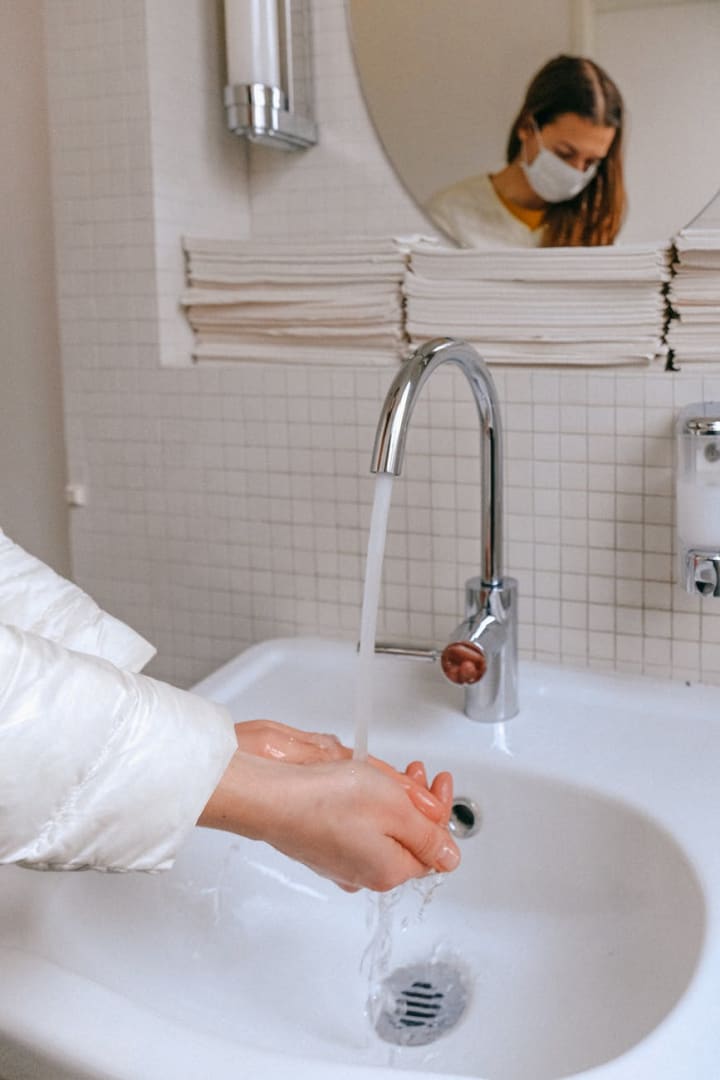
If you want to keep yourself and your family happy and healthy during the coronavirus pandemic, now is the time to start developing healthy habits such as vigorously washing your hands with soap and warm water for 20-60 seconds.
Cleanliness is the best habit you can have during this global pandemic. Dr. Samir Gupta, Respirologist and associate professor at the University of Toronto, says "The time [for hand-washing] is most important when you've had contact with the outside world, but even if you haven't had contact, it's a great habit to get into."
Make sure you are washing your hands with an antibacterial soap every time after returning home, sneezing, or coughing. Washing hands before meals is also a great, healthy habit to adopt.
2. Keep your house clean
Personal hygiene is important, but so is keeping your house clean. Harvard Medical School reports that COVID-19 can stay alive on plastics and stainless steel for up to three days, making it essential that you clean surfaces regularly.
Use bleach, detergent, and water, or a household disinfectant to wipe down surfaces. Surfaces such as countertops, tables, doorknobs, toilets, phones, tablets, keys, and bathroom fixtures should be cleaned daily.
3. Self-isolate if you have traveled
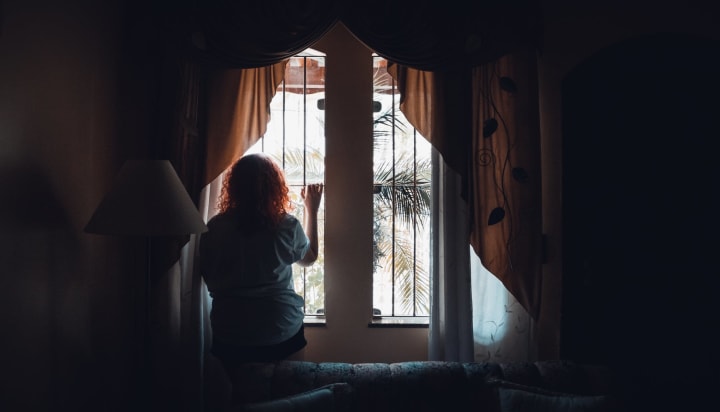
If you have traveled recently, it is imperative that you self-isolate for 14-days to make sure you do not have any symptoms.
This can be a bit of a drag, especially if you're living with a large family. After all, who wants to be trapped in their room for two weeks?
Regardless, you must do your part to help prevent the spread of the illness.
Stay in your room, have family members bring your food to you, and do not leave except to use the bathroom.
4. Factor in family health issues
If you and your family have self-quarantined for 14 days, are not leaving the house for work or school, and have no symptoms, it is perfectly fine to associate together.
However, it is wise to consider those in your family who may be vulnerable to the virus.
For example, elderly ones and those with known respiratory weaknesses such as those with asthma should be given special attention at this time.
If you are out at the grocery store or have come into contact with a large group of people, you would not want to directly associate with those at risk in your household.
5. Vulnerable ones should minimize the social time
Pew Research from 2018 found that 64 million Americans were living in multigenerational households. An example of this would be a married couple living with their elderly parents and young children.
With these statistics in mind, it is not unlikely that millions of families around the world are living with relatives who would be considered at-risk or vulnerable to COVID-19.
Such family members would be wise to self-isolate from relatives who are still leaving the house to go to work so as not to put themselves at further risk.
6. Use common rooms separately
If you want to be extra careful during social distancing, think about using common rooms, such as the kitchen, separately from those who are still leaving the house.
Disinfect the area after use so that you don't spread any germs to the next person to use the space.
7. Stay social while social distancing
No matter how you choose to self-isolate with your family, it's important to stay social, whether that means interacting in person with your relatives or getting on video chat.
When it comes to interacting with members of your family, Dr. Isaac Bogoch says, "It's totally reasonable to have some sense of normalcy in the relationship at home, and if both people are completely healthy and well, I think that's totally fine."
Facetime, Google Hangouts, and Zoom are all great ways to stay in contact with friends and family while you're stuck at home.
Not only is a video chat a fun avenue for staying in touch, but it can also raise morale. Studies show that support from loved ones can significantly lower psychological distress during traumatic times.
8. If someone in your household has COVID-19
The Center for Disease Control suggests that unless those who have contracted the virus are experiencing severe symptoms, they should do their recovery at home.
Living in the same house as someone who has been diagnosed with the coronavirus can be very stressful for healthy family members.
If your loved one has COVID-19 and you must share the same space with them, remember to:
· Keep your family member in self-isolation
· Use separate bathrooms, if possible
· Avoid touching your face
· Frequently clean surfaces, doorknobs, and light switches
· Get as much distance as possible, never coming within 6-feet of one another.
· Bring meals to your family member
Limit the sick family member's access to the rest of the house
Use extreme care when handling their dishes or other items they have touched, sanitizing with a bleach solution afterward.
How you choose to socially distance within your own family is up to you. We know you want to make informed and responsible decisions that won’t put your loved ones at risk.
You can do your part by keeping a clean house, self-isolating after travel, and diligently washing your hands.
By following the 8 tips above, you can help flatten the curve and slow the spread of COVID-19.
About the Creator
Keep reading
More stories from writers in Families and other communities.
Wise~Guys
— Look Behind what's in Front of You ~ Make Good Choices — Hey, So how you Doin'..! Made~Men — Mobster Movies romanticise a distinctive, elegant appearance, impeccable attire style, along with the 'Families' expressive lingo. Making their 'Bones' gave them Panache — with vintage fedoras, tailored pin-striped suits, mirror-polished wing-tip shoes adorned with tassels; with their 'Gun Moll' gorgeous dates on their arms.
By Jay Kantor18 days ago in Families
The quiet sound of families breaking
There is a kind of silence that is louder than any noise. It is the silence of a child waking in the night and realizing their parent is gone. It is the silence of a kitchen table with one chair suddenly empty. It is the silence of a home that still looks the same, but no longer feels the same. Across the United States, thousands of families live inside that silence. Not because of war. Not because of disaster. Not because of death. But because of policy.
By Kaylee Souther7 days ago in Families
The Devil's Cut
“Comrade, finally you’re awake.” The voice was smooth, sensual. A flickering incandescent bar was all that lit the white, sterile room. All Vladimir remembered was everything going black. He tried to move his arms and found them strapped to the gurney.
By Matthew J. Fromm5 days ago in Fiction



Comments
There are no comments for this story
Be the first to respond and start the conversation.