
The Words You Speak And The Tone You Use Can Impact Your Child’s Temperament
Children are constantly learning as they grow older from their own explorations, their peers, and most importantly, from their parents.

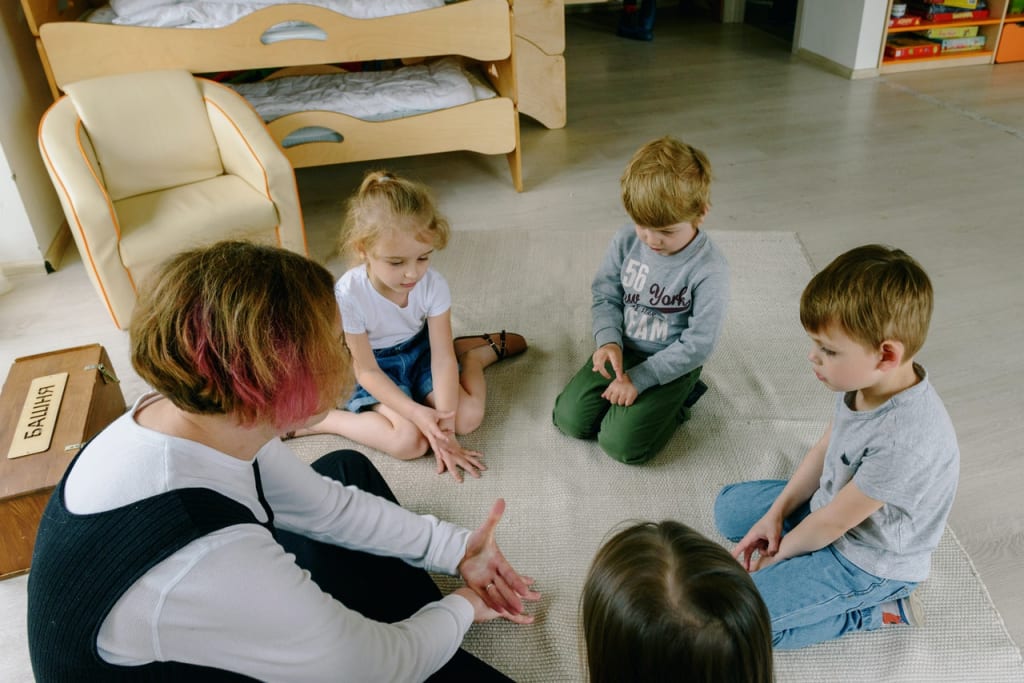
Children are constantly learning as they grow older from their own explorations, their peers, and most importantly, from their parents. It was thought that your child’s temperament was genetically predisposed and wired at birth. However, a recent 2016 study, has suggested that a child’s environment plays a crucial role, that includes how and what a parent says to their children on a daily basis.
What is temperament?
Temperament is how a child adapts to his environment and his or her emotional style. For the most part temperament is an innate quality of each individual child, yet it can be heavily influenced throughout the early years of a kid’s life, by their experiences and interactions with other people, their environment, and their overall health.
By the time your child reaches school, their temperament will be well defined. “However, their behavioural adjustment depends a lot on the interaction between their temperament and yours, and how others respond to them as well, or their overall comfortability they fit in to the surrounding environment and the people around them” says Mary Clark, a psychology writer at Essayroo and Best Essay Services.
Characteristics of Temperament
The following characteristics make up your temperament:
- Sensitivity- This has to do with how sensitive you are to sensory stimuli. How much discomfort do you feel when you hear a loud noise and how well do you tolerate it?
- Regularity- Do you enjoy a regular schedule or prefer spontaneity?
- Activity level- How active are you on a daily basis? Do you enjoy a lot of activity, or do you prefer more quiet, sedentary activity?
- Intensity-How easily can others tell how you are feeling? Do you show a big response when you are upset, for example, or do others have to guess how you are feeling?
- Persistency-Are you able to stick with a task? Are you likely to move from one activity to another without finishing or do you stick with one task until it’s finished?
- Adaptability- How do you do with change? Do you jump right into a new situation, or do you take the time to assess a situation before stepping in?
- Distractibility-Are you able to pay attention for long periods of time or do you get distracted easily?
Your temperament determines how you perceive and respond to your child’s behaviours and influences your child and your discipline strategies you use.
How the words you choose and how you say them can impact your child.
In the 2016 experiment, 15 children at 15 months of age were taught by researchers how to play with toys while sitting in their parents’ lap, while another researcher, called the ‘emoter’ would either react with anger and say sternly “That’s aggravating” or react neutrally and say in a neutral tone “That’s interesting”, while the infants watched this demonstration. Later, they let these children play with the toys. The children who had been responded to with anger were less likely to play with the toys.
What this means for parents is that how we say things and what we say can have a massive impact on our child’s behaviour in the moment, but also how they react to future instances. “If you react angrily, because you are noise sensitive to certain sounds, for example, over time a child will generalise your reaction and may become hesitant and fearful in new environments with new toys, afraid of making too much noise,” says Ian Marvel, a blogger at Research Papers and Top Essay Services.
How can you use this information to help your children?
You can use this knowledge to impact your children in a positive manner. By using a positive tone and positive statements around your small children in various situations, you help them react in a more positive manner. You can teach your child to not fear new places or new people in this way, while using a stern tone to help them understand dangerous items and situations, so they will avoid them in the future.
How you speak to your children is critically important to their own temperament as it can impact how they react to different situations in the future. Equally important is the tone you use. You can use this information to help you encourage your children’s emotional growth more effectively.
About the Creator
Madeline Miller
Madeline Miller is a writer and blogger.
Keep reading
More stories from Madeline Miller and writers in Families and other communities.
How to Read Polyphonic Music on the Piano
In music theory, music is categorised into monophonic and polyphonic. According to the definition, the difference lies in the maximum number of sounds occurring simultaneously at any given moment in the piece. So if there is only one sound present, we call it monophonic music, but if there are two or more at the same time, we call it polyphonic. We commonly refer to these individual notes as “voices” or “parts”, therefore, a monophonic piece should have only one part, but polyphonic music will have two or more.
By Madeline Miller4 years ago in Education
Wise~Guys
— Look Behind what's in Front of You ~ Make Good Choices — Hey, So how you Doin'..! Made~Men — Mobster Movies romanticise a distinctive, elegant appearance, impeccable attire style, along with the 'Families' expressive lingo. Making their 'Bones' gave them Panache — with vintage fedoras, tailored pin-striped suits, mirror-polished wing-tip shoes adorned with tassels; with their 'Gun Moll' gorgeous dates on their arms.
By Jay Kantor23 days ago in Families




Comments
There are no comments for this story
Be the first to respond and start the conversation.