
Do I Even Have the Right Not to Love My Mother?
A story of childhood trauma, constant surveillance, and the struggle to survive.
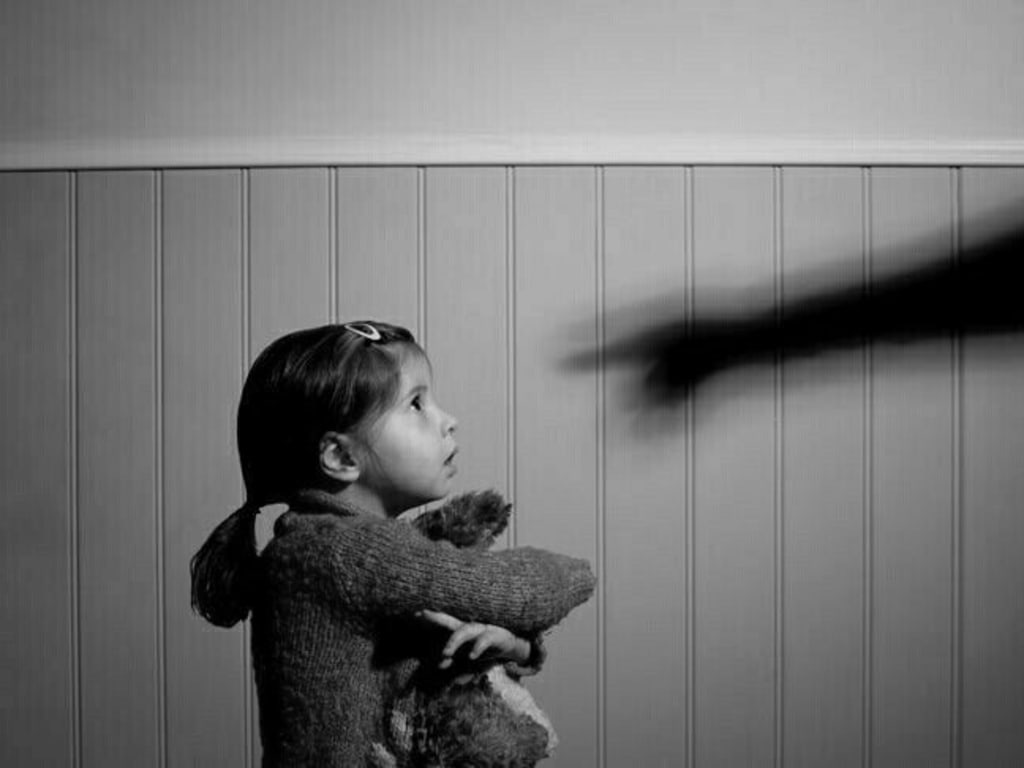
Trigger warning: child abuse, self-harm, psychological trauma, surveillance
I want to share the story of my friend Emma.
Her mother, Anya, made her childhood feel nothing like other kids’ stories. While Emma’s friends talked about bedtime stories and gentle goodnights, Emma was simply told, “Go to sleep!” — the lights were turned off, and the door slammed shut. The silence that followed was heavy, almost like waiting for something bad to happen.
Emma grew up in a so-called “well-off” family. Her parents didn’t drink, they were always neat, and she had enough food and clothing. Still, her mother often bought second-hand clothes, and Emma would mend, wash, and iron them herself. Every crumb she dropped, every “weird” glance, could spark yelling. Sometimes she was even hit, with words like, “Make your face simpler!” echoing in the house.
The house itself felt like it belonged to Emma. She was responsible for cleaning and taking care of everything. Once, forgetting a plate on the kitchen counter, she went to take a bath. Her mother saw it, grabbed Emma by the hair, and tried to hold her underwater. Bad grades meant punishment; she was sent to school even with a fever. One time, forgetting to put away a knife, her mother threw it at her leg — luckily, it got stuck in the floor.
Emma has a younger brother, three years younger. He is treated far more leniently: he only needs to take out the trash and vacuum. They share a room, and one day they noticed a faint blinking light behind some boxes. Curious, they discovered a small hidden camera, and later another in the living room.
Terrified, Emma and her brother tried small, careful tricks to hide the cameras — covering them with curtains, moving them slightly “by accident” — anything to make them less visible. Even these tiny attempts triggered furious outbursts from their mother. Their fights were minor, like “Why didn’t you put your things away?” or “Why should I do it?” But even small, cautious acts of hiding the cameras led to yelling, punishment, and fear.
When they confronted Anya directly, she screamed, “I’m tired of your fighting. Now I will know who is responsible and who will lose their phone!” Even when my mother, who is friends with Anya, tried to point out that children need personal boundaries, Anya insisted: “If you don’t care about your kids or control them, that’s your problem. I need to know what happens in my house. While they live here, I have the right to place cameras anywhere — in every corner — to see if they do homework, clean, or go to bed on time.”
Emma seems to have resigned herself to the constant surveillance. Once, she even said, “What if something happens to me? At least mom will see it on the camera right away.” I find this disturbing. The apartment has three rooms — it would be easy to check without cameras — but Emma has either gotten used to it, or she feels ashamed and tries to make it seem normal.
Her phone is constantly monitored. Every chat, every app, every message is checked. She can’t even manage to clear her chats because her phone is regularly taken away for inspection.
Recently, Emma showed me the scars on her arms. I was shocked and asked why she did it. She said she thought it would help her feel better but realized it was only self-suggestion. Now, the scars remain as a reminder of the past, but the pain hasn’t gone away.
She is 5’4” (163 cm) and weighs 192 lbs (87 kg). I’m certain this is the result of constant stress. She tries to exercise more, but every attempt spirals because her mother shames her, labeling the fridge with signs like, “Fat — do not open.”
I feel so sorry for her. When I asked about her mother, Emma said she would keep in touch, but very rarely. And when I asked if she loved her, she quietly answered:
“I don’t know… do I even have the right not to love her for my childhood?”
Even now, Emma counts the days until she can leave. Every small victory, like stepping outside, feels monumental. But the shadow of the past, the constant control, the cameras, and the surveillance still linger in her mind. Their small, careful attempts to cover or move the cameras were tiny acts of resistance — ways to survive in a world where privacy doesn’t exist, where even the simplest actions are watched.
Emma’s story is a reminder that some scars are invisible, some pain never leaves, and some battles are fought quietly, every single day
About the Creator
Keep reading
More stories from Nikol Danilova and writers in Families and other communities.




Comments
There are no comments for this story
Be the first to respond and start the conversation.