
The study of happy tears
Drinking up sadness and happiness, all at once

I don’t think I had a sense of who I was, or wanted to be, until I grew old enough to remember what it was like being young.
My attention to moments started when I was little. I was fascinated by the camera. My three-year-old self always wanted - and verbally demanded (there’s tons of embarrassing video proof) for my dad to flip the VHS recorder screen around so I could see what he was capturing. What did I look like, and what was happening? I eventually got my hands on cameras myself to answer those questions for other people around me.
During the summers and winters, I’d go with my family to visit relatives in California. At the time, I had no interest in the classic California beaches. For me, California truly meant my grandparents’ big house, where we’d all sleep over like sardines in a can, talking to each other until we fell asleep.
Out of all these picture-worthy moments, what seemed most interesting to me early on was each time we all said goodbye to family. I felt real, heavy sadness parting with relatives. I loved playing, and hanging out, and gathering for enormous, homemade meals. I never wanted the fun to stop.
Before we’d board the plane back to Texas, I remember I’d dramatically look out at the California mountains and tearfully whisper, “Bye,” with my cousins and extended family in mind (as if they could hear me). My mom would lean over my shoulder and tell me I should just say, “See you later,” instead.
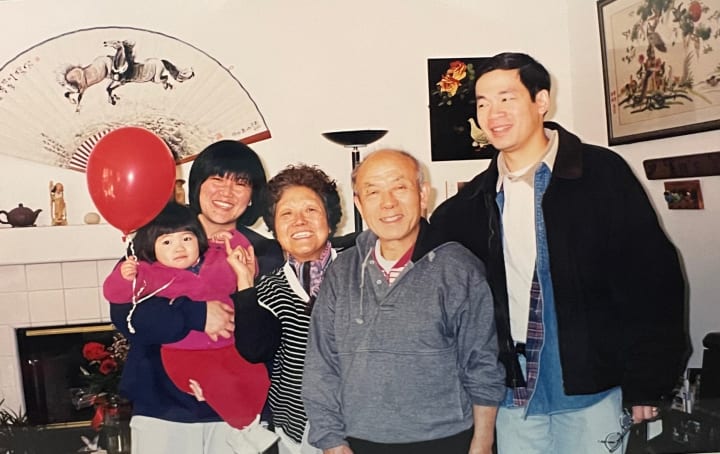
As a kid, I eventually realized that adults cried too, but I couldn’t figure out if we were crying for the same reasons. I watched them all the time: when we went through the same cycles of visiting California; when we traveled from different families’ and friends’ houses at night, like following a string of constellations in the dark; and when we went from sharing meals and stories, to spending Christmas mornings together, to saying “Thanks for everything. It was good to see you.”
For some reason, even in the happiest moments - when we were all together, about to pray before eating a meal together - someone would get verklempt while giving thanks for the food. The adults would quietly linger when they hugged each other before leaving. I remember wondering why this felt like a different type of sadness.
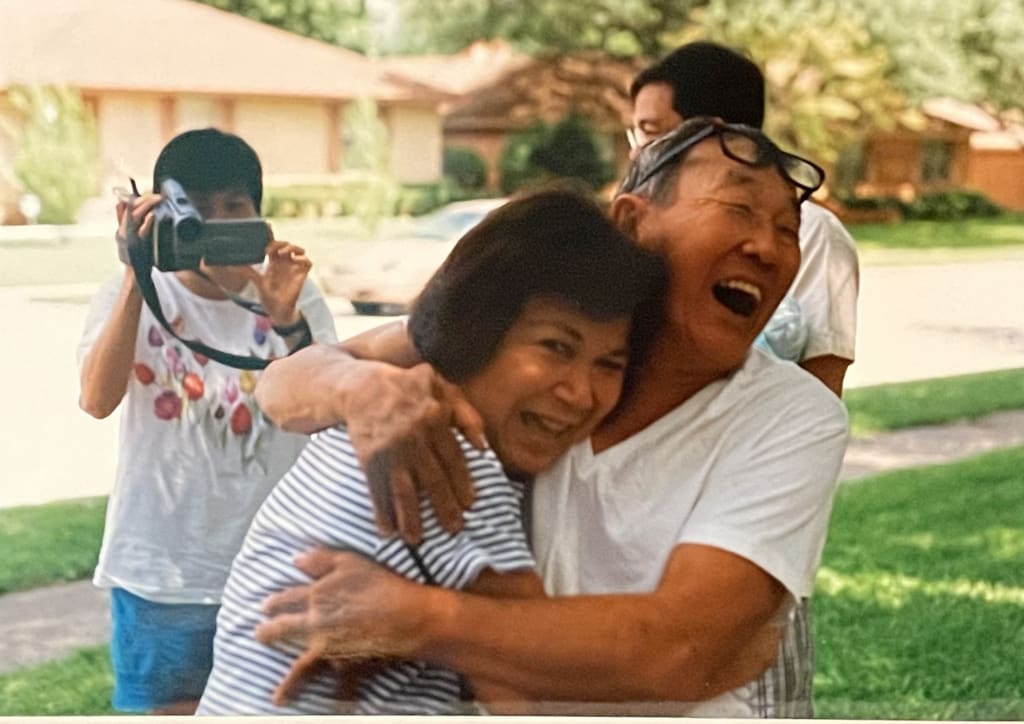
My grandma on my mom’s side - we call her Po Po (婆婆) - easily cried at everything. Whenever we’d arrive - tears. When we’d leave - tears. Whenever Po Po felt happy and grateful - tears. Back then, I didn’t understand why her wrinkly, freckled face was always gleaming with tears whenever something beautiful was happening, when she was happy to see us, and when she was sad to see us go.
As a sensitive child, I tried to pick apart the hairs between these different sad feelings. How could the emotion be all the same?
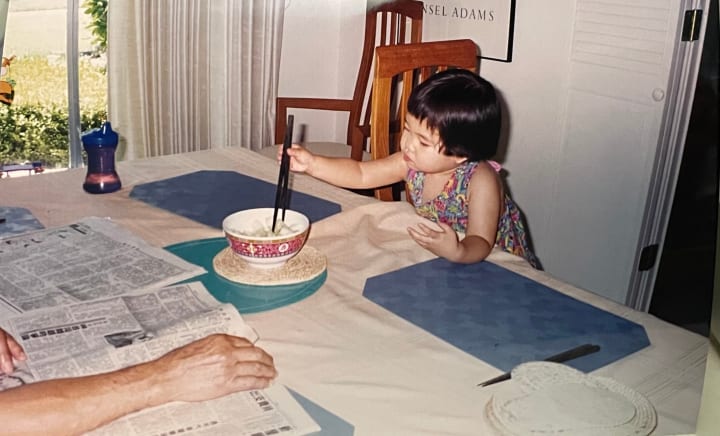
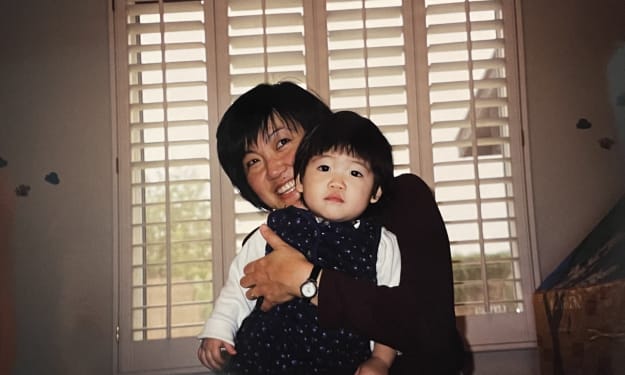
For me, the first time I remember consciously crying from being happy was when my mom came back from a two-week business trip in China (which felt like an eternity to me). I’d worried so much about how my dad, sister, and I would all survive for two weeks without her taking care of us at home. That must have been my first time realizing the power of being so happy to see someone again, that it just felt right to cry. (I love my dad very much, but my younger self really didn’t appreciate his rare cooking attempt at homemade Mac n’ Cheese during my mom’s absence. More stories about Dad another time.)
As I grew up, I realized that a lot of the time, crying isn’t truly sadness. Happy tears are like releasing an ocean you’ve been holding back from rushing onto the shore. It’s complete happiness, or sadness about happiness being so fleeting, that you’re afraid you don’t deserve to experience it, or may not get to relive it again.
My understanding today: it turns out sadness and happiness work hand in hand like that. You’re sad to see someone you love go, because it’s like opening the door for happiness on its way out. Happiness grows and changes shape, and it also grows old. Sometimes it passes away, and it leaves you behind. But it always returns, even if you don’t know how long it’ll stay.
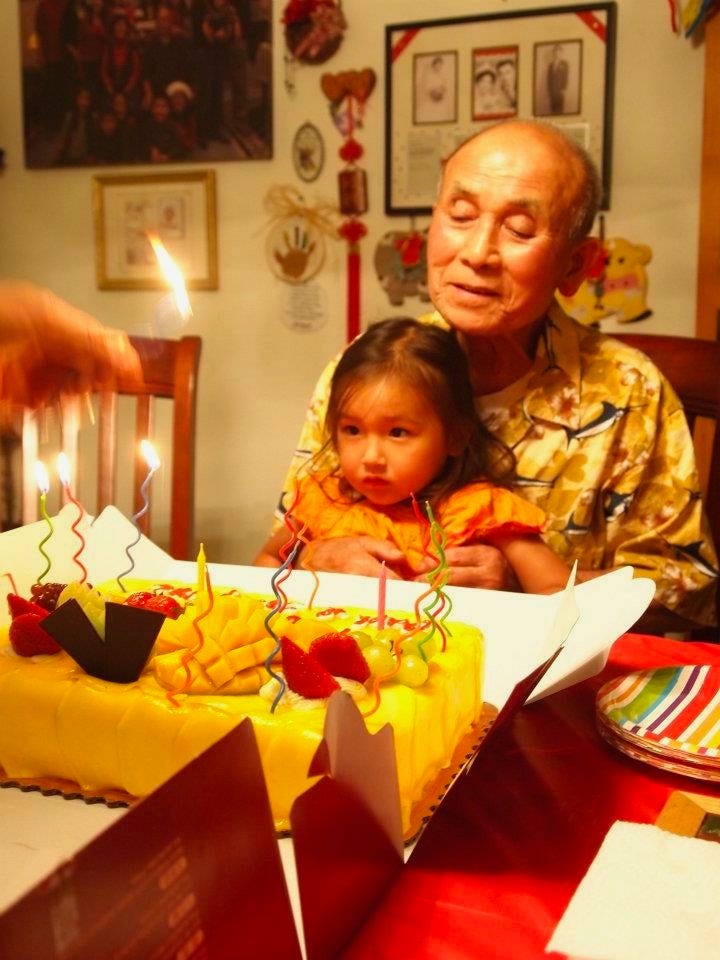
And in between this ebb and flow - these waves of change coming and leaving from your life - there is crying, and every hello and goodbye, to grieve and celebrate it all.
When I think about I who I want to be, I just know I want to be there for every part of it.
About the Creator
Lindsay Sing
Writing a collection of snack-sized reflections on life, culture, relationships, and growing up. Come for homemade observations, and stay for new perspectives and stories. There's a seat for everyone at the table.
Keep reading
More stories from Lindsay Sing and writers in Families and other communities.
Making friends with authenticity
Everyone has something to say about authenticity, especially when it comes to Asian fusion food. But I’m not sure if every immigrant grandparent’s dream was ever about being “authentic.” For some, just getting by is enough. And there’s nothing more authentic than making a living so you can have a future.
By Lindsay Singabout a year ago in Humans
Wise~Guys
— Look Behind what's in Front of You ~ Make Good Choices — Hey, So how you Doin'..! Made~Men — Mobster Movies romanticise a distinctive, elegant appearance, impeccable attire style, along with the 'Families' expressive lingo. Making their 'Bones' gave them Panache — with vintage fedoras, tailored pin-striped suits, mirror-polished wing-tip shoes adorned with tassels; with their 'Gun Moll' gorgeous dates on their arms.
By Jay Kantor20 days ago in Families
Why Are Teachers Leaving Education?
As someone who is new to teaching, I will not sit here and pretend to fully understand everything veteran teachers have endured over the years. I do not yet have decades of experience to draw from. However, I can speak honestly about what I have observed in my year and a half in the classroom, and what I have learned in that short time is both eye opening and concerning. Teaching today is no longer just about teaching content. It has evolved into a profession that often requires educators to act as the judge, the juror, and the executioner, so to speak, all while being expected to maintain patience, professionalism, and compassion at every turn.
By Kimberly Nightengale4 days ago in Families
Ludacris and Nelly draw backlash over bookings at MAGA-coded music festival
Ludacris and Nelly headlining a mostly right-wing event is good for them. It’s also great for the genre of hip hop. The two rap veterans have showcased their talents on other stages. Why can’t they perform for mostly MAGA folks and grab that bag?
By Skyler Saunders6 days ago in Beat



Comments
There are no comments for this story
Be the first to respond and start the conversation.