
She dies on a Tuesday. Quietly; inconspicuously; just as she lived. Her husband calls their children to tell them. He never understood this strange woman who shared his bed, his home, who wore his wedding band for fifty-seven years. But he loved her. As much as he could. As much as anyone can love a person they don’t understand.
They have one daughter and two sons, all three grown to middle age. Their daughter is a single mother, never married, who moves home when the baby is barely a year old. This makes her feel like a failure and for a reason she can never quite unravel even to herself, she blames her soft-spoken mother; her hushed tones and long stares. She lives alone in a small but comfortable apartment by the time her father is calling to say her mother is dead.
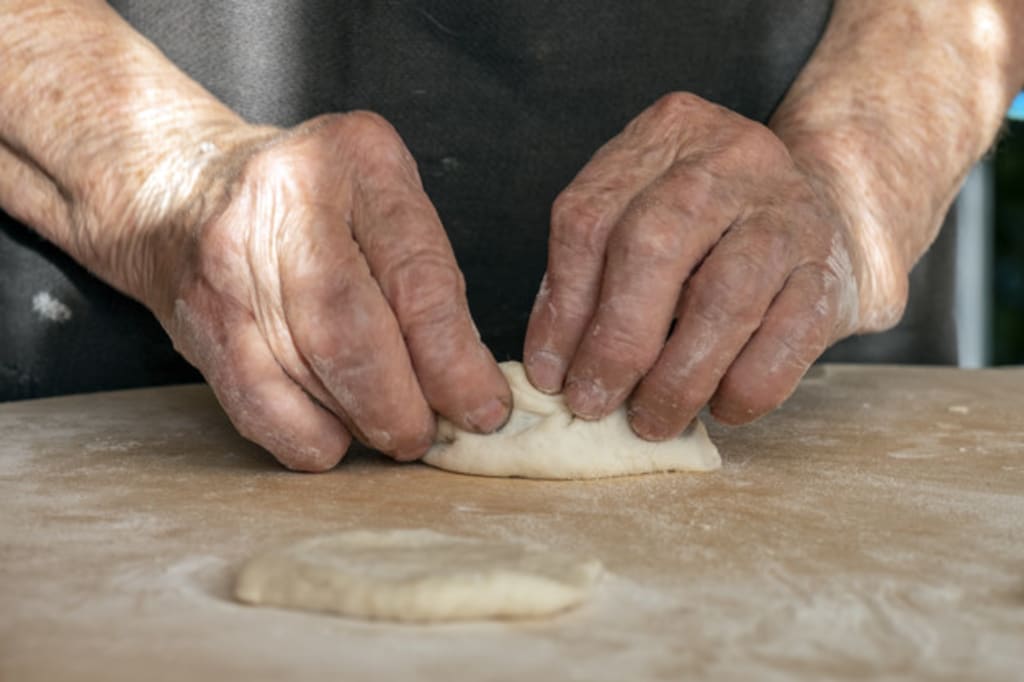
The fatherless granddaughter is named Sasha, for the motherland. From her very early years, Sasha watches. She watches her babushka in the kitchen, the long hours toiling over simmering pots, rolling dough until it is smooth and beaten-down, sniffing the onions to gauge their ripeness, peeling the potatoes. She watches the lines deepen on babushka’s face as the years pass. She watches her own mother’s face grow creased from frowning, sees how she sometimes glares at families in the supermarket, not in anger but in such painful longing that it makes Sasha turn away. When Sasha is little, she thinks it is mommies and daddies that make her mother look that way; when she is about twelve years old, she realizes it is also grandmothers.
Sasha comes to think of people as the rooms they dwell in most. Her dedushka is the workshop downstairs, with its shelves of tools and the saw-teeth she must never touch and the jars of nails and those curling black and white photos taped to the walls; he smells like cedar and clean laundry and the cigarettes he only smokes outside. Her mother is the study; the shiny wood of the desk, the neatly organized folders and files, the harsh light of the computer monitor, the shelves of books, the adding machine with its receipt paper and buttons like fire crackers, the strange chomping sound when calculations are printing. Her mother is the tube of cherry-red lipstick in the bottom of a black purse that is never worn except when she is by herself in the bathroom late at night, when no one can see, only to be smeared off again before bed with a frustrated sigh; peppermint chewing gum and rose hand soap. Babushka is the kitchen, all fragrant herbs and root vegetables; a worn butcher’s block made smooth from decades of chopping and kneading and scrubbing. Sasha spends much of her childhood at babushka’s side.
At first, babushka tells her stories while she cooks; fairy tales of Russia and Vasilisa the Wise and Tsars with errant daughters and bewitching women and talking horses. When she is five, babushka begins teaching Sasha how to write letters while the oven bakes and the borscht flavours. The day after her sixth birthday, babushka produces a black Moleskine notebook and a yellow number four pencil from her apron pocket and sets them down on the table in front of Sasha; “My own secret present”, she says in her low, rich voice, the still-foreign English words rolling out of her mouth like stones. Sasha runs her hand over the soft black cover, opens it gently, like the magic could spill out from the blank pages. She raises her pencil and begins writing down babushka’s stories as she tells them, slowly at first, just trimmings while she learns to keep pace. Although it is never said out-loud, neither of them ever tell about their book of afternoons in the kitchen. It is not many months before Sasha becomes quite proficient at recording babushka’s tales. And soon she is pulling her little book out after bedtime to write down her own imaginings; the pages fill with adventures and buried morals. This becomes tradition; each year, the day after Sasha’s birthday, a new black notebook and a freshly sharpened pencil. At fourteen, the pencil is replaced by a shiny silver pen with black ink, and Sasha forever-after marks this as the moment she leaves girlhood behind. Stories become braided with recipes for pelmeni and beef stroganoff, with the names of long-lost family members babushka says must be remembered. Amidst the chapters of princesses turning into animals and firebird feathers, there are notes about vinegar to treat infections and onions on the feet for a fever. Sasha secrets these notebooks away on the bottom shelf of her bedroom bookcase, tucked away behind school texts and novels. When she leaves home for university, she carefully boxes these up, all together, safe, like a nest of ravens huddled together. She keeps this box under her bed for all four years of her undergrad, from dorm room to the apartment on Queen Street that she shares with five other girls. On holidays, she comes home to hugs of wood and smoke, the cool hands of rose and lost lipsticks, the kitchen with babushka and her histories.
Sasha is living with her boyfriend in a small five-storey walk-up when her mother calls to say babushka has died. Their furniture is mostly second-hand and shabby, but clean and comfortable. She works in an office as an Administrative Assistant; her boyfriend is the manager of a local hardware store. His smile is always lurking at the ready, always easily spilling across his face like daybreak. His hands are not ungentle, and he always asks Sasha about her day. He knows things about her, personal details that feel intimate; like how she doesn’t like to spend more than a few days with her mother, and how she always likes to have a jar of honey in the cupboard. When Sasha tries to tell him about the box of Moleskine notebooks, his eyes become distant, like he has stepped back; he interrupts her, says that all kids like fairy tales but life isn’t about swans that are under spells or lost kings. He rarely gets angry, but his temper rises like a boiling pot when he sees Sasha looking at travel websites. “Too expensive”, he says with just a little contempt when she mentions flights to Russia. When she mentions a local printer that helps authors publish their own books, his hand clenches and he stares at her, brows furrowed; this reminds Sasha of the look her mother used to wear in the grocery store, so she turns away and says nothing more. But the fridge is always full and they talk about someday buying a house and getting married, and Sasha’s mother tells her this is enough; this should be enough.
At babushka’s small funeral, her boyfriend stands close, arm always wrapped around her or hand resting on hip or arm. Her mother becomes very quiet, like she has inherited her own mother’s silence. Her uncles sip vodka and toast to memories. Her dedushka smokes too much and rubs shadows under his eyes. Afterwards, he pulls her aside into his workshop, that strange hallowed ground where she seldom tread. His movements, always so sure and steady, seem less so; like something important has slipped away. “She wanted you to have this” he says, his usually-loud voice low and solemn. He hands Sasha a black notebook, an envelope inside. He walks out suddenly, and it is the only time Sasha is alone in dedushka’s land. The envelope contains a cheque made-out to her for $20,000.00. She cannot even begin to imagine how her babushka scrimped and saved to have this for her. The notebook pages are blank.
Sasha cannot explain why she puts in for her vacation at work, packs a small suitcase with her notebooks, some clothes, a few photographs in brass frames, and leaves for a taxi in the middle of the night while her boyfriend sleeps in their bed. She does not quite know herself why she never tells him in the weeks before her flight that she has booked a ticket to Moscow, that she does not want him to come. She does not tell her mother until she makes a collect call from Russia. Her mother says little at first, until Sasha thinks the line has dropped; then there is a sigh, but not the usual disappointed sigh she has long associated with motherhood; at the end, her mother tells her she is glad. She does not explain to Sasha what has made her so, but they understand. Sasha has watched long enough to understand.
On her third day in Russia, Sasha sits at a restaurant table. She can smell the syrniki as she waits. From her bag, she pulls out babushka’s last notebook. She clicks the silver pen. She opens the cover, carefully, as though the magic might spill out. She begins.
About the Creator
Alexandra Kelter
A story-collector who drinks too much tea, has an affinity for filling walls with a questionable number of paintings, lives with a decidedly chubby guinea pig, and is determined to one day see her novel sitting on a bookshelf.
Keep reading
More stories from Alexandra Kelter and writers in Families and other communities.
An Empty Glass
He sits at the table, running his hands over the impossibly stiff, smooth white fabric of the cloth, and he uncorks a bottle of Merlot (the good stuff), pouring a generous glass (real crystal) which he sniffs then sets back down, untasted. The restaurant is dark now, the lights all dimmed or off completely, the doors locked, the staff long-since departed into the night, the customers as well. The aromas of the tasting menu—the duck, the onion, the satsuma— have begun to settle and fade, while the ever-present underlying notes of garlic, rosemary, thyme—the familiar and faithful—remain steady and quiet in the background. He looks around, and in spite of the darkness, he knows the shape of the wooden chairs, the silken surface of the bar, the expensive art (all original) positioned on the walls just-so (the designer said each piece had to be a “statement”, her lipstick shockingly red, her black hair cut sharp and short. “This sets the tone,” she’d said with an exaggerated sweep of her arm, a tasteful array of bangles clattering together on her wrist. He had balked at the price-tag for all these strange dashes of framed colour, these hazy shapes that wanted to tell him a story but fell short. It was the one luxury his investors had readily agreed-to. “Very necessary to elevate the ambiance,” they’d nodded sagely, their expensive suits tailored and perfect).
By Alexandra Kelter5 years ago in Humans
Wise~Guys
— Look Behind what's in Front of You ~ Make Good Choices — Hey, So how you Doin'..! Made~Men — Mobster Movies romanticise a distinctive, elegant appearance, impeccable attire style, along with the 'Families' expressive lingo. Making their 'Bones' gave them Panache — with vintage fedoras, tailored pin-striped suits, mirror-polished wing-tip shoes adorned with tassels; with their 'Gun Moll' gorgeous dates on their arms.
By Jay Kantor21 days ago in Families
Forever Mommy
You are placing bricks, one on top of the other, oblivious to the couples pressing their noses to the glass that separates them from you. The room on this side of the glass has many more like you, in all shapes, sizes, colours, and ethnicity scattered on tables, chairs and mats, playing and laughing unaware of the fate that awaits you on the other side of the glass. The couples on the other side are seated in a waiting room awaiting their turn to view from the glass and choose their prospective offspring. It’s a thrift store of the unwanted and used.
By Poonam Desai5 days ago in Families




Comments
There are no comments for this story
Be the first to respond and start the conversation.