

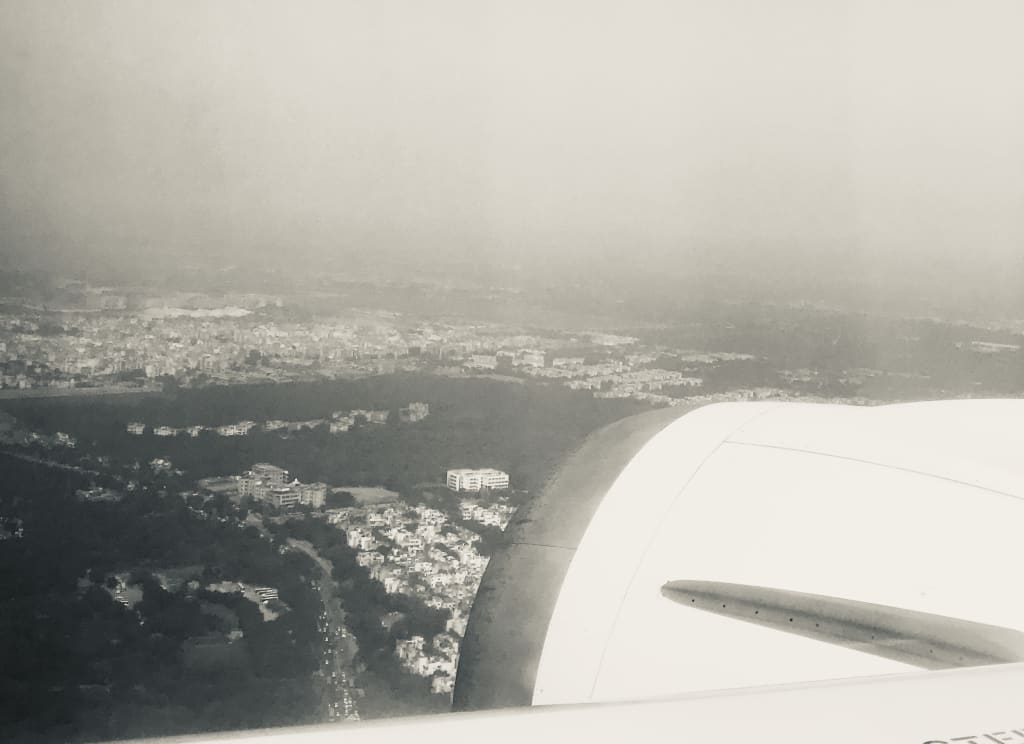
Ella yawned, stretched and slowly prised open her eyes, gradually taking in the strange surroundings. Her mouth and tongue were as sticky as flypaper, her throat parched and raw with a lingering chemical aftertaste. She reached out blindly, grasped a tepid bottle of water and gulped it down in a vain attempt to quench her raging thirst.
Without warning, images of the last twenty-four hours began a spontaneous slideshow in her head: her tearful, but smiling Mum, waving goodbye at airport security; the long flight, surrounded by a large, garrulous Indian family, insisting that she share their food, “don’t trust that filth they try to serve you,” that she stay with them, “don’t trust those hotel-wallahs, all robbers after your dollars”; hugs and kisses, phone numbers and addresses thrust into her hands, as they guided her through the marble and gold airport terminal and out to crazy, chaotic, filthy Delhi. From air-conditioned luxury to third-world bedlam in one stride. The heat and pollution caught in her throat and stung her eyes. And then there was the drive into the city!
Garishly decorated lorries incessantly blaring their strangely melodic horns; barely roadworthy buses some ferrying workers, others with schoolchildren, people hanging from the doors or leaning out of windows, luggage often piled precariously on the roof; cars of all shapes and sizes, covered in dents and scratches worthy of the best stock car racers, changing lanes indiscriminately, some driving the wrong way, others stopping randomly and precipitously to pick up or drop off passengers. Swarms of tuk-tuks and cycle rickshaws, weaving in and out of this anarchy with no apparent regard for their safety or that of their passengers; rickety old bikes ridden by crisp-uniformed schoolchildren; men, old and young, pulling hand carts piled high with fruit and vegetables, cloth, paper, sticks; and an endless stream of people, mainly women and children, walking along the edge of this crazed highway.
Ella’s head swivelled madly from side to side, trying to take it all in: here, a group of sari-clad women with no protection from the teeming traffic around them, squatting in the middle of the road, digging holes in the tarmac; there, street dwellers in their small, filthy camps dotted at intervals along the side of the road or on the makeshift central reservation, clothes drying on the railings in the dust of the endless traffic; bare-bottomed children wandering around and into the traffic, squatting to defecate; men standing by the road to urinate; groups of sad-looking women, staring blankly at the passing cars; and the ubiquitous stray dogs and bony cows, rummaging through the ever-present rubbish.
A hand taps at the car window, startling her. Dirty faces implore her to give them food or money, hands touching mouths or reaching out to her. Then, just as quickly, they are gone as the traffic finally moves and they drive on. Her driver looks at her in the rear-view mirror, a slight shrug indicating that there is nothing that she can do to help them. And everywhere, the all-pervading grey polluted haze, the smell and taste of diesel. Hardly the exotic India that she had daydreamed of, this bipolar, teeming metropolis of all humankind, at once both captivating and disturbing.
Crossing the room, she now caught sight of her reflection in the mirror, the yellowish-black stain around her left eye an unwelcome reminder of Jamie. A small tremor of fear coursed down her spine, as she was once more wracked with self-doubt, his words echoing in her ears.
“Do you want me to show you what they do to women like you in India?” Jamie had snarled, his face just millimetres from hers.
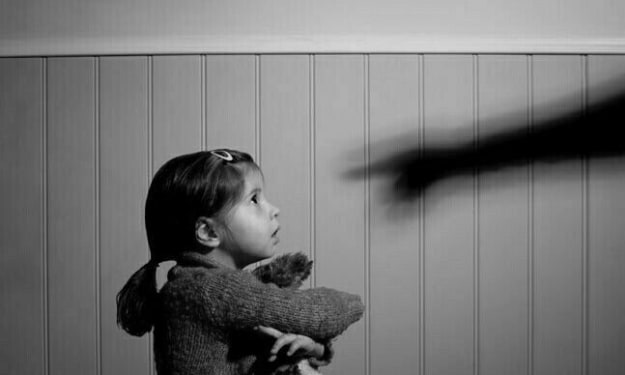
Grabbing her by the wrist, he had wrenched her away from the door, sending her backpack hurtling through the air, knocking a vase of flowers to the wooden floor before crashing into the antique mirror which they had so lovingly brought back to life. Blood flooded her mouth, its metallic bitterness making her retch; her head spun wildly as she slumped lifelessly to the floor amongst the detritus of glass, water and flowers. Ella felt herself being dragged along the hall, powerless to resist, no match for Jamie’s strength; the lithe, athletic body that she had once found so attractive, now oozing raw hostility and aggression. Obscenities spewed from his beautiful mouth; cruel and derogatory insults where there had once been professions of love. She was mental, a lunatic. She needed to see a psychiatrist. Spoilt little brat. Selfish whore. There was no stopping him as he tore at her clothes, slapping her every now and then as she fought back, mustering all the strength she could to cry out, hoping against hope that someone on either side of them would hear through the paper-thin walls.
Through the clamour in her head, she dimly heard her name being called and a knocking on the door. She might even have let out a strangled laugh. Those insufferable thin walls that they had cursed when they first moved into the house, so full of dreams and passion; the embarrassment of realisation that their unbridled lovemaking was a talking point for their two neighbours. Those same walls now coming to her rescue. Jamie was momentarily thrown off balance and Ella seized her opportunity to escape, staggering to the door and crashing into a bewildered Mr Watson, before everything shut down.
Later that evening, stitched, bathed and cradling a mug of hot chocolate, curled up in a blanket in the comfort of her Mum’s voluminous settee, she allowed herself to think about Jamie, spending the night in a cold police cell, and wonder where they had gone wrong. To the outside world they were the golden couple; young, beautiful and successful, life was one endless party. Meeting Jamie had thrown Ella’s meticulously planned and orderly life into a frenzied whirlwind, sucking her into his crazy lifestyle where day and night merged, work and play were intertwined, his disregard for conventions both dangerous and bewitching. He surrounded himself with friends and acquaintances who were living life on the edge, making obscene amounts of money and squandering just as much. It terrified Ella, much to Jamie’s amusement: “my beautiful, boring little square,” he would murmur to her drunkenly, when she made her apologies on yet another late night, desperate to keep hold of the career that she had worked so hard to build.
She struggled to remember when things had changed, when his devotion became possession, his desire turned to disgust and love to contempt; when he turned her into the cowardly creature lying here, battered and bruised, unable to escape his control. Seemingly light-hearted jibes turned vitriolic; their lives, once filled with family and friends, light and laughter, became dull and insular; Jamie needed to know every detail of her day, where she had been, where she was going, who she had seen and why; every penny she spent had to be accounted for and scrutinised, even though she was the main breadwinner; recently, the only breadwinner.
Ella thought back to the day they had moved into her Grandad’s old house, everyone helping, even Grandad, who hadn’t been able to resist pulling up a few weeds in the back garden and checking on his little shed and greenhouse. Now her precious greenhouse, full of her first crop of his favourite tomatoes. Her eyes filled with tears as she remembered those early spring days, Grandad wrapped up warmly in a chair in the garden, watching her digging her tiny vegetable patch and sowing her first seeds, giving her invaluable advice here and there, and not just about gardening. More a Dad than a Grandad. Jamie had never quite got that. Never quite understood how hard it was to lose him.
When Jamie had heard about her $20,000 legacy in his will, he had barely been able to contain himself. How could Ella doubt him? She would be a fool not to invest that money in him, in them, in their future. All he needed was for someone to have a bit of confidence in him. He’d just had some bad luck recently, that was all. Didn’t she trust him? Was she insinuating that he was a failure, that he was sure to lose her money, no, surely their money?
It took several days of anguish and three things for Ella to refuse him: a little black notebook, an envelope full of photographs and a letter.
“My dear Ella,” her Grandad had written, his handwriting, though wavering, still unmistakable in its sloping left-handed style.
In life and in love, it is easy to lose sight of yourself in the pursuit of happiness. One of the greatest joys in my life has been watching you develop into the strong, beautiful young woman that you are today. I know that you are shaking your head at me right now. I’m right though – you just need to learn to appreciate how brilliant you are! Remember what I’ve always told you? There is nothing you can’t do if you put your mind to it and don’t let anyone tell you otherwise. (Ella recited the words aloud as she read them, tears flowing, Grandad’s voice accompanying her.)
You remind me so much of your mother at your age, so many hope and dreams. Promise me that you won’t live your life with any regrets. And don’t ever compromise, for anyone. Use your inheritance wisely – not to be confused with sensibly!
Your ever-loving, always proud Grandad.”
Ella had once again spread the photographs out in front of her, trying to make sense of them; old, faded prints of the most exquisite buildings and landscapes, many with Grandad’s distinctive handwriting; groups of people, some smiling, some staring suspiciously at the photographer, no names. Not even her Mum had had any that Grandad was ever in India; he had never talked about it with either of them, so why had he left her these photos? What did he want her to do with them? Finally, she caressed the soft black notebook, opened it and reread the dedication inside the front cover: “There is no path to happiness: happiness is the path.” Grandad quoting Buddha? Had she ever really known him? Yet again she flicked through page after blank page (to fill with her own story?) until she reached the fragrant envelope, glued to the back cover. Once more she took out a photograph: an exquisitely beautiful young woman, a name, Savita, in that same inimitable script, and a phone number.
“I’m going to India,” she had informed Jamie then, emboldened. “I’ve got a feeling that Grandad wants me to go there, to find something or someone. Or maybe just myself. Come with me? Please?”
It took just seconds for Jamie to react: “A hippy trip to India? You’re fucking mental!”
Speaking slowly and deliberately, struggling to control his anger, he almost whispered into her ear, “Just because you think some demented old man might want you to find someone? Some tart he probably screwed years ago. No fucking way!”
Anger turned to wheedling, romantic gestures and sweet-talking. He was doing it for them. He would look after her. Give her the life she deserved. He would change. He promised. Then insults and abuse, slaps and punches.
Turning from the mirror and her reflections, Ella stood by the window, looking out over hazy, polluted, bewitching Delhi, picked up her phone and punched in a now-familiar number. Heart racing, she listened to another phone, in another room, ring out.
“Hello? .... Savita?”
About the Creator
Keep reading
More stories from writers in Families and other communities.
Wise~Guys
— Look Behind what's in Front of You ~ Make Good Choices — Hey, So how you Doin'..! Made~Men — Mobster Movies romanticise a distinctive, elegant appearance, impeccable attire style, along with the 'Families' expressive lingo. Making their 'Bones' gave them Panache — with vintage fedoras, tailored pin-striped suits, mirror-polished wing-tip shoes adorned with tassels; with their 'Gun Moll' gorgeous dates on their arms.
By Jay Kantor20 days ago in Families
Ludacris and Nelly draw backlash over bookings at MAGA-coded music festival
Ludacris and Nelly headlining a mostly right-wing event is good for them. It’s also great for the genre of hip hop. The two rap veterans have showcased their talents on other stages. Why can’t they perform for mostly MAGA folks and grab that bag?
By Skyler Saunders6 days ago in Beat



Comments
There are no comments for this story
Be the first to respond and start the conversation.