
The Last Hunt with Grandfather
In the fading light of tradition, a final journey into the mountains becomes a passage between memory and legacy

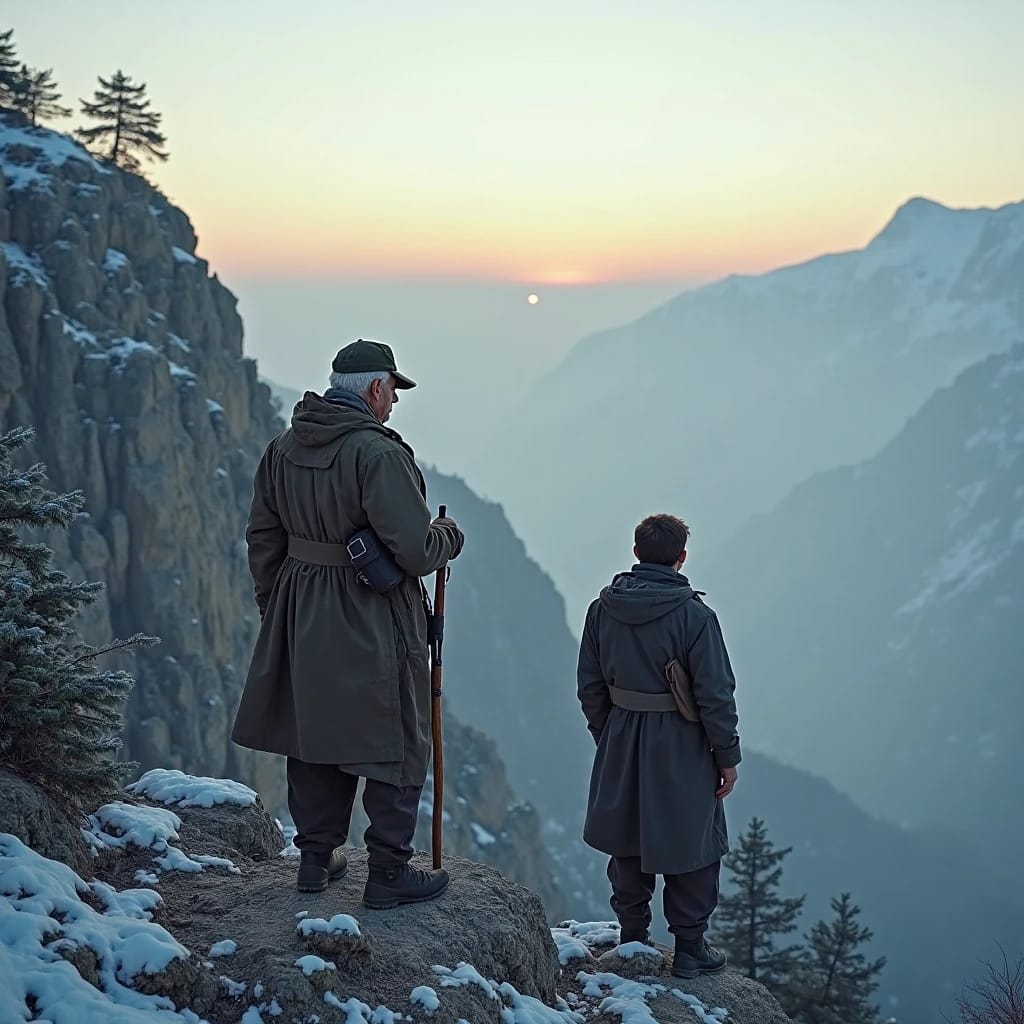
I remember the cold more than anything.
That biting, high-altitude kind that chews through the thickest wool and lingers in your bones long after the sun comes up. We were two hours into the trail when the fog parted just enough for the mountains to show themselves—jagged, ancient, and still carrying the echo of stories only my grandfather could tell.
He walked ahead of me, slow but steady, his curved hunting stick tapping the stone every few steps. His frame, though stooped with age, still moved like it remembered strength. He wore the same woolen coat he’d worn since before I was born—patched, worn at the elbows, but still holding the scent of cedar smoke and oil.
This was our last hunt together.
Not because anyone said so out loud. But we both knew.
We were deep in the woodlands of northern Pakistan, not far from the border where mountains grow teeth and rivers cut through valleys like veins. My grandfather had spent his life in these forests. He knew where the ibex grazed at dusk, where the wolves made dens under the rocks, where the wind told stories if you were quiet enough to listen.
I wasn’t a hunter—not like him. I’d grown up with Wi-Fi and deadlines, not goatskin boots and long silences. But I came back every winter, ever since my father died, to keep that thread tied. To remind myself where I come from.
This trip, though, felt different.
That morning, before we left, my grandmother packed the saddlebag with dry apricots, flatbread, and tea wrapped in cloth. She didn’t speak much—she rarely did when he went hunting—but her eyes lingered longer than usual on his face. Like she was memorizing it.
“Don’t let him walk too fast,” she said to me in Pashto, pressing a boiled egg into my palm.
“I’ll watch him,” I promised.
He looked at me then, and for a second, I wondered if he’d heard. But he only adjusted his satchel and said, “If you walk behind me, you’ll never get lost.”
It wasn’t a joke. It was instruction.
We had one goal: to track and sight a solitary ibex—one that had been roaming near the ridge for the past week. Rumors of its spiraling horns and unusual coat had spread through the village like wildfire. “Too old to breed,” they said, “but too smart to be caught.”
Some said it was cursed. Others called it a ghost.
My grandfather didn’t believe in either.
“To hunt well,” he’d once told me, “you must not chase legends. Just animals. If the animal becomes a legend, then let it be.”
Still, that was the one we were after. Not because of its rarity, but because he wanted one last clean shot before the winter grew cruel.
We walked until the trail narrowed and the trees thinned, revealing sheer cliffs to our left and pine-covered slopes to our right. The air grew thinner, but he didn’t stop. I had to quicken my pace just to keep up.
At one point, I reached for his arm as he crossed a patch of loose rock. He pulled away—not roughly, but firmly.
“I’m not broken yet,” he said. Then, softer: “But I’ll tell you when I am.”
I nodded. Said nothing.
We camped beneath a half-sheltered outcrop that night. He built the fire without asking for help. I let him, even though my fingers were numb.
As the flames took shape, we ate in silence. The tea tasted like pine needles and memory.
“You’ll take the rifle tomorrow,” he said suddenly.
I looked up. “Me?”
He nodded.
“I haven’t—”
“You don’t have to kill it. Just aim. If it’s clean, you take it. If not, you don’t.”
“Is that how you always decided?”
He looked into the fire. “When I was young, I hunted because I wanted to prove I was a man. Then I hunted because it fed my family. Now,” he shrugged, “I hunt because the mountains expect me to.”
“And what do they expect of me?” I asked.
He smiled. Not kindly, not unkindly—just the way a man does when he sees a tree growing in two directions.
“They expect you to choose.”
At dawn, he woke me with a whisper.
“He’s here.”
I didn’t ask how he knew. He’d always known.
We moved slowly, carefully, the mist curling through the trees like it too was hunting. My grandfather pointed to fresh tracks near the frozen spring—cloven, large, deliberate. Ibex.
He crouched, placed his palm over the hoofprint like it was sacred.
“He’s alone,” he said. “And he’s tired.”
We followed the trail upward, boots crunching over frostbitten moss. The silence grew dense. Even the birds seemed to hush. Then, just past a wind-bent pine, we saw it.
The ibex stood on a ridge, noble and massive. Its horns twisted skyward like carved wood. Its coat was mottled with age, gray streaks along its neck. It looked straight at us, unafraid.
My grandfather handed me the rifle. His fingers lingered a second longer than necessary.
I raised the scope. Held my breath.
But something in the ibex’s eyes held me.
Not fear.
Just… stillness.
Like it knew.
I lowered the rifle.
“I can’t,” I said.
My grandfather looked at me, eyes unreadable.
“You sure?”
“Yes.”
He nodded.
“Then let it be.”
We sat down right there on the ridge, side by side. The ibex remained for a moment, then turned and disappeared into the mist.
“I was afraid you’d want to prove something,” he said quietly.
“I thought I would too,” I admitted. “But I didn’t come here to kill something.”
He looked down at his hands—wrinkled, cracked, stained with decades of blood and bark.
“I did.”
He said it without pride. Without shame.
We started the descent late that afternoon. The weather had shifted; the wind had picked up, bringing with it a bitter chill.
Halfway down the trail, he slowed.
Not the usual, intentional pace.
He was favoring his right leg.
“Sprained?” I asked.
He didn’t answer.
Just sat down on a flat rock and closed his eyes.
I sat beside him.
The silence this time was different.
Not meditative. Not watchful.
It was final.
He didn’t speak for a long time. Then:
“I was six when I first came here. My father brought me. He told me that real hunters don’t hunt for blood. They hunt for balance.”
I nodded, though I didn’t fully understand.
“I always thought I’d die here,” he said. “Not in a bed. Not in a hospital. But here. Where the wind knows my name.”
“Don’t say that,” I said quickly, panic rising in my throat.
He smiled faintly.
“You’re strong,” he said. “But more than that—you listen. That’s what makes a good man. Not loudness. Not speed. But the ability to listen to something other than himself.”
He reached into his coat pocket and pulled out a small pendant—a smooth stone carved into the shape of a bird.
“This was my father’s. Now it’s yours.”
He placed it in my hand, and for the first time in my life, I saw his fingers tremble.
We made it back by nightfall.
Grandmother saw us from the porch and came down the steps faster than I’d ever seen her move.
She didn’t speak. Just held his face in her hands like it was the last warm thing on earth.
That night, I slept beside his bed.
Not because he asked me to.
But because I needed to.
He never woke up.
They buried him near the ridge. The one where we’d seen the ibex.
He’d marked the spot years ago, said it had the best morning light.
The village came. Men who had hunted with him. Boys who had learned from him. Even strangers who knew him only as a silhouette on a trail.
And me—the boy who didn’t pull the trigger.
Now I return every year.
Not to hunt.
But to walk.
I follow the same trail. Carry the same rifle—though I never use it. I wear his coat, patched one more time at the elbows. And in my chest pocket, I carry the carved bird.
Somewhere in those woods, the ibex still walks. Or maybe its son. Or its grandson. They don’t fear me.
Because I didn’t take.
I listened.
And the mountains remember.
Author’s Note:
The greatest hunts are not for prey, but for understanding.
And sometimes, you return home not with meat or trophies—
—but with silence, weight, and peace.
About the Creator
Muhammad Sabeel
I write not for silence, but for the echo—where mystery lingers, hearts awaken, and every story dares to leave a mark
Keep reading
More stories from Muhammad Sabeel and writers in Families and other communities.
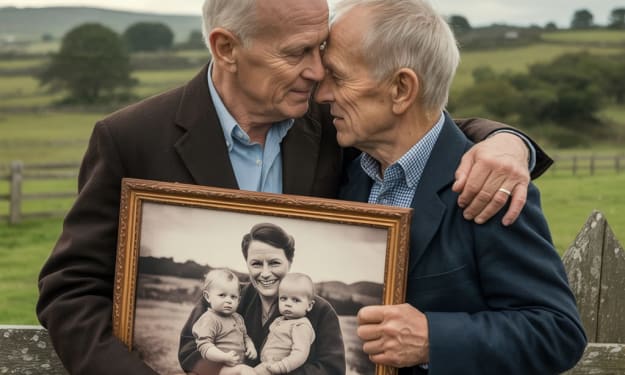
The Photograph That Bridged Nine Decades: A Heartwarming Tale of Twin Brothers and Their Mother's Legacy
The late afternoon sun cast long shadows across the emerald hills of County Cork as Margaret O'Sullivan adjusted her checkered headscarf and smoothed down her worn but clean dress. It was autumn 1936, and at just twenty-two years old, she carried the weight of the world on her slender shoulders. In her arms, she held her greatest treasures – twin boys, barely eight months old, their cherubic faces peering out at a world that seemed both promising and uncertain.
By Muhammad Sabeel9 months ago in Families
Hottest in the Office
Dear Rafi, You’re very distracting to work around. For the first second I saw you the other day, I thought you were some type of executive. It took a moment to realize no, you were just the new guy, dressed up for the job he wants. Be still, my heart.
By Gabriel Shames2 days ago in Pride



Comments
There are no comments for this story
Be the first to respond and start the conversation.