
The Last Gallop
A story of loyalty, loss, and the quiet strength that shapes us

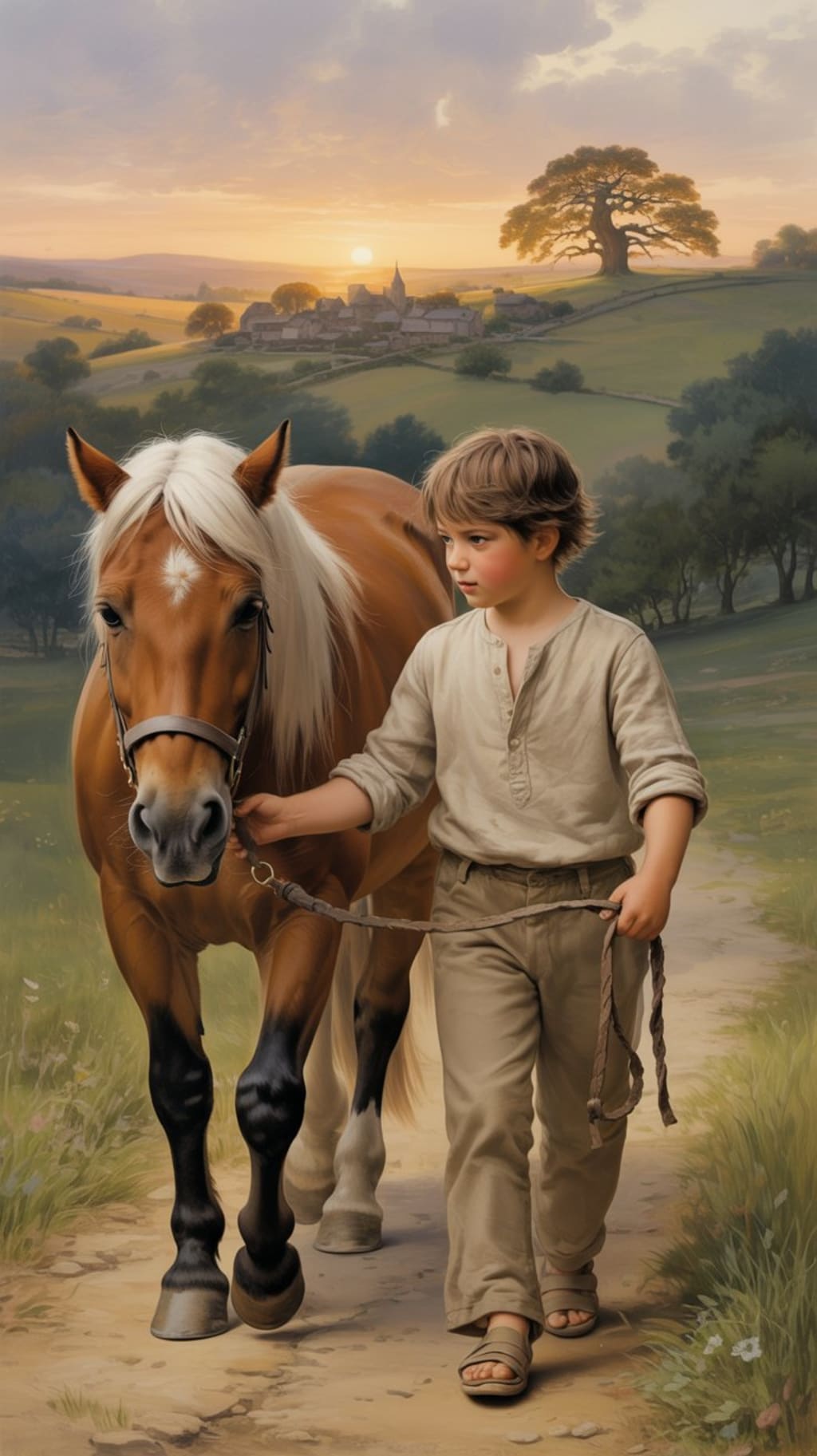
In a small village nestled between golden wheat fields and sun-cracked hills, there lived a horse named Bahar. He wasn’t sleek or swift, nor did he have a pedigree worth boasting about. His coat was dull in places, his legs bore old scars, and one ear was half-torn from a long-forgotten storm. But to twelve-year-old Rehan, Bahar was more than a horse—he was memory, comfort, and home.
Bahar had once belonged to Rehan’s grandfather, a quiet man who had served in the cavalry before returning to the village with stories he rarely told. He believed horses could see into a person’s heart, that they noticed not just movement, but intention. When the old man passed, the villagers assumed Bahar would be sold for meat or turned loose to wander the hills.
But Rehan refused to let go.
He didn’t want fame or fortune from Bahar. He wanted to keep something alive—the way his grandfather used to stand beside the stall, hand resting on the horse’s neck, saying nothing at all. That silence had taught Rehan more than words ever could.
Every afternoon after school, Rehan walked the dusty path to the barn. He brushed Bahar’s coat until it gleamed faintly in the fading light, offered him pieces of jaggery wrapped in cloth, and sat beside him, reading aloud from old storybooks or just talking about his day. At first, Bahar barely acknowledged him—his eyes distant, ears flicking at every sound. Horses like him were used to commands, not conversation.
But slowly, something shifted.
Bahar began to wait for him. He’d lift his head when Rehan’s footsteps crunched on the gravel path, letting out a soft puff of breath—his own quiet way of saying, I’m here.
Rehan wasn’t like the other boys. He didn’t chase goats through the fields or shout during cricket games. He watched. He listened. And over time, he learned Bahar’s rhythms—the way he liked to stand facing west at dusk, how he shied from sudden shadows, how he calmed when Rehan hummed the same lullaby his grandfather used to sing.
Then came the news: the village festival would return after five years. There would be music, food, and the old horse procession—a winding journey through the valley that honored tradition and those who came before.
“You should ride,” Rehan’s cousin said, clapping him on the back. “It’s your chance to show everyone what Bahar means.”
Rehan wasn’t sure. The path was long, the climb steep in places. Bahar was old. But that night, as he sat beside the stall, he whispered, “Do you think we could try?”
Bahar turned his head slowly and nudged Rehan’s shoulder with his muzzle.
That was all the answer he needed.
They began training at dawn. No harsh reins, no forced gallops. Just walking, then trotting, then climbing the lower slopes. Rehan paid attention—when Bahar’s breath grew heavy, they stopped. When he hesitated at a shadow, Rehan waited. They learned each other’s limits, and in doing so, built something stronger than speed: trust.
On the morning of the procession, the air buzzed with excitement. Horses gleamed in bright harnesses, riders wore embroidered clothes and polished boots. Rehan arrived in a simple white kurta, his hair still damp from the well. Bahar wore only a clean saddle and a garland of marigolds—bright orange, like the sun.
When the drums began, the line moved forward. Some horses pranced, tossing their heads. Bahar walked steadily, calmly, as if he knew exactly where he was going.
Halfway through, on a narrow cliffside path, a young horse ahead spooked—thunder cracked in the distance, and it reared, panicked. The rider struggled, the crowd gasped. Without hesitation, Rehan guided Bahar to the edge, creating space, letting the frightened horse room to breathe. He didn’t shout. He didn’t rush. He just was—steady, sure, quiet.
People noticed.
At the final hill, Bahar slowed. His breath came in deep pulls. Rehan leaned forward, pressing his forehead to the horse’s neck. “Just a little more,” he whispered. “One last time.”
And Bahar climbed.
At the summit, the wind rushed over them. Rehan raised his hand—not in triumph, but in tribute. Around him, people clapped, not because he won, but because they had seen something rare: dignity, loyalty, the kind of courage that doesn’t roar.
That night, Rehan visited the barn one last time. Bahar lay down, as he often did, but didn’t rise when Rehan called.
He was gone—peaceful, as if he’d simply chosen the moment.
No one spoke much the next day. The village elders brought flowers. Rehan planted a neem tree by the old pasture, its leaves rustling in the wind. At its base, he placed a stone.
It read:
*“He wasn’t the fastest.
But he carried a heart too big to measure.”*
Years later, when Rehan walked that path with his own son, he’d stop beneath the tree, now tall and wide. And if the wind stirred just right, he’d swear he heard the softest echo of hooves—faint, familiar, and full of love.
*Moral:*
The deepest strength isn’t in speed or spectacle, but in showing up—day after day—with kindness, patience, and a heart wide open.
About the Creator
meerjanan
A curious storyteller with a passion for turning simple moments into meaningful words. Writing about life, purpose, and the quiet strength we often overlook. Follow for stories that inspire, heal, and empower.
California Community Property Laws: What You Need to Know
Getting married is one of life’s biggest milestones, but alongside the excitement, couples face important legal and financial considerations. In California, community property laws govern how assets and debts are treated during marriage and in the event of a divorce. Understanding these rules can help you protect your financial interests and avoid disputes later on.
By Dina Haddad3 days ago in Families



Comments
There are no comments for this story
Be the first to respond and start the conversation.