
The Art of Effective Parenting
Building Strong Bonds and Resilient Families

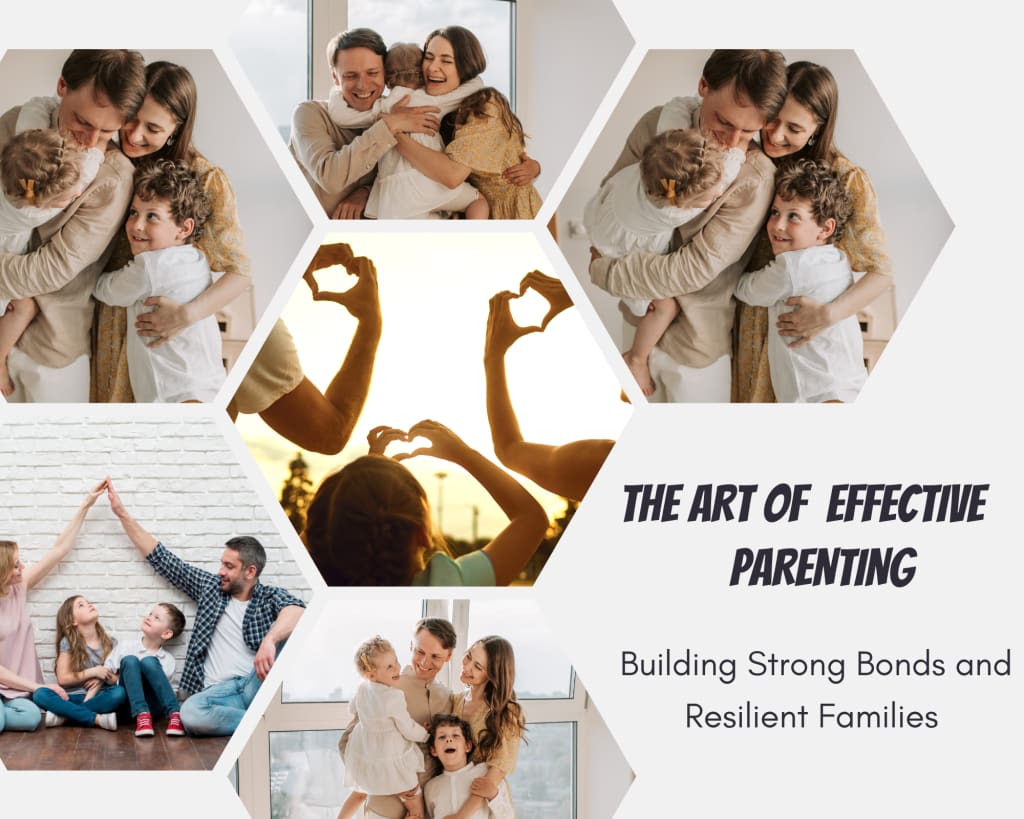
Parenting is an intricate journey that requires a delicate balance of love, guidance, and understanding. The art of effective parenting goes beyond the basic responsibilities of providing for children's needs; it encompasses building strong emotional bonds and fostering resilience within the family unit. In this article, we delve into the key principles and practices that contribute to successful parenting, resulting in strong bonds and resilient families.
Cultivating Open Communication:
Effective parenting begins with open and honest communication. Creating an environment where children feel comfortable expressing their thoughts and emotions fosters trust and strengthens the parent-child relationship. Active listening, empathy, and non-judgmental responses play a vital role in nurturing open lines of communication within the family.
Setting Clear Boundaries and Consistency:
Establishing clear boundaries is essential for children to develop a sense of security and understand expectations. Consistency in enforcing these boundaries helps children develop self-discipline and respect for rules. Through consistent and fair discipline, parents provide a stable framework for children to grow and thrive.
Encouraging Independence and Autonomy:
While guidance is crucial, effective parenting also involves encouraging children's independence and autonomy. Allowing children to make age-appropriate decisions, take responsibility for their actions, and learn from their mistakes fosters resilience and self-confidence. Balancing guidance with opportunities for independence is key to raising well-rounded individuals.
Nurturing Emotional Intelligence:
Emotional intelligence plays a significant role in building strong family bonds. Parents can support their children's emotional development by teaching them to identify and express their feelings, empathize with others, and manage conflicts constructively. By modeling emotional intelligence themselves, parents provide a blueprint for healthy emotional expression within the family.
Prioritizing Quality Time and Creating Family Rituals:
Spending quality time together strengthens family bonds and creates lasting memories. Making dedicated time for family activities, such as shared meals, outings, or game nights, allows for meaningful connections and promotes a sense of belonging. Additionally, establishing family rituals and traditions fosters a sense of identity and strengthens the familial bond across generations.
Practicing Positive Reinforcement:
Recognizing and praising children's efforts, achievements, and positive behaviors is an effective way to reinforce desired behaviors and build their self-esteem. Celebrating their milestones and successes, no matter how small, helps create a positive and supportive atmosphere at home.
Being a Role Model:
Parents serve as powerful role models for their children. Modeling the behaviors, values, and attitudes they want to instill in their children is crucial. Children often learn more from observing their parents' actions than from verbal instructions alone. Being mindful of one's own behavior and demonstrating positive traits can have a profound impact on children's development.
Flexibility and Adaptability:
Parenting requires flexibility and adaptability as children grow and face different developmental stages. Being open to adjusting parenting approaches, strategies, and expectations to align with each child's unique needs and temperament fosters a harmonious parent-child relationship.
Self-Care for Parents:
Taking care of one's physical, mental, and emotional well-being is essential for effective parenting. Parents need to prioritize self-care to ensure they have the energy, patience, and emotional capacity to meet the demands of parenting. Taking time for hobbies, relaxation, and seeking support when needed are vital for maintaining a healthy balance.
Resolving Conflicts with Empathy:
Conflicts are a natural part of family life. When conflicts arise, it's important for parents to approach them with empathy and a problem-solving mindset. Active listening, validating emotions, and finding mutually agreeable solutions demonstrate respect and teach children constructive conflict resolution skills.
Celebrating Diversity and Inclusion:
Families come in all shapes, sizes, and backgrounds. Embracing diversity and fostering inclusivity within the family unit promotes acceptance, understanding, and respect for differences. Teaching children about various cultures, traditions, and perspectives broadens their worldview and cultivates empathy.
Seeking Support and Resources:
Parenting can be challenging, and seeking support is a sign of strength, not weakness. Parents can benefit from joining parenting groups, attending workshops, or seeking guidance from professionals or trusted individuals. Sharing experiences and learning from others can provide valuable insights and support along the parenting journey.
The art of effective parenting involves intentional efforts to build strong emotional bonds and nurture resilience within the family. By prioritizing open communication, setting clear boundaries, encouraging independence, nurturing emotional intelligence, and creating family rituals, parents can create a supportive and loving environment for their children to thrive. Ultimately, these practices contribute to the development of resilient families capable of navigating life's challenges with strength and unity.
Remember, effective parenting is a continuous learning process. It's important to adapt these principles and practices to fit your unique family dynamics, values, and circumstances. Building strong bonds and resilient families requires patience, dedication, and an unwavering commitment to nurturing the well-being and growth of each family member.
About the Creator
Geekay
As a writer, I am a wordsmith who weaves ideas into captivating tapestries of thought. With my trusty pen and imaginative mind, I embark on journeys through the vast landscapes of knowledge, curiosity, and creativity.
Personal Development for Self-Transformation
Personal development is an empowering journey that allows individuals to tap into their true potential and create transformative changes in their lives. It involves a conscious effort to enhance self-awareness, develop new skills, adopt positive habits, and cultivate a growth mindset. At the heart of personal development lies the key to unlocking the power within oneself, leading to profound self-transformation. In this article, we will explore the importance of personal development, its impact on self-transformation, and practical strategies to embark on this empowering journey.
By Geekay3 years ago in Motivation
Wise~Guys
— Look Behind what's in Front of You ~ Make Good Choices — Hey, So how you Doin'..! Made~Men — Mobster Movies romanticise a distinctive, elegant appearance, impeccable attire style, along with the 'Families' expressive lingo. Making their 'Bones' gave them Panache — with vintage fedoras, tailored pin-striped suits, mirror-polished wing-tip shoes adorned with tassels; with their 'Gun Moll' gorgeous dates on their arms.
By Jay Kantor24 days ago in Families
The Kind-Hearted Friend
In a lush forest, there lived a troop of monkeys. Among this troop were two young monkeys who were notorious for their mischievous behavior. Their constant pranks and antics had even exhausted their parents, who often scolded them for their wildness. In the same forest, there was a young giraffe, a gentle and innocent creature, known for his simplicity and good nature. One day, while grazing on the green grass, the young giraffe wandered into a part of the forest where the mischievous monkey duo was busy plucking leaves and fruits from the trees to eat.
By Sudais Zakwan3 days ago in Families



Comments
There are no comments for this story
Be the first to respond and start the conversation.