
The Art of Doing Nothing: How Stillness Can Fuel Your Creativity
Exploring why taking intentional breaks, embracing boredom, and slowing down can actually spark your most innovative ideas.
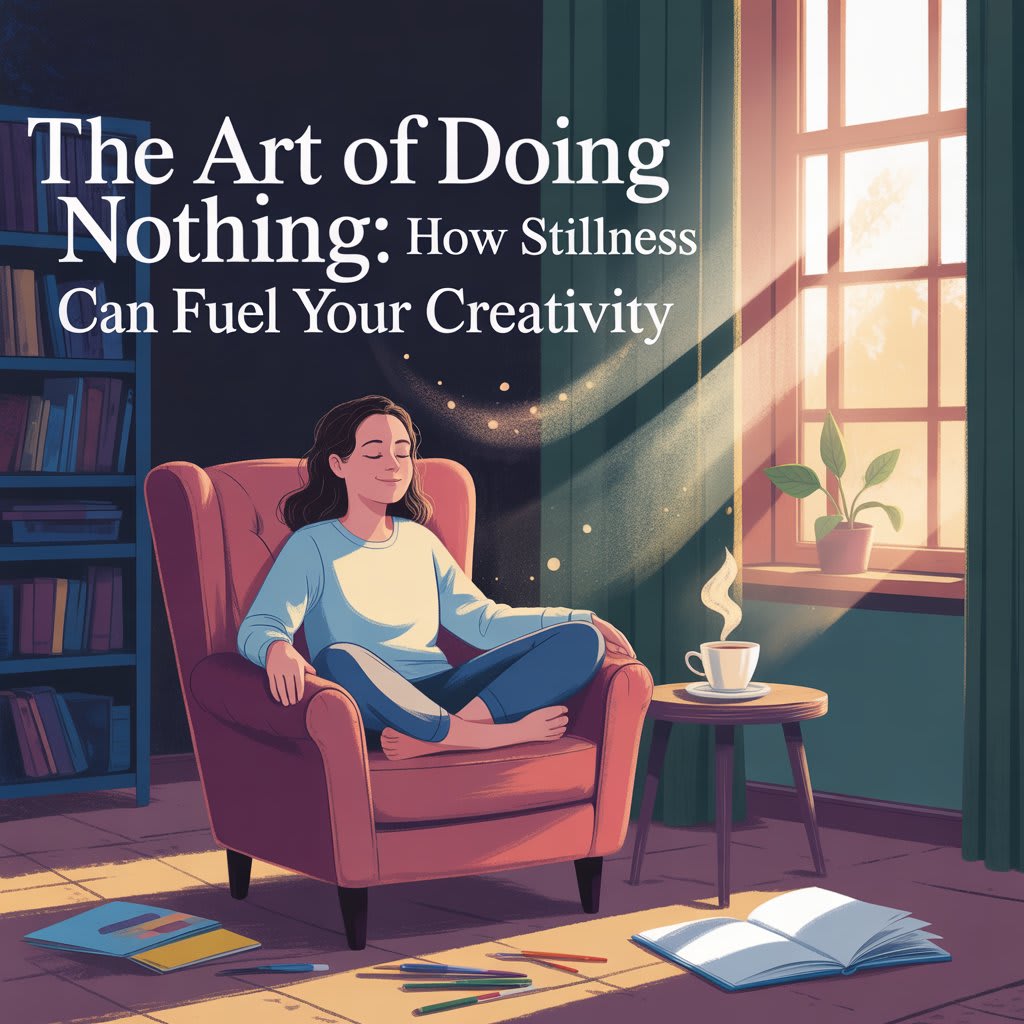
In a world that moves at the speed of Wi-Fi, doing nothing can feel like a luxury — or worse, a waste of time. We glorify hustle, productivity hacks, and multitasking like they’re badges of honor. When was the last time you sat quietly without checking your phone, scrolling through social media, or mentally running through your to-do list?
For most of us, the answer is: not recently. Yet, there’s a growing body of evidence — and centuries of human wisdom — suggesting that stillness isn’t laziness. It’s an essential ingredient for creativity, problem-solving, and deep thinking.
Welcome to the art of doing nothing. Spoiler: it’s not as easy as it sounds.
1. Why We Fear Doing Nothing
We live in a culture that equates “being busy” with “being valuable.” The question “What are you up to?” has become a subtle productivity check, and if your answer is “not much,” it can feel like you’re failing at life.
This mindset has roots in the Industrial Revolution, when efficiency and output became the gold standard. Fast forward to the digital age, and we’ve taken it to extremes — now, even our downtime is optimized. We listen to podcasts while cleaning, answer emails while waiting in line, and scroll through Instagram while “relaxing.”
The problem? When our brains are constantly stimulated, they don’t have room to wander, connect ideas, or imagine something new. Doing nothing feels uncomfortable at first because we’ve trained ourselves to fear it. But in truth, that empty space is where creativity lives.
2. The Science of Stillness and Creativity
Your brain has a fascinating feature called the default mode network (DMN). This is the neural system that kicks in when you’re not focused on a specific task. Instead of shutting down, your mind begins connecting unrelated ideas, replaying memories, and imagining possibilities.
Studies have shown that some of our most creative breakthroughs happen in this “idling” state — think about how many people get their best ideas in the shower, while driving, or just before falling asleep. That’s your DMN at work.
When you fill every spare moment with noise and distraction, you rob your brain of this fertile ground. Stillness is the mental compost pile where random scraps of thought can combine into something new.
3. Doing Nothing Through History
While modern culture treats stillness as suspicious, many ancient traditions valued it deeply.
The Ancient Greeks practiced scholé — a form of leisure dedicated to contemplation and philosophy.
Buddhist monks spend hours in meditation, seeing stillness as a path to wisdom.
Japanese Zen gardens are designed for the sole purpose of sitting, looking, and being.
These cultures understood something we’ve forgotten: slowing down is not the opposite of living fully — it’s part of it.
4. Stillness in the Age of Distraction
Let’s be real: doing nothing is harder than ever. Our phones are portable boredom-killers. We can binge-watch entire TV seasons in a weekend, scroll endlessly through social feeds, and get instant news updates 24/7.
We don’t just have to choose stillness; we have to defend it. And that means confronting some uncomfortable feelings. Doing nothing can bring up restlessness, anxiety, or guilt. But it’s in pushing past that discomfort that you find the magic.
5. The Myth of Constant Productivity
There’s a reason writers, musicians, and inventors talk about “creative blocks.” You can’t force originality on a tight schedule. Productivity has its place, but creativity requires ebb and flow.
Think of your brain like a field. If you harvest it continuously without giving it time to rest, the soil depletes, and nothing new can grow. Farmers call this “fallow time” — nature calls it common sense. We need the same principle for our minds.
6. How to Practice the Art of Doing Nothing
If the idea of “just sitting” feels impossible, you’re not alone. The key is to start small and build your stillness muscle. Here are a few ideas:
1. Stare out the window. Don’t bring your phone. Just watch the light change, the trees move, or the clouds drift.
2. Take a walk without headphones. Let the sounds of the world — footsteps, wind, conversations — fill your mind.
3. Schedule “white space” on your calendar. Literally block out time labeled “Nothing.” Treat it as non-negotiable.
4. Try a “mindful pause.” Before switching tasks, close your eyes and take five slow breaths.
5. Sit in silence after finishing a book, movie, or conversation. Let your thoughts linger before rushing to the next thing.
At first, your brain will protest — loudly. You’ll think of chores you should be doing, messages you should reply to, or things you “should” look up. Resist. This is the detox phase.
7. When Doing Nothing Feels Impossible
If you find stillness intolerable, it might be because you’re using constant busyness as a way to avoid something — maybe a tough decision, an uncomfortable feeling, or even boredom itself. Doing nothing removes the distractions that shield you from those things.
Here’s the twist: facing them often frees up creative energy. When you stop running from your thoughts, you can actually listen to them — and sometimes, they have brilliant ideas.
8. The Creative Payoff
So what happens when you make stillness a regular part of your life?
You notice more. Small details — the way sunlight hits a wall, the rhythm of a stranger’s voice — become sparks for creative work.
You connect ideas. Your mind starts drawing lines between things you didn’t realize were related.
You feel less burned out. Rest refills your mental fuel tank, making your creative sprints more productive.
You become more original. Instead of constantly consuming, you start generating.
Think of doing nothing as a workshop for your subconscious — one that’s always open, but only if you give it space.
9. The Art of Doing Nothing in Daily Life
You don’t need a week-long retreat in the mountains to practice stillness. The real skill is weaving it into your everyday routine.
While waiting for water to boil, don’t pick up your phone.
In the shower, let your mind wander instead of planning your day.
Sit in your parked car for a few extra minutes before going inside.
These moments might seem insignificant, but they add up. They train your brain to slip into the default mode network more easily, so creativity becomes a natural byproduct of your day.
10. A Final Thought: Stillness as Resistance
In a society that measures your worth by your output, choosing to do nothing — and do it unapologetically — is an act of quiet rebellion. It’s saying, “I’m not a machine, and I don’t need to be producing at all times to have value.”
Stillness is not the enemy of progress; it’s the foundation of it. The greatest works of art, the most transformative ideas, and the most profound shifts in human thought have often been born not in moments of frenzied activity, but in the quiet spaces in between.
So the next time you feel guilty for sitting still, remember: you’re not wasting time — you’re making room for magic.
About the Creator
Keep reading
More stories from Aiman Shahid and writers in Families and other communities.
The Beauty of Slow Days: Why Doing Less Can Mean Living More
In a world that worships busyness, the idea of “slowing down” can feel almost rebellious. We’ve been conditioned to measure our worth by how much we produce, how fast we respond, and how many items we check off a never-ending to-do list. The faster we move, the more successful we must be—at least, that’s the story we’ve been told.
By Aiman Shahid5 months ago in Families
Wise~Guys
— Look Behind what's in Front of You ~ Make Good Choices — Hey, So how you Doin'..! Made~Men — Mobster Movies romanticise a distinctive, elegant appearance, impeccable attire style, along with the 'Families' expressive lingo. Making their 'Bones' gave them Panache — with vintage fedoras, tailored pin-striped suits, mirror-polished wing-tip shoes adorned with tassels; with their 'Gun Moll' gorgeous dates on their arms.
By Jay Kantor17 days ago in Families



Comments
There are no comments for this story
Be the first to respond and start the conversation.