
The 5 Core Elements of Japanese Gardens: From Stone to Water
Discover the profound interplay of nature, philosophy, and design that shapes these tranquil landscapes.


Key Insights into Japanese Garden Elements:
- Stones and Water: These are the foundational elements, symbolizing permanence and continuity, respectively. Stones are meticulously placed to represent natural formations, while water features embody life and renewal.
- Plants: Selected for their symbolic meanings and seasonal beauty, plants contribute to the garden's serene atmosphere, emphasizing naturalism and the transient beauty of seasons.
- Architectural Features & Ornaments: Bridges, lanterns, fences, and tea houses are integrated to enhance the garden's aesthetic and provide functional or contemplative spaces, often with symbolic significance.
- Philosophical Principles: Beyond physical components, core design principles like asymmetry, enclosure, borrowed scenery (shakkei), balance, and symbolism are paramount, creating a deeper, meditative experience.
Japanese gardens are meticulously crafted outdoor spaces that transcend mere aesthetics, embodying a profound connection to nature and deeply rooted philosophical principles. These gardens are designed to evoke tranquility, peace, and contemplation, serving as miniature, idealized representations of the natural world. While interpretations of the "five elements" can vary, they consistently refer to a combination of essential physical components and guiding design principles that define these serene landscapes. The synthesis of these elements, often drawing from Buddhist, Shinto, and Taoist beliefs, creates a harmonious and meditative environment.
The Foundational Five: Physical Elements of Japanese Gardens

The most commonly cited physical elements that form the backbone of Japanese garden design are water, stones, plants, bridges, and lanterns. Each plays a crucial role, both functionally and symbolically, in creating the garden's unique atmosphere.
The Enduring Power of Stones (Ishi)
Stones are perhaps the most vital and foundational element in a Japanese garden, symbolizing permanence, stability, and the enduring forces of nature. Their careful selection and placement, an art known as ishi gumi, require considerable expertise. Stones can represent majestic mountains, tranquil islands, or even mythical creatures like the sea turtle, which in Daoist legends carried five mountainous islands inhabited by immortals. Larger stones often symbolize significant geological features, while smaller stones and gravel are used in dry landscapes (kare-sansui) to emulate the flow of water, streams, or ponds through intricate raked patterns.
Arrangements of stones often follow specific symbolic patterns; for instance, groups of three stones are common, with the tallest representing heaven, the medium-sized stone representing humanity, and the smallest serving as a bridge between the two. Clusters of two, five, or seven stones are also frequently seen. Stone pathways, stepping stones, and intricately designed stone walkways guide visitors through the garden, integrating them into the contemplative journey.
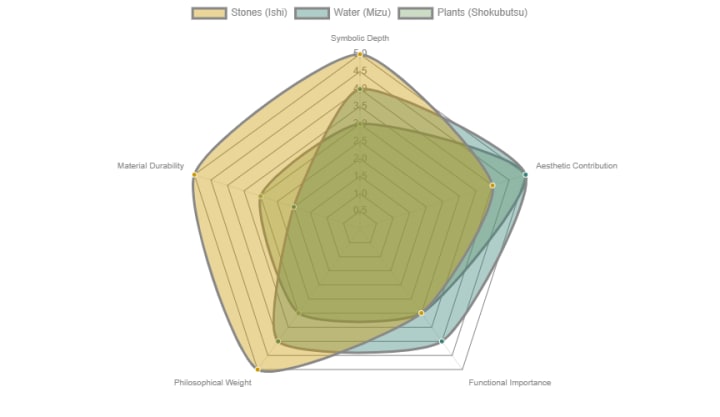
The radar chart above illustrates the perceived significance of various elements in a Japanese garden based on their Symbolic Depth, Aesthetic Contribution, Functional Importance, Philosophical Weight, and Material Durability. As shown, Stones (Ishi) rank highest in symbolic depth, philosophical weight, and material durability, underscoring their foundational role. Water (Mizu) excels in aesthetic contribution and functional importance, while Plants (Shokubutsu) contribute significantly to aesthetics and philosophical reflection through seasonal changes.
The Flowing Grace of Water (Mizu)
Water is a dynamic and essential element, symbolizing renewal, continuity, and purity. It manifests in various forms, including serene ponds, gentle streams, and dramatic waterfalls, all designed to create miniature reproductions of natural scenery. The orientation of ponds is often meticulously planned to optimize reflections of surrounding trees and plants, enhancing the garden's visual depth and tranquility. Ponds may also host koi, adding vibrant life and color. In kare-sansui (dry gardens), water is abstractly represented by carefully raked gravel or sand patterns, inviting contemplation of its flow without its physical presence.
Water basins (tsukubai) are crucial, especially in tea gardens, where they are used for ritual cleansing before tea ceremonies. Often paired with stone lanterns, these basins emphasize purification and preparation for a meditative experience.
The Living Canvas of Plants (Shokubutsu)
Plants and trees are integral to Japanese gardens, chosen not for their profusion of color but for their symbolic meanings and seasonal transitions. This minimalist approach allows the individual characteristics of each plant to stand out. Evergreens, particularly pines, bamboo, and plum trees, are highly valued for their enduring beauty, especially through winter, symbolizing longevity and resilience. Maple and cherry trees are selected for their dramatic seasonal displays, offering fleeting bursts of color that emphasize the transient beauty of nature, a concept known as wabi-sabi.
The art of bonsai, where plants are trained to resemble miniature old trees, is also a signature element, further enhancing the garden's ability to represent grand landscapes in a compact form. Thoughtful plant selection and placement are key to evoking the peace and tranquility of nature.
Bridges (Hashi) and Lanterns (Toro): Architectural Accents
While the primary focus of Japanese gardens is on natural elements, man-made structures and ornaments are seamlessly integrated to enhance both aesthetics and function. These include bridges, lanterns, fences, gates, and tea houses.
- Bridges: Traversing Realms
Bridges serve as vital features, both functionally allowing passage over water and symbolically representing transitions. They can connect islands, span streams, or lead visitors along winding paths, offering new perspectives of the garden's beauty. Made from materials like wood, bamboo, or stone, bridges are designed to blend harmoniously with their natural surroundings while also acting as focal points.
- Lanterns: Guiding Light and Symbolism
Stone lanterns (toro), particularly the traditional Kasuga-style, provide subtle, atmospheric lighting and serve as distinctive decorative elements. Introduced with the tea ceremony in the 16th century, they are often placed near water basins or along paths. Symbolically, lanterns can represent the light of knowledge or embody the four natural elements of fire, water, earth, and wind. A large traditional Japanese dai-dōrō, resembling a pagoda, can symbolize the five elements of Buddhist cosmology: earth, water, fire, wind, and ethereal space/void.
Philosophical Underpinnings: The Guiding Principles

Beyond the tangible elements, the true essence of Japanese gardens lies in their underlying philosophical principles. These abstract "elements" guide the arrangement of physical components, transforming a collection of plants and stones into a living work of art that encourages contemplation and reflection.
Asymmetry (Fukinsei): Embracing Nature's Imperfection
Unlike Western gardens that often prioritize strict symmetry, Japanese gardens embrace asymmetry to mimic nature's inherent unevenness and spontaneity. This principle avoids straight lines and perfect balances, instead using irregular arrangements to create a sense of organic flow and dynamic movement. Asymmetry draws the viewer in, encouraging exploration and reflecting nature's ever-evolving state, preventing the garden from appearing artificial and promoting a more engaging, meditative experience.
Enclosure (Hei-en): Cultivating Seclusion
Enclosure involves defining boundaries within the garden using elements like fences, walls, hedges, or strategic plant placement. This principle creates a sense of privacy and introspection, separating the garden from the outside world and fostering a feeling of seclusion and focus. Enclosure helps form intimate areas, allowing visitors to disconnect from external distractions and find a personal retreat for contemplation. It also plays a practical role in making even compact spaces feel expansive and self-contained.
Borrowed Scenery (Shakkei): Integrating the Beyond
Borrowed scenery is a sophisticated technique where external features, such as distant mountains, trees, or even neighboring temples, are intentionally incorporated into the garden's design. This principle blurs the boundaries between the garden and the larger landscape, creating an illusion of greater depth and harmony with the natural world. By aligning viewpoints to frame these external elements, the garden appears larger and more integrated with its surroundings, embodying the Japanese philosophy of living in harmony with one's environment.
Balance (Kanso): The Harmony of Simplicity
Balance in Japanese gardens refers to a subtle equilibrium achieved through simplicity and restraint. It avoids excess, ensuring that all elements coexist harmoniously without overwhelming the space. This principle, often linked to the Zen concept of kanso (simplicity), involves careful selection and arrangement to create a composed yet understated elegance. It's about achieving a sense of calm through proportional relationships rather than strict symmetry, inviting a deeper appreciation for subtlety and moderation. Balance also extends to seasonal changes, with plants chosen to ensure visual harmony throughout the year.
Symbolism (Shin): Layers of Meaning
Symbolism infuses Japanese gardens with profound meanings, where every element represents something greater than itself. Drawing from Buddhist, Shinto, and natural symbolism, rocks might symbolize sacred mountains, water could represent purity or the flow of time, and plants may signify seasonal cycles or spiritual concepts. This principle transforms the garden into a metaphorical landscape that conveys philosophical ideas, inviting personal reflection and enlightenment. Symbolism is carefully layered to resonate on multiple levels, allowing each visitor to interpret the space in their own contemplative way.
Comparative Analysis of Key Elements
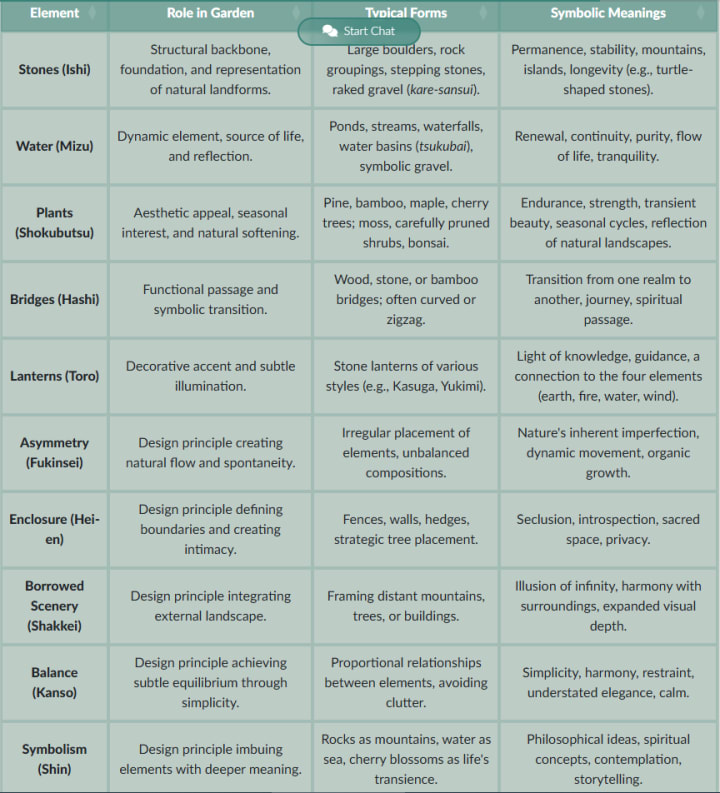
To further illustrate the multifaceted nature of Japanese garden elements, the following table provides a concise comparison of their roles, typical forms, and symbolic meanings.
The Interplay of Elements and Principles in Garden Types
Japanese gardens come in various types, each applying these elements and principles in unique ways. From vast strolling gardens designed to be walked through, revealing new vistas at every turn, to compact Zen rock gardens (kare-sansui) intended for static contemplation, the core elements remain consistent but their manifestation adapts to the garden's purpose and scale.
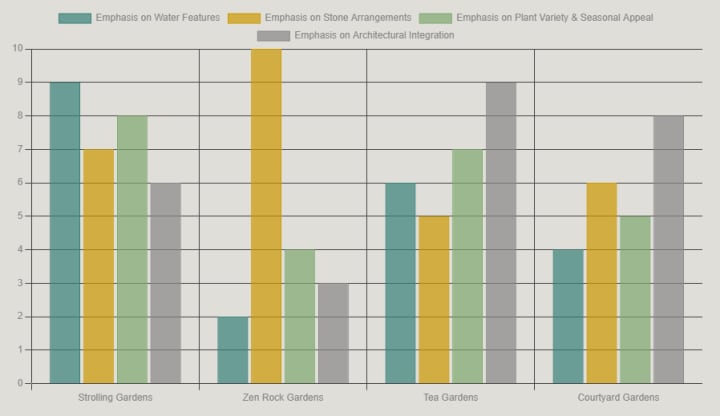
The bar chart above illustrates the varying emphasis of key elements across different types of Japanese gardens. Strolling Gardens, designed for visitors to walk through, show a balanced emphasis across water, stone, and plant features, alongside architectural integration. Zen Rock Gardens heavily prioritize stone arrangements, where raked gravel symbolizes water. Tea Gardens place a high emphasis on architectural integration, notably tea houses and water basins, alongside specific plant selections. Courtyard Gardens, often smaller, still incorporate all elements but with a more concentrated emphasis on architectural features and stone work due to space constraints.
Deep Dive: Zen Principles of Japanese Garden Design
To truly grasp the profound philosophy embedded within Japanese gardens, it's essential to understand the Zen principles that often guide their design. The video below, "Zen Principles of Japanese Garden Design | 7 Design Tips," offers invaluable insights into how these ancient philosophies are translated into physical spaces. It delves into aspects like simplicity (kanso), naturalness (shizen), austerity (koko), and stillness (seijaku), explaining how these concepts create gardens that are not just visually appealing but are also spaces for meditation and spiritual growth. The video highlights how elements such as asymmetry, borrowed scenery, and the careful selection of stones and plants are not merely aesthetic choices but are deliberate expressions of Zen thought aimed at fostering contemplation and a sense of harmony with the universe. Understanding these principles enriches the experience of a Japanese garden, transforming it from a beautiful landscape into a profound spiritual journey.
Frequently Asked Questions

- What is the spiritual significance of water in Japanese gardens?
Water in Japanese gardens carries deep spiritual significance, symbolizing purity, renewal, and the continuous flow of life. Whether manifested as a tranquil pond, a gentle stream, or a cascading waterfall, it represents the constant change and impermanence of existence. In dry gardens, raked sand or gravel symbolically represents water, inviting contemplation of its essence without its physical presence. The cleansing ritual at a tsukubai (water basin) before a tea ceremony further emphasizes its role in purification and preparing the mind for reflection.
- Why are rocks so important in Japanese garden design?
Rocks are considered the "bones" of a Japanese garden, symbolizing permanence, stability, and the enduring forces of nature. Their meticulous selection and placement, known as ishi gumi, are an art form. Rocks often represent mountains, islands, or even mythical creatures associated with longevity, grounding the garden and providing a sense of ancient wisdom. They are chosen for their shape, texture, and color, and their arrangement reflects philosophical ideas, creating a miniature idealized landscape that invites contemplation and introspection.
- How do Japanese gardens create a sense of tranquility?
Japanese gardens achieve tranquility through a careful integration of natural elements and philosophical principles. They prioritize simplicity (kanso), naturalness (shizen), and a sense of restraint, avoiding clutter. Elements are arranged with asymmetry to mimic nature's inherent balance, and spaces are often enclosed to create a sense of privacy and introspection. The use of calming sounds like flowing water, thoughtful plant selection that emphasizes seasonal change, and the strategic use of borrowed scenery all contribute to an atmosphere conducive to peace, reflection, and mindfulness.
- What is "borrowed scenery" (shakkei) in Japanese gardens?
Borrowed scenery, or shakkei, is a sophisticated design technique where elements from the surrounding external environment—such as distant mountains, neighboring trees, or even buildings—are intentionally incorporated into the garden's visual composition. This creates an illusion of greater depth and expands the garden's perceived boundaries, making a smaller space feel larger and more integrated with its natural surroundings. It embodies the Japanese philosophy of living in harmony with the environment and appreciating the interconnectedness of all things.
Conclusion
The beauty and profound impact of Japanese gardens stem from the masterful integration of both tangible elements and abstract philosophical principles. The physical components—stones, water, plants, bridges, and lanterns—are carefully selected and arranged to represent a miniaturized, idealized natural world. Each element is rich with symbolism, from the enduring permanence of stones to the flowing continuity of water and the transient beauty of seasonal plants. Beyond these physical forms, guiding design principles such as asymmetry, enclosure, borrowed scenery, balance, and symbolism elevate the garden experience, transforming it into a contemplative space. Together, these five elements, understood in their dual manifestation as physical features and guiding philosophies, create serene environments that foster introspection, harmony, and a deep connection with nature, embodying centuries of cultural and spiritual wisdom.
About the Creator
pestosol
Hi.
I am Hmimda 30 years old From Algeria. I am a blogger. I like to share articles about decoration and designs
Wise~Guys
— Look Behind what's in Front of You ~ Make Good Choices — Hey, So how you Doin'..! Made~Men — Mobster Movies romanticise a distinctive, elegant appearance, impeccable attire style, along with the 'Families' expressive lingo. Making their 'Bones' gave them Panache — with vintage fedoras, tailored pin-striped suits, mirror-polished wing-tip shoes adorned with tassels; with their 'Gun Moll' gorgeous dates on their arms.
By Jay Kantor18 days ago in Families



Comments
There are no comments for this story
Be the first to respond and start the conversation.