
How to Create a Small Japanese Garden Step-by-Step
A Beginner’s Guide to Japanese Serenity


Transforming a compact space into a tranquil Japanese garden is an achievable dream, blending natural elements with profound philosophical principles.
Key Insights for Your Miniature Zen Retreat
- Philosophical Harmony: Japanese gardens are more than aesthetics; they are deeply rooted in Buddhist, Shinto, and Taoist philosophies, emphasizing asymmetry, balance, enclosure, borrowed scenery, and symbolism to create a peaceful, contemplative space.
- Essential Elements: Master the use of foundational elements such as carefully selected rocks (symbolizing mountains or islands), subtle water features (representing life and flow), and strategically chosen plants (like Japanese maples and moss) to evoke natural landscapes in miniature.
- Thoughtful Design for Small Spaces: Employ techniques like winding paths, vertical elements, and strategic placement of ornaments to enhance visual depth and create a sense of journey and seclusion, even in very limited areas.
Creating a small Japanese garden is an art form that transforms a limited space into a sanctuary of peace and contemplation. These gardens are not merely decorative but are imbued with deep philosophical meaning, drawing inspiration from Buddhist, Shinto, and Taoist traditions. The essence lies in capturing the grandeur of nature in miniature, focusing on harmony, simplicity, and natural balance. This guide will walk you through the comprehensive steps to design and build your own serene Japanese garden, adapting traditional principles to fit a compact area.

Understanding the Core Philosophy and Design Principles
Before selecting a single stone or plant, it's crucial to grasp the underlying philosophy that shapes Japanese gardens. These spaces are designed to evoke tranquility and inspire peaceful contemplation, often serving as a spiritual retreat. Several key principles guide their creation:
Asymmetry and Natural Irregularity
Unlike Western gardens that often favor strict symmetry, Japanese gardens embrace asymmetry. This principle reflects the natural world's inherent irregularity, creating compositions that feel organic, balanced, and visually dynamic without being perfectly mirrored. Elements are placed to create a harmonious flow, guiding the eye subtly through the landscape.
Enclosure and Seclusion
A sense of enclosure is vital for fostering intimacy and a feeling of retreat. Walls, fences (often bamboo), hedges, or even strategically placed large plants can define the garden's boundaries, separating it from the outside world and enhancing the sense of seclusion and peace. This principle helps to create a private oasis, even within a bustling urban environment.
Borrowed Scenery (Shakkei)
Shakkei, or "borrowed scenery," is an advanced design technique where external elements—such as distant mountains, neighboring trees, or even the sky—are seamlessly integrated into the garden's composition. This clever illusion extends the perceived size and depth of the garden, making a small space feel much larger and more expansive by incorporating the surrounding landscape.
Balance and Harmony
Achieving balance in a Japanese garden doesn't mean equal distribution but rather a harmonious interplay of elements. Each component—be it a rock, a plant, or a water feature—is chosen and placed with deliberate purpose, ensuring it contributes to the overall tranquility without overpowering other elements. This holistic approach creates a cohesive and peaceful environment.
Symbolism and Miniaturization
Every element in a Japanese garden carries symbolic meaning. Rocks can represent mountains or islands, raked gravel can symbolize flowing water or a vast sea, and plants can embody resilience or longevity. This miniaturization allows the garden to represent grand natural landscapes within a confined area, inviting contemplation and imagination. It’s an ideal approach for small spaces, as it transforms limited dimensions into expansive symbolic worlds.
Choosing Your Garden Style for Small Spaces

Several traditional Japanese garden styles are particularly well-suited for smaller areas:
1. Tsubo-niwa (Courtyard Garden)
These are tiny urban gardens, often enclosed within a building's structure. They are typically meant to be viewed from indoors rather than walked through, making them perfect for compact courtyards or balconies. They prioritize visual appeal and often feature a single prominent element like a stone basin or a small tree.
2. Zen Garden (Karesansui or Dry Rock Garden)
A karesansui garden uses carefully raked sand or gravel to symbolize water (often ripples or waves) and strategically placed rocks to represent mountains, islands, or even waterfalls. These gardens are minimalist, low-maintenance, and designed for meditation and contemplation, making them an excellent choice for a small, sheltered space where living plants might struggle.
3. Tea Garden (Chaniwa)
While historically leading to a tea house, a small tea garden can be adapted to feature key elements like stepping stones (tobi-ishi), a stone water basin (tsukubai) for ritual purification, and minimalist planting. These gardens aim to create a tranquil transition space, fostering a sense of calm and anticipation.
Essential Elements and Their Thoughtful Integration
The beauty of a Japanese garden lies in the careful selection and placement of its components. For a small garden, every element must contribute meaningfully to the overall design.
1. Rocks and Stones: The Garden's Skeleton

Rocks are the backbone of a Japanese garden, symbolizing permanence, strength, and natural landscapes. They are chosen for their character—their shape, texture, and color—and are placed deliberately. Larger boulders can serve as focal points, representing mountains or islands, while smaller stones can define pathways or borders. Always arrange stones asymmetrically, often in odd-numbered groupings (like three or five), to maintain a natural, balanced appearance.
2. Water Features: The Essence of Tranquility

Water embodies life, purity, and constant change. Even in a small garden, its presence can profoundly impact the atmosphere. Consider a small pond, a bamboo fountain (such as a shishi-odoshi, which makes a rhythmic clacking sound), or a simple stone basin with recirculating water. If a traditional water feature isn't feasible, raked gravel or sand can beautifully symbolize water, creating intricate patterns that mimic ripples or flowing streams. The planting around water features is crucial for integrating them seamlessly into the design.
3. Plants and Greenery: Nature's Palette

The selection of plants is paramount for achieving the authentic Japanese garden aesthetic. Focus on muted, natural tones and evergreen varieties for year-round interest. Avoid overly showy or brightly colored flowers, as they can detract from the tranquil atmosphere. Key plant choices include:
- Japanese Maples (Acer palmatum): Revered for their delicate foliage and stunning seasonal color (reds, oranges, golds), these small trees add elegance and structure. Varieties like 'Sango-Kaku' (coral bark maple) or 'Beni-maiko' are excellent for smaller gardens.
- Evergreen Shrubs: Azaleas, camellias, and Pieris japonica provide consistent greenery and structure.
- Bamboo: Clump-forming varieties are ideal for screens or accents, offering a traditional look without invasiveness.
- Moss and Ground Covers: Moss creates a velvety, timeless feel, symbolizing miniature hills or ancient landscapes. If moss is difficult to establish in your climate, alternatives like Soleirolia soleirolii (baby's tears) can provide a similar effect.
- Ornamental Grasses: Japanese forest grass adds texture, movement, and softness along paths or in beds.
- Minimal Flowers: While generally subtle, chrysanthemums or Japanese water irises can be used sparingly for seasonal highlights.
4. Paths and Boundaries: Guiding the Journey

Pathways in Japanese gardens are rarely straight; they meander gently, encouraging a slower pace and a sense of discovery. Use natural materials like fine gravel, stepping stones (tobi-ishi), or cobbles. Stepping stones should be placed unevenly to promote mindful walking. A clear boundary, whether a simple bamboo fence, a low wall, or a hedge, helps define the garden space and enhances its enclosed feel.
Thoughtful Ornamentation and Design Tips for Small Spaces
Ornaments in a Japanese garden are used sparingly and with purpose, enhancing the natural aesthetic rather than dominating it.
Stone Lanterns (Ishi-dōrō)
Originally used for lighting tea gardens, stone lanterns add a delicate, traditional touch. They are often placed near water features, pathways, or as subtle focal points. Choose a size proportionate to your small garden.

Water Basins (Tsukubai)
A tsukubai is a small stone basin, typically found in tea gardens, used for ritual hand washing. Even without a tea house, it can serve as a beautiful, functional, and symbolic element, often accompanied by a bamboo scoop.
Bridges
Even in miniature scale, a small arched wooden or stone bridge can add charm and symbolism, representing a crossing to another realm or simply connecting different sections of the garden.
Maximizing Small Spaces
- Curved Lines: Use winding paths and curved beds to create an illusion of greater space and a sense of natural flow.
- Vertical Elements: Incorporate taller plants or bamboo screens to add height and visual interest without consuming much ground space.
- Layering: Create visual depth by layering plants of different heights—low ground covers in front, followed by medium shrubs, and then taller trees or screens in the background.
- Containers: For very limited spaces like balconies or patios, use containers to house miniature landscapes, including bonsai trees or compact plant arrangements.
- Minimalist Approach: Resist the urge to overstuff your garden. Fewer, well-chosen elements create a stronger impact and maintain the serene, uncluttered aesthetic.
The Practical Steps: From Concept to Creation

Building your small Japanese garden is a process that requires patience and attention to detail. It's often recommended to embrace it as an evolving project.
1. Planning and Sketching: Laying the Foundation
Begin with a detailed sketch or grid plan of your space. Consider viewpoints—where will the garden primarily be seen from? This helps in strategic placement of key features. Before any digging, physically lay out rocks and outline plant placements with objects (like pots or stakes) to visualize the scale and arrangement. This hands-on approach helps ensure a harmonious layout.
2. Preparing the Ground: Drainage and Structure
Proper drainage is crucial. Lay down a base layer of gravel or sand, especially for areas that will feature raked gravel or pathways. This creates a stable foundation and ensures water doesn't accumulate. If planting, prepare the soil appropriately for your chosen plants, ensuring good aeration and nutrient content.
3. Placing the Core Elements: Stones First
The "skeleton" of your garden is established with the placement of rocks. Position your prominent stones first, as they will define the garden's character and overall balance. Then, integrate any water features, ensuring they are properly plumbed or set up for recirculation. Consider how water will flow or where sounds will best resonate.
4. Planting: Adding Life and Texture
Once the hardscaping (rocks, paths, water features) is in place, begin planting. Start with your main trees and larger shrubs, followed by smaller plants, ground covers, and moss. Pay attention to the texture and form of each plant, and how they contribute to the overall visual harmony. Thinly prune trees to maintain an airy, natural look and avoid a cluttered appearance.
5. Finishing Touches: Paths and Ornaments
Install your pathways and stepping stones, ensuring they guide the eye and invite gentle movement. Finally, carefully place any chosen ornaments like stone lanterns or water basins, making sure they enhance rather than detract from the garden's natural beauty. Remember, less is often more in Japanese garden design.
Maintenance: Nurturing Your Tranquil Space

A Japanese garden is a living, evolving entity that requires ongoing care to maintain its serene quality. Regular maintenance includes:
- Raking: For dry gardens, regularly rake the gravel or sand to maintain the intricate patterns that symbolize water.
- Pruning: Carefully prune trees and shrubs to maintain their desired shapes and promote a natural, cloud-like appearance. This is an art form in itself, aimed at enhancing the plant's inherent beauty.
- Weeding: Promptly remove weeds to keep the garden tidy and prevent competition for resources.
- Watering: Water plants appropriately based on their needs and climate, respecting their natural cycles.
- Cleaning: Keep stones, pathways, and water features clean to preserve their aesthetic appeal and functionality.
By approaching the creation and maintenance of your small Japanese garden with mindfulness and attention to detail, you will cultivate not just a beautiful outdoor space, but a personal haven for reflection and peace.
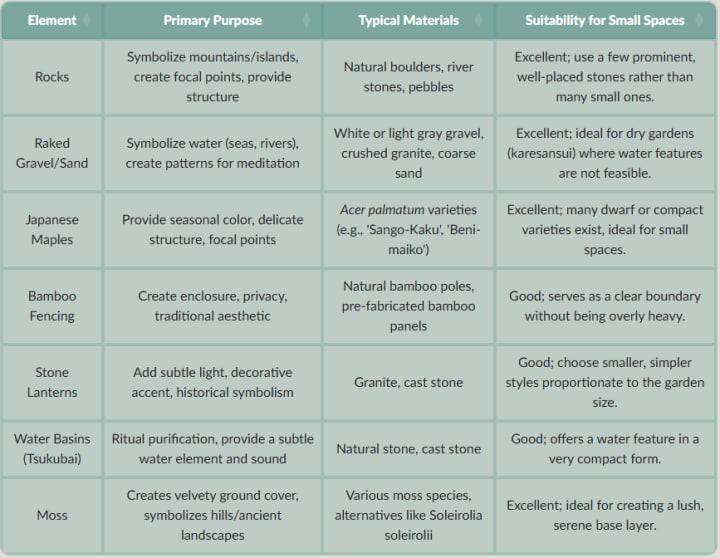
Comparing Common Elements in Small Japanese Gardens
The table below provides a comparison of frequently used elements in small Japanese gardens, highlighting their primary purpose, typical materials, and suitability for compact spaces. This overview can help you prioritize and select elements that best fit your specific garden size and design goals.
FAQ: Your Small Japanese Garden Queries Answered
- What are the essential elements for a small Japanese garden?
The essential elements for a small Japanese garden typically include rocks (symbolizing mountains or islands), a water feature (even symbolic like raked gravel), carefully chosen plants (such as Japanese maples, moss, and evergreen shrubs), and pathways. Thoughtful placement of these elements, combined with minimalist aesthetics, creates a tranquil space.
- How can I create a sense of depth in a tiny Japanese garden?
To create a sense of depth in a small Japanese garden, use winding paths rather than straight ones to encourage a feeling of discovery. Layer plants of different heights, placing lower ground covers in the foreground and taller elements or screens towards the back. Incorporate "borrowed scenery" by framing views of distant trees or features outside your garden, which makes the space feel larger.
Are Zen gardens suitable for small spaces?
Yes, Zen gardens (karesansui or dry rock gardens) are particularly suitable for small spaces. They primarily use raked gravel or sand to symbolize water and strategically placed rocks to represent natural formations. This minimalist approach requires less maintenance than gardens with living plants and can be created in very confined areas like courtyards or even tabletops, making them ideal for contemplation.
- What plants are best for a small Japanese garden in a non-Japanese climate?
When adapting to a non-Japanese climate, prioritize native plants that will thrive in your local conditions while still evoking the Japanese aesthetic. Good choices include compact Japanese maples, evergreen shrubs like azaleas and camellias, ornamental grasses (such as Japanese forest grass), and ground covers like moss or Soleirolia soleirolii (baby's tears). Focus on plants with subtle textures and muted colors.
- What is the philosophy behind Japanese garden design?
Japanese garden design is deeply rooted in philosophical principles, primarily influenced by Buddhist, Shinto, and Taoist beliefs. Key principles include asymmetry (natural irregularity), enclosure (seclusion), borrowed scenery (incorporating external views), balance (harmonious interplay of elements), and symbolism (representing natural landscapes in miniature). The goal is to create a peaceful, contemplative space that inspires tranquility.
Conclusion
Creating a small Japanese garden is a rewarding endeavor that brings a piece of serene nature into your home, regardless of the space available. By understanding and applying the core design principles—asymmetry, balance, enclosure, borrowed scenery, and symbolism—you can craft a space that is not only visually stunning but also deeply meaningful. The thoughtful selection and arrangement of elements like rocks, water, and plants, combined with careful planning and maintenance, will result in a tranquil oasis. Whether you opt for a minimalist dry rock garden, a charming courtyard garden, or incorporate elements of a tea garden, your miniature Japanese garden will serve as a personal retreat, offering moments of peace and reflection in the rhythm of your daily life.
About the Creator
pestosol
Hi.
I am Hmimda 30 years old From Algeria. I am a blogger. I like to share articles about decoration and designs
The Politics of Playing Dress-Up
Well, to start off I'd like to say a happy world book day to all who celebrate. I know I haven't really posted anything on my socials about it but I'm not a jubilant kind of person. I lay low most of the time. Let's start off with a popular anecdote from the vaults...
By Annie Kapur6 days ago in Geeks




Comments
There are no comments for this story
Be the first to respond and start the conversation.