
Step-by-Step Guide to Concussion Recovery: What Physiotherapists Wish You Knew
From Rest to Full Recovery: A Physiotherapist’s Proven Roadmap for Healing After a Concussion

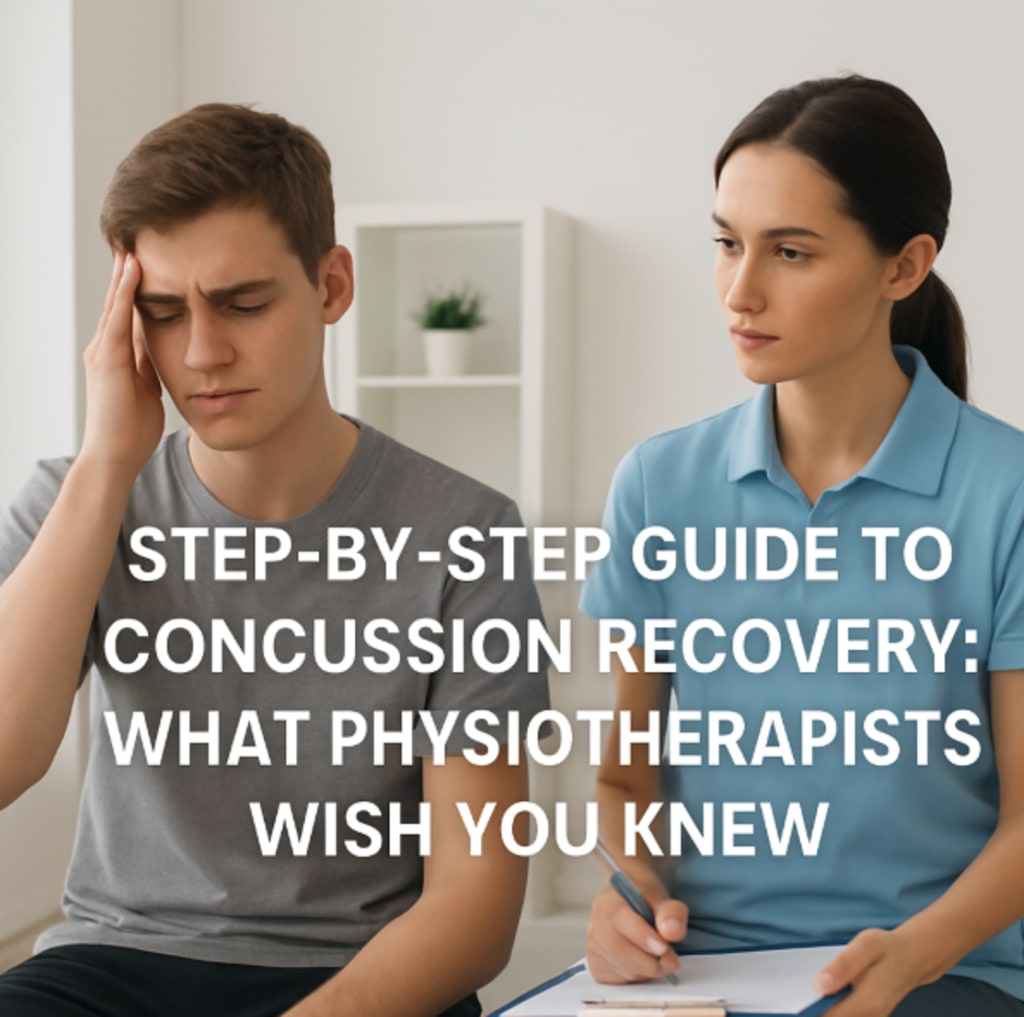
Recovering from a concussion isn’t just about resting in a dark room anymore. Modern physiotherapy has significantly changed how we approach concussion treatment, blending cognitive, physical, and neurological strategies for a full recovery. Yet, many patients don’t realise the steps they should take — or avoid — in the days and weeks after a concussion.
In this guide, we’ll walk you through the physiotherapist-approved recovery process and share what most people get wrong about healing from a concussion. If you've experienced a mild traumatic brain injury (mTBI), this information could change your recovery journey completely.
What Is a Concussion?
A concussion is a mild traumatic brain injury typically caused by a blow to the head, a fall, or a sudden jolt that causes the brain to move within the skull. It can affect memory, balance, vision, concentration, and coordination — and despite being “mild,” the symptoms can be highly disruptive if not managed properly.
Contrary to popular belief, you don't need to lose consciousness to have a concussion. Many people walk away from accidents feeling "off" without realising their brain is injured.
Step-by-Step Concussion Recovery Process
Step 1: Get Diagnosed Early
The first step after a head injury is to seek medical evaluation. Ignoring signs like headache, dizziness, nausea, blurred vision, or sensitivity to light/sound can prolong recovery or lead to complications.
Once a diagnosis is confirmed, booking an assessment at a trusted physiotherapy clinic in Singapore can help initiate a personalised rehabilitation plan.
Step 2: Start With Cognitive and Physical Rest
For the first 24–72 hours after the concussion, rest is essential — both mentally and physically. This means:
- No screen time
- No reading, driving, or working
- No physical exertion
However, full bed rest beyond a few days can delay recovery. Physiotherapists now recommend gradual reintroduction of activities under professional supervision.
Step 3: Begin Supervised Return-to-Activity Plan
After the acute phase, a physiotherapist will guide you through a stepwise protocol that reintroduces light movement and mental activity. This stage typically includes:
- Short walks or stationary cycling
- Light balance and coordination exercises
- Simple cognitive tasks (reading, puzzles)
The goal is to test tolerance without triggering symptoms. If symptoms return, it’s a sign you’ve pushed too hard and need to scale back.
Step 4: Vestibular and Balance Therapy
Many concussion patients experience dizziness, imbalance, or visual tracking issues. Vestibular rehab includes:
- Eye-tracking drills
- Balance exercises on unstable surfaces
- Head movement coordination
These techniques, delivered by physiotherapists trained in concussion treatment, help retrain the brain and improve spatial awareness — crucial for safe return to daily function or sports.
Step 5: Cervical Spine Treatment
What many don’t realise is that neck injuries often accompany concussions — especially in car accidents or sports collisions. A stiff or misaligned cervical spine can cause headaches, dizziness, or visual disturbances that mimic concussion symptoms.
Manual therapy, dry needling, or targeted stretches at a physiotherapy clinic in Singapore can relieve these secondary issues and speed up recovery.
Step 6: Neuromuscular and Functional Re-training
Once balance, vision, and symptoms improve, the focus shifts to rebuilding strength, coordination, and neuromuscular control. These exercises prepare you to return to school, work, or sport safely.
For athletes or active individuals, incorporating modalities such as Clinical Pilates in Singapore can improve core stability, posture, and motor control — all of which can be disrupted post-concussion.
Step 7: Return to Work, School, or Sports
Your physiotherapist will implement a graded return-to-activity protocol. This ensures you're symptom-free and functionally ready before you go back to:
- Competitive sports
- Physically demanding jobs
- Mentally intense tasks
Pushing too soon can worsen symptoms or cause re-injury, especially if reaction time or coordination is still impaired.
What Slows Down Concussion Recovery?
- Ignoring symptoms or delaying treatment
- Complete rest for more than 3–4 days
- Returning to screens or physical activity too soon
- Undiagnosed neck or vestibular dysfunction
- Not addressing coexisting musculoskeletal issues
Physiotherapists trained in concussion rehab can identify these barriers early and customise your plan accordingly.
What Slows Down Concussion Recovery?
- Ignoring symptoms or delaying treatment
- Complete rest for more than 3–4 days
- Returning to screens or physical activity too soon
- Undiagnosed neck or vestibular dysfunction
- Not addressing coexisting musculoskeletal issues
Physiotherapists trained in concussion rehab can identify these barriers early and customise your plan accordingly.
Long-Term Outlook
Most people recover from a concussion within 2–4 weeks, but some experience prolonged symptoms, known as post-concussion syndrome (PCS). If you’re still struggling with concentration, fatigue, or headaches after a month, a structured rehab program is essential.
The good news? Research shows that early intervention with physiotherapy leads to faster, more complete recoveries.
FAQs About Concussion Recovery
Q1: How soon should I see a physiotherapist after a concussion?
A: Ideally, within a few days of diagnosis. Once the initial rest phase passes, a physiotherapist can guide your return to activity safely and effectively.
Q2: Do I need imaging like an MRI to start treatment?
A: Not always. Most concussions do not show up on scans. If red flags are ruled out by a doctor, you can begin treatment without imaging.
Q3: Is it normal to feel worse when I start exercising again?
A: Some symptom increase is expected, but it should be mild and short-lived. Your physiotherapist will monitor your response and adjust accordingly.
Final Thoughts
Concussion recovery isn’t just about waiting it out — it’s an active, strategic process. Physiotherapists understand the complex systems affected by concussions and offer a comprehensive roadmap to full recovery.
From vestibular rehab and cervical spine care to functional training and return-to-sport protocols, concussion treatment goes far beyond rest. The key is starting early, progressing gradually, and working with experienced professionals who guide you every step of the way.
If you or someone you know is recovering from a concussion, don’t wait. Reach out to a dedicated physiotherapy clinic in Singapore for the support you need to heal fully — and confidently.
About the Creator
Integrative Physio
Integrative Physio Pte Ltd, based in Orchard, Singapore, was founded in January 2016 to fulfill a vision of complete patient management. It is made up of a team of internationally trained health professionals.
Keep reading
More stories from Integrative Physio and writers in Families and other communities.
Does Shockwave Therapy Really Work? 5 Conditions Treated Successfully in Singapore
Shockwave therapy has gained strong attention in recent years, especially among patients looking for non-invasive alternatives to surgery. If you're struggling with chronic pain or injury and wondering whether shockwave therapy really works, the answer lies in understanding how it's used and which conditions it treats effectively.
By Integrative Physio8 months ago in Families
The Man with the Jacket Haunts My Childhood Memory
We were in a hurry. Mother always walked fast, but I struggled more than usual to keep up with her as we sped through the train station with her suitcase. She held my hand and dragged me along behind her, her oversized purse swinging from her shoulder, clunking into my head with every step.
By Georgia Kreiger3 days ago in Families



Comments