
Old is Gold: The Lantern That Lit More Than Just Rooms
He built a light with his hands—and it lit generations with his heart

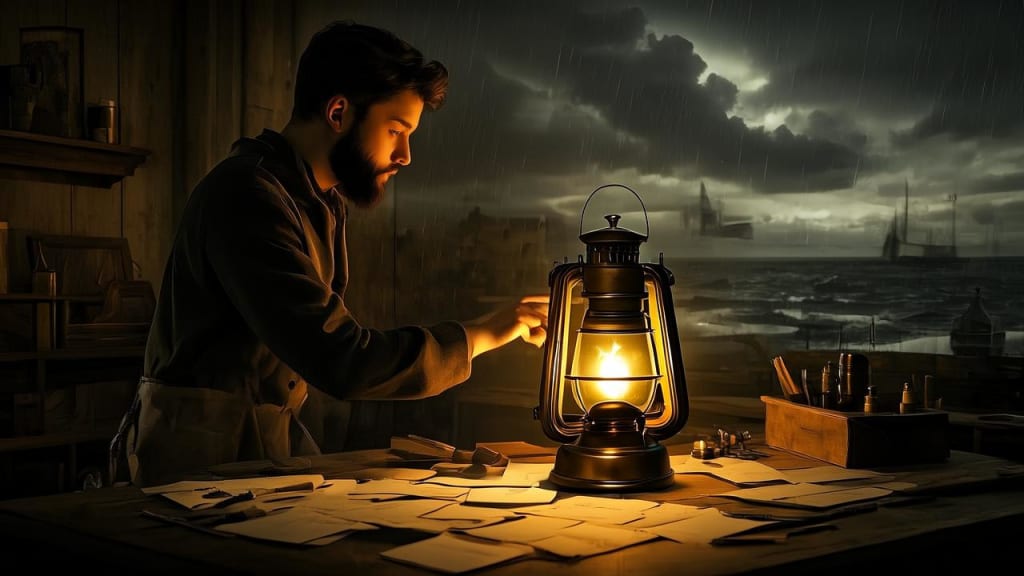
In the dusty corner of an old wooden shelf sat a brass lantern—its glass smudged with age, its metal dulled by time. To most, it was just a relic, a forgotten object from the past. But to me, it was a treasure chest that didn’t need to be opened to spill stories; it only needed to be lit.
The lantern once belonged to my great-grandfather, Yousaf Ustad—a man who never went to school but had the kind of wisdom that can't be written in books. He was a lantern maker in the early 1900s, in a small town where electricity hadn’t yet touched the sky. People called him “The Light Giver,” not because he sold lanterns, but because he gave hope in the form of flame.
His workshop was a modest clay room with wooden beams and the smell of metal, oil, and burnt fingers. As a child, I was told he crafted each lantern with care, bending brass sheets with worn hands, fitting glass panels with precision, and whispering prayers over each finished piece. "A lantern is more than fire," he used to say. "It's a keeper of warmth, a witness to life."
One day, a traveler came to town during winter. The mountains were ruthless, the night colder than silence. The man had no money, only a sick child and eyes full of desperation. My great-grandfather gave him a lantern—one he had just finished polishing. “It will keep your child warm,” he said. “And may the flame remind you that kindness still burns in this world.”
That night, the man took shelter beneath a tree, wrapped his child in a blanket, and lit the lantern. In the morning, the child was alive—and so was the story. The traveler became a merchant years later and returned just to thank the lantern maker. "Your light saved my son," he said, “and I tell your story in every town I go.”
Years passed. Technology replaced fire. Bulbs buzzed overhead. Switches made light too easy. But even as the world moved forward, the people of the village still came to Ustad Yousaf for lanterns—not because they needed them, but because they trusted them.
My grandfather kept the tradition alive. And when I was old enough, he handed me the lantern. “This one,” he said, “was the first your great-grandfather made. He kept it for himself. And now, it’s yours.”
I didn’t understand its value then. I was a boy of screens, not flames. But one night, a storm hit. Power lines snapped, and the house drowned in darkness. I fumbled through drawers until my hands touched the cold brass handle. I lit the wick. The soft glow spread like honey across the room. My heart slowed. My mind hushed. The light didn’t just show the walls—it showed memories. In that moment, I met my great-grandfather in the flicker. I saw the traveler under the tree. I saw warmth.
From that night onward, I kept the lantern on my study table. Not for emergencies—but for reminders. It reminded me to slow down. To craft things with care. To light others’ lives, even when mine felt dim. It became my teacher, my grandfather’s voice, my history book.
Today, in a world rushing toward neon and pixels, we forget that the softest lights shine the deepest. We forget that handmade things carry souls. That a man with rough hands can leave behind something more enduring than fame—a legacy of love wrapped in metal and flame.
So yes, old is gold. And sometimes, that gold is hidden in brass.
And that lantern? It still lights my room.
But more than that…
It lights me.
About the Creator
Leah Brooke
Just a curious storyteller with a love for humor, emotion, and the everyday chaos of life. Writing one awkward moment at a time
Keep reading
More stories from Leah Brooke and writers in Families and other communities.
She Was Never Real
I met her on a rainy Tuesday. The kind of rain that doesn't just fall—it lingers in the air, heavy and cold, like the universe itself is pressing down on you. I was sitting alone in a bookstore café, sipping cheap coffee and pretending to read a book I’d already abandoned. She sat across from me without asking, as if we’d done it a thousand times before.
By Leah Brooke6 months ago in Fiction
Wise~Guys
— Look Behind what's in Front of You ~ Make Good Choices — Hey, So how you Doin'..! Made~Men — Mobster Movies romanticise a distinctive, elegant appearance, impeccable attire style, along with the 'Families' expressive lingo. Making their 'Bones' gave them Panache — with vintage fedoras, tailored pin-striped suits, mirror-polished wing-tip shoes adorned with tassels; with their 'Gun Moll' gorgeous dates on their arms.
By Jay Kantor17 days ago in Families
Kids Beds Suitable for Smaller Bedrooms: Smart Comfort Without Crowding
Not every child has a large bedroom. In many homes, space is shared or limited, which means every piece of furniture needs to be chosen carefully. A bed that is too big or bulky can make a small room feel cramped and uncomfortable.
By Shazad Khana day ago in Families




Comments (1)
Absolutely Right