
My Mother’s Hands: Stories Etched in Skin
A poetic tribute to a mother’s sacrifices and hard work.
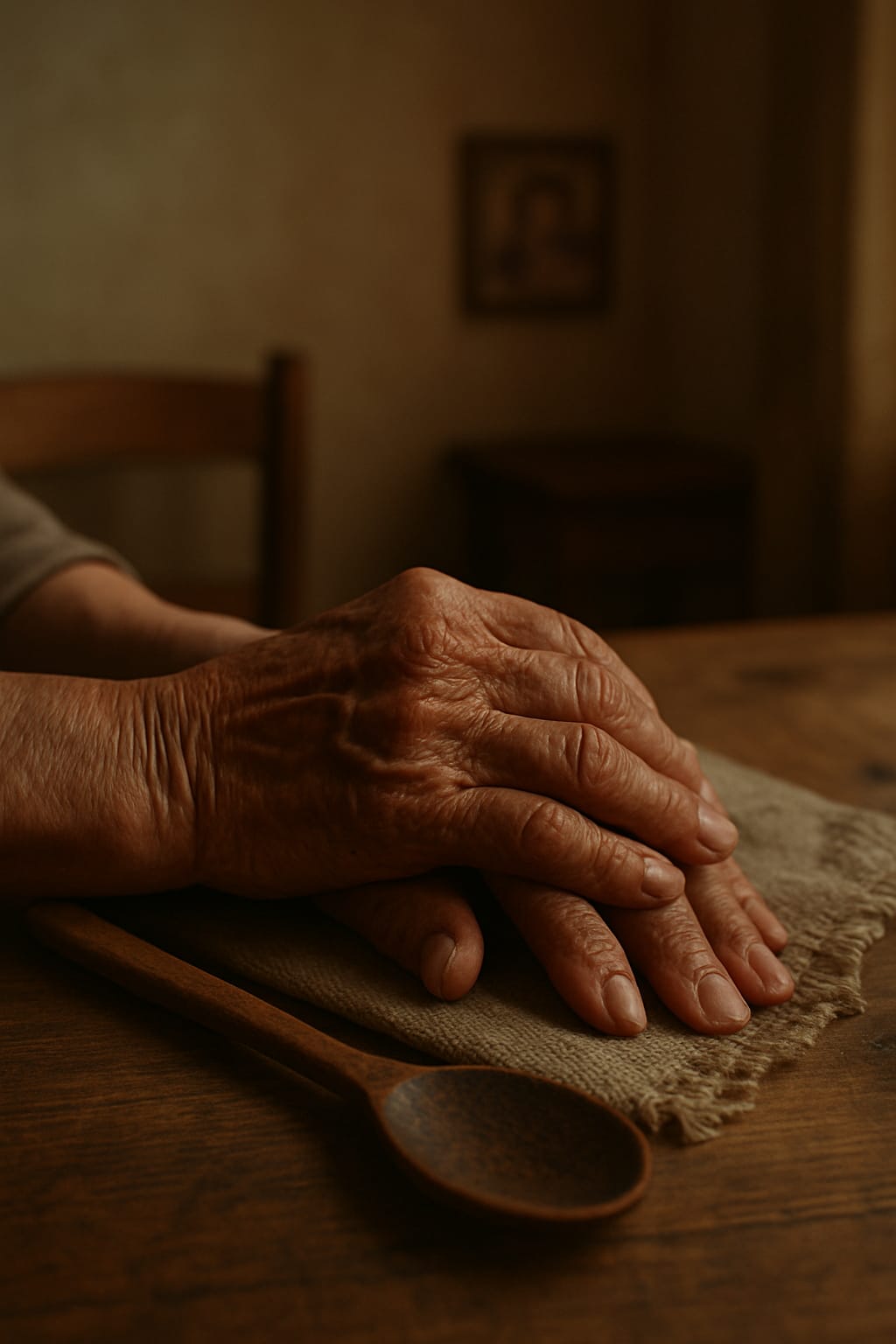
My mother’s hands were never soft.
They were weathered by time, browned by sun, cracked by winters that seemed colder in our little home than outside it. The tips of her fingers had tiny scars—some from kitchen knives, others from sewing needles. She wore no rings. No polish. Only the plainness of duty, the truth of labor, the quiet language of love.
As a child, I didn’t understand them. I envied the hands of other mothers—delicate, adorned, gentle in their touch. My mother’s hands were firm, rough, always doing something. They smelled of cumin, wood smoke, Dettol, and cardamom. I remember once, at a friend’s birthday party, seeing his mother stroke his hair with fingers that looked like they belonged to a magazine cover. When I got home, I looked at my mother’s hands and wondered, not unkindly—why aren’t yours like that?
She didn’t answer. She just ruffled my hair, left flour on my head, and went back to stirring the daal on the stove.
---
It took years for me to begin hearing the stories her hands told. I began to understand not through words, but through memory.
Like how, every morning before dawn, she would light the stove in winter, even when her joints hurt. She’d make roti from scratch, her hands working the dough with a rhythm passed down through generations. She said the secret to soft roti was to press with the heel of your palm, not your fingers. That way the warmth passed into the dough. That way, the bread remembered your love.
Her hands would roll each ball with patience, flatten it gently, and press it on the hot tawa. Steam would rise, curling around her fingers like smoke around a flame. She moved fast, flipping, buttering, stacking. She made enough for everyone before we even opened our eyes. By the time we got to the table, she was already at the sink, washing dishes with the same hands that had cooked, cleaned, wiped, healed, and held.
---
She had the kind of hands that remembered everyone’s needs except her own.
When I fell and scraped my knee, it was her hand that cupped water and cleaned the wound. When I had a fever, her palm on my forehead was my thermometer, my comfort. When I cried in secret, ashamed of teenage heartbreaks, her hand reached for mine in the dark. She never asked questions. She just squeezed it once. That was her way of saying, “I know. I’m here.”
I remember how she stitched my school uniform when I tore it climbing the fence. The thread matched perfectly, but the stitching was crooked. “No one will notice,” she said, smiling. “Only I will know.” That stitch is still there, tucked in a drawer with the rest of my past.
Her hands were also disciplinarians. They knew when to spank, when to point, when to fold into fists of frustration. But even in anger, they never lingered too long in fury. They always came back to softness. Always found their way back to love.
---
I started noticing the way her hands aged.
The veins became more visible, the joints stiffer. But she never stopped using them. She massaged our heads with warm oil on Sundays, the way her mother once did. She wrapped pickles in cloth to dry on the rooftop, turning them with her fingertips until the sun had kissed every piece. She peeled garlic at night, her fingers working even in sleepiness, because she wanted cooking to be easier the next day.
I remember watching her once from the hallway—her hands folded in prayer, fingers trembling slightly. She didn’t see me. But I saw her. The way her thumbs rubbed her forehead, the way her palms pressed together in silent conversation with God.
---
She never wrote poetry, but her hands were poems.
They spoke without language. They forgave without words. They made space in a world that often gave her none. When she braided my sister’s hair before school, it wasn’t just about neatness. It was her way of saying, “You are cared for. You are seen.” When she folded clothes, she tucked a bit of herself into every crease.
We took those hands for granted, as children do. We expected them to always be in the kitchen, always picking up our mess, always reaching for us when we cried. We didn’t know the toll it took. That her hands were tired, too. That maybe some nights, she wanted to be the one held.
---
I remember the first time I saw her cry.
It wasn’t dramatic. She was sitting at the edge of her bed, hands open in her lap, eyes wet. My father had lost his job. The bills had piled up. And her brother had called from far away, saying he couldn’t send money this month. She said nothing. Just looked at her hands.
As if they had failed her.
As if she had given and given, and now they had nothing left to give.
I sat beside her and took one hand in mine. I was old enough to understand, but still too young to know what to say. So I just held it. I felt the roughness against my smooth skin. The warmth. The quiet pulse of a life lived in service.
---
Later, when I left home for university, I remember how she packed my bag.
Not just with clothes and books, but with snacks, remedies, folded notes of advice. She tucked turmeric in one pocket (“for when you’re sick”), sewing thread in another (“just in case”), and a small silver coin she said had protected her as a girl.
She held my hand as I boarded the train. Her grip was tight, like she was trying to memorize it. Her thumb moved in slow circles on my palm. That was her goodbye. No big speech. Just circles on my skin.
I watched from the window as the train pulled away. She didn’t wave. She just pressed her hands together in prayer. For me. For the journey. For all the pieces of her heart she had packed into my bag.
---
Years passed. And one day, she couldn’t use her hands the way she used to.
Arthritis stole her grip. The woman who once kneaded dough and chopped onions without flinching now struggled to open jars. She pretended it was fine. “Just a little pain,” she said. But I saw her wince. I saw how she cradled her own wrist like a broken thing she was trying to soothe.
So I cooked. I cleaned. I folded her clothes the way she used to fold mine. I massaged her fingers with warm oil, the way she once did for me. And when I touched her hands now, I no longer saw them as rough. I saw them as sacred.
They were maps. Of all the places her love had taken me.
---
She passed away in her sleep.
Peacefully, they said. But it didn’t feel peaceful when I held her hand for the last time. It was cold. Still. Empty of motion.
But not empty of meaning.
Even in death, her hand held memory. The lines hadn’t faded. The scars still whispered. The callouses still bore witness to a life that had been nothing short of holy.
I pressed my lips to her palm, the same way she used to kiss my forehead. And I whispered, “Thank you.”
---
Now, years later, I still think of her hands.
When I make roti and get the dough consistency just right. When I fold my child’s clothes with careful corners. When I rub a tired shoulder or braid hair or cut vegetables. Her gestures live in me.
I carry her in every movement.
Sometimes, when I’m tired and feel like I’m failing, I look at my own hands.
They’re not soft anymore. They’ve begun to crack. A burn mark near the wrist from last winter. A faint cut across the thumb from a kitchen mishap. A new wrinkle by the knuckle.
And I smile.
Because I know now.
These hands are becoming like hers.
And that is the greatest honor I will ever know.
About the Creator
Keep reading
More stories from Abubakar Khan and writers in Families and other communities.
Smoke from the Stove
A mother’s silent sacrifices, a son’s long journey, and the love that held them together—despite the distance. --- In a small village nestled between fields and silence, there stood a modest mud-brick house with a slanted tin roof and smoke rising gently from its chimney each morning. That smoke, thin and unassuming, was the first sign that life within those walls had begun its day. It came from an old clay stove—handmade, cracked at the corners—where Mumtaz Begum cooked meals, boiled tea, and warmed her aging bones during winter.
By Abubakar Khan8 months ago in Families
Wise~Guys
— Look Behind what's in Front of You ~ Make Good Choices — Hey, So how you Doin'..! Made~Men — Mobster Movies romanticise a distinctive, elegant appearance, impeccable attire style, along with the 'Families' expressive lingo. Making their 'Bones' gave them Panache — with vintage fedoras, tailored pin-striped suits, mirror-polished wing-tip shoes adorned with tassels; with their 'Gun Moll' gorgeous dates on their arms.
By Jay Kantor20 days ago in Families


Comments
There are no comments for this story
Be the first to respond and start the conversation.