
Lila, I bought a boat
Memory of things that happened and also of those that never did
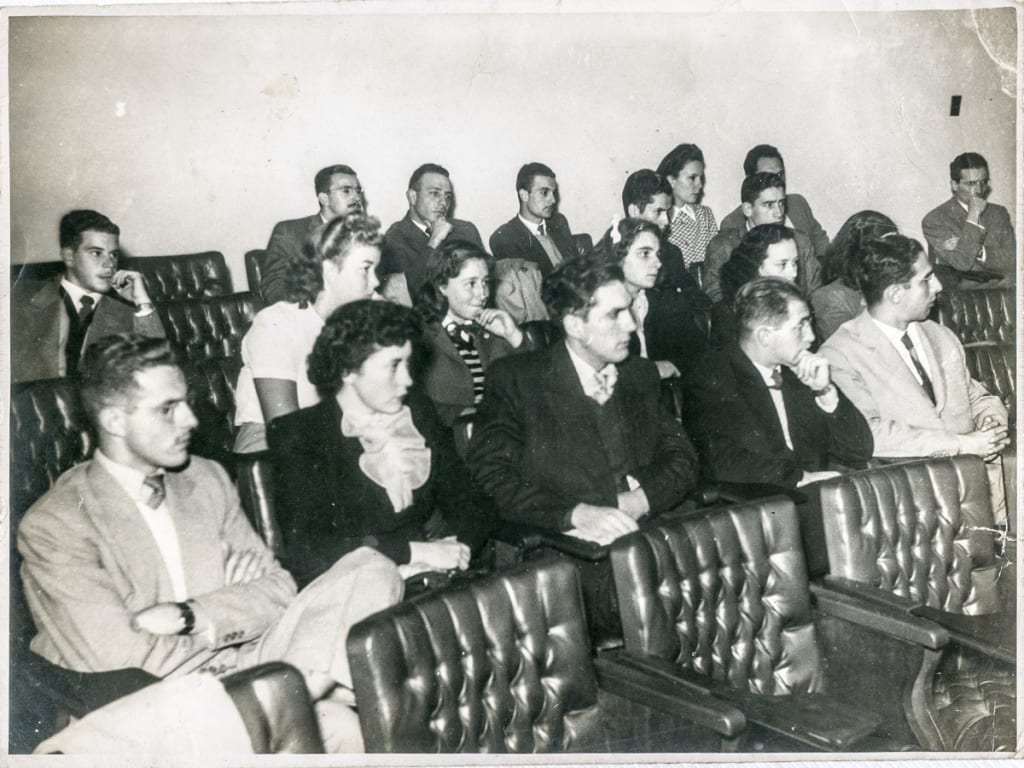
Dad got home: his way from parking the car in the garage, opening the living room door, walking through the aisle into the dining room had the same sounds, light, colors and maybe smells. At the end of the aisle was the dining room and kitchen and people just appeared from the darker aisle into the light.
Lila, I bought a boat!
He looked excited, his little eyes shining and a childish smile on his full lips.
Come again?...
That was my mom in clinical mode. She squinted a little on clinical mode, and held her head back as if to observe whatever it was again.
I bought a boat…
You bought a boat. You bought a boat?!
She looked alarmed, going angry, he looked confused. She continued:
You really did buy a boat?
This part of the scene is absent. The next thing I remember is mom in full angry impatient mode:
I don’t believe it (rhetorical). How could you buy a boat? We have mortgage, we owe my mother money, we… what were you thinking?
It didn’t last long. It never did. I don’t remember my mother mad at dad for longer than minutes. But that’s the public version of things. They had long conversations behind locked doors. I’m not sure about how long the conversations were but the boundary was very much physical: the door was closed and we were not supposed to get in.
This is what I remember about the red and white boat that carried us through plenty of adventures at Juquehy, a litoral village at the North of Sao Paulo.
Except this whole memory is false: I wasn’t born yet. It feels real as any of the certified real memories, the two of them appear tall from a three meter distance, something that would put me at age four or five. It simply didn’t happen.
I checked with mom and she confirmed that this is exactly how it happened. How it ended up in my head as a memory, I don’t know. Maybe she told me. Maybe she told somebody else and I was that silent small omnipresence, always listening and processing information.
The fact is that I don’t know what memories are recollections of what happened, reconstructions from partly witnessed episodes or complete video memories made from pieces of other peoples’ memories.
Finally, I am their fourth child, unplanned as the others and born ten years after the third. I was born when everybody was too busy to realize I was overhearing a lot of stuff. Small children can circulate in environments relatively unnoticed. I don’t know what happens to what we overhear at this stage since context is either fragmented, absent or magical.
I’m not sure it matters that much. For one thing, the memories are consistent with these two people that became the constantly metamorphosing figures of my parents. Their behavior is consistent from my first memories - real of fictional - to what I see now during our video-calls.
They make sense. Whether they happened or not, these stories are chapters of a greater story, one that came before me and will continue after I die: the story of mom and dad, Lila and Moacyr, and their adventures in world of reality and fantasy, of science and literature and of inventing, from scratch, a lineage. They broke up with too many things that were dumped on them and played it by ear, inventing on the go.
They made and raised us with no blueprint and here we are, remembering and inventing the parts of their saga that we highlighted. Because I don’t know what was most important in their life according to them. I can’t ask them, either, because it’s the type of stupid question for them. They would just laugh it off.
I do know that they started something that turned out to be awesome and meaningful. To whom? May one ask. I think whatever they started is universal. It has already transcended them, us, our children, and their students and Brazil. I think they invented something new, something atypical and something worthy. That’s why I am telling their story, with facts, fiction and transcendence.
Lena had an idea
About a year ago Lena, the third sibling, decided to create an online chatting space for us to help with decision-making involving the progenitors in real time. They were already over 90 years old, they needed our help for many things and there were only two of us living in Brazil: Laerte and Mauro.
At first we dedicated time to sharing management information and plans, like the management department of the Coutinho project. We did a lot of screening to deliver an elegant decision-making package to the progenitors. We were the go-betweens: we talked to them, figured out the parameters, applied the parameters and came up with a few names or items for them to choose for.
That didn’t last long. Soon mom had pneumonia from an amoxicilin-resistant strain. The on-ground crew (Laerte and Mauro) had to rush her to the emergency room while discussing each decision with the online crew (Lena and myself) full-time. For a good 72 hours I don’t think we slept much.
On retrospect, that was what kicked off the memory project, which is actually a meaning and transcendence project. Because that was when we faced death for the first time. It was terrifying.
We still didn’t have the better setup of our medical support, the physician in charge of them was, circumstantially or structurally, incompetent and unprepared for that kind of emergency. An emergency that I realized then would be always a hovering threat. The hospital physician and nurse personnel was even worse. The frustration of not having any power to enforce proper procedure was unbearable for me.
Maybe that’s what brought us closer as a sibling system. My siblings are much better equipped for handling people. I’m not. Especially on what concerns medical decisions, my role had always been that of the decision-makers. I am prepared for quick analysis, decision and being obeyed. And I wasn’t even considered, much less obeyed.
That was 2019 and I had been dealing with a similar type of frustration here in the US, where I still haven’t figured out how to handle the complete and utter dismantling of American medicine, from med school to every corner of health-care. Here I am in permanent defense and strike mode.
But mom’s pneumonia and dad’s anxiety was something I was unprepared for. Through the screen of my stupid phone I saw my mom lifeless, it seemed. Through the same screen, I saw my dad in extreme anxiety, frustrated and scared. I had seen dad scared before but that was different. He was not panicked-scared or intimidated-scared. He was determined to solve whatever there was to solve but like me, he couldn’t.
Mauro and Laerte kept it together like Buddhas. They moved through the Brazilian healthcare mess, still five-star compared to the US, and got mom back in shape in record time. All my screaming into the stupid phone about bacterial resistance had zero effectiveness. And out they went, not a single punch thrown, not a single bloody nose.
Lena, as online as me, had all the right information, which often was the password to something, ready in real time. I had useless folders with files and files of controversial primary sources on every aspect of mom’s issues, ready to fuel my powerlessness even more.
I think that’s when it dawned on me that I had no clue about who I was. That was not scary. It was in some way peaceful. The key to finding out who I was was there, coming back home in her wheelchair, meeting her with his concealed gigantic fear, surrounding her with the basic necessary decisions and items. The key was that system, our surviving mom, our hyper-vigilant dad and the sibling system.
The pneumonia scare was behind us and we moved into a new set of decisions. It was clear that we needed to have competent and progenitors-approved physicians to rely on because that scare was over but others would come. It was also clear we needed to coordinate with the staff of what became an in-house clinic for the progenitors as best as we could to spare the ground-crew excessive worry and demand.
Something changed, though, as if the veils of time got ripped in certain places and we could see through. Not for long, not at will, but sometimes.
The siblings and I started to share some memories in that space. The memories gained context, finally. Together, the four of us made sense of bits and pieces of information we had. We shared and contextualized the scary, evil letter written by Ulysses Coutinho, my dad’s father, to grandma, my mom’s mother. The letter was an attempt to obstruct their children’s marriage. It was diabolical.
It made sense of another memory I had: my dad being offered a tray of appetizers and saying “my condolences” to the person holding the tray. Again, there is no chance of this being a true memory because none of us were born yet: this was my parents engagement party.
I have some diagnosed memory deficits. I don’t seem to retain memories of places, for example. It is quite unpleasant and the permanent jamais-vu sensation makes driving through known places anxiogenic. The only places I drove relaxed were Brasilia and Gainesville, Florida. All addresses were cartesian points. In Brasilia, by acronyms that identified North-South and West-East locations and what kind of block (commercial, residential, government buildings, etc). In Gainesville all you had to do was count the streets to either side. Apart from places like that I depended on maps and now on GPS. The red house in the corner? I find it completely new every time I drive by. I have a strange feeling I should remember it but I don’t. Faces are not much different. I forgot what my mom looked like when she took a short trip do Bahia and I stayed behind with Mauro. When she came to pick me up a week later at kindergarten, and I remember it very clearly, I had the uncomfortable feeling of knowing she was my mother but not really recognizing her. I must have been around four years old.
It didn’t get better with age. I felt embarrassed at school to be the only kid that never remembered to bring scissors, glue or whatever was scheduled for that day. Nor did I remember tests for that matter.
Years later, while I was still a Ph.D. student and I finally carved some time for myself, I opened the first book from the pile of unread books. It was Foucault’s “The order of things”. The book looked used. As I started to read, I found several annotations on the sides written with a fine pencil and a very small printed handwriting. Very much like my own handwriting. Curiously, the other seem to have a similar way of thinking to mine. The it sank in: I had read the whole book and annotated it. I had no recollection. I had to read it again.
Recently I found a review article about a movie. I never saw that movie and the review suggested it would be good. And then I found out that I was the review’s author.
Laerte disagrees and thinks I have a great memory. I dare not imagine why.
Today, I document all important events. I have whole folders with memories now: the records of things as they were happening. Some of them still feel like somebody else’s memory.
As far back as I can remember, my dad complained about his memory. A good decade and a half ago he obsessed enough with it as to get a physician request a head MRI for him. In Brazil, lab results not only belong to the patient, but the patient alone holds on to it. There we were, with the MRI and dad didn’t like the physician who requested it. He was also terrified to know the image’s interpretation. That’s when one of my physician friends referred us to Jairo. The deal was that I was supposed to go to the consult in his place, talk to Jairo about the image and if he had Alzheimer or dementia, not say anything. If the results were clean, then I would tell him. I know it’s a surreal agreement but that’s how we roll.
It turned out that his brain was in better condition than a much younger person’s. He has a horrible memory for appointments, and for where he left his keys, wallet and glasses. He can remember the whole story about a field trip with his students, including the names of the minerals he identified and who was in the group.
I think we, children, took after him in the memory department. Certainly not from mom because she has an incredible ability to recall and connect things.
This is the story of my parents as I remember them and also as I could never have remembered. Whenever possible, I talked about them with the protagonists and with my siblings.
I’m not leaving the fictional memories out, though. Not even if they are not confirmed.
About the Creator
Marilia Coutinho
Marilia is a multi-disciplinary scholar who publishes on health, politics and culture. Her background include biology, biochemistry, ecology and sociology. She also writes memoir pieces about her unusual life and fiction pieces based on it.
Keep reading
More stories from Marilia Coutinho and writers in Families and other communities.
Finding Dad
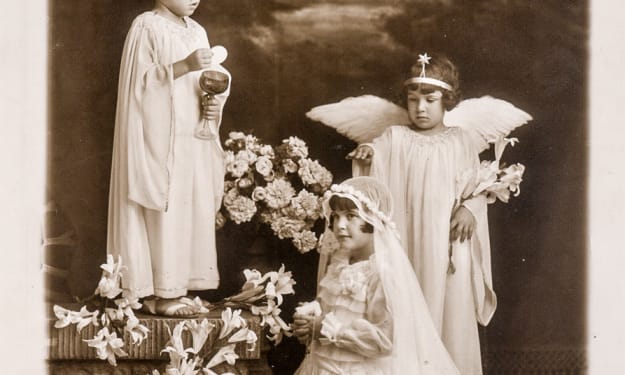
Who is my father? Who is this handsome old man looking at me through the cell phone screen, this cute young man with a ridiculous moustache, this blond little kid in an ancient sepia picture with angel wings in some type of pageant, this boy dancing with this girl, couldn’t be older than 15 but they were actually 23 and 25?
By Marilia Coutinho5 years ago in Families
The Day I Saw My Father Cry
Most of us grow up believing that our parents are unbreakable. As children, we see them as pillars of strength—people who always know what to do and how to solve every problem. Especially fathers. They are often seen as the strong ones, the protectors, the people who never show weakness. For most of my life, I believed that about my father. Until the day I saw him cry.
By Shoaib Afridi3 days ago in Families
Early March 2026: 4 Goals Accomplished
It's early March and I've now accomplished my 4th writing goal for the year of 2026. Before diving into the behind-the-scenes of it... why not tell you up front what that accomplishment was? I was published in a 2nd publication for this year. Published in Helix Literary Magazine out of Central Connecticut State University. You can read it for free right now!
By Stephen Kramer Avitabile7 days ago in Writers



Comments
There are no comments for this story
Be the first to respond and start the conversation.