
Is it Good for Babies to Look at Themselves in the Mirror?
What happens when babies see themselves in mirror?

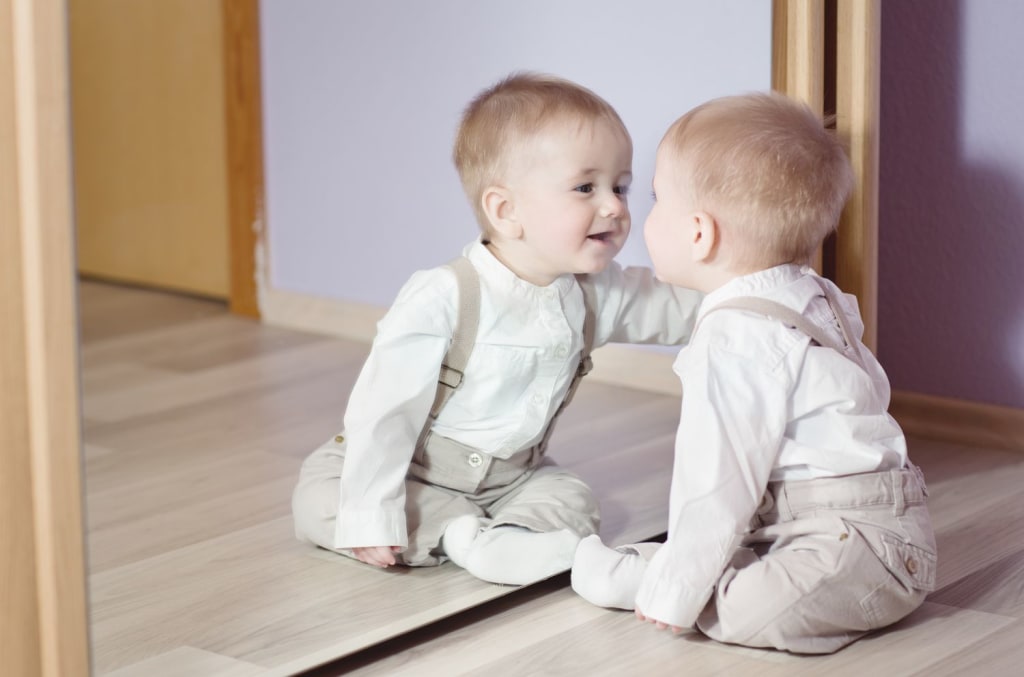
Wondering whether it's a good idea for your little one to spend time gazing at their reflection in the mirror? You're not alone in pondering this aspect of your baby's development.
What happens when babies see themselves in mirror? Some Common Myths
Seeing themselves in the mirror often sparks social interactions. Babies might smile, babble, or even engage in playful gestures, considering the baby in the mirror as a newfound playmate. This early interaction lays the groundwork for developing essential social skills.
One common myth is that babies lack the ability to recognize themselves in the mirror. However, research, notably the "mirror test" developed by psychologist Gordon Gallup, suggests that by around 18 months, many babies do demonstrate self-recognition. They may touch their own nose or make funny faces, indicating an awareness that the reflection represents their own image.
In various cultures, superstitions or cultural beliefs sometimes associate mirrors with the supernatural or negative energy for babies which is not true.
Dispelling the myth that it's bad for babies to look at mirrors opens the door to recognizing the positive impact mirror play can have on a baby's developmental journey.
Mirror, Mirror on the Wall: The Curious Case of Baby Reflections
Babies are captivated by the simplest of things — colorful toys, playful sounds, and, yes, even their own reflection.
The mirror becomes a portal to a world of discovery, where they encounter a fascinating "playmate" who mimics their every move. But is this newfound fascination with self-image beneficial for their development?
Now, What do babies think when they look in the mirror?
Initially, babies often display sheer curiosity when faced with their reflection. Their wide-eyed gaze and attentive expressions suggest an eagerness to understand the intriguing "playmate" in the mirror. They may reach out, touch the glass, or attempt to engage with the baby they see.
As babies grow and their cognitive abilities mature, they gradually come to recognize the reflection as themselves. This realization is marked by gestures such as touching their own nose or reaching towards the reflected image. This stage indicates the beginning of self-awareness.
The mirror becomes a canvas for emotional expression. Some babies may giggle and laugh, indicating joy and amusement. Others might display a more serious or contemplative demeanor, suggesting a range of emotional responses to their own image.
Babies are natural imitators. When they see their reflection mimic their movements, it can lead to a sense of delight and surprise. This mimicry not only entertains them but also contributes to their understanding of cause and effect.
While we can't exactly decipher the intricate thoughts of a baby gazing into the mirror, their behaviors and reactions suggest a rich internal world of discovery, curiosity, and the gradual unfolding of self-awareness.
The Early Stages: Baby's First Encounter with the Mirror
In the early months, a baby might not immediately recognize the reflection as their own. Instead, they might view the baby in the mirror as an intriguing companion, sparking coos, smiles, and attempts at interaction. This stage is not just adorable; it's a crucial step in their cognitive and social development.
What is the benefit of baby looking at mirror?
Encouraging your baby to look at themselves in the mirror isn't just an adorable pastime; it's a practice rich in developmental benefits.
Mirror play serves as an early introduction to self-awareness. As babies gaze at their reflection, they begin to recognize themselves, a crucial milestone in understanding their own identity. This self-awareness lays the foundation for emotional and social development.
When they reach out to touch the baby in the mirror or attempt to grab a reflected object, they're honing their hand-eye coordination and motor skills. Mirror play engages their curious minds, promoting cognitive development through interactive exploration.
Building Self-Awareness: Mirror, Mirror, Who Am I?
As your baby grows, so does their understanding of the world around them. The mirror plays a pivotal role in this journey of self-discovery.
Looking at themselves in the mirror helps babies develop a sense of self-awareness, a fundamental aspect of their cognitive growth. It's a gradual process that unfolds as they begin to connect the dots between their actions and the captivating reflection before them.
Mirror Play and Cognitive Development
Engaging with a mirror isn't merely an amusing pastime for babies; it's a cognitive workout.
As they reach out to touch the baby in the mirror or attempt to grab those elusive toes, they're refining their hand-eye coordination and motor skills.
Mirror play serves as a dynamic and interactive way for babies to enhance their physical abilities.
Social Interaction with the Mirror Buddy
Ever noticed your baby smiling, babbling, or even blowing kisses at their reflection? This isn't just a display of cuteness; it's a sign of their growing social awareness.
Interacting with the baby in the mirror provides a safe and enjoyable platform for babies to practice social skills. It's a precursor to the countless interactions they'll have with the people around them.
Mirror, Mirror, Everywhere: Exploring Perspectives
Introducing mirrors in different areas of your home can offer varied perspectives for your baby.
Placing a mirror on the floor, for instance, allows them to discover their reflection while engaged in tummy time. This exploration from different angles aids in their spatial awareness and understanding of object permanence.
The Mirror as a Learning Tool
Mirrors can be educational tools that extend beyond self-recognition. For example, showing your baby pictures of family members and then allowing them to see those same faces in the mirror reinforces the concept of identity and connection. It's a delightful way to introduce them to the faces that surround them daily.
When to Introduce Mirrors to Babies: A Timely Introduction
While mirrors offer a plethora of benefits, it's essential to introduce them at an appropriate time.
During the early months, babies are still developing their vision, and the concept of self-recognition may not fully emerge until around 18 months. As their visual acuity improves, so does their ability to engage meaningfully with the baby in the mirror.
Mirror Safety: Ensuring a Secure Experience
When incorporating mirrors into your baby's play space, safety is paramount.
Opt for child-friendly, unbreakable mirrors to eliminate any risk of accidents. Additionally, secure mirrors to the wall to prevent them from becoming unstable during your baby's exploration.
Mirror, Mirror Conclusion: A Reflection on Development
In the grand narrative of babyhood, the mirror serves as a captivating chapter in their developmental journey. It's not just about the joy of seeing a cute face; it's a tool for building cognitive, social, and motor skills.
So, the next time your baby giggles at their reflection or reaches out to touch the baby in the mirror, revel in the magic of this developmental milestone. Mirrors are more than mere reflective surfaces; they're windows into the wondrous world of your baby's growing mind.
About the Creator
Jennifer
I am Jennifer, a writer who adores babies and cats. Join me in the world of my heartwarming stories. 📝
Wise~Guys
— Look Behind what's in Front of You ~ Make Good Choices — Hey, So how you Doin'..! Made~Men — Mobster Movies romanticise a distinctive, elegant appearance, impeccable attire style, along with the 'Families' expressive lingo. Making their 'Bones' gave them Panache — with vintage fedoras, tailored pin-striped suits, mirror-polished wing-tip shoes adorned with tassels; with their 'Gun Moll' gorgeous dates on their arms.
By Jay Kantor19 days ago in Families
What If I Am the Victim
There is a moment many of us reach after deep self-reflection. You ask yourself hard questions. You examine your behavior. You wonder if you are the problem. And after all that honesty, another thought quietly appears. What if I am actually the victim
By Eunice Kamaua day ago in Families
Silver Screen Magic with Mae West
American actress and singer Mae West became a popular film actress during the Great Depression. She started entertaining in vaudeville, then performed on Broadway, and finally went to Hollywood. She signed up with Paramount Pictures and made her debut in the 1932 film “Night After Night.” She also starred in musicals, comedies, and crime dramas. The American Film Institute named her one of the best classic Hollywood actresses.
By Rasma Raisters7 days ago in Geeks



Comments (1)
very informative use some keywords also