
Inside the Whittaker Family’s Unique Journey: Lessons in Compassion
Exploring the lives of the Whittaker family, a story of genetic isolation, resilience, and the power of compassion.

This Article Was Written by a Human With the Help of AI
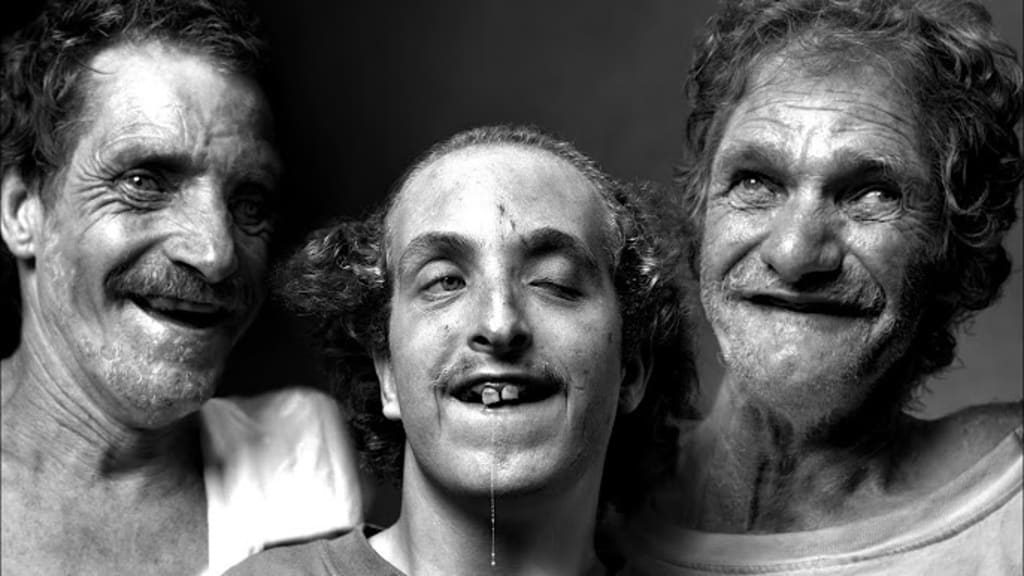
The story of the Whittaker family from Odd, West Virginia, is one that intrigues and captivates, yet also calls for a deep sense of understanding and compassion. Their lives have become a subject of widespread curiosity, often overshadowed by sensationalism. As a writer, I’ve pieced together their story from various documentaries and interviews, approaching it with the sensitivity it deserves.

The Whittakers live in the remote Appalachian hills, a location as unique as their story. Their family tree is shaped by generations of inbreeding, a reality stemming from the isolation of their community. This genetic closeness has had profound effects on their physical and cognitive traits, a fact that has brought them into the public eye but also made them vulnerable to misunderstanding.
One of the family’s most well-known members is Ray Whittaker, who communicates non-verbally through grunts and barks. His behavior, often misunderstood, reflects the intersection of genetic factors and possible conditions such as non-verbal autism. While his communication style has drawn attention, it is only a part of a much larger and more complex narrative about the Whittaker family.
Their lives are closely guarded by neighbors who act as protectors, ensuring the family’s privacy remains intact despite growing interest from the outside world. It is this protective environment that has allowed the Whittakers to live their lives with a degree of normalcy amidst the challenges they face. Those fortunate enough to gain their trust have documented poignant moments that reveal a family striving to make sense of their circumstances.
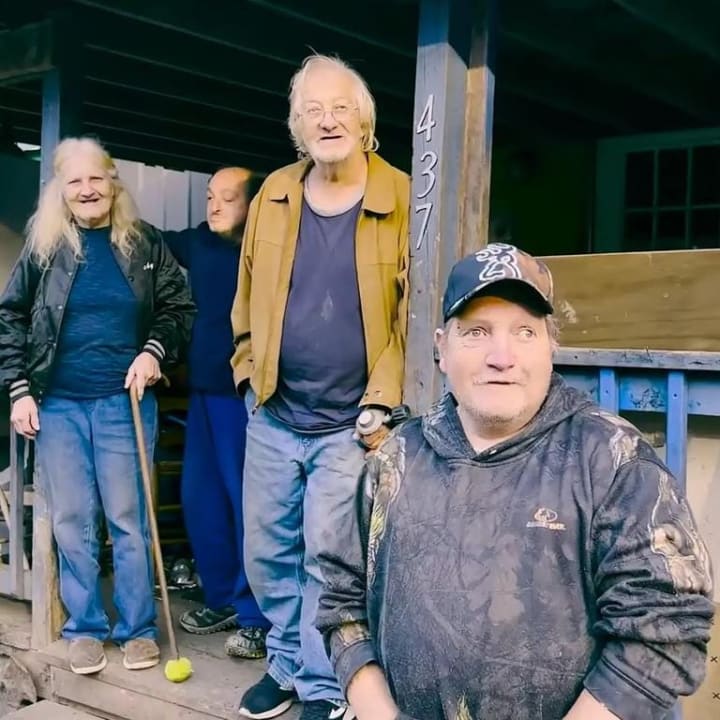
The Whittakers’ lineage can be traced back to James and Lucy Whittaker, whose descendants intermarried over generations. This lack of genetic diversity is not unique to their family but is a broader issue in many isolated communities worldwide. Inbreeding often arises from geographic and social barriers, resulting in genetic conditions that manifest in various physical and mental challenges. For the Whittakers, this reality is visible in their day-to-day lives and interactions.
Documentarians have captured moments where family members struggle to recall details about their heritage or express their emotions, underscoring the complexities of their situation. These interactions are not just about genetics but are also shaped by the cultural and environmental factors of Appalachian life. Their story is as much about where they live as it is about who they are.
While the Whittakers’ story has been the subject of public fascination, it is essential to approach it with empathy. They did not choose their circumstances, and treating their lives as mere spectacle strips away their humanity. The challenges they face are not just theirs alone but serve as a window into the broader issues of isolation and genetic diversity in similar communities. Their story is an opportunity to reflect on how these circumstances come to be and how they might be addressed with compassion and care.
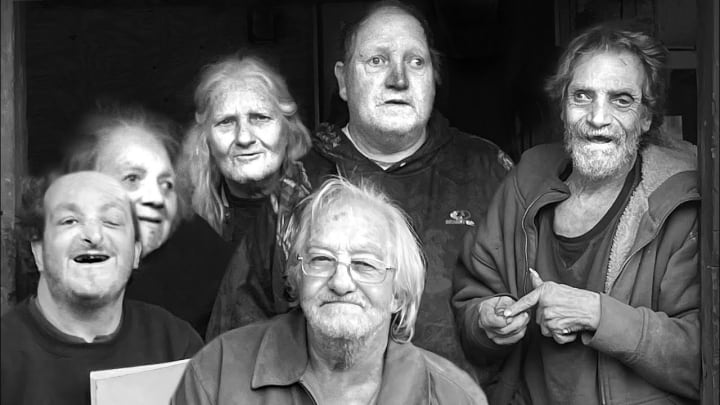
The Whittakers’ resilience is perhaps the most striking aspect of their story. Despite their challenges, they continue to live as a family, adapting to their circumstances and finding ways to endure. Their lives are a testament to the human spirit’s ability to persevere, even in the face of adversity.
As a writer, I believe their story is a powerful reminder of why understanding and kindness are so important when discussing sensitive topics. It is not enough to simply tell their story; it must be told in a way that honors their humanity and respects their experiences. Sensationalism only deepens the gap between understanding and judgment, whereas empathy builds bridges.
Reflecting on the Whittakers’ lives also challenges us to think about the role of community. Their neighbors, who shield them from unwanted attention, demonstrate the value of collective support and respect. It is a reminder that community is not just about proximity but about protecting and uplifting one another in meaningful ways.
In the end, the Whittaker family’s story is not just about inbreeding or isolation. It is a story of family, resilience, and the enduring strength of humanity. Their lives, though marked by challenges, offer profound lessons about compassion, respect, and the complexities of human existence. It is a story that deserves to be told with care, not to exploit but to inspire reflection and understanding.
If this story has moved you or made you think, feel free to share your thoughts. Let’s remember to keep the conversation respectful and focused on what truly matters: our shared humanity and the lessons we can learn from one another.
About the Creator
Gerald mawuli Deynu
Gerald Mawuli Deynu
Born on October 14, 2003, in Ghana, Gerald Mawuli Deynu is a dedicated writer who focuses on news, lifestyle, crime, relationship advice and more.
Keep reading
More stories from Gerald mawuli Deynu and writers in Families and other communities.
Is Rectal Bleeding Normal? Signs That It Might Be Something Serious
Hey there, it's Gerald here, and today I want to discuss something that, while uncomfortable, is important: rectal bleeding. Now, I know it’s not the most pleasant subject to think about, let alone talk about, but the truth is that it's a common experience for many people. Whether you've noticed a streak of blood on toilet paper, in the water, or on your stool, it’s essential not to ignore it. As awkward as it might be to bring up, addressing these issues early can prevent bigger problems down the road.
By Gerald mawuli Deynuabout a year ago in Longevity
Wise~Guys
— Look Behind what's in Front of You ~ Make Good Choices — Hey, So how you Doin'..! Made~Men — Mobster Movies romanticise a distinctive, elegant appearance, impeccable attire style, along with the 'Families' expressive lingo. Making their 'Bones' gave them Panache — with vintage fedoras, tailored pin-striped suits, mirror-polished wing-tip shoes adorned with tassels; with their 'Gun Moll' gorgeous dates on their arms.
By Jay Kantor18 days ago in Families
Kids Beds Suitable for Smaller Bedrooms: Smart Comfort Without Crowding
Not every child has a large bedroom. In many homes, space is shared or limited, which means every piece of furniture needs to be chosen carefully. A bed that is too big or bulky can make a small room feel cramped and uncomfortable.
By Shazad Khan2 days ago in Families




Comments
There are no comments for this story
Be the first to respond and start the conversation.