
How to Deal With the Pain of Finding Out a Loved One is Dying
Because there's no pain worse than losing a loved one

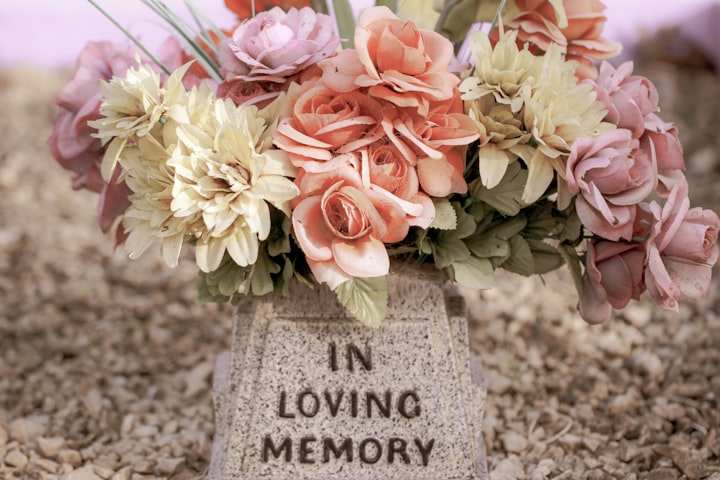
My senior year of high school was an eventful one in many ways. Not only was I going through the steps of selecting the college I wanted to go to, applying, waiting to find out if I’d been accepted, and getting ready to go to college, all while going through my last year of high school, I was also dealing with some stressful things at home.
When my senior year began, my mother found out she had breast cancer. She had a mastectomy and went through a round of chemotherapy because the cancer cells had spread to the lymph nodes. This was all stressful for me to deal with, but I made it through it because I had a great support system at school from my friends and teachers. I wanted to share some tips for dealing with the stress you feel when discovering a loved one has a terminal illness.
Express your pain.
Know that you’re not the only one experiencing pain when someone you love finds out they’re terminally ill. When my mother discovered she had cancer, I knew I wasn’t the only one concerned about her.
Many people were concerned about her, like people in the community that worked with her, and friends she had made through different activities she’d been involved in. I knew I could talk to them, and they’d know how I felt. My teachers also knew what was happening and encouraged me to talk to them when needed.
Spend time with them.
Even though I was still in school and was busy with homework and activities, I still tried to spend time with my mother when I could. I’m thankful for a few friends because they helped me out when my mother couldn’t because she was too weak from chemotherapy, and my dad was out of town.
By the time I graduated from high school, my mother had lost much hair from chemotherapy, but she hung in there. When she was dying, I felt bad about going away to college, but I knew it was the right choice for me academically. I kept in touch with her — she told me about getting fitted for a wig because she had started losing more hair, and I got to see that on my first visit home after I started college.
I was surprised at how thin her hair was when I came home for my first visit, but what was even more surprising was how much hair she had lost when I came home at Thanksgiving, and then again when I came home in December. I’m thankful I had my friends and family to talk to during that time. Otherwise, I wouldn’t have been able to make it through it.
What was worse, though, was when I came home at the last minute in February, a few weeks before Spring Break, when my dad told me my mother’s cancer had moved into her brain and she’d started having seizures. He wanted me to see her while she was still somewhat lucid.
I’m glad I went home then because it was the last time I saw her while she still knew who I was. I spent as much time as I could with her then, except for some time I took to go get a haircut. She seemed ok — she had a little trouble telling the hospice people how to get to the house, but she seemed okay. Nothing could have prepared me for what happened when I came home for Spring Break.
When I came home for Spring Break a few weeks later, I wasn’t prepared for what I saw. My mother was a shell of her former self. She was confined to a hospital bed, unresponsive except for a few occasional noises. My grandma had come down from New York to help the hospice nurses take care of her. I think she knew I was there, but I’m not sure. She was okay for a few days.
On March 16 though, while talking to a neighbor visiting us, the hospice nurse told me I needed to say my goodbyes because my mother was dying. After that, things happened quickly. I said goodbye to my mother, our neighbor left, my dad came home, the coroner came and took my mother’s body away, and dad and I went and started arranging her funeral.
We found a funeral home to have the service at and started arranging it. After looking at a few cemeteries, we found a suitable one that had a plot available and picked out a nice headstone. After that, we came home, started making phone calls, and arranged everything. People started arriving over the next few days. My uncle Bob came in from Maine, and my uncle Ralph from New Hampshire. My uncle Tom didn’t come at my grandmother’s suggestion because she didn’t think he’d be able to handle it.
The viewings and burial went well — many people showed up, including many of my former high school teachers and classmates, and people from the community who had known her. After that, some people returned to the house and continued sharing stories about her. It was a day I’ll never forget — a day full of memories about the woman who had given me life and shown me how to live it to the best of her ability during the 19 years I was lucky to have her as my mother.
Lean on others for support.
The following day I went back to school to finish my freshman year. I dreaded the flight back because it meant I would have to tell my roommate, suitemates, and all my teachers about my mom’s death. I could have asked Student Services for leniency, but I didn’t. I’m glad because I still finished the semester with a decent grade-point average — not as good as the first semester when I made Dean’s List with two A’s, two B’s, a carried-over self-paced class, and a class that was just graded as pass-fail, but still pretty good. I got mostly A’s and Bs, except for math (my carried over class) which was a C, and a history class which I think was also a C. But overall, I think I ended up with a 3.0 for the entire year, which was pretty good.
Dealing with a loved one’s death can be hard. I was lucky to have strong support systems both at home and school. That’s the most important thing anyone dealing with someone dying needs. If someone in your life is dying, make sure you have (or build) a strong support system now so you can deal with the pain when their time comes.
About the Creator
Erica Martin
I started writing in elementary school and haven't stopped since. I love to write about my life experiences and the hard lessons I've learned from them, as well as some of the life hacks I've discovered. I love tips for great work.
Keep reading
More stories from Erica Martin and writers in Families and other communities.
Four Facial Hair Methods Not to Use, and What Does Work
Please note, this article contains affiliate links. If you click on a link and buy, I may receive a portion of the sale. Ladies, have you ever looked at your face in the mirror and thought you had too much facial hair? You’re not alone. Hirsutism, or excessive hair growth, affects 5 and 10 percent of women.
By Erica Martin3 years ago in Blush
Wise~Guys
— Look Behind what's in Front of You ~ Make Good Choices — Hey, So how you Doin'..! Made~Men — Mobster Movies romanticise a distinctive, elegant appearance, impeccable attire style, along with the 'Families' expressive lingo. Making their 'Bones' gave them Panache — with vintage fedoras, tailored pin-striped suits, mirror-polished wing-tip shoes adorned with tassels; with their 'Gun Moll' gorgeous dates on their arms.
By Jay Kantor19 days ago in Families
Silver Screen Magic with Mae West
American actress and singer Mae West became a popular film actress during the Great Depression. She started entertaining in vaudeville, then performed on Broadway, and finally went to Hollywood. She signed up with Paramount Pictures and made her debut in the 1932 film “Night After Night.” She also starred in musicals, comedies, and crime dramas. The American Film Institute named her one of the best classic Hollywood actresses.
By Rasma Raisters6 days ago in Geeks




Comments
There are no comments for this story
Be the first to respond and start the conversation.