
From the Heart of Chaos to the Awareness of the Survivor.
hidden dysfunctional families and psychological scars.


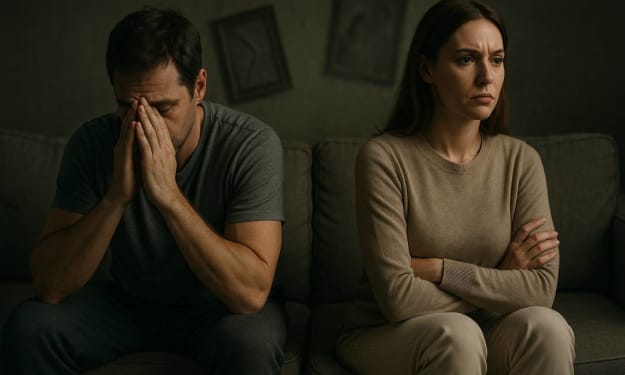
There are families not made of love, but of performance, where the bonds of affection are replaced by roles in a psychological theater. These families don’t raise children, they cast roles. The mother becomes the director of emotional manipulation, the father fades into the shadows of absence, and the children are assigned parts that suffocate their individuality.
This article is not a recount of a specific story, but rather a study of a familiar and haunting pattern, a behavioral blueprint deeply ingrained in households governed by dysfunction rather than connection.
The Core Problem: Emotional Roleplay Instead of Emotional Safety
In healthy families, emotional expression is a tool for bonding. In toxic families, emotional expression becomes a weapon. The child learns not how to feel but how to adapt.
The key term here is "pseudo-individuation", the illusion of becoming oneself while merely fulfilling a pre-assigned role. Examples include:
The "strong one"
The "scapegoat"
The "golden child"
The "silent absorber"
These are not identities; they are defensive postures adopted for psychological survival.
Here lies the core trauma: the child does not develop an integrated sense of self. Instead, the self fragments into roles that serve the dominant figures in the home. This leads to what psychology terms "role-based identity dissociation".
Consequences: The Long Shadow of Dysfunction
The psychological scars from toxic households are often invisible but devastating:
Chronic self-doubt
Hypervigilance in relationships
Inability to trust or attach securely
Fear of autonomy
Overattachment to emotionally unavailable people
Many survivors carry guilt for leaving such families. Behavioral psychology refers to this as "conditioned loyalty trauma", a psychological state in which the survivor feels morally obligated to maintain ties with toxic relatives, even at the expense of their own wellbeing.
The longer one remains immersed in such environments, the more the internal compass malfunctions. The individual begins to mistake control for love and drama for passion.
Breaking the Cycle: Awareness as Rebirth
Awareness rarely arrives gently, it comes as a breakdown. It may follow betrayal, manipulation, emotional collapse, or being cast out.
This moment marks the beginning of what psychologists call "constructive detachment", a conscious decision to remove oneself psychologically and emotionally, often before the physical departure even occurs.
True awareness is not a singular moment. It is a journey:
Recognition: Acknowledging that what was once normalized was actually abusive.
Deconstruction: Examining the roles one was forced to play.
Reintegration: Rebuilding the self outside of survival modes.
Reengagement: Learning to re-enter the world with boundaries and authenticity.
Why Behavioral and Social Psychology Matter
Behavioral psychology helps us understand how trauma conditions responses—why a person flinches at kindness or distrusts peace. It reveals the deep programming that makes chaos feel familiar and safety feel suspicious.
Social psychology, on the other hand, allows us to decode how group dynamics normalize dysfunction, especially in closed systems like families. It explains how a shared narrative of “this is normal” can imprison entire generations.
These disciplines are not merely academic, they are lifelines for those trying to make sense of internal chaos. Without them, survivors may mislabel their adaptive strategies as flaws. With them, they gain tools to decode, detach, and reclaim agency.
Societal Impact: Toxic Families, Broken Communities
When dysfunction is passed down unchecked, it doesn't just ruin individuals, it fractures society. Children who grow up in these systems often become adults who:
Struggle to form stable relationships
Project their unresolved trauma onto their partners or children
Remain emotionally dependent on toxic figures
Repeat the same harmful patterns in professional and social settings
The ripple effect of one emotionally toxic household can distort generations. That is why public awareness and access to psychological education are not luxuries—they are necessities.
Investing in behavioral and social psychology is an investment in community healing. Therapy, psychoeducation, and safe dialogues should be normalized, not stigmatized.
A Message to Survivors
You are not broken. You are not too much. You are not dramatic.
You are the sane one who was placed in insane surroundings. Your journey from chaos to awareness is not a weakness, it is a masterpiece in the making.
Your story may have begun in confusion, but it can end in clarity, strength, and peace.
Read More
About the Creator
Sayed Zewayed
writer with a background in engineering. I specialize in creating insightful, practical content on tools. With over 15 years of hands-on experience in construction and a growing passion for online, I blend technical accuracy with a smooth.
Keep reading
More stories from Sayed Zewayed and writers in Families and other communities.
The Silent Killer of Love and Respect
The Silent Killer of Love and Respect. Marriage is meant to be a partnership built on mutual trust, respect, and emotional safety. But what happens when one partner brings in not just emotional immaturity, but a toxic, narcissistic personality?
By Sayed Zewayed10 months ago in Families
The king of pop Jackson Family Legacy (2009–2026)
Introduction For more than five decades, the Jackson family has been one of the most influential dynasties in entertainment history. From the rise of The Jackson 5 in the late 1960s to global solo careers, their cultural impact spans music, film, modeling, and philanthropy. Following the passing of Michael Jackson in 2009, the family entered a new era focused on preserving its legacy while embracing generational growth. As of 2026, the Jackson lineage spans four generations, with careers and public contributions continuing across the globe. First Generation: The Jackson Siblings Rebbie Jackson (b. 1950) Rebbie Jackson, the eldest of the siblings, has remained closely connected to family milestones while pursuing her music career. She has three children: Stacee Brown (b. 1971), Yashi Brown (b. 1973), and Austin Brown (b. 1985), and one grandchild, London Blue Salas (b. 2003). Rebbie has balanced public appearances with a largely private family life. Jackie Jackson (b. 1951) Jackie Jackson has maintained a presence in music and occasional public appearances while raising four children: Sigmund “Siggy” Jackson Jr. (b. 1977), Brandi Jackson (b. 1982), Jaylen Jackson (b. 1987), and River Jackson (b. 1992). He is also a grandfather to Jared Jackson (b. 2005), Kai-Ari Jackson (b. 2008), and Skyy Jackson (b. 2010), reflecting his continued role in supporting the family’s younger generations. Tito Jackson (1953–2024) Tito Jackson, who passed away in 2024, left behind a strong musical and familial legacy. His children include Taj Jackson (b. 1973), Taryll Jackson (b. 1975), TJ Jackson (b. 1978), and three younger children born between the 1980s and 1990s. Tito’s grandchildren include Royal Jackson (b. 2000), Bryce Connor Jackson (b. 2003), Dee Dee Jackson (b. 2005), Jordan “JoJo” Jackson (b. 2007), Adren Michael Jackson (b. 2010), and Rio Tito Joe Jackson (b. 2012). Tito’s influence continues through 3T and their extended families. Jermaine Jackson (b. 1954) Jermaine Jackson has one of the largest second-generation families in the Jackson lineage. His eight children are Jermaine Jackson Jr. (b. 1977), Autumn Jackson (b. 1978), Jaimy Jackson (b. 1987), Jeremy Jackson (b. 1996), Jourdynn Michael Jackson (b. 1998), Jaafar Jackson (b. 1996), Jermajesty Jackson (b. 2002), and Tahkyah Brings Plenty Jackson (b. 2008). Many of his children pursue acting, modeling, and music while focusing on education. Jaafar Jackson has gained attention for portraying his uncle Michael Jackson in the upcoming biographical film Michael, and Tahkyah Brings Plenty Jackson is active in acting, modeling, and activism, representing the family’s emerging fourth generation. La Toya Jackson (b. 1956) La Toya Jackson has remained engaged in media and television work. She has no children, but she continues to participate in public appearances and family events. Marlon Jackson (b. 1957) Marlon Jackson balances family life with nonprofit work and philanthropy. He has three children: Valencia Jackson (b. 1980), Brittany Jackson (b. 1982), and Marlon Jackson Jr. (b. 1984). His grandchildren include Noah Laniak (b. 2005), Sophia Laniak (b. 2007), Phoenix Sanchez (b. 2008), Savanna Bella Sanchez (b. 2010), and Summer Blue Sanchez (b. 2012). Randy Jackson (b. 1961) Randy Jackson maintains a private profile while raising three children: Genevieve Jackson (b. 1983), Steven Randall Jackson Jr. (b. 1985), and Stevanna Jackson (b. 1988). He continues to participate in family events while keeping much of his personal life out of the spotlight. Janet Jackson (b. 1966) Janet Jackson has balanced a highly successful global music career with motherhood. She has one child, Eissa Al Mana (b. 2017), and continues to influence music, acting, and advocacy projects worldwide. Michael Jackson (1958–2009) Michael Jackson’s children — Prince Michael Jackson (b. 1997), Paris-Michael Katherine Jackson (b. 1998), and Prince Michael Jackson II “Bigi” (b. 2002) — have gradually stepped into public life. They are involved in philanthropy, music, modeling, and film while maintaining privacy in their personal lives. The Third & Fourth Generations (2026) By 2026, the Jackson family spans over 20 children of the original siblings, dozens of grandchildren, and a growing fourth generation. The family’s influence continues across music, film, modeling, activism, and private business, maintaining recognition worldwide while nurturing the next generation of talent. The Jackson Family Today Seventeen years after Michael Jackson’s passing, the Jackson family remains a global cultural presence. While earlier decades were defined by intense media exposure, today’s family blends public careers with private development. Each sibling branch contributes to a multigenerational legacy, from Motown origins to modern film projects, demonstrating resilience, creativity, and unity across four generations.
By Allie Jackson a day ago in Families
The Loneliest People Are the Most Liked
I have 3,842 followers. And no one to call when my chest feels heavy at 11:47 p.m. It sounds dramatic when I say it out loud, which is probably why I don’t say it. Instead, I post. A photo. A joke. A thoughtful caption about growth. A filtered version of a life that looks full. People respond the way they always do — hearts, laughing emojis, “You’re glowing lately,” “Proud of you,” “You’re such a positive soul.” Positive. That word follows me everywhere. I learned early that people like warmth. They like the friend who listens more than they speak. The one who remembers birthdays. The one who shows up smiling, even when they arrived tired. So I became that person. Not because I was fake — but because it worked. Being liked feels a lot like being safe. When you’re liked, people clap for you. They invite you places. They tag you in things. They assume you’re doing well. And assumptions are comfortable. No one looks too closely at someone who seems fine. I seem fine. The loneliest people aren’t the quiet ones in the corner. Sometimes they’re the loudest laugh in the room. The ones who know how to carry a conversation. The ones who can make strangers feel seen. I know how to make people feel seen. I just don’t know how to let them see me. There’s a difference. When you’re the “strong” friend, the “funny” friend, the “put-together” one, you slowly become a role instead of a person. And roles don’t get comforted. They perform. At gatherings, I float between groups like I belong everywhere. I ask questions. I remember details. I make connections. I leave with new followers, new contacts, new proof that I’m socially successful. And then I go home and sit on the edge of my bed in complete silence. No notifications feel the same as conversation. No heart emoji replaces eye contact. No comment section replaces someone noticing that your voice sounded off. Sometimes I scroll through my own profile to understand why I feel so empty. The grid is curated. Balanced. Happy. There’s evidence of friendships, coffee dates, achievements, small adventures. If someone studied my page, they’d think I’m surrounded. Maybe that’s why I don’t reach out when I need help. Who would believe the person who always looks okay? There’s a strange pressure in being well-liked. You don’t want to disappoint the image people hold of you. You don’t want to be “too much.” You don’t want to shift from inspiring to overwhelming. So you swallow the heaviness. You reply, “I’m good!” automatically. You become efficient at redirecting conversations away from yourself. You tell yourself loneliness is dramatic. After all, you’re constantly interacting. Constantly visible. But visibility isn’t intimacy. And being known is not the same as being recognized. I remember one night in particular. I had just posted something vulnerable — but not too vulnerable. Carefully measured honesty. The kind that hints at depth but doesn’t expose the wound. It went viral. Messages poured in. “Thank you for saying this.” “You always articulate things so well.” “You’re so brave.” I stared at the screen and felt nothing. Because bravery would have been telling someone specific, “I’m not okay.” Bravery would have been admitting that I feel invisible even when I’m admired. But admiration is addictive. It fills the surface. It doesn’t reach the center. The loneliest people are often the most liked because they learned how to survive by being agreeable. Being helpful. Being impressive. They built connection skills before they built vulnerability skills. I know how to network. I don’t know how to need. There’s a fear underneath it — what if people like the version of me that doesn’t ask for anything? What if the moment I reveal the mess, the overthinking, the quiet sadness, the confusion… the likes fade? So I maintain. I keep conversations light. I keep problems private. I keep performing stability. And the world rewards me for it. But sometimes, late at night, I wonder what it would feel like to be deeply understood instead of widely appreciated. To have one person notice the pause before I say “I’m fine.” To have someone call without a reason. To sit in silence with another human and not feel the need to entertain. Loneliness isn’t always about physical isolation. It’s about emotional distance. It’s about realizing that many people enjoy you, but very few truly know you. And maybe that’s partly my fault. Being liked gave me control. If I’m useful, funny, inspiring — people stay. If I’m messy, confused, uncertain — that feels risky. But slowly, I’m learning something uncomfortable. Connection requires risk. The kind where you let someone see the unedited version. The kind where you say, “I don’t have it together.” The kind where you admit you don’t want advice — just presence. The first time I told a friend, “I’ve been feeling really alone,” my voice shook. It felt dramatic. Unnecessary. Embarrassing. She didn’t laugh. She didn’t minimize it. She said, “Why didn’t you tell me sooner?” I didn’t have an answer. Maybe because I was too busy being liked. Maybe because I confused applause with affection. Maybe because I thought needing someone would make me less admirable. But something shifted that night. A small crack in the performance. A small step away from being universally appreciated and slightly more personally known. I still have 3,842 followers. But now I also have one person who knows that sometimes, I sit on the edge of my bed and feel the weight of everything. And somehow, that one connection feels louder than all the notifications combined. The loneliest people are often the most liked. Not because they are fake. But because they learned how to shine in public and hide in private. I’m tired of hiding. I don’t want to be everyone’s favorite. I just want to be someone’s real.
By Faizan Malik5 days ago in Families
A Planetary Alignment will coincide with Mercury Retrograde
Double phenomena in the heavens Some people say in jest that the planets have aligned in their favor when life works the way they desire. Were you aware that there are seasons when things do line up in the heavens? There will be a planetary alignment AKA a planet parade, on February 28, 2026.
By Cheryl E Preston3 days ago in FYI


Comments (1)
This is some heavy stuff. You're right about how toxic family dynamics mess with a kid's sense of self. I've seen it in friends who grew up in households like this. They're still dealing with the consequences. How do you think we can help break this cycle for future generations? It's crazy how these roles become so ingrained. The "scapegoat" especially. They're made to carry all the family's problems. What kind of support do you think would be most effective for someone trying to overcome this role-based identity dissociation?