
Following My Father, Palo Alto, Part Two
Seventh Grade

Our move to a house right across the street from Jordan Junior High School proved to make for a miserable year for me. Throughout my childhood, it often seemed that we lived in a place I liked a lot, moved to a place I didn't like, moved to a place I liked, and so on. This was not always the case; sometimes there were two places, even three, in a row where I felt unhappy.
During my teen years the social aspects of moving affected me deeply. Moving was much more painful. Losing my peer group and having to start all over to fit in with a new one repeatedly took a huge toll on me. In this case, I left a group of friends and a neighborhood I loved for another Palo Alto neighborhood where I felt lonely and alienated much of the time.
Seventh grade in a rival school from the one my friends were starting was difficult just for that reason. I felt like my friends in East Meadow would somehow not like me because I went to a rival school. This reasoning made no sense in reality, but I was about to turn twelve, and lots of things I felt were irrational, I suppose.
I felt reluctant to phone them, that's how overly sensitive and fearful of rejection I was. I lost contact with them for many years; from their perspective, I just disappeared off the face of the earth.
Miles and I happened to go to the same high school in San Francisco in our sophomore year. Heidi and I happened to meet because we both folk danced in San Francisco during our college years. We are friends on Facebook.
Jordan Junior High presented me with once again having to be a new kid. Most of the kids came together from their various elementary schools, so had a built-in social networks.
I missed the camaraderie of my old school. I felt overwhelmed by the presence of so many kids and the unfamiliar necessity to rush down crowded halls from class to class. It wasn't easy to carry heavy books and a binder while dodging kids barreling through the other way.
I got so depressed that I ate a mushroom I found in the grass in our front yard. I hoped it would kill me and put me out of my misery. Nothing happened. Waiting to be poisoned scared me, and I was glad when it didn't work. I never tried to kill myself again.
I hated gym class. My embarrassment about getting undressed and dressed in the locker room was intense. Team sports, such as soccer, on the huge playing field felt unpleasant. I did not like the ugly blue gym outfit, for one thing. Unaccustomed to field sports, by the time I caught on, we switched to another sport.
My classes felt impersonal and confusing. Algebra class, for example, gave me a permanent mental block to math. Prior to that, math was one of my better subjects. It felt important to me to be good at it, as there was an emphasis on math in my family. Dad was an engineer, and my sisters successfully emulated his proficiency in math.
In fifth grade, I was included with a small group of boys to learn algebra. We met in a janitor's closet. That gave me a head start, but my seventh grade teacher moved too fast and seemed to dislike me.
She was a small, brisk, old maid-like woman, who wore her hair in a French twist. She asked me my name, and I answered using my nickname, "Pepsi." She was affronted, and said condescendingly, "You are too old to be using a nickname in school. What is your real name?"
Well, she had it there right on her list of students.
The class moved too fast for me; I was confused by the teacher's explanations. That's when my mental block to math started.
The in-group took an interest in me, I don't know why -- I certainly made no effort to join them. They included me just enough to make me an involuntary part of "Hate Weeks." Hate Weeks worked this way: one kid was picked as the target of shunning and mistreatment. When the week was over, the lost and mistreated lamb was accepted back into the flock.
My turn was the last week of school. I received the usual shunning and abuse. One afternoon I was home alone when I heard noises coming from the side yard. Three boys were trying to kick down the tall wood fence. When that failed, they started to climb over.
I was terrified, but had no one to call who could get there fast enough to help me, not thinking I could call the police. Mom and Dad and Winnie were all at work and wouldn't be home for two or three hours.
Once school ended, Mom and I took off for a trip back east. I was worried about what would happen upon my return for the whole trip. After I was home a week or so I happened to run into one of the girls. She seemed friendly. I told her I thought they would still hate me. She said, "No, your week ended, and that was it."
Those Hate Weeks were barbaric and cruel. I knew I could never treat anyone like that. I was very glad when Mom announced in the middle of summer, "We're moving in two weeks, get packing!"
I did make friends with three nice girls that year. Two of them were part of the in-group, Claudia and Patty. One thing about living in lots of different places is that I met a wide range of people.
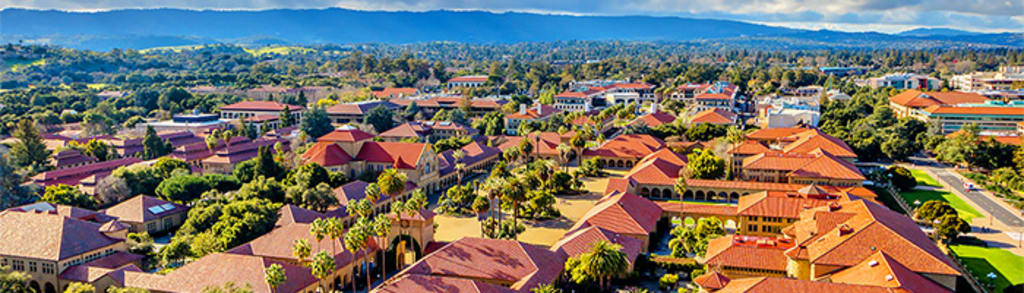
Claudia and her older sister lived with their divorced mother in the posh part of Palo Alto near downtown. Their house was Spanish-style, with arched windows, thick walls, a terra cotta roof, red tile floors, and quaint features.
Claudia's room had an arched fireplace. The staircase leading to it was curved and lent an air of mystery. In the hallways and living area, alcoves set in the walls contained beautiful Spanish figures. Ethnic carpets covered floors and wall hangings decorated the walls.
Spanish architecture has appealed to me since we arrived in Santa Barbara when I was three. Dad worked in South America and loved it, too. When we visited our lot in Cambria, Dad showed Mom and me how we would build our adobe house from bricks we made ourselves. The house would straddle the creek; a deck would extend out, so we could enjoy the sound of the trickling water.
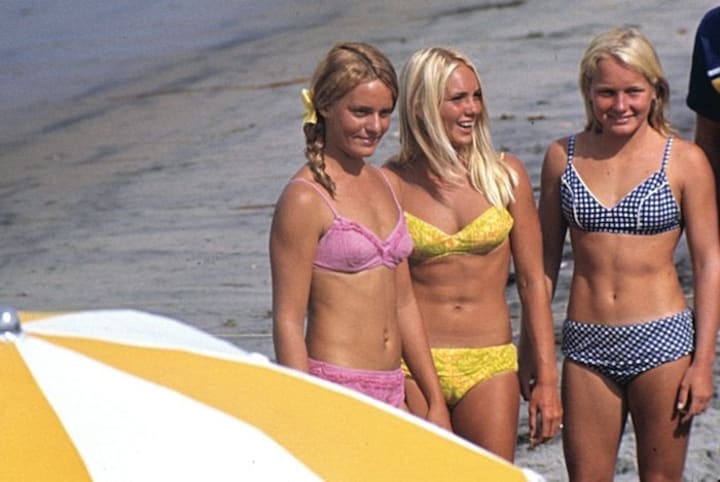
All the girls wanted to lighten their hair. Claudia and I spent hours in her yard lying on towels, slathering Coppertone or baby oil, and hoping the lemon juice we applied to our hair would dry and make us beautiful. We hoped to look like surfer girls.
The other girl from the in-group was named Patty. She was gorgeous, with long black hair, olive skin, and lovely features. She lived with her parents and siblings in a large, concrete house several blocks from us.
Patty's mother was a petite, meek little lady from the Philippines, who hardly spoke English. She was sweet to me.
One day her father came home, and the atmosphere shifted to one that felt ominous to me. He was a tall white man with an aggressive manner, very strict with the kids. Claudia told me he brought her mom from the Philippines after meeting her when he was stationed there.
Years and years later, while an intern at a day treatment center for severely mentally ill patients, I accompanied the crisis worker to an apartment in San Francisco. The petite Pilipino lady there had called because she was afraid of her husband.
Her husband was, indeed, a scary guy when he showed up. He, like Patty's father, towered over his wife and dominated the relationship. He was hostile toward us, of course. We talked with him about his wife's complaints. He assured us everything was okay. We asked the wife if she wanted us to take her to a safe place. She said no.
I'm by no means suggesting that every man who brings a Pilipino woman over here treats her badly. I have encountered many white/Asian couples who seem very happy together.
My other girlfriend in seventh grade was Christina. She was a very smart, cute, and sweet girl from a Mexican-American family. She and I grew our thick brown bangs out way below our eyebrows. We got a kick out of bending our heads down to hide our faces.
I visited her family in their small apartment in a long, one story building in a nice neighborhood not far from our house. The place was packed with children running around. I could tell from the way Christina was with her siblings that they were put under her care a great deal.
Winnie lived with us in that house on Middlefield Road. For a time, a friend of hers named Marcia lived there, too. They shared Winnie's large, sunny bedroom in the back of the house.
Marcia gave Mom fits! She wore high heels with narrow tips that left pockmarks in the linoleum.
Marcia wall tall and willowy, not pretty. She wore her hair teased and short. I always wondered what she put on her face that was extremely shiny. Marcia was nice enough to me, although I never knew her well.
In the spring Winnie and Marcia rented an apartment in an area full of singles. Marcia was so protective of her things, and so unwilling to share, that she put labels on her food. The apartment felt cold and uncomfortable to me.
Mom's and my trip back east was somewhat marred for Mom because I was moody and demanded peculiar things. For example, she, her best friend Thelma from childhood, and I went to the New York World's Fair. I insisted she tell the cashier that I was thirteen. For some reason, it felt crucial to me to be seen as a teenager, even to a ticket taker!
I must admit, I gave my mom a hell of a time when I was a teenager. The repeated moving made me so angry that I lashed out at her. I had no one else to express my anger to; it was not allowed for me to even let dad know I was angry. I blamed Mom for not standing up to Dad when the whim came upon him to uproot us again, and again, and again.
Other aspects of the trip went well for both of us. In addition to attending the World's Fair, Mom wanted to visit her friend from nursing school, Mona. Mona's older daughter was marrying a naval officer, and we were invited to the wedding.
Mona lived with her husband and daughters in a large house in a posh suburb of Philadelphia. Most men there commuted to New York City by train. The house was set on a large wooded property surrounded by similar ones. Inside, a balcony led to the bedrooms.
Mona's younger daughter was named Paula. Paula was an active girl who welcomed me to her home. She took me to visit friends and showed me around the neighborhood.
The wedding was held in a huge Catholic church with a vaulted ceiling. The guests were many. I don't know what military officer's weddings are generally like, but this one was something to see! The groom's entourage were dressed in uniform, as was he. It was all very ritualized and formal.
I wasn't sure I was dressed up enough. I wore a lime green, low-waisted dress Mom made for me, I remember, and felt I looked good in it. I wore a long string of pearls someone loaned me. I truly doubt that anyone cared what a twelve-year-old girl wore.
The reception was held in a huge hall a private golf course, a vast expanse of lawn. A curving road led to the hall. Guests parked their fancy cars nearby.
I had wealthy friends in St. Helena and San Francisco when I was younger, so was not that surprised by the polish and poshness, and had a good time.
From Pennsylvania we rode the train back to New York and took the bus to Hackensack, where Mona and her husband, Henry, and their developmentally disabled son lived. They took us on a trip to Vermont. I sat in the back with Lolly, whom I enjoyed immensely. He was a large man, like his dad, funny and nice.
Vermont is beautiful! We drove along long stretches of road between mile after mile of forest. We traveled to the family's summer home up a steep driveway. It was a picturesque, barn-like structure, painted deep red.
I slept in a charming bedroom upstairs. Its low ceiling sloped and made the room very cozy.
Thelma and Mom met each other as very young children. Mom had a picture of them with their long, dark bangs and frilly white playsuits happily playing in the creek in back of Mom's childhood home.
Thelma and Mom had very different lives. While Mom and we traveled and moved, Thelma stayed put. While Mom worked, Thelma married and stayed home. Even as a twelve-year-old I felt the effects from their wildly different lifestyles. Whereas Mom moved quickly and efficiently, Thelma plodded along. Whereas Mom talked about many subjects, Thelma seemed content to stay in her own orbit with Henry and Lolly.
Dad did a strange thing when we lived in that house. After dinner he put on a blond wig. I took it in stride, and only years later realized how bizarre that was.
Dad's behavior was by no means reflective of homosexual tendencies. He merely thought it was funny, which it was.
Some of us girls crank called random numbers. We laughed at the person's confusion, then hung up. This went on for a while.
One day a policeman came to the door and told Mom he came to talk to me. She called me to come. The policeman asked me if I was making crank calls. I denied it. He said that making such calls was against the law. I never made them again.
When Mom said, "We're moving in two weeks," I was relieved.
"Where to this time," I asked.
"Los Angeles."
Los Angeles, that city where Hollywood was! I might meet movie stars! I might go surfing!
On the trip along the coast route when we passed the white sand beaches, I had visions of riding in a red Cadillac convertible. My excitement knew no bounds.
I will talk about my time in LA in the next post.
Until then, stay safe, and wear your masks!
About the Creator
Caroni Lombard
As a child my family moved often. In my story, I share that experience; what it was like and how we coped.
But my story is not just for those who share my experience of growing up in a highly mobile family. It's for anyone who's human.
Keep reading
More stories from Caroni Lombard and writers in Families and other communities.
Following My Father: Palo Alto, Part One
My family left San Francisco at the end of fifth grade. Why? Beats me. Dad still worked at John Blum's firm downtown. We moved many times during the years he worked for him. I've written before about how nonsensical most of our moving seemed. Dad had wanderlust in addition to a tendency toward the geographical cure.
By Caroni Lombard5 years ago in Families
Wise~Guys
— Look Behind what's in Front of You ~ Make Good Choices — Hey, So how you Doin'..! Made~Men — Mobster Movies romanticise a distinctive, elegant appearance, impeccable attire style, along with the 'Families' expressive lingo. Making their 'Bones' gave them Panache — with vintage fedoras, tailored pin-striped suits, mirror-polished wing-tip shoes adorned with tassels; with their 'Gun Moll' gorgeous dates on their arms.
By Jay Kantor17 days ago in Families
The quiet sound of families breaking
There is a kind of silence that is louder than any noise. It is the silence of a child waking in the night and realizing their parent is gone. It is the silence of a kitchen table with one chair suddenly empty. It is the silence of a home that still looks the same, but no longer feels the same. Across the United States, thousands of families live inside that silence. Not because of war. Not because of disaster. Not because of death. But because of policy.
By Kaylee Souther6 days ago in Families



Comments
There are no comments for this story
Be the first to respond and start the conversation.