
Family: The Foundation of Society
Family is often described as the smallest unit of society, yet it plays the most significant role in shaping individuals and communities

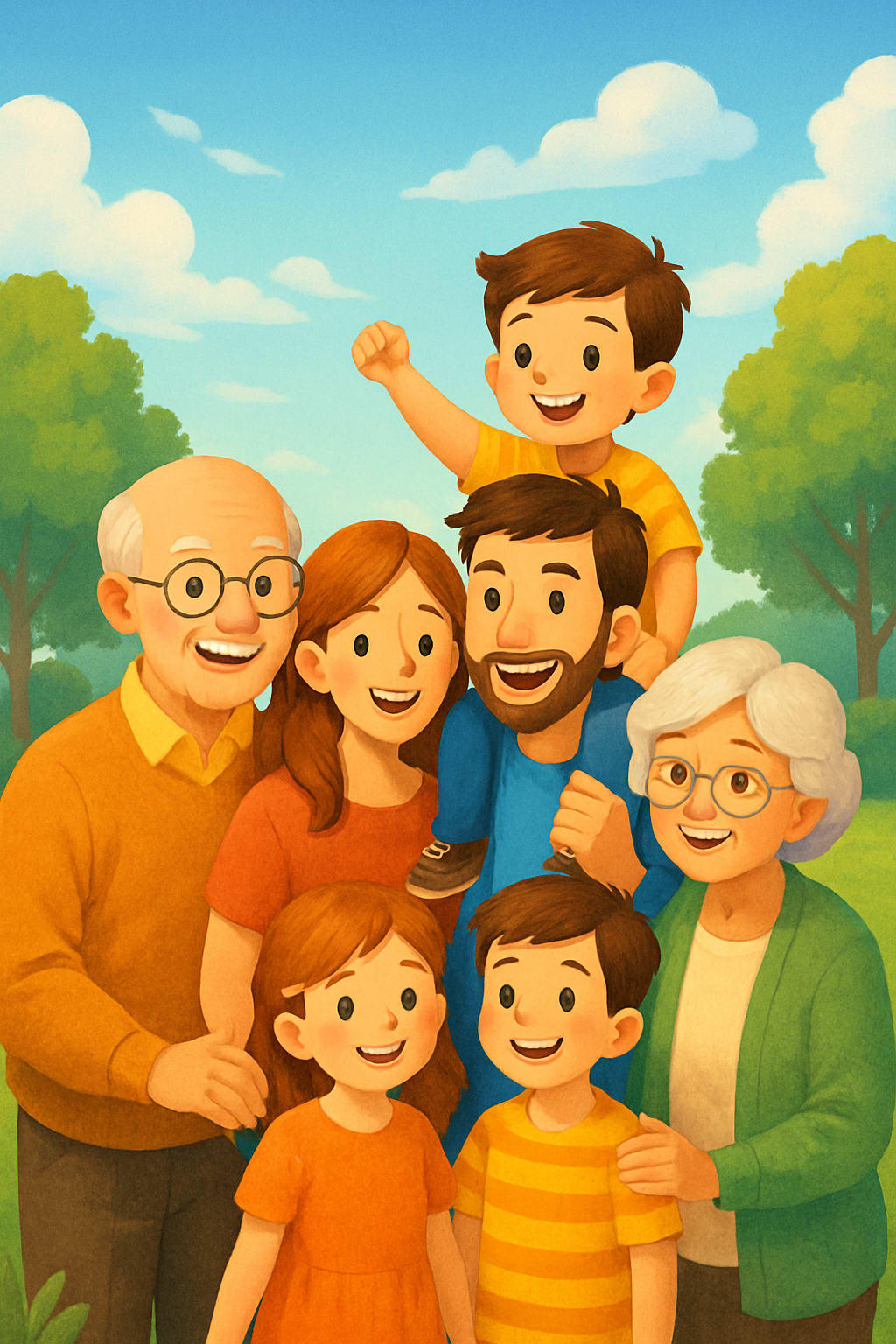
The family: The backbone of society Family is often described as the smallest unit of society, yet it plays the most significant role in shaping individuals and communities. We acquire the fundamental understanding of human relationships, learn about values, and experience love for the first time in our families. The importance of family goes far beyond the biological connection—it is a source of emotional support, moral guidance, social identity, and personal development.
The Importance of Family Traditionally, a family is defined as a group of individuals related by blood, marriage, or adoption. The modern understanding of family, on the other hand, has grown. Extended families, blended families, single-parent families, and even chosen families—individuals who are not related by blood but share deep emotional bonds—are all included in today's definition of family. No matter the structure, the essence of family remains rooted in love, trust, and mutual support.
The Role of Family in Early Development
From the moment we are born, our family becomes our first school and our parents or guardians our first teachers. They teach us how to talk, walk, eat, and interact with others. Family members introduce us to basic values like honesty, kindness, respect, and responsibility. The foundation of our personality and moral character is established by these early lessons. Children raised in loving and stable families often grow up to be more confident, empathetic, and socially well-adjusted. They tend to perform better academically and cope better with stress. In contrast, emotional instability, behavioral issues, and difficulties in later life forming healthy relationships can result from a lack of family support. Emotional Support and Security
One of the most essential functions of a family is providing emotional support. Life is full of ups and downs, and having a family that offers comfort during hard times is invaluable. Whether it’s celebrating achievements or consoling during failures, family members offer a safe space where one can be vulnerable without fear of judgment.
Additionally, family provides a sense of identity and belonging. In a world that is constantly changing, the family can be a source of stability. Knowing that there are people who love and accept you unconditionally provides immense strength and motivation.
Family as a Socializing Agent
Family also plays a crucial role in socializing individuals. Through daily interactions, family members teach each other about societal norms, cultural practices, traditions, and expectations. For example, in many cultures, respect for elders is a deeply rooted value, and it is within the family that children first learn to practice this respect.
Celebrating festivals, cooking traditional meals, and participating in rituals together strengthens family bonds while also preserving cultural heritage. These shared experiences contribute to a sense of identity and continuity, helping individuals feel connected to their roots.
Challenges Facing Families Today
Despite its importance, the concept of family is facing several challenges in today’s fast-paced and globalized world. The rise of technology, urbanization, economic pressures, and individualistic lifestyles have changed the way families function. Many people live far from their families due to work or education. In some cases, the demands of modern life reduce the amount of quality time family members spend together.
Divorce, domestic violence, and generational gaps can also strain family relationships. Financial difficulties, lack of communication, and misunderstandings often lead to conflicts that weaken family ties. In such situations, it is crucial to seek support, engage in open dialogue, and remember the core values that hold families together: love, patience, forgiveness, and mutual respect.
The Evolving Definition of Family
It is essential to acknowledge that the concept of family is constantly changing. Same-sex couples raising children, friends living together as families, and single parents raising children are all valid forms of family. What truly matters is not the structure, but the quality of the relationships within. A healthy family environment is one where every member feels loved, heard, and supported.
Conclusion
In conclusion, family is the cornerstone of our lives. It shapes who we are, influences how we see the world, and provides us with the strength to face life's challenges. A strong family builds a strong individual, and strong individuals build a strong society. No matter how the definition of family changes over time, its role in our lives remains irreplaceable. Therefore, we must cherish our families, invest time in nurturing relationships, and uphold the values that make families the foundation of a healthy and harmonious society.
About the Creator
Sabrina
A curious soul weaving words across emotions, ideas, and the world around us. Her writing seeks meaning in the everyday and beauty in the untold.
Wise~Guys
— Look Behind what's in Front of You ~ Make Good Choices — Hey, So how you Doin'..! Made~Men — Mobster Movies romanticise a distinctive, elegant appearance, impeccable attire style, along with the 'Families' expressive lingo. Making their 'Bones' gave them Panache — with vintage fedoras, tailored pin-striped suits, mirror-polished wing-tip shoes adorned with tassels; with their 'Gun Moll' gorgeous dates on their arms.
By Jay Kantor18 days ago in Families
My Mother And George Michael
On Christmas Day 2016, news broke that George Michael had died. It was late in the evening, and my mother and I were sat in front of the TV. Our friends and family had gone home, we had eaten way too much food and we were tired. My mother was asleep, in fact. I wasn’t. I was scrolling, looking for anything to watch. It was Christmas Day, surely something good would be on. But what I got were reruns, repeats, Christmas specials from the year before that I had already seen… I sort of gave up and logged onto Facebook just to pass the time. That’s when I saw it. George Michael had died. I immediately jumped out of the sofa. That couldn’t be. Or maybe it could. It was 2016, after all. I put on Sky News because who can believe anything they see on Facebook these days? And there it was. The man I had grown up with had died. My mother didn’t know. Not for another minute, when I had to gather the courage to wake her up. I was crying and I knew she would immediately know something was wrong. I gently woke her up and pointed at the TV…
By Carol Saint Martin6 days ago in Families
Wild Card Weekend Recap: What Happens Now?
I think I figured out why I love Wild Card Weekend so much. It's because it's the first playoff anything of the calendar year. The NFL season starts in the fall, and once upon a time, the champion was crowned either on or slightly before New Year's. The evolution of the NFL schedule has resulted in the playoffs starting just into the New Year, and currently, the final week of the season falls on the first weekend of the New Year, with Wild Card Weekend coming a week after that. So yes, chronologically, the NFL's Wild Card Weekend serves as the first playoff anything of the calendar year.
By Clyde E. Dawkins6 days ago in Unbalanced




Comments
There are no comments for this story
Be the first to respond and start the conversation.