
Consumerism vs. Meaning
A family learns to let go of materialism and rediscover the true meaning of Christmas

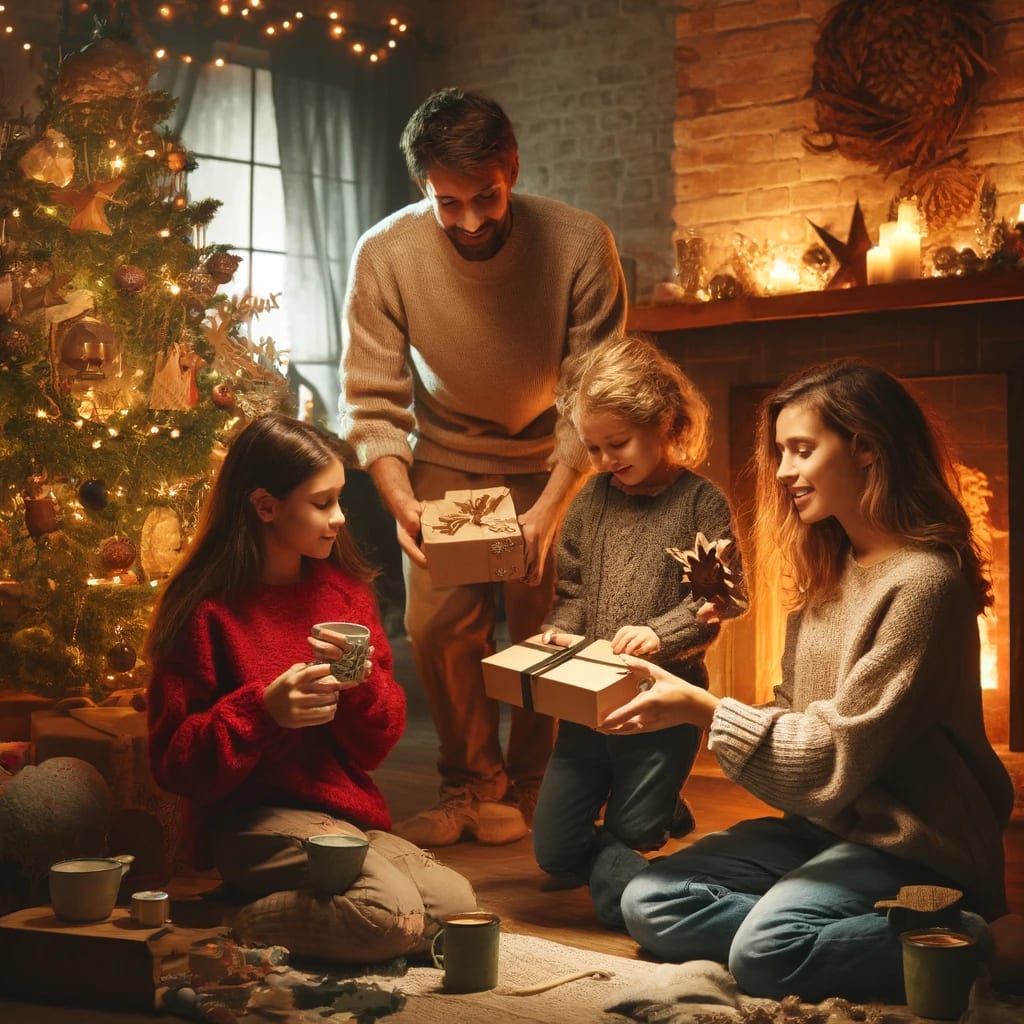
The Johnson family lived in a sprawling suburban home adorned with all the trappings of success: sleek cars in the driveway, high-end gadgets in every room, and a towering Christmas tree glittering with expensive ornaments. For years, their Christmas mornings were a blur of tearing wrapping paper, comparing price tags, and rushing through meals to visit malls for post-holiday sales.
But this year felt different. The house was quieter, the excitement subdued. Sarah, the mother, couldn’t ignore the gnawing emptiness that lingered despite the mountain of presents under the tree. Her husband, Mark, seemed preoccupied, scrolling endlessly on his phone, while their two children, Emily and Jake, were glued to their tablets.
“Is this it?” Sarah thought, staring at the glittering tree. “Is this what Christmas has become?”
The catalyst for change came unexpectedly. While unpacking groceries one snowy afternoon, Sarah overheard her neighbor, Mrs. Cole, talking to a friend outside. Mrs. Cole, a widow living on a fixed income, was cheerfully recounting her plans for Christmas: baking cookies with her grandchildren, volunteering at the local shelter, and attending the town’s candlelight service. Her joy was palpable, untainted by the frenzy of consumerism.
That evening, Sarah brought up the idea at dinner. “What if we did something different this Christmas?”
Mark raised an eyebrow. “Different how?”
“Less about stuff, more about meaning,” Sarah said, her voice tinged with hesitation. “I feel like we’ve lost what Christmas is really about.”
Emily groaned. “Does that mean no presents?”
“Not exactly,” Sarah said. “But maybe fewer gifts. Instead, we could focus on experiences or giving back.”
Mark leaned back in his chair, crossing his arms. “Like what?”
Sarah’s eyes brightened. “We could volunteer at the shelter, visit a nursing home, or spend time together doing something meaningful.”
Jake, their twelve-year-old, looked up from his plate. “Can we still have cookies?”
Sarah laughed. “Of course.”
The initial resistance was palpable, but Sarah’s enthusiasm was infectious. By the weekend, the Johnsons found themselves bundled up and standing outside the local shelter. Emily complained about the cold, and Mark looked skeptical, but once they stepped inside, the warmth of the place and the gratitude of the people they served began to soften their hearts.
Emily helped a young girl pick out a winter coat from the donation pile. The girl’s eyes lit up as she hugged the coat close, and for the first time, Emily felt the joy of giving without expecting anything in return. Jake teamed up with Sarah to serve hot meals, and by the end of the evening, his usual sarcasm was replaced with a quiet pride.
Mark, who had reluctantly joined, struck up a conversation with an elderly man named Harold. Harold shared stories of Christmases past, when his family would gather around a simple meal and sing carols by the fire. “We didn’t have much,” Harold said, “but we had each other. That was enough.”
Driving home that night, the Johnsons were uncharacteristically quiet. The usual post-shopping chatter about bargains and deals was replaced by reflections on the people they’d met.
The next day, Sarah suggested another idea: crafting homemade gifts for each other. The family spent the afternoon gathered around the dining table, surrounded by craft supplies. Emily painted a picture of the family’s dog, while Jake made a bracelet for his mom using beads he’d found in the attic. Mark, surprisingly handy, carved a small wooden ornament shaped like a star. For the first time in years, laughter filled the house as they worked together.
On Christmas morning, the Johnsons exchanged their handmade gifts. Each present carried a story, a piece of effort and love. Emily’s painting made Sarah tear up, and Jake’s bracelet became her new favorite accessory. Mark’s star found a special place on the tree, a symbol of their new tradition.
But the day wasn’t over. That afternoon, they visited a nursing home, bringing cookies they’d baked together. Emily played the piano while the residents sang carols, their faces lighting up with joy. Jake sat with a retired teacher who shared stories about her travels, while Mark and Sarah joined a group assembling care packages for the homeless.
As the sun set, the Johnsons attended the town’s candlelight service. Standing in the glow of flickering candles, surrounded by neighbors and the sound of carols, Sarah felt a deep sense of peace. For the first time in years, Christmas felt complete.
That night, as they sat around the fireplace, Sarah looked at her family. “This,” she said, gesturing to the cozy scene, “is what Christmas should feel like.”
Mark nodded, his arm around her shoulders. “You were right. It’s not about the stuff. It’s about us.”
Emily and Jake, curled up on the rug with mugs of hot cocoa, chimed in. “Best Christmas ever,” Jake declared, and Emily nodded in agreement.
From that year forward, the Johnsons made a pact to keep Christmas meaningful. They still gave gifts, but they focused on thoughtful gestures and experiences. They spent more time together, helping others and cherishing the simple joys of the season.
And their once glittering, materialistic holiday? It became a warm, heartfelt celebration—a reminder that the true spirit of Christmas isn’t found in what you buy, but in the love you give and the moments you share
About the Creator
Esther Hambolu
As a passionate content writer, I bring fresh perspectives and engaging narratives to every topic I tackle. With a keen eye for detail and a commitment to clarity, I create content that not only informs but also resonates with readers.
Keep reading
More stories from Esther Hambolu and writers in Families and other communities.
The Struggle of Simplicity
Maria’s small apartment smelled of frying plantains. It wasn’t the scent of wealth or indulgence. No, it was the scent of survival, of love stretched thin but still holding on. Every morning, as the sun barely peeked over the skyline, Maria would get up before her children, her tired feet dragging against the cold, creaky floor. The bills still weren’t paid, and the thought of the rent creeping closer made her chest tighten, but for today, there was food. That was all that mattered.
By Esther Hamboluabout a year ago in Families
Wise~Guys
— Look Behind what's in Front of You ~ Make Good Choices — Hey, So how you Doin'..! Made~Men — Mobster Movies romanticise a distinctive, elegant appearance, impeccable attire style, along with the 'Families' expressive lingo. Making their 'Bones' gave them Panache — with vintage fedoras, tailored pin-striped suits, mirror-polished wing-tip shoes adorned with tassels; with their 'Gun Moll' gorgeous dates on their arms.
By Jay Kantor20 days ago in Families
How Screen-Based Entertainment Is Changing Traditional Toy Brands
Today, every home has some kind of screen, gadget or high tech toy. Where traditional toys have been around for centuries, technological advancements have over-powered this market. In the U.S. alone a vast majority of minors play video games. Children spend more time playing with their favourite action figures and building blocks. It is reported that 80-85% of teens, ranging from ages 13-17 %, play video games daily. While 83% of younger children, ranging from 5-12 years, play video games on a weekly basis.
By Cristina Baker5 days ago in Families




Comments (3)
Insightful. Keep soaring
Nice read. Keep it up
Thanks for sharing it.