
The Struggle of Simplicity
A struggling single mother uses plantain as a staple for her family’s meals. The story could explore the emotional weight of poverty, sacrifice, and the comfort of simple, nourishing food.

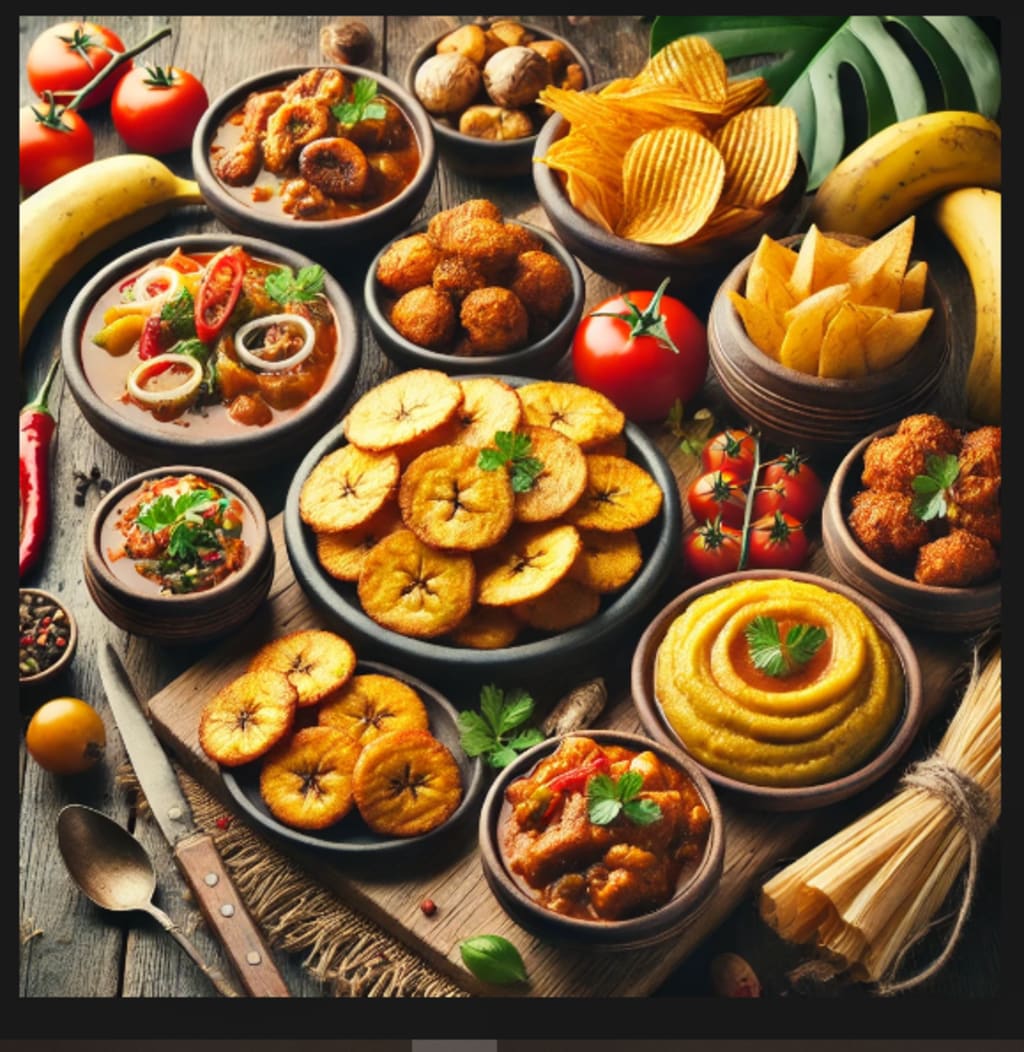
Maria’s small apartment smelled of frying plantains. It wasn’t the scent of wealth or indulgence. No, it was the scent of survival, of love stretched thin but still holding on. Every morning, as the sun barely peeked over the skyline, Maria would get up before her children, her tired feet dragging against the cold, creaky floor. The bills still weren’t paid, and the thought of the rent creeping closer made her chest tighten, but for today, there was food. That was all that mattered.
She stood over the stove, peeling the ripe plantains with practiced hands. The plantains were always the same. She could afford little else. A few weeks ago, she had bought a sack of them—cheap, filling, and versatile. She knew how to make them stretch. They were sweet and savory at the same time, and when they hit the hot oil, they turned golden and crispy, just the way her mother had taught her. It was the one dish she knew she could make her children feel full and loved with.
As the sizzling sound filled the kitchen, Maria closed her eyes for a moment, letting the warmth of the pan seep into her skin. Her mind wandered, remembering when her life had been different. When her daughter Sofia was small and her son Luis was just a baby, life hadn’t seemed as difficult. Back then, there were dreams—of a better job, of a house with a backyard, of a family who could eat whatever they wanted without counting the cost. But now, every day felt like a fight. A fight for food. A fight for warmth. A fight for a life that didn’t feel like it was constantly slipping away.
“Mom, are we having plantains again?” Sofia’s voice broke through her thoughts, pulling Maria back to the present.
Maria smiled, turning around to face her daughter. Sofia was ten now, with her father’s dark eyes and Maria’s stubborn chin. She had always been a smart girl, quick to notice things, quick to understand the weight of the world around her. It hurt Maria to see her growing up so fast, with worries beyond her years.
“Yes, sweetheart,” Maria replied gently, wiping her hands on her apron. “We’re having plantains again. But they’re special today, just for you.”
Sofia’s eyes lit up, not because she was excited about the food, but because she knew her mother always made sure to give it her best. Sofia didn’t complain, not anymore. She understood, too. She was growing up faster than she should have, but there was no other way. And no matter how many times she had asked for something different, Maria had always turned the answer back to love, back to the simplicity of what they had.
Maria carefully plated the plantains and added a dollop of sour cream on the side. It wasn’t much, but it was enough. For a moment, she let herself bask in the pride of her effort—feeding her children with everything she had left. She served them both and sat down with them at the small kitchen table, the one she’d inherited from her mother. The table was worn, the edges chipped, but to Maria, it held years of memories—of meals shared, of laughter, of better days.
Sofia and Luis dug into their food, their faces lighting up as they tasted the warm sweetness of the plantains. They didn’t know the weight of the sacrifices Maria made every day to make sure they had something to eat. They didn’t know how often she had gone without so that they could have enough. They didn’t know how many times she had walked past the storefronts of shops, wishing she could buy them something special, but always settling for what she could afford. For her, the sacrifices were just part of being a mother, part of the quiet love that flowed through her veins.
As the meal came to an end, Sofia looked up at her mother, her brow furrowed in concern. “Mom,” she asked softly, “why don’t we ever have anything else? Just plantains… don’t we need other things?”
Maria’s heart sank. She knew that Sofia was starting to notice. She had seen the way her daughter looked at other families at school, the way their lunch boxes were full of variety, of treats. Sofia had never said anything before, but Maria knew the questions were coming.
“We’ll have other things someday,” Maria said, her voice thick with emotion she didn’t want to show. “But for now, plantains are enough. They fill our bellies and remind us that we’re okay, that we’re still together. And that’s the most important thing. Right?”
Sofia nodded, but Maria could see the doubt in her eyes. She wished she could give her more—more food, more joy, more opportunities. But for now, plantains were all she had to offer.
Later that evening, after the children had gone to bed, Maria sat alone in the kitchen. She turned off the light and stared at the empty table, the faint smell of fried plantains still lingering in the air. The silence pressed against her chest, and the weight of everything she carried felt heavier than usual.
She thought about the years she had spent struggling—about the jobs she worked late into the night, about the nights she lay awake, wondering how she was going to make it. She thought about the hopes she once had for a better life. Dreams that had slowly faded away, replaced by the reality of survival.
But then, she thought about Sofia’s smile that morning, about how Luis had laughed when she made a funny face at him, about how they had all gathered around the table as a family. In that moment, she realized something that gave her a small, quiet peace. No matter how hard it got, no matter how little she had, she had her children. And they had her. They had each other. And that love, simple and unadorned, was enough to carry them through.
Maria stood up and walked to the stove, wiping a tear from her cheek as she picked up the last plantain. She fried it slowly, savoring the comfort of the familiar task. The oil crackled, the golden slices danced in the pan, and she smiled, knowing that no matter how simple the food, it was made with a love that nothing—no hardship, no struggle—could take away.
Tomorrow, they would have plantains again. And that was enough
About the Creator
Esther Hambolu
As a passionate content writer, I bring fresh perspectives and engaging narratives to every topic I tackle. With a keen eye for detail and a commitment to clarity, I create content that not only informs but also resonates with readers.
Keep reading
More stories from Esther Hambolu and writers in Families and other communities.
The Human Cost of Inflation
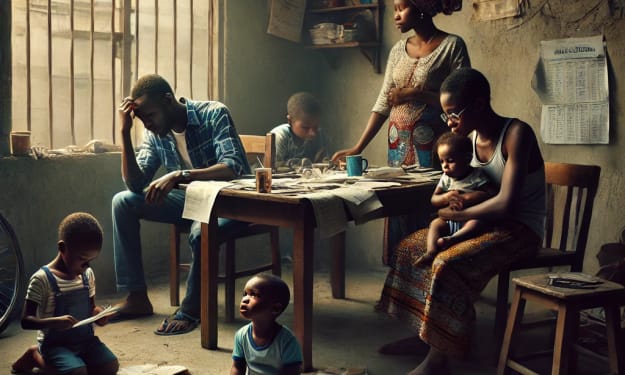
It was another sweltering afternoon in Lagos, and the power had been out for hours. Inside a cramped two-room apartment, Tayo wiped the sweat off his forehead as he sorted through a stack of overdue bills. The numbers were suffocating—rent had increased by nearly 40%, the price of food seemed to double every month, and his eldest daughter, Zainab, had been sent home from school for unpaid fees. His wife, Amaka, stood by the window, fanning their youngest child, David, who was crying from the heat and hunger.
By Esther Hamboluabout a year ago in Families
Wise~Guys
— Look Behind what's in Front of You ~ Make Good Choices — Hey, So how you Doin'..! Made~Men — Mobster Movies romanticise a distinctive, elegant appearance, impeccable attire style, along with the 'Families' expressive lingo. Making their 'Bones' gave them Panache — with vintage fedoras, tailored pin-striped suits, mirror-polished wing-tip shoes adorned with tassels; with their 'Gun Moll' gorgeous dates on their arms.
By Jay Kantor20 days ago in Families
Why Are Teachers Leaving Education?
As someone who is new to teaching, I will not sit here and pretend to fully understand everything veteran teachers have endured over the years. I do not yet have decades of experience to draw from. However, I can speak honestly about what I have observed in my year and a half in the classroom, and what I have learned in that short time is both eye opening and concerning. Teaching today is no longer just about teaching content. It has evolved into a profession that often requires educators to act as the judge, the juror, and the executioner, so to speak, all while being expected to maintain patience, professionalism, and compassion at every turn.
By Kimberly Nightengale4 days ago in Families



Comments
There are no comments for this story
Be the first to respond and start the conversation.