
How Screen-Based Entertainment Is Changing Traditional Toy Brands
Toy Brands vs. Screen-Based Entertainment

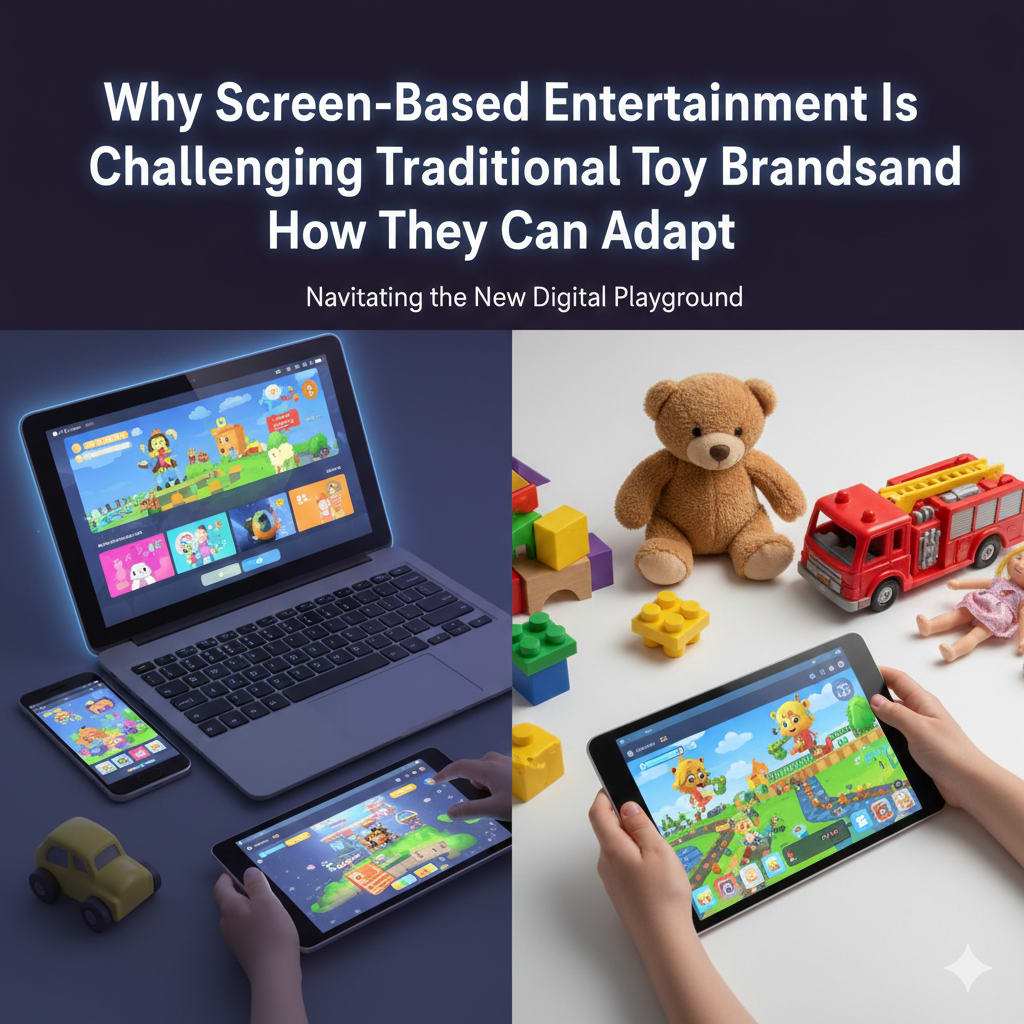
Today, every home has some kind of screen, gadget or high tech toy. Where traditional toys have been around for centuries, technological advancements have over-powered this market. In the U.S. alone a vast majority of minors play video games. Children spend more time playing with their favourite action figures and building blocks. It is reported that 80-85% of teens, ranging from ages 13-17 %, play video games daily. While 83% of younger children, ranging from 5-12 years, play video games on a weekly basis.
This major shift in the toy industry has undergone a dramatic transformation. Digital technology is a gigantic correspondent in this. Technology has reshaped not just how children play, but how they want to connect with the world around them. This shift has led the toy industry through one of the most profound and quiet transformations in its long history. Now children have turned into gaming consoles, smartphones and tablets rather than building, imaging and role-playing with physical toys. This massive transformation has brought screen based entertainment to the core of childhood play.
The Growing Screen-Based Entertainment Impact on the Toy Market
Screen-based entertainment offers instant engagement. Games update constantly, apps introduce new levels weekly and digital platforms are designed to hold attention for long periods of time. Look at a child today, completely absorbed by a tablet. It’s a tough act for a simple toy to follow.
Kids are now living more hours of their day through screens. When the screen goes off, the energy for building a fort or imagining a story is often just spent. This changes everything about what they ask for. Toys that need a quiet mind and an open imagination are the first to be left in the box. The real fight for a toy brand is not against another company. It’s for a child’s attention against a whole world of apps, videos, and games.
Traditional Toy Industry Challenges in a Digital-First Era
This shift has created traditional toy industry challenges that go beyond declining physical sales. The toy industry is confronting structural shifts pushed by evolving consumer expectations and behavior. There are some of the exceedingly influencing challenges that reflect a broader digital disruption in the toy market. Consequently, they force traditional brands to rethink their relevance in modern childhood. They are:
- Shorter Attention Spans
Children immersed in quick, flashy digital content often find traditional toys too slow to be engaging. Their patience runs thin quickly, and toys that don't change or react struggle to keep their focus.
- Changing Parental Priorities
Screens are sometimes viewed as educational or convenient tools, reducing reliance on physical toys.
- Retail and Visibility Pressure
Digital entertainment products often dominate online and in-store promotion.
- Perception of Value
Digital games are seen as offering “more” due to constant updates and extended engagement.
Toy Brands vs Digital Gaming: A New Competitive Reality
The debate around toy brands vs digital gaming highlights how competition has shifted. Digital games are immersive, social and endlessly adaptable. By contrast, traditional toys are tangible, finite and rooted in physical interaction. Despite rapid digitalization, the toy market is still producing toys that are not only driven by nostalgia but also hold an educational value. Unquestionably a timeless appeal of childhood play experiences, that everyone of us can resonate with. The traditional toys are continuing to adapt by integrating with sustainable materials and innovative designs. Hence, maintaining its relevance in the modern consumer landscape. As compared to digital gaming, the traditional toys categories like puzzles and board games are the top-performing sub-segments. They still hold a dominating share in the toy market due to the persistent demand for family-oriented and cognitive development activities.
Yet this comparison also reveals very important advantages for current traditional toy brands.
1. Physical toys are powerful because they encourage creativity, problem-solving, emotional expression and social interaction in a very real way that screens often cannot replicate..
2. Today's parents are increasingly aware of the real downsides of excessive screen use. They see it in reduced physical activity, in the effects of overstimulation, and in limited real-world interaction. This growing awareness creates a meaningful space for toy brands to be seen differently. You can reposition yourselves. Not as outdated alternatives, but as essential tools for balanced development.
3. In a world of screens, the box you ship in becomes part of the toy. A great package creates a moment of "wow" before anything's even taken out. It tells a parent, "This is quality," and it makes your brand feel real to a child. That’s the power of going the extra mile like using Japanese-inspired packaging. It’s not just a box. It’s a quiet nod to artistry, to detail, to taking play seriously. For a family, that thoughtfulness matters. It turns a purchase into a shared moment of respect and discovery.
Adapting to Digital Disruption in Toy Market
Survival in today’s toy industry requires adaptation, not resistance. Brands that acknowledge the digital disruption in the toy market and respond strategically are far more likely to succeed.
- Redefining the Value of Physical Play
Parents are looking for toys that help their kids learn, create, and understand their feelings. The moment you stop calling it “entertainment” and start calling it what it is. Its a tool for growth. This is the moment a parent stops seeing a toy and starts seeing an investment in their child. By making that shift in perspective, brands can change the entire discussion. It stops being about competing with a screen for a child's attention and starts being about investing in a child's long-term value. It's about what they build, feel, and learn. Not just what they watch.
- Integrating Digital Without Losing Identity
Some toy brands are successfully blending physical and digital experiences. For instance, interactive storytelling, companion apps or optional digital extensions can enhance toys without replacing hands-on engagement. As a result, this approach allows toy brands to connect with screen-focused children. While maintaining the core benefits of physical play.
Branding, Storytelling and the Role of Packaging
A toy with a clear soul, a simple story, an identity that feels genuine. That’s what turns a generic object into a small treasure. A parent sees that and doesn’t just see a toy. They see a moment waiting to happen for their kid. In a world of digital noise, that tangible sense of treasure is what makes a family pause and choose you. And that story starts with the box. The right packaging builds a little moment of "what's inside?" It tells a parent this is quality, and it makes your brand stick in their mind. When you choose something truly special like custom japanese toy packaging. You are adding more than protection. You're adding a sense of culture, of careful making, of something unique. It shifts the whole feeling. The toy stops being another thing to buy and starts feeling intentional, collectible, worth keeping. The box is not just a shell anymore. It's the first chapter of the play.
Responding to Children Screen Time Trends with Purpose
Most parents have let go of the dream of a screen-free house. That ship has sailed. The goal now is simpler: a little less scrolling, a little more living without the nagging. They are not shopping for nostalgia. Not a punishment from the past, but a more engaging invitation into the present moment. Something that breaks the digital trance naturally, because it's more interesting to build, create, and imagine together than it is to scroll alone. They're looking for the toy that makes their child choose to put the tablet down.
That's the opening. A toy that makes a child's eyes light up for a reason other than a pixelated reward. A puzzle that gets everyone at the kitchen table leaning in. A playset that starts a conversation. In the quiet after the screen goes off, the right toy doesn't just fill time. It rebuilds a connection. That's the balance they're truly looking for.
Innovation Without Imitation
One of the worst moves a toy company can make is trying to act just like a video game. A physical toy does not need to imitate an app to be worthwhile. By focusing on what they do best, classic toy makers can evolve without forgetting who they are. Instead, innovation should focus on:
- Enhancing imaginative play.
- Improving product design and durability.
- Creating emotional connections through storytelling.
- Offering experiences that screens cannot replace.
The Path Forward for Traditional Toy Brands
The screen-based entertainment impact has undeniably reshaped childhood and introduced significant traditional toy industry challenges. However, it has also forced the industry to evolve, refine its message and reconnect with the true purpose of play. In the ongoing tension between toy brands vs digital gaming, the most successful brands will not be those that compete on speed or stimulation. But those that offer depth, creativity, and real-world connection.
Screens may capture our focus, but traditional toys are what build a child's imagination. With thoughtful intention, they will always have a place.
About the Creator
Cristina Baker
I’m Cristina Baker, a business and market expert with 8+ years of experience helping brands and entrepreneurs grow. I share insights, strategies, and ideas that inspire growth, spark curiosity, and turn challenges into actionable results.
Keep reading
More stories from Cristina Baker and writers in Families and other communities.
Market & Customer Penetration Strategy
Complete Guide for Business Growth When people hear “market penetration,” it often sounds complicated or technical. In reality, it’s one of the most practical ideas in business. It’s not about launching something new or expanding into a different country. It’s about getting more value from the market share growth you are already in. Most businesses fail out in their initial years because they are putting all their efforts in the wrong direction.
By Cristina Baker2 months ago in Trader
Punch the Macaque: The Baby Monkey Who Found Comfort in a Plush Friend
Today we look back at one of the most unexpected viral stories of 2025—a tale that began quietly in a zoo in Japan and grew into a global symbol of resilience and tenderness. It is the story of Punch, a Japanese macaque born in July 2025 at Ichikawa City Zoo in Chiba Prefecture. His life began with hardship, but what followed has touched millions across the world.
By Haroon Pasha6 days ago in Families
Worth the Wait: Puerto Viejo, Costa Rica
Beach bumming in a small Caribbean beach town sounded like a perfect way to end our 6-month trip through Mexico and Central America. Or so we thought. The foul, fishy stench of rotten seaweed hit our nostrils as we stepped from the cramped bus and looked out at a rather depressing, empty, and underwhelming black sand beach. It was pouring with rain, and we had to quickly fish out our ponchos. We thought, this couldn’t be it, could it?
By Sh*t Happens - Lost Girl Travel6 days ago in Wander




Comments
There are no comments for this story
Be the first to respond and start the conversation.