
Assisted Living vs Memory Care?
Key distinctions between Assisted Living and Memory Care
When it comes to choosing the right care for your loved one, the options can be overwhelming. Two of the most common choices for senior care are Assisted Living and Memory Care.
While these services may seem similar on the surface, they are designed for very different needs. Understanding these differences can help you make the best decision for your loved one’s well-being.
In this guide, we’ll break down the key distinctions between Assisted Living and Memory Care, including the type of care provided, costs, and which type of senior benefits most from each.
What is Assisted Living?
Assisted living is a residential care option for seniors who need help with daily tasks, such as bathing, dressing, or medication management, but still want to maintain their independence.
These facilities offer various levels of support, from minimal assistance to more hands-on care, depending on the individual’s needs.
Read more about Assisted Living Facilities in Lafayette IN
Key Features of Assisted Living:
- Personalized Care: Each resident gets individualized support based on their needs.
- Independence: Residents can live in their own apartments or rooms and maintain independence, with help close by.
- Social Engagement: Assisted living communities often have scheduled social events, group activities, and common areas where residents can interact.
- Services Provided: Meals, housekeeping, transportation, and medication reminders.
Who Benefits from Assisted Living?
Seniors who are generally in good health but need some help with daily activities benefit most from assisted living.
These residents may have mobility issues, chronic conditions, or simply need a bit more supervision to ensure their safety.
What is Memory Care?
Memory care is a specialized form of long-term care designed specifically for individuals with Alzheimer’s disease, dementia, or other memory impairments.
Memory care units are typically found within assisted living communities, but they offer a higher level of security and specialized care for those suffering from cognitive decline.
Read more about Memory Care Facilities Near You in Lafayette
Key Features of Memory Care:
- Specialized Care: Staff are trained to care for seniors with cognitive impairments and manage symptoms of memory loss.
- Structured Environment: Memory care facilities offer a structured, predictable routine to help reduce stress and confusion in residents.
- Enhanced Safety: These facilities are designed with increased security to prevent wandering, a common concern for individuals with dementia.
- Therapeutic Activities: Programs are tailored to stimulate memory and cognitive function, such as music therapy, art therapy, or reminiscence sessions.
Who Benefits from Memory Care?
Memory care is ideal for seniors with Alzheimer’s disease, dementia, or severe cognitive impairments.
These individuals often require a higher level of supervision and support in a secure environment tailored to their specific needs.
Assisted Living vs. Memory Care: Key Differences
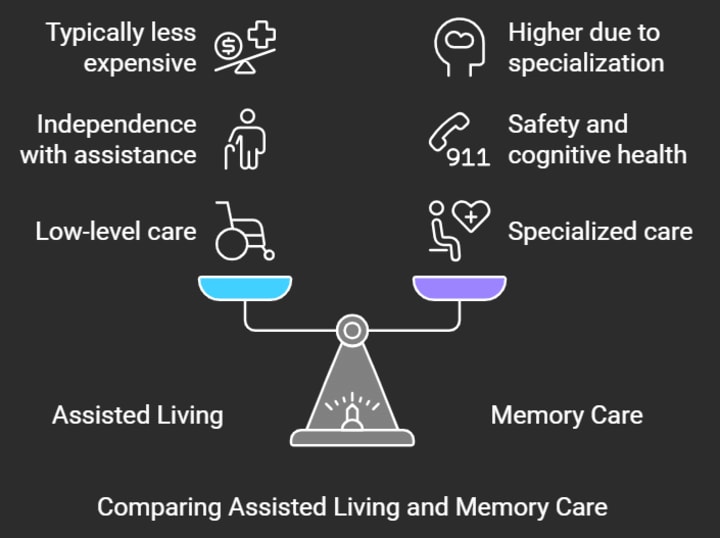
Cost Comparison
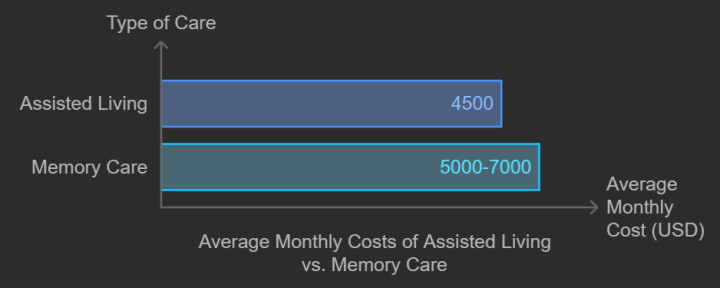
The cost of care is a major consideration when deciding between assisted living and memory care. On average, assisted living is less expensive because it provides a lower level of care.
In the U.S., the average monthly cost for assisted living is around $4,500, though this can vary significantly depending on location and services.
In contrast, memory care typically costs more, averaging between $5,000 and $7,000 per month, due to the specialized staff training, higher level of care, and enhanced security measures required.
Choosing the Right Care for Your Loved One
When deciding between assisted living and memory care, consider the following:
- Level of Independence: Does your loved one want to maintain as much independence as possible, or do they need close supervision and care?
- Cognitive Health: Is your loved one experiencing symptoms of memory loss, confusion, or wandering?
- Budget: What can you afford, and what services are most important for your loved one’s quality of life?
If your loved one is physically healthy but needs help with daily tasks, assisted living may be the best fit. However, if they have been diagnosed with Alzheimer’s or another form of dementia, memory care offers a safer, more structured environment.
Read more about Respite Care Facilities in Lafayette Indiana
Frequently Asked Questions
- Is memory care more expensive than assisted living?
Yes, memory care is generally more expensive due to the specialized training of staff, enhanced security, and the higher level of care provided.
- Can someone with dementia live in assisted living?
In the early stages of dementia, some assisted living communities can accommodate residents. However, as the disease progresses, memory care may become necessary.
- What kind of activities are provided in memory care?
Memory care facilities typically offer therapeutic activities designed to stimulate memory and cognitive function, such as music therapy, reminiscence therapy, and structured routines.
- How do I know if my loved one needs memory care?
Signs that memory care may be necessary include increased forgetfulness, confusion, difficulty with daily tasks, and wandering or getting lost.
Conclusion
Choosing the right care for your loved one can be challenging, but understanding the key differences between assisted living and memory care can help you make an informed decision.
If your loved one values independence and only needs help with daily tasks, assisted living may be the best choice.
However, if cognitive health and safety are primary concerns, memory care provides the specialized attention needed for those suffering from Alzheimer’s or dementia.
About the Creator
Keep reading
More stories from writers in Families and other communities.
12 Birthday Party Activities for Kids That Don't Require a Pinterest PhD
You don't need to spend three weeks crafting elaborate decorations or refinance your house for a bouncy castle. The best birthday party activities for kids are the ones that actually work: low prep, high chaos, maximum fun.
By Ben Robertson3 days ago in Families




Comments
There are no comments for this story
Be the first to respond and start the conversation.