
About Parades and Ferries and the Women Who Halt Them
When maternal instinct takes the helm


When I was eight and a half, my parents, fully and totally against my will, placed me in a Brownie troop that met in the musty basement of a Lutheran church. My oldest brother, Chris, was Staten Island’s first Eagle Scout, and my older brother, Tom, was its second. By that logic, my parents shoving their youngest into scouting made a whole lot of sense — to them.
I had a general idea of what my brothers did: activities involving mud, climbing ropes, and sleeping outside in thin fabric tents alongside animals hooting and rustling through the night. None of that interested me—not remotely.
My parents would not hear it. Scouting was for everyone, and it would build character.
Since I had a few behavioral problems in school, notably defiance and impulsivity, my parents felt scouting would do me a lot of good. (I worked as a middle school teacher for close to a decade, so the universe got its pound of karma there, plus some)
As my parents would not budge from their decision, I went to my grandfather to complain. He held some sway over my mom, and he agreed that I was not scouting material. Then again, he agreed with most things I wanted since I was the sole granddaughter and his publicly acknowledged favorite.
Grandpa, an Irish immigrant, did (secretly) warn me that if I drank the water in a Protestant church, I would most likely die since they regularly poisoned Catholic children. Such was the moderate imagery of my childhood.
So I traipsed into the Lutheran church basement, wearing the brown uniform and beanie, and I met Mrs. Dirk, a woman whose face had been carved from suspicion. She had narrow eyes above a permanent frown, and when I walked in, slowly, and unhappily, Mrs. Dirk shot me a look that might have been a bullet in another life.
Surprisingly, the first meeting wasn’t terrible. We spent time gluing fuzzy crafty objects onto paper plates and did some coloring. Mrs. Dirk had a daughter, Mavis, who resembled her mother both in looks and in her Calvinist-level of judgment. She placed Mavis beside me, saying, with no regard for social grace when a child approaches a new group, “You better keep an eye on Annie, that new girl."
We sang a song about friendship in the middle of the gluing. Mrs. Dirk read a story about being helpful and its importance, and then…we lined up for drinks from the water fountain.
Yes, water from the Protestant church. My grandfather’s words rang in my eight-year-old ears. Of course, Mrs. Dirk and the watchful Mavis stood right there as I pretended to have a drink. I even dramatically wiped my mouth with the back of my hand after I stood. I had watched enough old crime dramas with my grandpa to know how to outwit the enemy. I was not dying today, that was for sure.
Brownie meetings began in the spring, and before I knew it, after deftly avoiding any of their proffered snacks or beverages, it was time for the Memorial Day parade.
I grew up in Staten Island, and my little beachy street was known as “the street where the parade begins.” Everyone knew where I lived when I said that, plus, my brothers, in their scouting glory, always held the flags for their troop and stood out in front. The parade heralded the beginning of summer and was a big deal. A townwide picnic followed at the VFW. All the parents stood on the sides of the boulevard, snapping pictures of their shining progenies going by. My parents were no exception.
This year, I was expected to be in the parade as well. We marched behind the Cub Scouts, and no matter how much I told my parents I was not a soldier and should not be expected to march, I was dropped off with Mrs. Dirk and the beaming Mavis early on the Saturday of Memorial Day weekend for lineup.
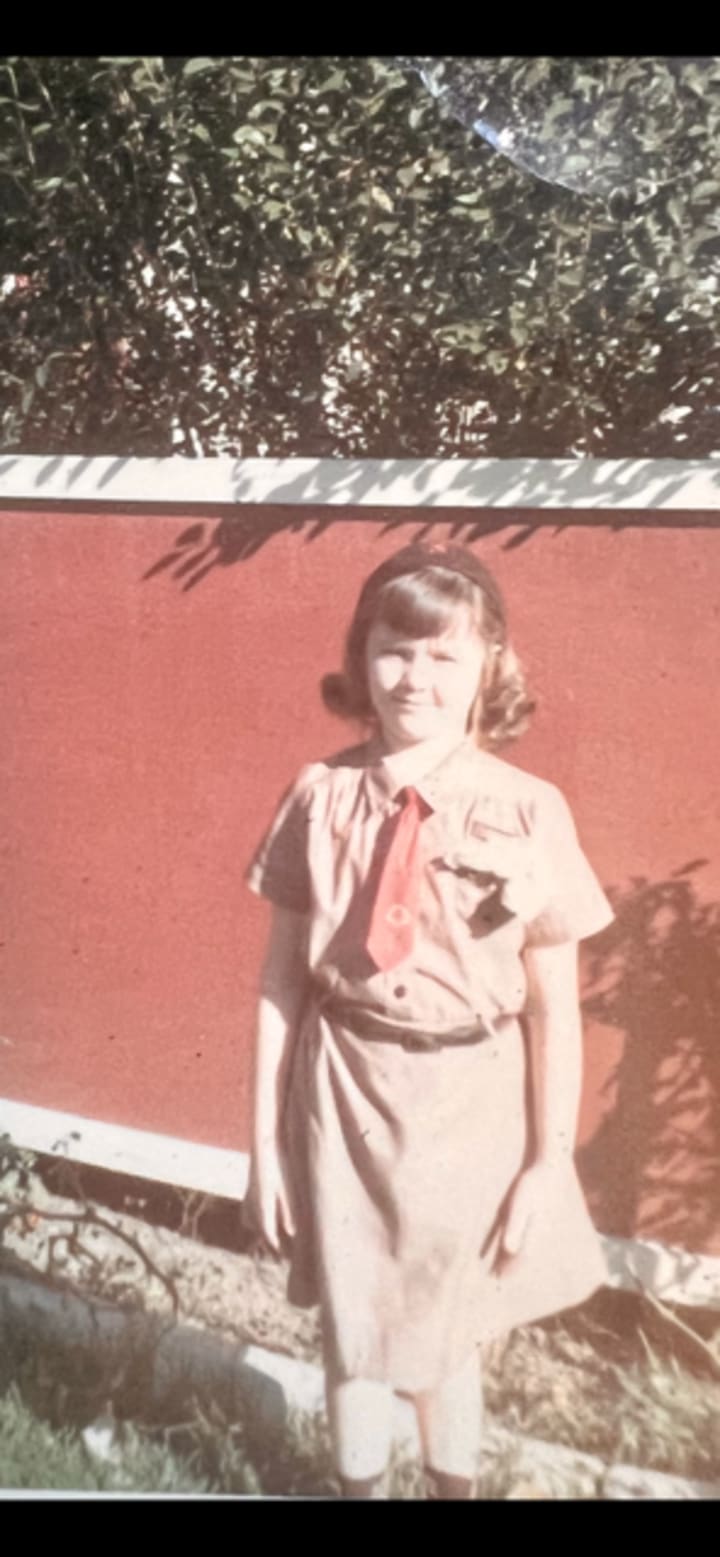
Mrs. Dirk made sure I was near her as we lined up. Drums began, and schools and vintage cars started moving along the boulevard. The air was scented with popcorn. Parents leaned in to wave and get shots of their children as they passed. We walked along as the other girls waved to their families and friends.
Then the parade stopped, as the procession came to a complete standstill.
Mrs. Dirk turned around and asked, “Does anyone recognize that woman?” It seemed that some woman had stopped the parade to get a close-up of her child in the parade. And, to my horror, I realized that woman was my mother. Yes, that sweet-looking lady in the picture above stopped a parade on Hylan Boulevard, a main artery of a New York City borough, where hundreds marched and hundreds more stood as spectators.
People began murmuring, then speaking, then yelling as my mother stood right on the asphalt, clicking away. Mavis turned to me and said, “Is that somebody’s mom from our troop?”
I shrugged. “No idea,” I mumbled, looking away
Eventually, my mother got her photo quota and dissolved back into the crowd on the sidewalk. To this day, until I sat down to write this, no one knew that it had been my mom stopping the show.
When I got in the car on the way home, my mother asked me if I remembered the story of Judas Iscariot, the apostle who betrayed Christ. I got her point immediately.
“I cannot believe you did that,” I huffed.
“For thirty pieces of silver, he betrayed Our Lord.” She looked over at my dad, who nodded. “Who would think my own daughter would pretend she didn’t know me?”
“Mom, you stopped the entire parade! The entire parade!”
“Yes, but I got some good shots of you.”
I think my parents sensed then that my scouting career was about to be over.
After that, never wanting to face Mrs. Dirk or the darling Mavis, when my grandpa drove me to Brownie meetings, where I was supposed to be learning the golden rule and how to weave potholders, I waited in the car while he went into a diner to place bets. This was before off-track betting was legal.
Grandpa had a bit of a gambling problem (a story for another day — actually, quite a number of them), and I had a bit of a not-wanting-to-go problem, so it was a quid pro quo kind of arrangement. Neither of us admitted to my parents what we did on Thursday afternoons, and eventually, when my parents realized I had stopped attending the meetings, they relented and let me officially quit.
My grandfather, however, continued his illicit Thursday afternoon forays into Monty’s Diner. He bought my eternal silence with ice cream and pretzels. I was easy that way.
II. Twenty Or So Years Late
As the daughter of the woman who stopped parades mid-stomp, when I had my own children, I understood her with a lot more compassion. My parents had devoted huge chunks of their time to my brothers’ scouting troop, and perhaps that day, my mother felt she had some type of permission to halt the town parade. A bit of payback, maybe, so I got it. Kind of.
But with the increase in psychology and a teaching degree that included coursework in child development, I was keenly aware of my children’s sense of dignity. I would never behave in such a manner.
Ever.
Or so I smugly thought.
Then my daughter became a teen.
When Ordealia turned thirteen, we had both an earthquake and a hurricane within days of her August birthday. We were living in the southern tier of New Jersey at the time. I didn’t know that the weather was Nature’s way of letting me know what Ordealia’s teenage years would be like. Of course, you never know what a foreshadowing is until later in the plot.
Unfortunately, my marriage dissolved at the same time she entered official teen hood. She was court-ordered to live with me, which meant a new school, a new state, and an apartment instead of a house. So I did what I could to help: I got her a new kitten, hers alone, which kept her happy for about a day and a half.
By the third day of our new lives, Ordealia announced she was going to leave. Just leave. She was not happy with her current arrangement and told me so at breakfast that morning.
“I’m not staying here,” she said, as she poured a mug of creamer and added a teaspoon of brewed coffee. “I don’t care what anyone says, including that idiot judge.”
“Where will you go?” I asked since she knew no one in Staten Island yet.
She gave me one of those dark, tweenish looks that you are only familiar with if you have had one of these creatures simmering across from you at your kitchen table. It’s a cross between being cursed for the ages and a non-verbal acknowledgment of your complete and utter irrelevance. It’s a paragraph in a glance.
I told her I wished she would stay and give her new life more of a chance. Did she want to go to the mall, maybe?
“With you? (exaggerated, incredulous, slow eye roll along with slack jaw) “Seriously?”
After that, she went into her room and shut the door just shy of a slam. Thinking the moment had passed, I went into the basement to put on some laundry. When I came back to the apartment, Ordealia was gone, along with Maui, her kitten, and Maui’s carrier.
Frantic that she was alone on the urban streets, I ran outside the building, and I asked the first person I saw if they had seen a young girl with a cat carrier anywhere.
The man looked at me for a long moment and pointed down the street. “Yes, ma’am. She went toward the ferry.”
In full panic mode, I ran the half mile to the Staten Island Ferry terminal to see that the boat was boarding and had about 90 seconds before it would start chugging across New York Harbor to bring my thirteen-year-old to Manhattan.
Manhattan!
I went over to the group of police officers who are regularly stationed at the ferry terminal. “My daughter is on that ferry,” I said, out of breath with my hair in scribbles from the August heat, sweat pouring down my face. “She is alone…”
“Sorry,” the officer interrupted as his friend looked over. “This ferry is about to depart.”
I stepped closer and looked into the man’s face. “Then you need to stop it! And stop it now! Search the boat until you find her!”
The man nodded and hurried off. Seconds later, an announcement came over the PA system that the ferry would be delayed while a search was underway. They took a description of Ordealia and they made me wait (ok, yes, maybe I tried to go with them) in the terminal.
Except Ordealia wasn’t on the ferry. An officer accompanied me back to the apartment to help me look for her.
And there she sat with her cat carrier in the small garden area in the back of our building. I thanked the officer profusely, realizing the man I had asked if he had seen her was probably crazy. Depending on the kindness of strangers is not always a good idea, particularly in our up-ghetto neighborhood of New York City.
But Ordealia was back, she was home, and while I cannot say things over the next year or so were smooth, I didn’t stop any more ferries, and she didn’t threaten to leave.
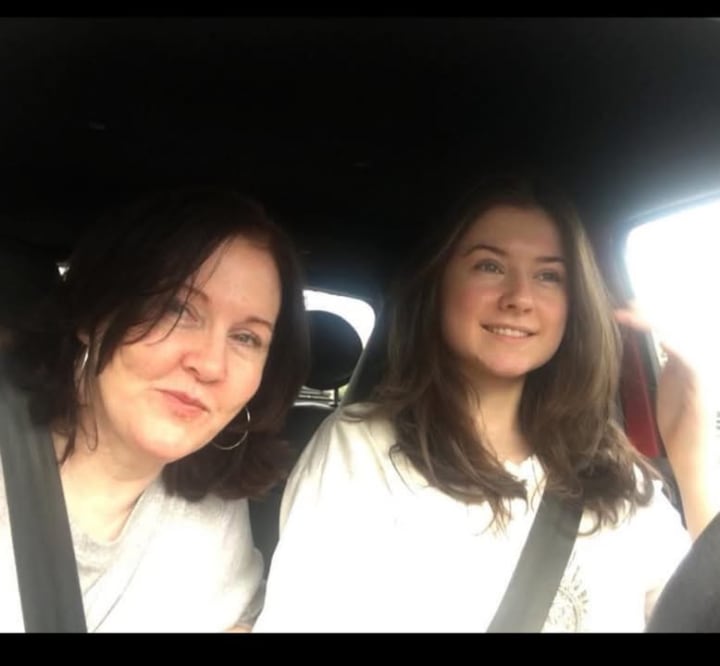
Ordealia and I survived her bumpy teen years, and she is now in nursing school. I’m assuming she will one day have children of her own. I like to wonder what scheduled, large-crowd event my daughter will freeze for the sake of her child. I am sure there is at least one in her future.
About the Creator
Anne Spollen
I haunt New York City, the Jersey Shore, and the Hudson Valley. I write a lot, and I read a lot. Working on two new novels (writing them, not reading them) because I haven't published a new novel in quite some time ~ but I'm back now.
Keep reading
More stories from Anne Spollen and writers in Families and other communities.
IVF Conception 2025: The Next Reproductive Battle for Women?
At first glance, IVF and abortion may seem like opposites: one is done to create a pregnancy, while the other is performed to terminate one. They are linked, however, due to the legal and moral debates surrounding the status of a fertilized egg in the context of reproductive healthcare. Both procedures involve the manipulation of fertilized eggs at an early stage of development — and in certain legal frameworks — especially those that consider “personhood” to begin at conception — both procedures could be impacted by legislation meant to restrict access because they both involve the potential to discard fertilized eggs or embryos. With the current political climate, the discussion around both procedures is becoming more complex, especially for women.
By Anne Spollen10 months ago in The Swamp
Wise~Guys
— Look Behind what's in Front of You ~ Make Good Choices — Hey, So how you Doin'..! Made~Men — Mobster Movies romanticise a distinctive, elegant appearance, impeccable attire style, along with the 'Families' expressive lingo. Making their 'Bones' gave them Panache — with vintage fedoras, tailored pin-striped suits, mirror-polished wing-tip shoes adorned with tassels; with their 'Gun Moll' gorgeous dates on their arms.
By Jay Kantor20 days ago in Families




Comments
There are no comments for this story
Be the first to respond and start the conversation.