
A Plumber’s Philosophy
Wit and Wisdom for a Happy, Healthy Life

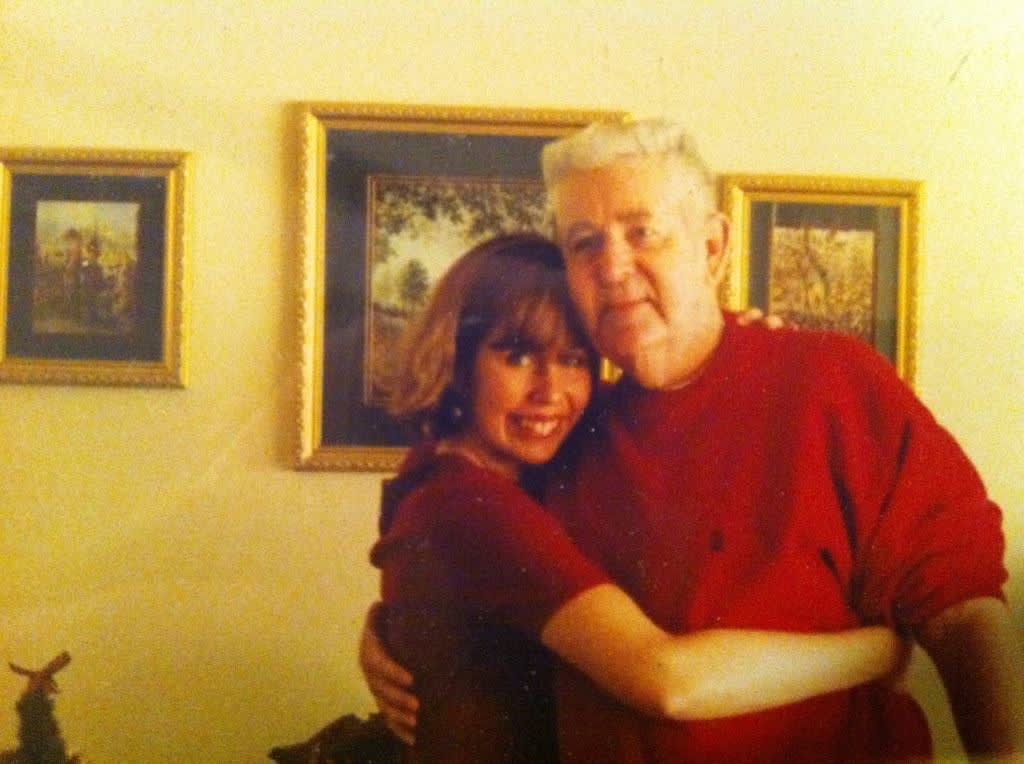
My dad was probably one of the most misunderstood people I know. It was easy to dismiss my dad as a blue-collar plumber who was known as a good family man but was not thought of for much else.
This assumption couldn’t be further from the truth. He was so much more than just a plumber. He enjoyed doing anything that involved using his hands. For school projects, he built replicas of Monticello and the Parthenon. He also made a model of a volcano that could erupt. He could also draw portraits, write calligraphy, and build lobster traps. He was a lifelong learner. He read encyclopedias, devoured books about the sea, and studied fluid dynamics. One of his favorite books was Atlantic High by William F. Buckley who wrote about his trans-Atlantic voyage.
By taking a look at the various stages of my dad’s life you see the emergence of his wit and wisdom that he imparted on my sister and me.
I feel compelled to share with you his story and advice as I think his simple commonsense approach to life would benefit people struggling to find meaning in their lives.
Childhood—Humble Beginnings.
On July 19, 1932, my dad, Lawrence Patrick Mulligan, Jr., entered the world. He was raised in Trenton, New Jersey by a blue-collar family and was an only child. His father was a hard-working firefighter and his mom was an operator for Bell Telephone. He had a wonderful relationship with his parents who instilled in him depression era values. Such values include saving your money, not wasting anything, a strong work ethic, and giving to charity. One example of how my dad later displayed these depression era values involved collecting our soda cans, compressing them and turning them into deposits for $.05 per can.
My dad was an average student academically. His English teacher would tease him that he always found the shortest poems to recite. However, he excelled in art and drafting. Later in life he admitted his only regret was not going to art school.
He taught depression era values to my sister and me and as such we started working at age 14. Accordingly, we supplemented our income working our way through college. We also bought our own first car. We gave 120% percent to whatever job even though it might be an odd job. We applied the same level of effort to our professional careers. My professional career meant writing and public health and for my sister it was neurosurgery and executive leadership in the Navy. As such we were taught that no job was beneath us and to respect everyone from all walks of life.
Navy—Becoming a Man
At age 18 my dad enlisted in the Navy as a boiler tender (BT-3rd class) with a four-year commitment to serve in the Korean War. As a boiler tender, he kept the steam turbines running on the USS Lake Champlain, an aircraft carrier. This was a physically demanding job and one that required working in extreme heat up to 110 degrees Fahrenheit.
Joining the Navy would prove to be the best decision he ever made. He learned the value of service before self, patience, an appreciation of other cultures, comradery and discipline.
For example, my dad had to stand in a 400-person line three times a day for meals for four years. (Now if that’s not patience I’m not sure what is!)
He would also take time every sunrise to read the Bible out on the ship’s deck to connect with Jesus as he watched the ocean swells. This practice brought him a sense of peace and serenity.
He traveled extensively covering east Asia and parts of Europe. Such travels exposed him to many cultures and expanded his knowledge about the world. Interestingly, he never went abroad again after completing his four years in the service.
These experiences shaped how he later led his life as a father. With regard to service before self, my sister followed in his footsteps and joined the Navy at age 21 as an ensign studying medicine. She made her career in the Navy and is now a captain. As for me, I spent 22 years in public service at the National Institutes of Health and have a master’s degree in public health where I learned how to formulate public health campaigns.
My father encouraged us to travel and learn about other cultures. As such my sister and I have been fortunate enough to travel quite a bit. I haven’t traveled too much internationally but have done considerable domestic travel with my sister and for work. My sister has traveled extensively both internationally and domestically thanks to being in the Navy.
Plumbing—A vocation
After my Dad finished his service in the Navy he began working as a union plumber on large construction sites. He was encouraged to go into plumbing by his parents. They saw plumbing as a valuable trade that offered career stability and was a marketable skill. Plus, my dad really enjoyed working with his hands. He started off as an apprentice and learned the value of mentorship by working with more seasoned trades people.
He committed time and energy to mastering his craft. He got a great sense of accomplishment from seeing a finished building that he helped build. For example, he helped construct Quakerbridge Mall; a nuclear power plant in Salem, New Jersey; and an assisted living facility where my grand mom ended up living. He honed his work ethic and hardly ever missed a day. This proved to be especially necessary since he didn’t get paid if he didn’t work. Some of his jobs required travel over 90 miles away. He made that commute day in and day out without a complaint. He often carpooled with other workers and enjoyed swapping stories and jokes on the way.
He also applied his handyman skills to our home. He built a shed that looked like a miniature house, wired electricity to the shed from the house, built a deck, and the list goes on. And furthermore, he helped neighbors and friends and never expected anything in return.
My sister and I seeing his commitment reinforced our work ethic. We both have experience mentoring people, especially my sister who mentored residents for years in neurosurgery.
Family Man—A Purpose
In 1968 my dad met my mom, Shirley Salerno, on a blind date and soon thereafter married and settled into a quaint colonial house in Lawrenceville, New Jersey. They raised my sister and me in that house. They were more friends than lovers but every day when my dad returned from work, he’d give her a kiss while holding his igloo lunch container.
Dad always had time for us, no matter how long his day or how far he had traveled to get to work and back. He found time after dinner to play badminton or basketball with us for a couple of hours. The nights he didn’t play with us he would spend tending to my grandmother’s yard.
He would then spend his evenings out on the porch listening to baseball games over the radio and reading the newspaper. He would have two scoops of chocolate ice cream, and invariably some of it would wind up on his white T-shirt.
Even though the budget was tight my parents found a way for us to participate in extracurricular activities like ice skating, swimming, and music lessons. My sister played the drums and I played the trumpet.
Then there were the college years. Even though my dad only made $40,000/year our parents encouraged us to go to any college we wanted. My parents really stressed the value of having a good education. For my sister it was Harvard with an annual tuition of $17,000; for me, it was Boston University, with an annual tuition of $25,000. We each received scholarships, held work study jobs and took out student loans but our parents still paid the lion’s share of our tuition. For six years (my sister graduated in three years) my parents made tremendous sacrifices. They didn’t buy any new clothes or take a single vacation during this time.
After college, my sister and I moved to Bethesda, Maryland and lived together. My sister was attending the Uniformed Services University of the Health Sciences to study medicine and I was working in public relations at the National Institutes of Health.
Retirement—Sunset Years
My dad began his retirement in New Jersey but soon thereafter he and my mom decided to relocate to be closer to my sister and me. So, in 1995 they moved to Bethesda. At one point we were all living in the same apartment building!
A few years prior to moving to Bethesda, my dad developed diabetes and congestive heart failure. As such what he envisioned retirement to be and what it actually turned out to be were very different. Due to complications from the diabetes he had to have his toes amputated on one foot. However, he never complained once about this loss. It was his faith in Jesus that enabled him to handle such medical problems with stoicism, grit, and a sense of humor.
To help keep his mind occupied from worry, he became a regular at many of the restaurants and shops in Bethesda. He knew all the young servers and restaurant owners. They would talk about sports and he would banter with the cook and patrons at the Tastee Diner. He would also give advice to some of the younger servers and listen to what was going on with them. My family called him the mayor!
Legacy—Leaving a footprint
On November 12, 2007 my dad passed away peacefully from complications from congestive heart failure. He was 75. He will be remembered for his quick wit, love of the Boston Red Sox, and as a loving husband, father, and friend.
The Philosophy
Hopefully, seeing how he developed his values over the years you can understand how he would become such a wise man. Below are some examples of his wisdom that I hope may benefit your life.
⦁ Be patient.
Do things that foster patience. Stand in the longest line at the grocery store. Don’t cut off people while driving. Learn how to cook. Do puzzles and other brain teasers. Go fishing. Meditate. Pray.
Practice patience with others—listen to what they have to say and be fully present.
You’ll find greater inner peace and empathy the more you practice patience.
⦁ Take your time with everything.
Slow and steady is key to doing things correctly the first time instead of having to do things over. Remember it was the turtle that won the race against the rabbit!
My father stressed the importance of taking the time to think things through and proceed with actions only once you’ve carefully deliberated the pros, cons and consequences. This process is akin to Jesuit teaching which teaches precision of thought; economy of expression.
⦁ Keep your wits about you.
In this day and age where you never know someone’s motives it’s very important to keep your wits about you and stay alert. My dad used to say this to me every time I left the house and I encourage you to be alert and aware of your surroundings. My dad also said safety in numbers so don’t walk alone at night.
Keep your wits about you applies to other facets beyond personal safety. It also means to keep your wits about you in your professional and personal life. For example, don’t let people steal your ideas and be discerning with whom you become friends with or who becomes your significant other.
⦁ Look alive.
My dad always told me to look alive, be present, and be engaging. He encouraged us to have fun and emphasized the benefits of humor to increase inner peace and decrease stress.
⦁ Practice, Practice, Practice.
My father explained to us that there is no such thing as an overnight success. When you see someone successful and it appears that they were just fortunate you can rest assured that they got where they got with blood, sweat and tears. He encouraged us to seek role models who will reveal some of their best practices that you can then emulate.
⦁ Be a good public speaker.
My dad stressed the importance of being able to communicate well. He said it is important to be understood so you must choose your words carefully. He also suggested joining Toastmasters-- which is a forum where people meet to hone their communication skills in a constructive environment with their peers.
⦁ Learn three things well.
My dad drilled into us the importance of knowing more than one thing and having back up plans. He wanted us to be well rounded so if one area goes sour you still have other outlets where you can thrive. These three things don’t have to be major but could include learning a language, learning an instrument, learning how to type, learning some arts and crafts, and learning how to cook.
My dad practiced what he preached and learned how to weld in his 40s. He would drive 90 minutes each way every Monday evening listening to Waylon Jennings as he went to sharpen his new skill.
⦁ Something good can happen just as quick as something bad.
My dad was an eternal optimist and saw the good in everything. When I would say I was worried about starting school or a new job he’d always tell me it would be a good experience if I went in with such a mindset. He also said people can surprise you with their generosity and kindness. He encouraged us to seize the moment which leads me to his next pearl of wisdom:
⦁ Everyone gets one turn.
When you understand that you get just one chance while you’re here to leave a mark on the world you become a more thoughtful person who seizes opportunity and surrounds themselves with positive people.
⦁ They’ve gotta come from somewhere.
Successful people all got their start from somewhere. Some were poor and became rich, and some were born into rich families; some were born in a rural setting while others urban. The point is successful happy people come from all walks of life and my dad would say—why not you?
⦁ Shiny lure catches the fish
As they say you only get one chance to make a first impression so make it a good one. Develop your own sense of style. Set a trend; don’t follow one.
⦁ If you have your health you have everything.
If you’re fortunate enough to be healthy don’t take it for granted. Work hard to maintain your health—mindful eating and consistent exercise are key factors. Practice other preventive medicine techniques such as getting a mammogram at the recommended age, annual dental check-up, and other tests as required.
On a lighter note being in good health has other benefits. For example, he would say it’s great knowing that you can go into any clothing store and buy what you want!
⦁ We fight but we’re friends
My dad believed in companionship and the need for strong relationships with family and friends. He acknowledged that arguments will arise but try to remember that he/she is your friend so let go of resentment, grudges and acts of revenge. Also be direct and straightforward with how you feel and be open to how other people feel. And to paraphrase Paul the Apostle in Ephesians 4:26 “don’t go to bed angry!”
⦁ Look out for each other
My dad encouraged us to always look out for each other. Be there during good times and bad. Keep confidences. And intervene if you think they are going down the wrong path. Above all he stressed be loyal and dependable.
⦁ Never give up
Dr Seuss got rejected 27 times before his first book got published. My dad would tell me no matter how many times you get rejected keep on refining your work and look for new outlets for submitting your work.
⦁ Presentation is key.
Don’t we all like it when you’re out to eat and the dessert plate comes and its drizzled with a swirl of raspberry sauce? My dad emphasized the importance of preparing and presenting your meals with special attention, even if it’s just for you.
⦁ Think of your palm holding a spoonful of sand—squeeze it and it’s gone; let it rest and it will be there.
The main point here is don’t force things. Don’t try to force someone to like you.
That’s All Folks
I hope what I shared about my dad’s life and principles will help you better navigate your life and to make wise choices.
I welcome your feedback and look forward to hearing how you’re heeding his advice and the changes you’re seeing in your everyday life.
About the Creator
Lori Mulligan
Hi, I’m Lori. Nice to be a part of this community. I have a blog called Extraordinary Ordinary People where I feature people who have overcome adversity, achieved an amazing feat, or have led an interesting life.
Keep reading
More stories from writers in Families and other communities.
Wise~Guys
— Look Behind what's in Front of You ~ Make Good Choices — Hey, So how you Doin'..! Made~Men — Mobster Movies romanticise a distinctive, elegant appearance, impeccable attire style, along with the 'Families' expressive lingo. Making their 'Bones' gave them Panache — with vintage fedoras, tailored pin-striped suits, mirror-polished wing-tip shoes adorned with tassels; with their 'Gun Moll' gorgeous dates on their arms.
By Jay Kantor23 days ago in Families
Men who eat nuts tend to have better quality sperm
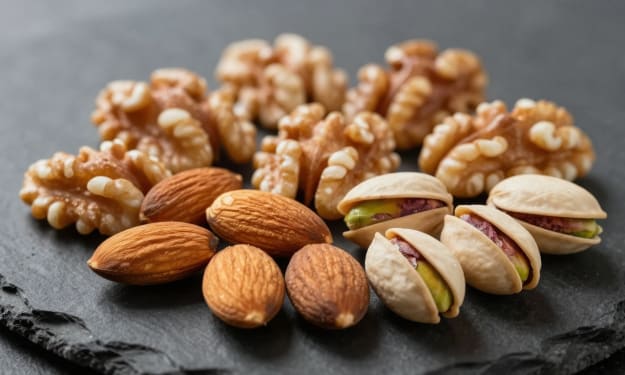
Peak Potency: How a Daily Nut Habit Elevates Male Sperm Quality Male fertility rates have dropped in recent years. Many couples struggle to conceive, and men often overlook their role in this challenge. Your diet can make a big difference here. Nuts stand out as a simple fix. They pack antioxidants and healthy fats that support better sperm quality. Think of them as fuel for your reproductive system. Studies show men who eat nuts regularly see real gains in sperm health. If you're planning a family or just want peak vitality, adding nuts could be your smart move.
By Story silver book 7 days ago in Families
Autonomy Is The Real Privilege
Good morning, freedom-seekers! Today we’re gonna be looking at autonomy. A strange word, I know; one many would probably look at blankly and run away from on sight. We’re gonna figure out what it actually means, consider how it’s achieved, and decipher just how deeply most of us are tangled up in dependence without realising it.
By That ‘Freedom’ Guy4 days ago in Humans



Comments
There are no comments for this story
Be the first to respond and start the conversation.