

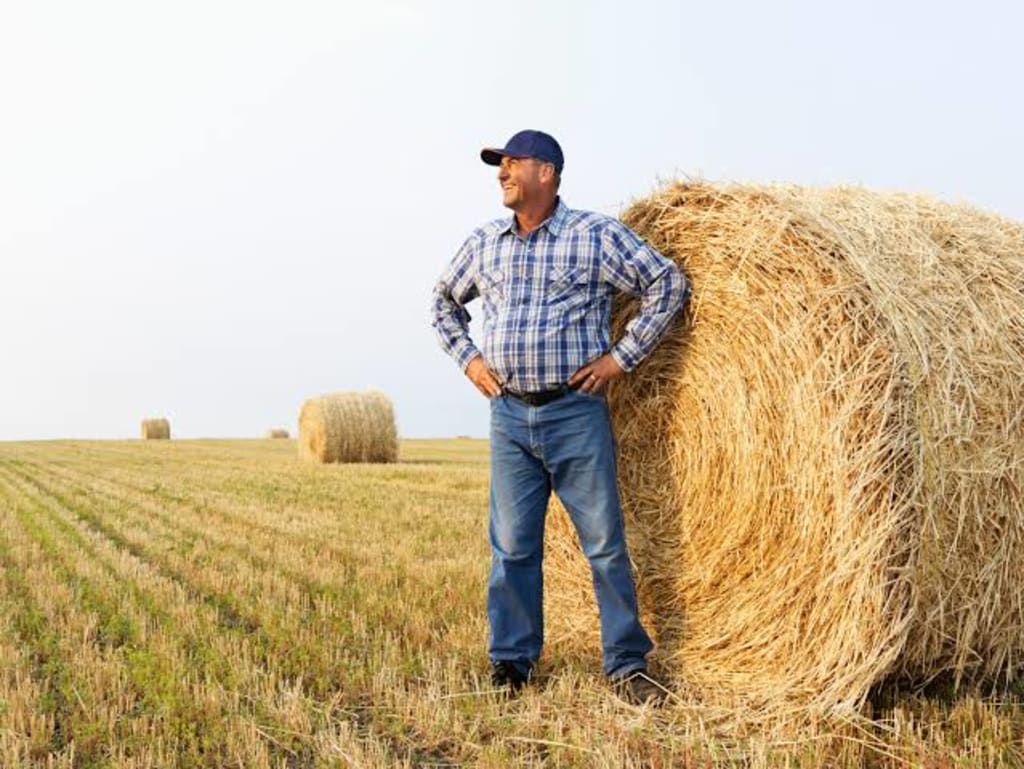
A farmer is the nation's foundation, working tirelessly from dawn to dusk to ensure that everyone has access to food. In the heart of a rural village, nestled between gentle hills and wide-open fields, lives Ramesh, a dedicated farmer whose life is deeply intertwined with the rhythms of the earth. Each day, he rises before the sun paints the sky with shades of gold, stepping into the morning mist with hope in his heart and determination in his stride. His hands, weathered and calloused from years of labor, are the true tools of his trade—more reliable than any modern machine. As he walks across his fields, the soil greets him like an old friend. He bends down to touch it, feeling its warmth, its readiness to receive life seeds, and its moisture. He begins his work with practiced skill, nurturing the seeds like a father would his children, knowing that each grain holds the promise of a better day. His crops—wheat, rice, vegetables—depend not only on his efforts but also on nature’s cooperation. Ramesh watches the sky constantly, his eyes trained to read the clouds, to sense when rain is near or when drought might loom. The weather, unpredictable and often harsh, is both a friend and foe, capable of blessing him with a bountiful harvest or leaving him staring at withered plants and empty granaries.
Life on the farm is not easy. Ramesh faces challenges at every step, from fluctuating market prices and rising costs of seeds and fertilizers to pests and diseases that can destroy months of effort in a matter of days. Yet, he endures it all with quiet strength. His fields come to life with activity during harvest. Under the scorching sun, Ramesh tirelessly cuts, gathers, and stacks the produce with his family and a few hired laborers. The sight of golden grains piled high fills him with pride—a tangible reward for his months of perseverance. However, the struggle does not end there. Another struggle is getting the harvest to the market. Roads are often in poor condition, and middlemen take a large share of the profits. Still, Ramesh remains hopeful. He recognizes the significance of feeding the nation and the dignity of his work. Despite the hardships, he finds moments of joy—listening to the birds as he plows, watching his children play by the fields, and sharing meals with his family under the shade of a tree. These simple pleasures are the treasures of a farmer’s life.
Education is important to Ramesh, though he himself had to leave school early to help his father. He wants his children to live a different life—not necessarily one without farming, but one with more options, knowledge, and support. He encourages them to study hard, often sacrificing his own comforts to buy them books or pay their fees. Technology has started to make its way into his village—mobile phones, government apps, and improved irrigation techniques. Ramesh is keen to learn, attending workshops and speaking with agricultural officers who visit the village. He adopts new methods slowly but surely, balancing tradition with innovation. Organic farming, crop rotation, and water conservation are practices he now embraces, not just to improve yield, but to protect the land he loves so dearly.
The community around Ramesh plays a vital role in his life. Farmers in his village support one another, sharing tools, advice, and sometimes even seeds during tough times. Festivals are a time of joy and bonding, where they celebrate the fruits of their labor with music, dance, and food. These gatherings are more than just a place to have fun; they also serve as a place of strength and cooperation. However, the modern world is undergoing rapid change. Urban migration is pulling young people away from the land, and Ramesh often wonders what the future holds for farming. Yet, he remains steadfast in his commitment. To him, farming is not just a job; it is a way of life, a sacred duty, and a source of identity. His fields are not just land; they are a legacy passed down through generations, and he feels honored to be their caretaker.
Ramesh sits on his porch and looks out over his land as the sun sets behind the hills and the sky turns orange and purple. He is tired, but there is a calm satisfaction in his heart. He has faced the day’s challenges with courage, just as he will tomorrow. His story is one of millions—unsung yet essential, humble yet heroic. A farmer like Ramesh may not wear a suit or sit in an office, but his contribution to the world is immeasurable. He grows not just crops but hope, not just food but the future.
About the Creator
Keep reading
More stories from writers in Families and other communities.
Wise~Guys
— Look Behind what's in Front of You ~ Make Good Choices — Hey, So how you Doin'..! Made~Men — Mobster Movies romanticise a distinctive, elegant appearance, impeccable attire style, along with the 'Families' expressive lingo. Making their 'Bones' gave them Panache — with vintage fedoras, tailored pin-striped suits, mirror-polished wing-tip shoes adorned with tassels; with their 'Gun Moll' gorgeous dates on their arms.
By Jay Kantor20 days ago in Families



Comments (1)
Yes I agree no farmers no food