
7 Elements Of Interior Design To Decorate Your Home
Elements for your home interior design
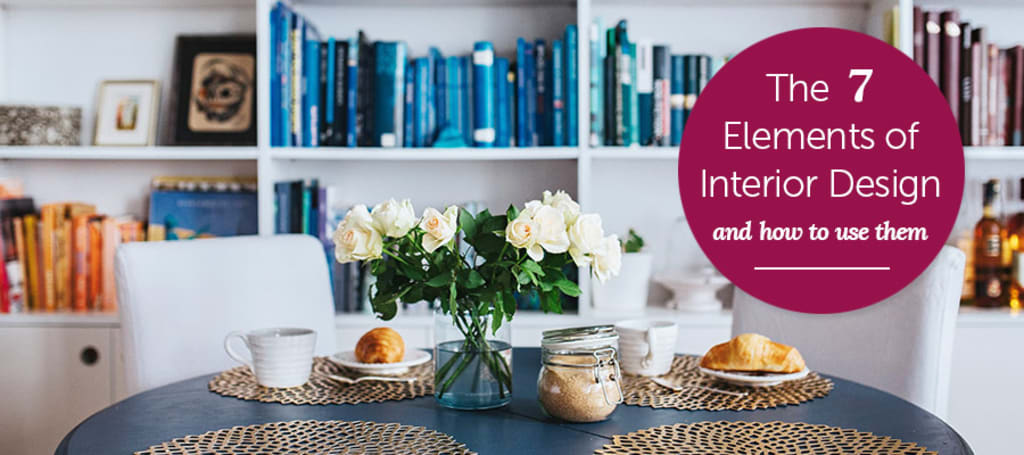
Interior decorating, which uses a pre-built space that is then adorned with furniture, wallpaper, and various other features, is frequently confused with interior design, which relates to the design of a room or living area from the ground up. Furniture, color, and objects—in particular—make up some of the elements of interior design. However, keeping the initial space in mind will help you make the decorative elements you like come to life.
Elements Of Interior Design To Decorate Your Home
SPACE
Space, as you might expect, has to do with the room itself, including its size, shape, walls, and windows, which serve as the foundation for your ideas. Making decisions will be simpler if you have a thorough understanding of the space, including the floor size, height, and any cubby holes or alcoves.
When the room is finished, there will be distinct "positive space" (areas with objects or furniture) and "negative space" areas (empty areas). For the room to feel right — not too busy, not too boring — positive and negative space must be balanced.
LIGHT
Think about the effects that various lighting types and styles will have on a room because light can drastically alter the impact of texture, lines, and colour. Include lighting in your planning to create the room you want, keeping in mind that other elements will appear differently depending on the lighting.
There are four different types of lighting; the most obvious is natural light, which can be adjusted by judiciously positioning doors and windows throughout the area.
The other three types of lighting are artificial: task lighting (think desk lamps and bedside lighting that facilitate a particular task), mood lighting (also known as ambient lighting, which provides general lighting for the space), and accent lighting (think spotlights that will highlight particular features, like artwork).
LINE
A room's form and shape are based on its lines, which can be divided into three basic types: dynamic, vertical, and horizontal. It's critical to use lines properly to create accurate forms (see next element).
Horizontal lines give a space stability (think tables, chairs). Vertical lines evoke a sense of freedom and the natural world (think windows, doors). Dynamic lines can be incorporated with patterns and colour to tie a room design together or to draw attention to a specific area. Think of stairs as an example of how dynamic lines can add interesting movement and energy to a space. Soft dynamic lines can harmonise other lines by connecting them.
Read: Bohemian interior designs: 7 tips for a Bohemian styled home
FORM
Form refers to the shape of the area, the objects you place there, and the lines you draw in it. To ensure that items don't overwhelm the space or become lost, take some time to consider the proportions of the room in relation to the scale of what you are adding.
Harmony can be achieved by using similar forms throughout a space, but an unbalanced appearance can be achieved by using an excessive variety of forms. Rectangles are hard shapes, but they create a flow through the room. Use forms carefully to create the desired effect in each room. Triangles add stability, while circles soften the feel of a space. In this picture, the room is balanced by the use of curved chairs that soften the hard table.
Forms can be divided into open and closed forms, as well as natural and artificial forms (whether you can see into the shape). A strong sense of space and lines will naturally add positive form to the space.
COLOUR
Although adding the category of colour is obvious, there are some hidden concepts that you probably already use. Additionally, it is more on the side of interior design and is easier to fit into your comfort zone.
A room's mood can be drastically altered by colour, from a serene, light palette to a vibrant, exciting red. It's important to keep in mind that using darker colours will make a room appear smaller, but using accent colors—in furniture or "feature walls"—can be a great way to bring a bold colour into a space that is smaller.
TEXTURE & PATTERN
Color and pattern go hand in hand, so use them to tie together different parts of the room and add focal points. Consider wallpaper, curtain and upholstery fabric patterns, and painting techniques. In order to draw attention to and contrast different areas of the room, patterns should be used in close coordination with color.
Visual texture and actual texture are the two main categories of texture that are used for depth and interest points. Texture is typically discussed in relation to curtains and upholstery; using a rough texture creates a cosy, homey feeling, and using smooth or shiny materials can create a more formal or opulent appearance. Rugs and blankets can be used to add texture.
To avoid monotonous or oppressive room design, a dominant or common texture should be countered by a contrasting texture. A room's design will flow if textures and patterns are combined.
FURNITURE & OBJECTS
Furniture serves as both a functional component of design and a key tool for completing a space and giving a home a cohesive feel. Furniture is a great way to express creativity or personality because it forces certain paths to be taken throughout the room.
One effective way to highlight a feature, like a fireplace, is to arrange furniture around it. Another quick and simple way to alter the mood of a space is to rearrange furniture periodically.
The most individualized component of the overall Home Interior design, objects have a history. Even though they are personal, the items used in a space should still be related to the design and complement it.
Good Luck!
About the Creator
Keep reading
More stories from Design hub and writers in Families and other communities.
Living Room Decoration With Plants: Types of Plants to Choose & Important Tips
When it comes to the living room, plants can be used to create a calming and inviting atmosphere. However, choosing the right plants and taking care of them is essential to ensure they thrive in your living room. In this article, we will discuss the types of plants to choose and important tips for decorating your living room with plants.
By Design hub3 years ago in Styled
Wise~Guys
— Look Behind what's in Front of You ~ Make Good Choices — Hey, So how you Doin'..! Made~Men — Mobster Movies romanticise a distinctive, elegant appearance, impeccable attire style, along with the 'Families' expressive lingo. Making their 'Bones' gave them Panache — with vintage fedoras, tailored pin-striped suits, mirror-polished wing-tip shoes adorned with tassels; with their 'Gun Moll' gorgeous dates on their arms.
By Jay Kantor17 days ago in Families




Comments
There are no comments for this story
Be the first to respond and start the conversation.