
World Mental Health Day: what to do when we feel like we can't take it anymore
I can not anymore. I don't know what to do. I can't get my head up.

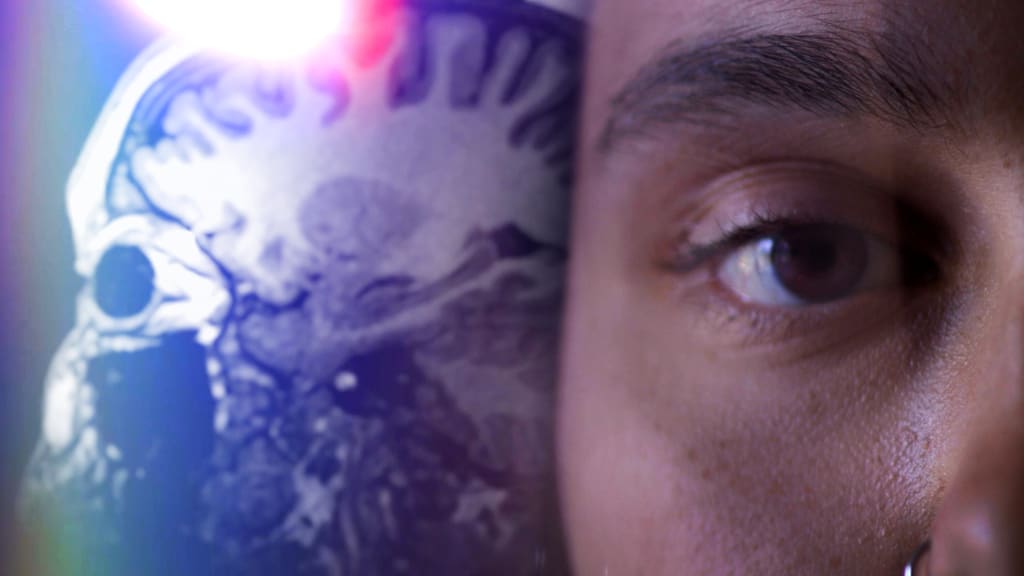
They are phrases that we pronounce and hear relatively frequently. And yet we tend to downplay it. An opposite reaction to the one that causes us to hear "My throat hurts" or "I can't turn my wrist", which invite us to visit the doctor immediately.
While they do not stop bombarding us with messages about the importance of maintaining a proper diet and exercising to have a healthy body (with every reason in the world), we pay little attention to mental health.
Even if we wake up in the middle of the night with anxiety attacks, or we can hardly go to work because everything is going uphill for us, talking about it and remedying it is still a taboo subject.
In Spain, at least one in ten people has been diagnosed with a mental health problem. A number that is surely higher considering that most of the time people do not usually go to the doctor.
world mental health day
With the aim of raising awareness of mental health problems and eradicating myths and stigmas around this issue, the World Health Organization commemorates World Mental Health Day every October 10.
But what is considered mental illness?
One definition could be those alterations of an emotional, cognitive and/or behavioral nature in which emotions, motivation, cognition, awareness, behavior, perception, sensation, learning or language are affected .
This makes it difficult for people with mental illness to adapt to the cultural and social environment in which they live, with the suffering that this entails.
Various mental illnesses have been cataloged, such as schizophrenia, psychotic disorders or attention deficit hyperactivity disorder (to name a few), with completely different origins and neurobiology.
Of all of them, the one with the highest incidence worldwide is undoubtedly depression .
Globally there are approximately 350 million people who suffer from depression, of which a large number are women.
According to recent studies, the number of women suffering from depression is more than double that of men, although it is still unknown why this is so.
What is depression and what happens in a depressed brain?
Surely on more than one occasion we have thought that we were depressed when we have gone through some difficult vital moment.
But depression is something different from normal mood swings or short periods of sadness triggered by specific events.
Depression is a mental disorder characterized by the persistent presence of sadness and a loss of interest in activities that people normally enjoy, accompanied by an inability to carry out daily activities .
All of this over a long period of time.
But why are we or can we become depressed? The exact mechanisms are still unknown. What we do know is that serotonin levels appear to be dysregulated in patients with depression.
In a region of the brain known as the prefrontal cortex (located between the forehead and the temple, more or less) we have a population of neurons that release serotonin.
This molecule is produced by the action of enzymes called TPH that transform the amino acid tryptophan (the "happiness" amino acid, according to some commercials) into serotonin.
When serotonin levels drop, the likelihood of depressive episodes increases .
This is shown by several studies in which, by directly reducing tryptophan or blocking the enzymes that transform it, the serotonin level decreased and the frequency with which new depressive episodes occurred in patients who already suffered from depression and were being medicated increased.
These are not the only indications that serotonin is important in depressive processes.
Traditional drugs like Prozac base their action on preventing serotonin from being reabsorbed by neurons in the brain. This causes the levels of this neurotransmitter to increase and patients improve with treatment.
Although the involvement of serotonin in depressive processes seems clear, some patients do not respond to treatment.
This suggests the existence of other mechanisms that can generate depression. In addition, it is not very clear why the levels of this neurotransmitter are altered.
What tools do we have and which ones are on the way
Although depression is an increasingly present disease in society, there is good news. Even the most severe cases of depression can be treated. Given the cyclical origin of depression, early treatment can help prevent recurring episodes.
Today there are different pharmacological treatments such as Prozac, Celexa and Paxil that work by selectively inhibiting the reabsorption of serotonin.
They generally give good results, although sometimes they have undesirable side effects, stop working, or simply don't work at all.
As an alternative, research on classic psychedelics such as psilocybin, mescaline or LSD has been taken up for the treatment of depression . Already before the 70s it was suggested that these chemical substances could be useful to treat depression or deep anxiety.
A recent human study found that patients treated with psilocybin had benefits up to four times greater than traditional antidepressants.
In addition, more than half of the cases were considered in remission, ceasing to be classified as depressive.
These advances have led the United States Food and Drug Administration (FDA) to initiate clinical trials in 2019 to test the effects of psilocybin in treatments against depression, since the therapeutic mechanisms are different from those used by drugs. classics.
Another recently published alternative is deep brain stimulation, through which activity patterns characteristic of depression have been blocked in a patient, obtaining very promising results.
Prevention is even better than cure
Both classic and experimental drugs are aimed at treating and not preventing depression.
For its prevention, both cognitive behavioral therapy and meditation have been shown to be of great help in maintaining good mental health.
Through the help of professional psychologists, these therapies help to become aware of irrational or negative thoughts, to visualize stressful situations more clearly and to respond to them more effectively.
So, dear readers, let us be aware of the impact of mental illness on our health and that of our loved ones . And let us act both to prevent them (if we are lucky) and to treat them (if we suffer from them).
Let's stop stigmatizing going to a psychologist or psychiatrist. Because in the same way that we consider it normal to go to the doctor when a leg hurts, it is also normal and essential to go to specialists when faced with a mental health problem.
About the Creator
Malik Kashif
Blogger | Creative Writer | Traveler | Full-Time Rver
I write because my heart tells me to, I read because I love stories that make my eclectic soul happy. I'm an Artist, Writer , Animal lover, traveller and free spirit
Keep reading
More stories from Malik Kashif and writers in Education and other communities.
Instructions to pick the best MacBook so you're not overspending for what you needn't bother with
Macintosh has five MacBook PCs to browse, which may be somewhat overwhelming in the event that you're on the lookout for another PC as we hit back-to-educational season. There's the new MacBook Air, for instance, however Apple likewise sells its more established 2020 MacBook Air. Then there are three unique MacBook Pro PCs to pick from.
By Malik Kashif3 years ago in Education
Mastering X-Bar Theory in Grammar in 10 Minutes
Grammar can often feel like a maze of confusing rules, especially when we dive into syntax — the study of sentence structure. One of the foundational tools in modern linguistics is X-Bar Theory, a framework that helps explain how words and phrases combine to form sentences. While it might sound intimidating, understanding X-Bar Theory can become straightforward if approached step by step.
By Games Mode Onabout 17 hours ago in Education
Miss Persephone's Manual to a Seemingly Ordinary Life
Miss Persephone was found at the dining table, her blue eyes swollen, her tears arriving and retreating like the tides of the ocean. Earlier that day, her family had visited her in the retirement home where she had lived for eight years. It was her eightieth birthday.
By Imola Tóth4 days ago in Fiction


Comments
There are no comments for this story
Be the first to respond and start the conversation.