
Women Empowerment
Defining Women Empowerment
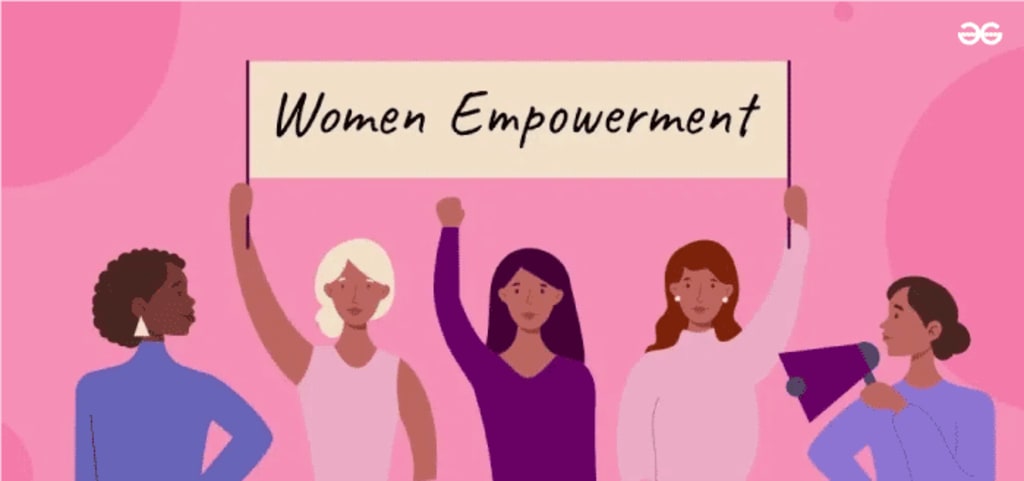
Women empowerment is more than just a buzzword; it is a movement that is essential to achieving equality and equity. Women empowerment is the process of enhancing women's self-worth, their capacity to make informed decisions, and their capacity to exercise their rights and opportunities. Giving women the means and opportunities to have a voice in their lives and society is the simplest definition. It requires challenging and overcoming stereotypes and social barriers that restrict women's potential.
Empowering women basically means:
Equality: Equality: Ensuring that men and women have the same opportunities and rights.
Agency: Giving women the power to make choices about their lives.
Independence: Enabling women to be self-sufficient and financially independent
Leadership: Creating opportunities for women to assume leadership roles.
Respect: Challenging gender stereotypes and valuing women's contributions.
It's important to note that women's empowerment is a journey, not a destination. To build a society where women can fully participate and thrive, ongoing efforts are required.
Women Empowerment vs. Gender Equality
While often used interchangeably, women empowerment and gender equality are distinct concepts.
Gender Equality
Focuses on achieving equality between men and women in all aspects of life.
The goal is to build a community where everyone, regardless of gender, has access to the same opportunities.
It’s about fairness and justice.
Women Empowerment
Specifically targets women and girls in order to increase their capabilities.
Aims to help women improve their self-esteem, take more responsibility for their actions, and take advantage of more opportunities.
It’s about giving women the means and confidence to overcome obstacles.
By empowering women, we move closer to achieving gender equality, but it's essential to recognize that both concepts are crucial for creating a just and equitable society.
Challenges Faced by Women
There are numerous obstacles that stand in the way of women's progress and potential all over the world.
These problems are usually the cause of some hard-to-the-core aspects of the social structures and norms.
Global Challenges
Social Barriers: Traditional gender roles, stereotypes and cultural norms of the society often leave the women bound to domestic and that is why they do not get the education and job opportunities that they deserve. Child marriages, female genital mutilation, and honor killings are extreme manifestations of these barriers
Economic Disparities: Although women are paid less than men for equal work, the global gender pay gap still exists. Financial resource, property rights, and entrepreneurial opportunity exclusion are other hindrances of women's economic independence.
Political Underrepresentation: Women are underrepresented in political leadership positions all over the world. This, in turn, limits their power to influence the policymaking and the decision-making processes that should affect their lives.
Education Inequalities: In many areas, girls are barred from getting an education, typically due to reasons such as early marriage, poverty, and, to some extent, cultural conventions that prefer boys' education. Such a situation prevents women from earning salaries and being efficient members of society.
Health Issues: The women's health problems which include maternal mortality, reproductive health, and healthcare access are many times more than the worldwide average in many areas. Unavailability of good health services is the main cause of these difficulties.
Domestic Violence and Sexual Harassment: Physical violence against women is a global epidemic with sexual and emotional abuse being the majority of the causes that affect women worldwide. This brutality has deep-rooted issues such as physical and psychological suffering as well as economic losses.
It is worth mentioning that the difficulties involved are interrelated and they strengthen each other. Addressing women's empowerment requires a multi-faceted approach that tackles these issues simultaneously.
The Importance of Women Empowerment
Women's empowerment is not only a social justice issue but boosts transformative change in the different spheres of society.
Impact on Individuals
Increased self-esteem and confidence: Empowered women are the ones who can say "I can do it!", make informed decisions, and chase their dreams.
A better state of mental and physical health: Women who have durability over decision-making in their lives enjoy a healthier state of being.
Enhanced decision-making power: Through empowerment, women have the right to make decisions regarding their bodies, the education they pursue, the careers they want, and their relationships.
Impact on Families
Improved child health and education: Empowered mothers do directly affect their children progressing in health, nutrition, and education.
Stronger family units: Women's economic assets serve to cement the ties that bind families together and lessen the burden of financial stress.
Reduced domestic violence: Empowered women do know how to say 'no' to domestic abuse.
Impact on Communities
Economic growth and development: Women who are part of the economy create new jobs and promote economic growth.
.Improved health outcomes: Empowered women have more options for healthcare and preventive treatments for themselves and their families
Reduced poverty: Women's economic empowerment not only helps them but also families and communities to come out of poverty.
Stronger democracies: With women's involvement in politics, more representative and inclusive governance will be realized.
Social progress: Empowered women resist gender stereotypes and thus, contribute to a more equitable society.
Basically, women's empowerment is one of the main elements in sustainable development. It is through this that a world of justice, equity, and prosperity can be created, a world that all can enjoy.
Strategies for Women Empowerment
Effective strategies for women's empowerment are multifaceted and require a holistic approach.
Here are some key areas of focus:
Education and Skill Development
Universal access to education: Making sure that all girls and women have the opportunities to attend school and get their education is universal access to education.
Vocational training and skill development: Teaching women to study professionally so that they could be employed and get better jobs.
Digital literacy: Women should be equipped with digital skills to be able to access information and opportunities.
Access to Finance and Economic Opportunities
Microfinance and credit facilities: Women should be given loans and financial services which they would use to start up businesses.
Entrepreneurship training: Giving women entrepreneur training and management skills is one way of supporting them.
Equal pay and employment opportunities: Advocacy for equal pay and the creation of job opportunities for women in different sectors should be done.
Political Participation and Leadership
Quotas and reserved seats: Implementing policies to increase women's representation in government and leadership positions.
Political leadership training: Giving women the education and training to be able to run for office.
Mentorship and networking opportunities: Linking women with older leaders for assistance in their political ambitions.
Health and Reproductive Rights
Access to quality healthcare: Making it sure that women have access to the necessary reproductive health services which includes maternal as well as child health care.
Family planning and reproductive rights: Assisting women to choose the right decision about their reproductive health is the aim.
Addressing gender-based violence: Enforcing policies and programs to avert and tackle domestic violence and sexual assault is the way to go.
Legal Protection and Justice
Enforcing gender equality laws: Granting that not only women's rights are protected but also that laws are implemented properly.
Access to justice: Helping those women who suffer from discrimination or violence through the provision of legal aid and support is indeed a great approach.
Awareness campaigns: Knowledge initiatives about women's rights and legal protections should be out to the public.
Changing Societal Attitudes and Norms
Media campaigns: Media should play its role in challenging harmful stereotypes and promoting gender equality.
Community engagement: Getting men and boys involved in supporting gender equality is an important part of the promotion process.
Education and awareness programs: Raising awareness about the importance of women's empowerment.
It is of utmost importance to note that these methods are interrelated. To illustrate, education empowers women to join the labor market which consequently results in economic autonomy and the empowerment of women in politics. The approach which is holistic and encompasses all areas at the same time is a prerequisite for the achievement of sustainable transformation.
Success Stories and Role Models
It is vital to present the stories of remarkable women who have gone through hard times and have done extraordinary things in order to encourage and motivate others. Let's celebrate a few:
Leaders Breaking Barriers
Malala Yousafzai: Malala is a global hero. Shestood up to the Taliban and fought for girls' education. Her resilience and courage have made her a symbol of hope for millions. Her resilience and courage have made her a symbol of hope for millions.
Angela Merkel: Merkel was the first female Chancellor of Germany and she proved her exceptional leadership skills by dealing with global problems very effectively. She has been praised all over the world for her balanced approach and ability to solve problems.
Entrepreneurs Building Empires
Indra Nooyi: Nooyi, who used to be the boss of PepsiCo, shifted the company from a local player to a global one. Apart from that, she was also able to manage a family. Her life story is a classic example of how ambition and hard work can lead to success.
Oprah Winfrey: An inspirational from humble beginnings to media mogul Oprah is everyone a true rags-to-riches. She was a trailblazer not only in the realm of television but also as a philanthropist and advocate for women.
Activists Driving Change
Ruchika Girhotra: A daring activist, Ruchika's fight against justice after being sexually harassed was a real example of a woman's courage ' to spark a movement against sexual abuse in India.
Greta Thunberg: An adolescent climate change activist Greta has amassed an army of young people who are calling for solving the climate crisis. Along with her charisma and dedication she has also been a global representative.
Community Workers Empowering Lives
Aung San Suu Kyi: A Nobel Peace Prize winner, Aung San Suu Kyi is a symbol of democracy and human rights in Myanmar, to which she has devoted her whole life. Her strength and courage under fire is a model for everyone.
Mother Teresa: A Nobel Peace Prize winner, Aung San Suu Kyi is a symbol of democracy and human rights in Myanmar, to which she has devoted her whole life to helping the poor and marginalized. Her legacy continues to inspire acts of kindness worldwide.
These are just a few examples of countless women who have made significant contributions to society. By narrating these stories, we can encourage the youngsters coming up to be daring, not be scared of the hurdles and be a part of the making of a better world.
Call to Action
Ladies' empowerment is a journey that asks for the joint effort and the collaboration of the society. Each person has a part to play in the making of a more equal society. Here's how you can contribute:
Individual Actions
Educate yourself: First of all, understand gender equality issues and correct your bias.
Support women-owned businesses: Decide to buy from companies run by women.
Mentor and support women: Provide guidance and useful resources to women who are leaders.
Speak out against gender inequality: Challenge harmful stereotypes and discriminatory behavior; tell the beliefs of the audience that are negative.
Vote for women candidates: Encourage women to be in charge.
Advocacy and Policy Change
Contact your elected officials: Campaign for gender equality policies such as equal pay, affordable childcare, and reproductive rights.
Support women's organizations: Donate to or volunteer with organizations working for women's empowerment.
Participate in advocacy campaigns: Be a part of campaigns to make people aware of women issues.
Awareness and Education
Share information: Spread knowledge about women's empowerment through social media and talk to your friends.
Support media that promotes gender equality: Choose to watch media that shows women in a positive and respectful light
Educate children about gender equality: Teach kids about diversity, equality, and respect.
We can make a world where women can reach their full potential and make meaningful contributions to society by taking these steps. Keep in mind that even seemingly insignificant actions can result in significant shifts. Let's collaborate to create more equitable future.
About the Creator
Keep reading
More stories from Zunaira Rizwan and writers in Education and other communities.
The Ultimate Guide to 5-Ingredient, High-Protein, Heart-Healthy Snacks
In today's fast-paced world, finding snacks that are both nutritious and easy to prepare can be a challenge. When juggling work, family, and personal time, the last thing you want to do is spend hours in the kitchen. Fortunately, heart-healthy, high-protein snacks can be made with five simple ingredients. These snacks not only fuel your body but also support heart health, helping you stay energized throughout the day.
By Zunaira Rizwanabout a year ago in Families
How to Transform Hospitality with Digital Signage Software
I'll never forget walking into a boutique hotel in Austin last year and being greeted by a stunning digital display that not only showed my reservation details but also recommended local restaurants based on the time of day. That moment made me realize: we're past the era of static lobby posters and outdated event boards. Digital signage has become the silent ambassador of hospitality, and after testing numerous solutions across different venues, I've learned what actually works.
By Jerry Kane 4 days ago in Education
Why the Cheapest Language Tutors Are Not Always the Most Effective
When searching for an online language tutor, the first reflex is often the same: compare prices. It feels logical, almost instinctive. Faced with dozens of similar profiles, the price becomes a reassuring shortcut. Many students tell themselves they will “try,” see how it goes, and change later if needed.
By Bubble Chill Media about 16 hours ago in Education



Comments