
Will AI Take Your Job? Here's What the Future of Work Really Looks Like
Meta Description: Discover how artificial intelligence is transforming the job market. Will AI take your job — or create new opportunities? This article explores the facts, risks, and future skills you need to thrive.

Introduction
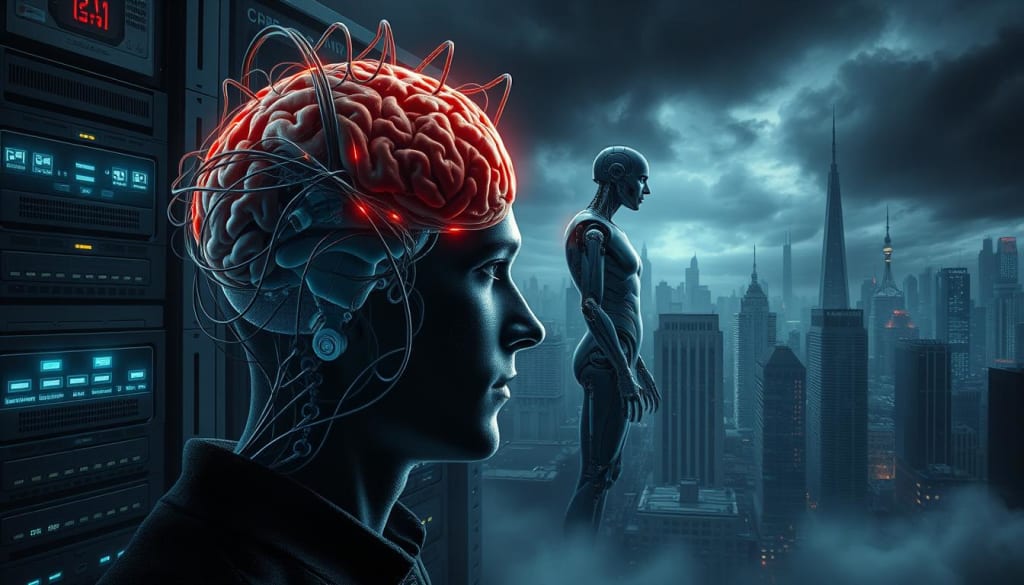
As technology evolves at a breathtaking pace, concerns about the impact of artificial intelligence (AI) on the job market continue to grow. Some believe AI will lead to massive job loss, while others argue it will open doors to new kinds of work and creativity.
In this article, we explore the facts — without exaggeration — and examine how AI is reshaping the future of work, and how we can prepare for what's ahead. We'll look at which jobs AI might replace, which jobs are safe from AI, and what skills are most in demand for the future of work.
1. Understanding Artificial Intelligence Today
Artificial Intelligence is a branch of computer science focused on building systems capable of performing tasks that typically require human intelligence — such as learning, decision-making, and natural language processing.
There are two main types:
- Narrow AI: Designed for specific tasks like image recognition or customer support chatbots.
- General AI: A hypothetical form of intelligence that can perform any intellectual task a human can — still under development.
In recent years, the growth of AI tools like ChatGPT, voice assistants, and machine learning platforms has made AI more accessible and powerful than ever.
2. How AI Is Transforming the Job Market
We are living in the era of the Fourth Industrial Revolution, where artificial intelligence and automation are redefining how industries operate.
Jobs most at risk from AI:
- Routine administrative tasks
- Basic data entry and analysis
- Call center and customer service roles
- Repetitive manufacturing jobs
These roles often involve predictable, rule-based work that AI can now handle more efficiently.
Jobs that are safe from AI:
- Creative professions: writers, designers, artists
- Emotionally demanding roles: therapists, teachers, caregivers
- Skilled trades requiring manual dexterity: surgeons, carpenters, artisans
Understanding which jobs AI is most likely to affect helps individuals make smarter career decisions.
3. Humans and Machines: Working Side by Side
AI doesn’t always mean replacement. In many cases, it means enhancement.
Examples of successful human-AI collaboration:
- Healthcare: AI helps doctors diagnose illnesses more accurately and faster.
- Education: AI customizes learning materials for individual student needs.
- Industry: Robots perform repetitive tasks while humans manage creative problem-solving.
The future of work will be about humans and machines complementing each other.
4. Preparing for the Future of Work
To thrive in a job market shaped by AI, we must build future-proof skills.
Top skills in demand:
- Critical thinking
- Creativity and innovation
- Emotional intelligence and empathy
- Digital and AI literacy
Practical ways to prepare:
- Take online courses on AI, data analysis, and digital tools
- Attend workshops and bootcamps
- Stay flexible and open to career pivots
5. Ethical and Social Considerations of AI
AI brings enormous benefits, but also serious ethical and social challenges.
Key issues include:
- Fair access to AI's benefits across social classes
- Protecting user privacy and workers' rights in digital environments
- Updating labor laws and social safety nets to reflect the changing nature of work
Society must ensure that AI serves humanity — not the other way around.
6. New Jobs and Opportunities Created by AI
While some jobs are being replaced by AI, many more are being created.
New AI-related jobs include:
- AI software engineers and data scientists
- Ethics officers in tech firms
- AI-enhanced user experience (UX) designers
Entire industries are also emerging, such as smart cities, digital health, and intelligent education platforms.
7. Expert Perspectives on the AI Job Revolution
According to the World Economic Forum, AI will displace certain roles — but will also create more jobs than it destroys.
Elon Musk once said: “AI could be the best or worst thing to ever happen to humanity.”
Most experts agree that preparation and adaptability are key. We must balance caution with optimism.
Conclusion
AI is already reshaping our world. The question is not "Will AI take your job?" but "Are you ready to adapt?"
By embracing lifelong learning and building the skills AI can't replicate — creativity, empathy, and critical thinking — we can secure a future where humans and technology work together in harmony.
Bonus FAQ
Q: What jobs are most at risk from AI?
A: Any job that involves repetitive, predictable tasks — like data entry, basic analysis, or simple customer support — is more likely to be automated.
Q: What jobs are safe from AI?
A: Jobs that require emotional intelligence, creativity, or complex manual skills are safer — such as therapists, teachers, artists, and skilled tradespeople.
Q: How can I prepare for the future of work with AI?
A: Focus on lifelong learning, embrace technology, and develop hybrid skills that combine human strengths with digital fluency.
About the Creator
Racha
"Discover inspiring content on health, fitness, travel, and thrilling stories. Whether you're here to learn or escape, there's always something exciting waiting for you!"
Was Alexander the great really that great?
Order, order! Who do we have on the stand today? Alexander... the Great, eh? Well, what’s so great about him? Your honor, the better question is, what's not great about him? He was the King of Macedon and considered a living demigod by Egyptians and Greeks alike. He conquered Persia when it was one of Earth's largest empires. And he was a thoughtful student of Aristotle, creative enough to untie the impossibly tight Gordian knot by cutting it in half. The Gordian knot is a myth— just like the countless other stories invented to enhance Alexander’s legend!
By Munesh Yadav3 days ago in Education
The 1793 Chain Cent: America's First Large-Scale Copper Coin
Holding a 1793 Chain Cent is like holding the first argument of a new nation. More than just America’s first mass-produced penny, this coin is a piece of history that sparked public debate, fueled by a design many found utterly wrong. Its story—from a chaotic mint to a collector's dream—explains why it remains one of the most coveted pieces in all of American numismatics. This guide will walk you through its turbulent birth, teach you to spot the tiny detail that can mean a fortune, and explain what truly makes it valuable.
By Laura Bennett6 days ago in Education


Comments
There are no comments for this story
Be the first to respond and start the conversation.